Top

North Gyeongsang Province launches metaverse platform to become digital hub

Policy & Regulation·November 20, 2023, 9:49 AM

North Gyeongsang Province has officially launched its integrated metaverse platform Metaport, which aims to expand access to the metaverse — a key component of the digital economy — for the region’s citizens. It also serves to showcase the region’s cutting-edge technologies and establish it as a hub for emerging industries.

Photo by Mimi Thian on Unsplash

“We will focus on a strategy to solidify our position not only as a metaverse capital but also as a global digital hub,” said the province’s Governor Lee Cheol-woo.


Offering a hybrid metaverse experience

Touted as the nation’s first scalable hybrid metaverse platform, Metaport utilizes Web3 technology to provide both web and app services. In particular, it leverages open APIs to integrate features such as login and avatars into one service, which allows users to enjoy metaverse content provided by local governments, public institutions, businesses, schools and more.


Bridge to the future

The platform also connects reality and the virtual realm with a virtual model of the Daegu-Gyeongbuk Integrated New Airport as the main space within the realm. The Daegu-Gyeongbuk Integrated New Airport is a joint military-civilian airport that is set to be built by 2030 in the Uiseong and Gunwi counties.

Users can access MetaPort through a website without downloading a separate program. The mobile app is also available for Android smartphones on the Google Play Store.

More to Read
View All
Markets·

May 11, 2024

Hong Kong spot BTC ETFs record second day of outflows

Hong Kong's spot Bitcoin exchange-traded funds (ETFs) encountered their second day of net outflows since their launch on April 30. According to data published by crypto trading data platform SoSo Value, in excess of 90 BTC exited the Hong Kong ETFs on May 9. The data indicated that China Asset Management's spot Bitcoin ETF observed an outflow of 80.16 BTC, while the Bosera HashKey Bitcoin ETF recorded a lesser outflow of 10 BTC. Meanwhile, Hong Kong’s third spot Bitcoin ETF offered by Harvest Global registered zero flows.Photo by Dmytro Demidko on UnsplashThese daily net outflows follow a trend of net inflows that had developed in the preceding days, with the three ETFs collectively witnessing net inflows of 101.6 BTC on Wednesday and 99.99 BTC on Tuesday. As of Thursday, the three ETFs, managed by ChinaAMC, Harvest Global and Bosera with HashKey, held approximately 4,260 Bitcoin, with total net assets reaching $261.45 million, marking an increase from $247.7 million on the first day of trading. The total trading volume for the three ETFs amounted to $2.06 million on Thursday, a decline from $2.67 million the day prior and a significant drop from the $9.74 million recorded on April 30, according to SosoValue data. This recent outflow represents the second day of net outflows from these products since their launch on April 30.   The initial day of outflows occurred on May 6, with 75.36 BTC flowing out of the products. This marked the first setback for Hong Kong's Bitcoin ETFs following their launch on April 30.  The outflows on that occasion primarily stemmed from the China Asset Management Bitcoin ETF, while other Hong Kong-based products saw no flows. Potential Stock Connect additionMany commentators had expected these Hong Kong-based products to see inflows from mainland China. While that hasn’t materialized yet, Harvest Global CEO Han Tongli said that he doesn’t rule out the addition of its Bitcoin and Ether ETF products to Stock Connect.  Shanghai Hong Kong Stock Connect is a cross border investment channel that would open access to these products to investors that ordinarily invest in and trade products and equities listed within the Shanghai Stock Exchange (SSEC). Tongli made the suggestion to the South China Morning Post (SCMP)  while attending the Bitcoin Asia conference. He suggested that such an addition is a possibility if all goes smoothly over the course of the next two years. U.S. product outflowsIn the U.S., spot Bitcoin ETFs also saw net outflows on Thursday, amounting to $11.29 million. Farside data indicates that the Grayscale Bitcoin Trust (GBTC) witnessed a substantial $43.4 million redemption, marking its largest single-day outflow since May 2, totaling $17.5 billion in outflows overall. BlackRock’s IBIT has now accumulated $15.4 billion in total inflows. Additionally, other top-performing ETFs — Bitwise (BITB), Fidelity (FBTC) and ARK (ARKB) — also experienced inflows. In total, U.S. ETFs have witnessed $11.7 billion in cumulative net inflows.

news
Web3 & Enterprise·

Aug 31, 2024

Stables Money partners with Coins.ph to use PHPC for cross-border remittances

Stables Money, an Australian platform that claims to be on a mission “to make stablecoins usable for everyday use,” has partnered with Philippines-based digital assets platform Coins.ph to use the latter’s peso-pegged stablecoin (PHPC) for remittances. Peso-denominated stablecoinIn a press release published to the Coins.ph website on Aug. 28, the firm laid out details of the deal. PHPC is a retail stablecoin which is backed by Philippine peso-denominated cash reserves and pegged to the peso on a 1:1 basis. The stablecoin was launched by Coins.ph in July.  It’s an ERC-20 token which runs on the Ethereum virtual machine (EVM)-compatible Ronin blockchain network. The stablecoin was accepted into the Bangko Sentral ng Pilipinas’ regulatory sandbox in May.Photo by Aeron Oracion on Unsplash$35 billion in remittancesThe Philippines has always been seen as a lucrative remittance market due to the high number of Filipinos who work outside of the country, sending funds home to family on a regular basis. In 2020, remittances back to the Philippines from overseas were just shy of $35 billion, according to data from the World Bank. It appears that Australia’s Stables Money has identified this opportunity, with the company entering the Philippine market back in March. The Philippine peso already accounts for over 25% of all outward transactions sent via the platform. Stables Money CEO Bernardo Bilotta spoke to the opportunity that the company is trying to exploit. He stated: "Recognizing the Philippines as a key player in global remittances, we expanded to deliver smooth PHP transactions. With 28.44% of our send transactions now in PHP, this move highlights our commitment to making cross-border payments hassle-free for those sending money to the Philippines.” Coins.ph has the intention of engaging in further industry partnerships in an effort to expand the reach of PHPC. That will mean additional collaborations with crypto exchanges, digital asset wallet providers and those financial institutions who are increasingly delving into the world of stablecoins. Commenting on this latest development, Wei Zhou, Coins.ph CEO, stated:”We’re encouraged to see growing adoption of PHPC among our user base. Our partnerships with Stables and Ronin underscore the vast potential of PHPC in cross-border transactions, trading and other financial activities.” Stables has also made efforts to expand through the use of Circle’s USDC stablecoin. Last month, it partnered with global payments card platform Mastercard in a collaboration which facilitates Stables users in purchasing goods using USDC at locations across 27 European countries where Mastercard is accepted. The firm’s partnership with Mastercard dates back to March 2023 when it entered into a similar collaboration relative to the Asia-Pacific region. Previous peso-based stablecoin projectsCoins.ph is not the first entity to try and drive adoption of a Philippine peso-based stablecoin. The Southeast Asian country’s UnionBank launched a similar product back in 2019. However, the product failed to find product-market fit and ultimately, it was withdrawn from the market. The company tried once again in 2022, attempting to launch a similar product through its digital bank subsidiary UnionDigital, in an effort that seems to have failed. More recently still, UnionBank subsidiary company UBX launched a peso-based stablecoin on Polygon back in March.

news
Policy & Regulation·

Nov 11, 2025

Japan to tighten crypto lending rules as regulator backs bank stablecoin pilot

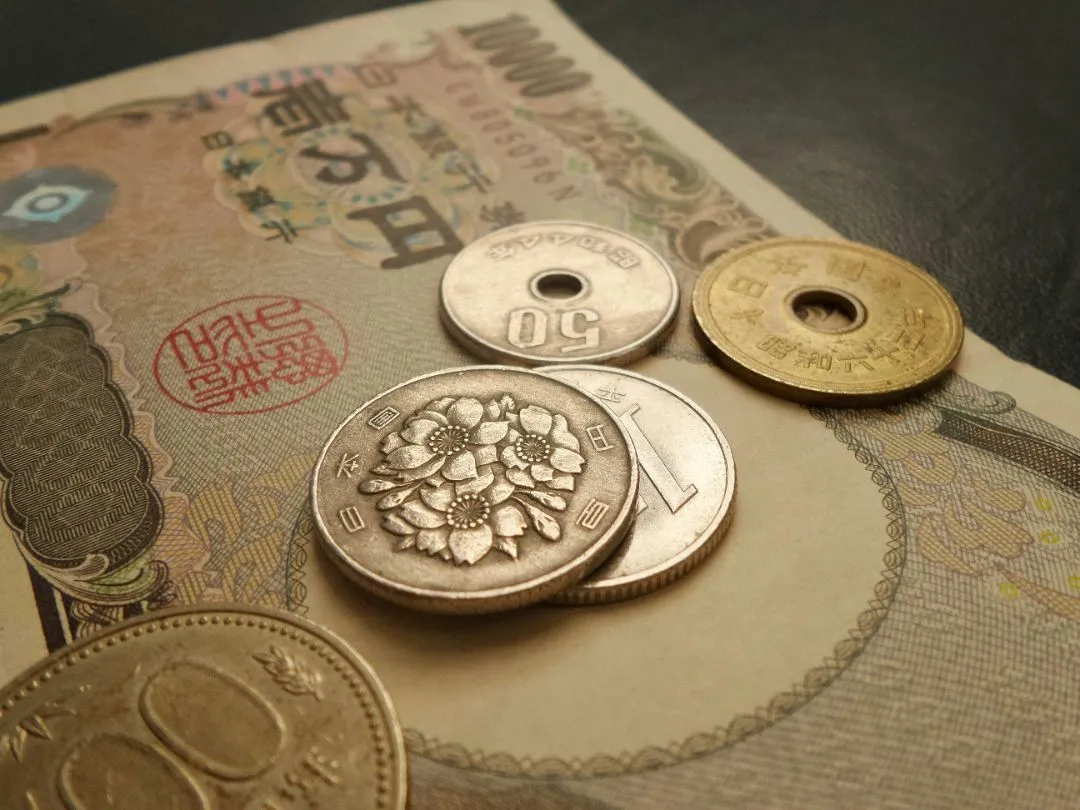
Japan’s Financial Services Agency (FSA) is moving to close gaps in crypto regulation and support a new bank-led stablecoin pilot, as markets watch for a potential Bank of Japan rate hike. Tougher oversight of crypto lending and IEOsAccording to a CoinPost report, at the fifth meeting of its Digital Asset Working Group held last week, the FSA discussed introducing new requirements to bring crypto lending clearly within the regulatory framework. While firms managing or staking crypto must register as exchanges, some operators have avoided registration by structuring services as borrowing schemes, which are not legally treated as asset management.Photo by Possessed Photography on UnsplashThe FSA flagged that users face both credit and volatility risks, yet operators are not required to segregate customer assets or use cold wallets. Some services offer returns around 10% or tie up funds for several years, with weak risk management and exposure to re-lending defaults and staking slashing. Under the new policy direction, operators will need stronger risk management for re-lending and staking, tighter custody controls, and clearer risk disclosures and advertising. Institutional-only borrowing not offered to the public will remain exempt. Some members questioned whether the new requirements would be practical to implement for off-chain operators, noting that staking is fundamentally on-chain. The group also examined initial exchange offerings (IEOs) lacking financial audits, particularly those aimed at retail investors. Members discussed limits similar to equity crowdfunding: investments over 500,000 yen ($3,000) capped at 5% of annual income or net assets, up to 2 million yen ($13,000). Most past domestic IEOs were under 500,000 yen ($3,200). Some warned such caps could be bypassed through secondary trading, where tokens are immediately tradable. Major banks pilot stablecoinAlongside stricter rules, the FSA will support a stablecoin pilot led by MUFG Bank, Sumitomo Mitsui Banking Corporation, and Mizuho Bank. CoinDesk Japan noted the project, the first under the Payment Innovation Project, will include three additional participants. Mitsubishi Corporation will oversee operations, while Progmat and Mitsubishi UFJ Trust and Banking will handle issuance and custody. The pilot, launching this month with implementation targeted within the year, will test whether a joint stablecoin by major banks can navigate regulatory and operational challenges. Rate hike speculation mountsJapan’s calibrated digital asset push comes as speculation grows over a possible Bank of Japan (BOJ) rate hike next month. Minutes from the BOJ’s October meeting, cited by South Korean outlet Edaily, show one board member saying most conditions for a hike have been met and that financial conditions would stay easy even after an increase. The BOJ kept its rate at 0.5% at that meeting. A rate hike was described as likely if firms are seen committing to wage increases ahead of next spring’s labor talks and if no major global shocks emerge. Markets, however, remain cautious, citing uncertainty over U.S. tariff effects and whether newly elected Prime Minister Sanae Takaichi will endorse such a hawkish stance. 

news
Loading