Top

Busan’s Digital Asset Exchange to Transform the City into a Global Financial Hub

Policy & Regulation·September 22, 2023, 4:02 AM

Busan, the southern port city in South Korea, has unveiled an extensive plan for the creation of the Busan Digital Asset Exchange. The primary aim of this initiative is to establish a blockchain-based exchange that facilitates the trading of a wide range of valuable assets, including raw materials, precious metals, intellectual property rights, and carbon emission rights, all through tokenization.

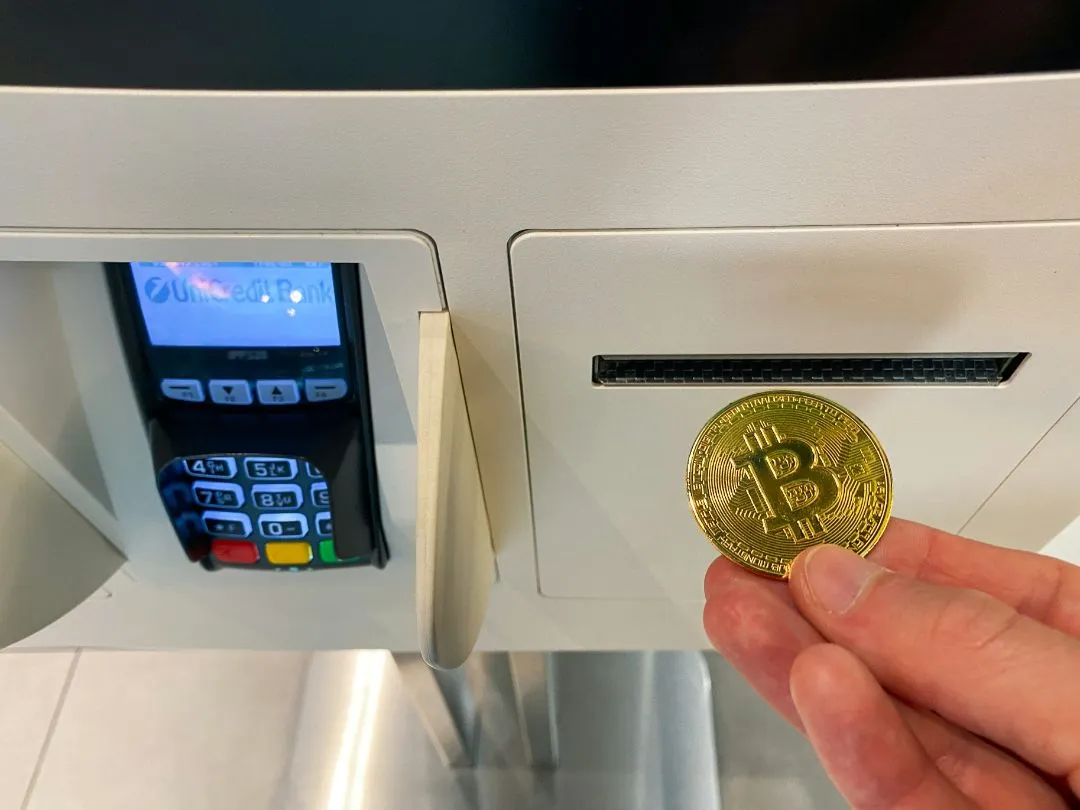
Photo by Joseph Pradipta on Unsplash


Decentralized governance model

This planned exchange will operate under a decentralized governance model, where separate entities will handle depository and settlement, listing assessment, and market monitoring. Such a governance framework is designed to ensure checks and balances and enhance investor protection. Busan is committed to providing both administrative and financial support for the establishment of these entities.

The roadmap for this plan was presented yesterday at Busan City Hall by Mayor Park Heong-joon and the Busan Digital Asset Exchange Establishment Promotion Committee.

The committee was introduced by the city in December of last year, and since then, it has been crafting specific plans. This committee is led by former lawmaker Kim Sang-min, who is recognized as an expert in blockchain policy.


Operator selection process

The legal operator for the exchange is slated to be launched within this year. Starting from the middle of the upcoming month, the city of Busan will initiate an application-based process to find an exchange operator and intends to finalize the selection by November.

The operator will be entirely funded through private contributions. Companies possessing blockchain technology and the capability to construct an exchange system will form a consortium to partake in the project and operate the exchange. The city of Busan will support the founding and operation of the exchange in accordance with the ordinance.


Diverse asset tokenization

Should everything proceed as planned, the exchange is set to commence operations next year. It will tokenize and support the trading of items that pass through the Port of Busan, including gold, silver, copper, crude oil, and ammonia. Additionally, a marketplace will be developed to trade intellectual property (IP) rights, such as films, and carbon emission rights. Particularly, there are plans to broaden the spectrum of tradable items to include virtual assets and security tokens.

In contrast to traditional stock exchanges that utilize home trading systems (HTS), the upcoming digital asset exchange will run on blockchain, which is immune to hacking and forgery. Users can trade their assets directly without intermediaries and benefit from reduced transaction costs.

Highlighting blockchain as a pivotal technology in the era of the Fourth Industrial Revolution, Kim Sang-min, the chair of the committee, expressed that Busan will develop its digital asset exchange to set a global standard in the field.

Mayor Park resonated with this perspective, emphasizing that in this age of digital transformation, Busan will leverage this opportunity to position itself as a global financial hub.

More to Read
View All
Policy & Regulation·

May 08, 2024

Korean Democratic Party to urge FSC to change its stance on spot BTC ETF

Korea's Democratic Party of Korea (DPK) plans to re-request the Financial Services Commission (FSC) for an authoritative interpretation of spot Bitcoin ETFs in June, seeking the legal interpretation of such products, according to The Korea Economic Daily.  The FSC currently does not classify virtual assets as financial investment products, as they do not function as underlying assets for ETFs as stipulated by the Capital Market Act. Thus, the issuance and listing of spot cryptocurrency ETFs have not been permitted in the country, limiting trading opportunities for Korean investors. Photo by Pixabay on PexelsDespite the situation, interest around the spot Bitcoin ETFs has surged in South Korea following the approval of such ETFs in the United States and recently in Hong Kong. This heightened expectation of spot Bitcoin ETF approval has coincided with the 22nd general election held on April 10.  DPK’s attempts to keep its promise The DPK’s decision to seek clarification on spot Bitcoin ETFs from the financial regulator comes after the party’s landslide win at the general election, securing a total of 175 seats out of 300 in the National Assembly. Among the party’s key pledges were to allow the trade of spot BTC ETFs and ease regulations on crypto products.  In the run-up to the election, the DPK and the ruling People Power Party (PPP) vied for introducing pro-crypto pledges to win votes from young Koreans in their 20s and 30s, who make up a significant portion of crypto investors within the country.  Bold move to amend Capital Market ActThe spokesperson of the DPK said the party will first seek an authoritative interpretation regarding spot Bitcoin ETFs from the FSC and continue to closely monitor how the situation unfolds. The prevailing view from experts, however, is that the agency is likely to remain sturdy in its view.  If the FSC insists on its current stance on spot BTC ETFs, the party would go as far as to amend the Capital Market Act, the spokesperson said, which would take at least a number of months to follow all due processes. 

news
Policy & Regulation·

May 29, 2025

Thailand plans to enable tourists to spend crypto

The Thai government is planning to enable tourists to spend crypto via credit card, according to information revealed by Thailand’s finance minister on May 26.Photo by rc.xyz NFT gallery on UnsplashPichai Chunhavajira, the Southeast Asian nation’s finance minister and deputy prime minister, delivered a keynote speech at an investment seminar in Bangkok in which he outlined that while some countries enable people to purchase goods directly with cryptocurrency, another option is to allow consumers to link their digital assets with other services such as credit cards.  In that way, the consumer can spend crypto through credit card services. English language news outlet The Nation reported that Chunhavajira confirmed that the government is preparing to launch a pilot project that would allow tourists to spend crypto in this manner within Thailand. Seamless conversion from crypto to fiatWith this system, merchants would still receive payment in Thai baht. From the point of view of the user, crypto could be spent but any exchange between crypto and fiat currency would happen seamlessly and automatically via the credit card service provider’s platform.Discussions between officials from the Bank of Thailand and the Ministry of Finance are ongoing with regard to the proposed scheme. It’s understood that similar existing models which have been introduced overseas are being examined. It’s likely that the pilot program is the same as the project that was announced by Chunhavajira in January when he alluded to a program enabled for foreign tourists visiting the Thai tourist resort of Phuket. At that time, it was envisaged that the scheme would adhere to existing legal frameworks and implicate identity verification through a third party service provider, with conversion from crypto to Thai baht to be enabled such that there would be no material difference experienced by merchants. Targeting touristsThis is not the first occasion in which tourists have been targeted by crypto-related initiatives. Earlier this month, it was announced that Binance Pay, a crypto payment service offered by global crypto exchange Binance, had partnered with the government of the Buddhist kingdom of Bhutan to launch the world’s first national-level crypto tourism payment system. In July 2024, the governor of Jeju Province in South Korea advocated for the use of non-fungible tokens (NFTs) and crypto as part of Jeju Island’s tourism strategy. Last December the province announced a digital transformation roadmap that sets out a cashless future. Plans include the introduction of a system for converting digital assets and facilitating payment methods from neighboring countries like China and Japan. However, not all governments have been keen to facilitate tourists in spending crypto. In May 2023, the governor of the province of Bali in Indonesia cautioned foreign visitors to the region against the use of cryptocurrencies as a means of payment for goods and services. Governor Wayan Koster warned that visitors using cryptocurrency for payments could face severe consequences, including criminal penalties and deportation.

news
Web3 & Enterprise·

Jan 30, 2024

BitBunny app offers users Bitcoin rewards for walking

BitBunny, a South Korean mobile app that distributes rewards based on walking activity, now offers rewards in the form of Bitcoin, according to an article by local news outlet TechM on Tuesday (KST).Photo by Thom Milkovic on UnsplashUnlocking rewardsBitBunny allows users to earn Bitcoin by completing missions like walking, checking daily attendance, inviting other friends to use the app, watching advertisements and participating in quizzes and games. Last Friday, the app added a new feature called "Catch the Bunny," a game where users can earn up to 10,000 points, or “coins”. These coins can either be used as cash when exchanged for vouchers – which can be used at various brands like Starbucks or Burger King – or invested in cryptocurrencies like Bitcoin, Ethereum, Ripple and Dogecoin. Due to these features, the app surpassed 100,000 users within just three months of release. BitBunny's vision"BitBunny's growth is an example of how mobile app technology and crypto are converging in everyday life, creating new user experiences," said Lee Kyung-tae, Team Lead at BitBunny. "We will continue to try different things to keep users interested and engaged." With a commitment to experimentation and user engagement, BitBunny is poised to redefine the way that users interact with both mobile apps and cryptocurrencies, offering a glimpse into a more integrated and rewarding digital future.

news
Loading
