Top

Busan City Houses Two Foreign Financial Firms on the Road to Becoming Blockchain, Fintech Hub

Policy & Regulation·July 31, 2023, 8:03 AM

The city of Busan said Monday that it has chosen two financial companies, UIB Korea and Lina One, as the new occupants of Decacorn-Space — an office space on the 63rd floor of the Busan International Finance Center (BIFC) — in an effort to position the southern port as the nation’s blockchain and fintech hub.

Busan has been running an open call for foreign financial institutions to move into the recently renovated space since June. After a rigorous two-step evaluation process, UIB Korea and Lina One were selected, the city said.

This comes as part of Busan’s efforts to further develop the BIFC and become a major financial powerhouse in Korea.

“We have been relocating public financial institutions, fostering financial experts, and exploring new growth drivers such as fintech, blockchain, and digital innovation,” the city’s mayor Park Heong-joon explained.
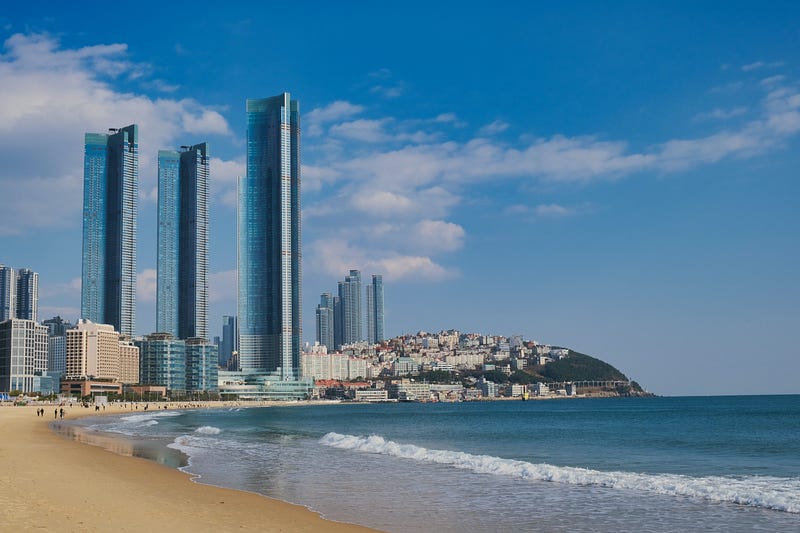
Photo by Minku Kang on Unsplash


About UIB Korea and Lina One

UIB Korea, or UIB Insurance Brokers, is the Korean branch of UK-based UIB Group — a global insurance broker that offers risk management advisory services. In particular, the firm is set to work with other domestic companies such as DB Insurance and Meritz Fire & Marine Insurance to establish a consortium for providing insurance products and consulting services.

Meanwhile, Lina One is the Korean branch of Chubb Group, the world’s largest publicly traded property and casualty insurance company. One of the firm’s major goals is to promote the insurance information technology market in Busan.

Notably, both companies aim to leverage their digital capabilities, experience, and competitiveness to achieve similar goals, which include digitizing insurance for various partners, ranging from maritime and industrial companies to regional banks, fintech companies, and individuals. In turn, their efforts are expected to expand Busan’s network with the larger global financial community and present the city as an ideal spot for international conferences.


On the road to becoming a financial hub

Despite considerable challenges such as the withdrawal of foreign financial institutions from Korea and the impact of COVID-19 on international travel, the city has continuously made efforts in collaboration with the Busan Finance Center to attract international financial institutions through events like investor relations meetings and local networking activities.

To support the successful landing of these companies in Busan, the city will also offer one-stop services such as business model development support and residential settlement consultations.

Once settled, UIB Korea and Lina One are expected to generate significant synergy with partner firms such as local financial holding company BNK Financial Group during the third phase of the development of the BIFC whose objective is to house innovative financial workspace by 2025.

“It is crucial for us to attract more competent domestic and foreign financial institutions that will have a great impact on the city’s financial economy,” Mayor Park emphasized.


More to Read
View All
Web3 & Enterprise·

Nov 30, 2023

Phoenix Group adjusts public trading launch date

Phoenix Group adjusts public trading launch dateWhile experiencing a considerable over-subscription during its pre-market sale on Nov. 21, Dubai-headquartered crypto mining firm Phoenix Group has had to announce a slight delay to its initial public offering (IPO) on the Abu Dhabi Securities Exchange (ADX).Photo by David Rodrigo on UnsplashAccounting for the UAE holiday scheduleIn an announcement published on Tuesday, Phoenix Group revealed that it would list its shares on Dec. 5 instead of the initially planned Dec. 4. The adjustment is attributed to the public holidays declared for the United Arab Emirates (UAE) National Day, celebrated on Dec. 2. The day marks the formation of the UAE, and the Ministry of Human Resources and Emiratisation has designated Dec. 2, 3 and 4 as public holidays for the private sector.“To honor this occasion and ensure comprehensive participation in the IPO, Phoenix Group PLC has rescheduled its listing date to December 5th, 2023,” the announcement states.IPO oversubscriptionAs advised by the company earlier this month, Phoenix Group achieved a successful closure of its IPO on Nov. 18, experiencing an over-subscription of 33 times the available share offering. The offering of 907,323,529 shares witnessed overwhelming demand, with retail investors oversubscribing 180 times and professional investors contributing to a 22-fold over-subscription.Discussions regarding the IPO launch in the UAE have been underway since at least July of this year, although public knowledge of the company’s intentions only became known in recent weeks.Speaking about the objective of the recent public listing, the company’s co-founders, Bijan Alizadeh and Munaf Ali, wrote:“Our aim is to be able to help create a more resilient, inclusive and diversified global blockchain economy, and this IPO is just the first step towards achieving that goal.”725MW mining capacityThe UAE-based mining operator is in the process of developing one of the largest mining facilities in the Middle East. Founded in 2016, the firm now manages 725MW of mining capacity globally, with facilities in the U.S., Canada, Europe and the Middle East.In August, it emerged that Phoenix is a key stakeholder in the development of a $300 million 150MW mining farm project which will be located at the Green Data City in the Omani capital, Muscat.Abu Dhabi-based conglomerate International Holding Company (IHC) acquired a ten percent stake in Phoenix in October. Co-founder Bijan Alizadeh is also a co-founder of M2, an Abu Dhabi-based cryptocurrency exchange that recently received a Multilateral Trading Facility and custodian license from the Abu Dhabi Global Market (ADGM).IPO activityComing off the back of a bear market, IPO activity has been scarce within the crypto space recently. That said, it emerged recently that South Korean cryptocurrency exchange Bithumb is working towards an IPO which it hopes to complete in the second half of 2025. Meanwhile, Ripple Labs has delayed its IPO plans due to regulatory challenges the company is currently dealing with in the U.S. Earlier this month, it emerged that USDC stablecoin issuer, Circle, is looking to launch an IPO in 2024.As Phoenix Group readies itself for public trading, the adjusted launch date aligns with the company’s strategy to maximize participation and capitalize on the UAE’s crypto-friendly environment.

news
Policy & Regulation·

Feb 16, 2024

Crypto.com moves to further global reach with Hong Kong license application

Singapore-headquartered cryptocurrency exchange platform Crypto.com is making a move to further its global reach through an application for a virtual asset trading platform (VATP) license with the Hong Kong Securities and Futures Commission (SFC). Application via Fortis DAX HK LimitedA number of months ago, the SFC established a list of both licensed platforms and license applicants. Crypto.com is the latest entity to appear on that list through a locally incorporated entity, Fortis DAX HK Limited. The application was made on Feb. 9, 2024. In this pursuit of regulatory approval in Hong Kong, Crypto.com now joins 16 other exchanges, including notable players like Bybit, Bullish, OKX and VAEX.Photo by Jie Yeu Teoh on UnsplashRegulatory ultimatumThe urgency to obtain a VATP license has become more immediate, given the regulatory ultimatum issued by the SFC recently. A stern warning from the Hong Kong regulator has been issued, mandating that exchanges must apply for the said license by Feb. 29, 2024, with a looming shutdown deadline of May 31, 2024, for those that fail to comply.  Currently, only two platforms, OSL and HashKey Exchange, hold the coveted licenses, underscoring the rigorous process and the importance of compliance in operating within the Hong Kong market.  Despite recent approvals of spot bitcoin exchange-traded funds (ETFs) in the United States and the acceptance of applications for similar products in Hong Kong, regulators are once again asserting their authority in the crypto space, demanding stringent compliance measures to safeguard investors and combat financial crimes.  Julia Leung, the chief executive officer of the SFC, emphasized the importance of regulatory oversight in today's landscape, highlighting the need to protect investors and hold wrongdoers accountable.  In light of these developments, the SFC has issued a cautionary advisory to investors, urging them to verify the regulatory status of the platforms they engage with. While exchanges can continue operating during the application process, investors are encouraged to take proactive measures, such as closing accounts with unlicensed platforms or transferring their assets to SFC-licensed exchanges before the looming deadline.  Licensing and partnerships Despite the regulatory pressures, Crypto.com appears to be navigating the challenges adeptly, leveraging its strategic partnerships and growth initiatives to reinforce its position in the market. In a recent interview, Eric Anziani, the COO of Crypto.com, highlighted the success of the company's collaborations with sports giants like F1 and the UFC, as well as a stadium naming rights deal in Los Angeles that has led to the Crypto.com Arena. These partnerships not only enhance brand visibility but also serve as avenues for attracting new users to the platform. With an approaching user base of 100 million, Crypto.com continues to expand its offerings, recently introducing Crypto.com Prime, an exclusive program tailored for high-net-worth individuals requiring a $1 million deposit. Anziani emphasized the importance of compliance, user convenience and competitive fees, while also acknowledging the diverse trading preferences among users. This license application is the most recent example of Crypto.com’s efforts to expand compliantly. Over the course of the past 12 months, the company has secured trading licenses in Spain, the UK, Dubai and Singapore.

news
Policy & Regulation·

Oct 24, 2025

U.S.-sanctioned Huione Group suspected of supporting crypto transactions in Korea

A Cambodia-headquartered financial group recently cut off from the U.S. financial system is suspected of having operated in South Korea, raising fresh questions about cross-border crypto and currency flows tied to the group. According to the Dong-A Ilbo, which cited data from the Korea Customs Service (KCS), Huione Group—now sanctioned by the U.S. Treasury Department’s Financial Crimes Enforcement Network (FinCEN)—appears to have run a currency exchange in Seoul from 2018 to July 2024. The outlet reported that a banner on the premises displayed a logo identical to Huione’s, prompting suspicions about its ownership and control.Photo by Aleksandar Pasaric on PexelsTies to North Korean hackersThe exchange reported conducting roughly $20,000 in annual currency conversions during that period, excluding cryptocurrency transactions. The timeline overlaps with a period in which Huione Group reportedly received $150,000 in cryptocurrency from the North Korean hacking group Lazarus.  Connections also extend to Cambodia. Panda Bank—a local lender that shares a building with Huione subsidiaries—supports USDT transactions originating from South Korea. Panda Bank director He Yanming is listed as the owner of Huione Crypto, a virtual asset service provider (VASP), suggesting potential links between operations in Seoul and Phnom Penh. These developments come against the backdrop of a U.S. investigation disclosed in May, in which FinCEN said Huione’s business networks, including payments arm Huione Pay, collectively laundered at least $4 billion in illicit proceeds between August 2021 and January 2025. Crypto used in $2.6B illegal conversionsMeanwhile, recent KCS data also shows a rise in illegal currency conversions involving cryptocurrency by foreign nationals. The Korea Economic Daily reported conversions totaling 432 billion won ($302 million) in 2021, climbing to 836 billion won ($584.5 million) in 2023 and 956 billion won ($668.4 million) last year. Over the past eight years, the total amount involved in such cases reached 3.7 trillion won ($2.59 billion) across 28 instances. By value, Chinese nationals accounted for 84.1% of the total, followed by Australians (11.1%), Vietnamese (3.2%), and Russians (1.6%). The growing prevalence of cryptocurrency in illicit activity parallels a broader surge in crypto investment within the country. Many South Koreans have turned to digital assets, often with home ownership as a long-term goal. Trading on local exchanges, Bloomberg reported, is heavily skewed toward more volatile altcoins, which make up more than 80% of total volume.  That stands in contrast to global markets, where investors largely focus on Bitcoin and Ethereum, which together make up more than half of overall trading. The momentum in local crypto investment intensified after Donald Trump’s U.S. presidential victory, with crypto trading in Korea reaching $27 billion in December 2024, about 80% of turnover on the KOSPI stock index. The investigation underscores the growing challenge for regulators in tracking and containing cross-border financial networks that rely on cryptocurrency and informal money transfers. As crypto adoption deepens in South Korea and scrutiny widens abroad, authorities find themselves navigating an increasingly intricate intersection of financial opportunity, enforcement, and risk. 

news
Loading