Top

India’s RBI Cites Stablecoin Risks With Call for Global Regulation

Policy & Regulation·June 29, 2023, 7:06 AM

In its latest Financial Stability Report released on Wednesday, the Reserve Bank of India (RBI) expressed concerns about the potential harm stablecoins could inflict on emerging markets and developing economies (EMDE).
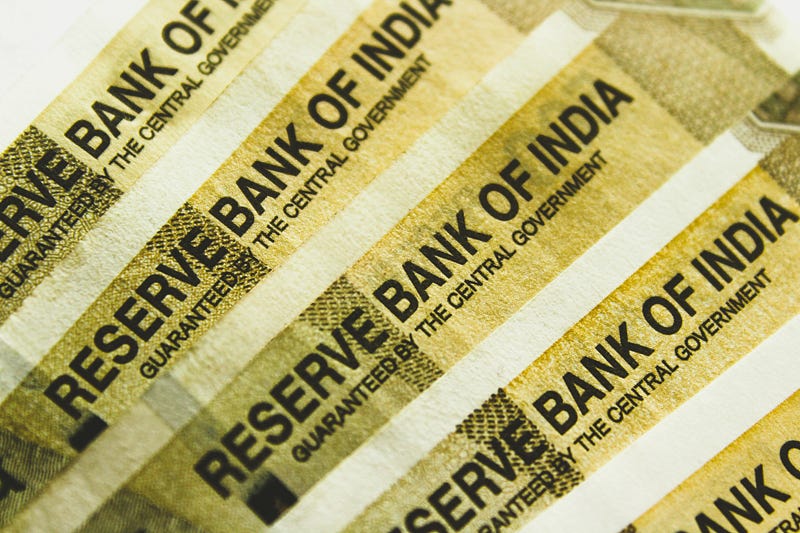
Photo by rupixen.com on Unsplash


Perennial critic

The RBI has been a consistent critic of cryptocurrencies, but particularly so in the case of stablecoins, from an EMDE perspective. However, the lack of authenticated data and inherent data gaps in the crypto ecosystem hindered a comprehensive assessment of financial stability risks.

According to the report, one of the ways stablecoins could pose a threat to an EMDE is through currency substitution. Since the underlying assets of stablecoins are generally denominated in freely convertible foreign currencies, the widespread adoption of stablecoins could lead to currency mismatches on the balance sheets of banks, firms, and households, resulting in an increased risk to the economy.


Monetary policy headache

Furthermore, the presence of stablecoins in the economy could create challenges for an EMDE’s central bank in setting domestic interest rates and managing liquidity conditions. The decentralized, borderless, and pseudonymous characteristics of crypto-assets make them potentially attractive instruments for circumventing capital flow management measures.

Another concern highlighted by the RBI is that stablecoins could undermine credit risk assessment and interfere with banks’ ability to mobilize money and create credit by offering an alternative to the domestic financial system. Additionally, the report emphasized the difficulty in tracking peer-to-peer transactions, on the basis that they increase the potential for illicit activities.

In light of these risks, the RBI reiterated its call for global coordination and regulation. It emphasized the need for a globally coordinated approach to analyze the risks posed to EMDEs compared to advanced economies (AEs). As India holds the G20 presidency, one of its priorities is to establish a framework for the global regulation of unbacked crypto-assets, stablecoins, and decentralized finance (DeFi).


Establishing a CBDC

While the RBI has been cautious about cryptocurrencies, it has shown more enthusiasm for central bank digital currencies (CBDCs). In November, the RBI launched a wholesale digital rupee pilot project. It followed that up in February with a retail digital rupee pilot project. In March, it signed an agreement with the Central Bank of the United Arab Emirates to study a CBDC bridge aimed at facilitating trade and remittances.

By calling for global regulation and highlighting the risks associated with stablecoins, the RBI aims to foster a safer and more secure environment for financial transactions while exploring the potential benefits of CBDCs in facilitating trade and remittances.

As the discussions around stablecoins and CBDCs continue, we’re likely to see ever greater collaboration between regulators, policymakers, and international organizations with a view towards establishing a comprehensive regulatory framework that addresses the challenges and harnesses the potential of digital assets on a global basis.

More to Read
View All
Markets·

2 days ago

Institutional support expected to cushion crypto volatility, analyst says

Despite ongoing fluctuations in the cryptocurrency market, analysts suggest that sustained institutional activity is likely to underpin a near-term rebound. As Bitcoin recovered above $90,000 on Dec. 5, market observers began weighing potential risks against growing evidence of corporate and sovereign adoption.Photo by Austin Hervias on UnsplashStructural risks seen as limitedAccording to South Korean news outlet Etoday, Hong Sung-wook, a researcher at NH Investment & Securities, said that the recent slump in both Bitcoin and Strategy stock may weigh on shareholders but does not fundamentally threaten the company’s solvency. He noted that concerns that typically emerge during Bitcoin downturns seldom reflect new underlying risks. Addressing the potential removal of Strategy from the MSCI index, pending review results expected by Jan. 15, Hong indicated that the impact would likely be limited, as the firm has already exhausted its capacity to make additional Bitcoin purchases. However, he cautioned that prolonged share price weakness could force companies to reevaluate digital asset treasury (DAT) models. Such a shift, he warned, could trigger corporate sell-offs that would burden the broader market. Hong also addressed concerns related to stablecoins and future technology. Despite S&P Global Ratings assigning Tether its lowest grade of "weak," Hong observed that the issuer maintains reserves exceeding the USDT in circulation, rendering a mass withdrawal crisis unlikely. Regarding the threat of quantum computing, he argued that the timeline remains uncertain and that the Bitcoin network could mitigate future risks through consensus-driven protocol upgrades. Policy moves may offer market tailwindsLooking ahead, the analyst identified several constructive developments that could bolster the market, including the potential passage of a U.S. crypto market structure bill early next year. He also pointed to the anticipated nomination of Kevin Hassett as Federal Reserve Chair by President Trump. Hassett is expected to favor interest rate cuts, creating a potentially favorable macro environment. Additionally, Vanguard’s decision to permit the trading of select third-party crypto ETFs and mutual funds was cited as significant, given the asset manager’s historically conservative stance on digital assets. While the market has shifted into a broader risk-off mode, institutional demand for Bitcoin has continued to build, including activity that began well before the recent pullback. The Czech central bank recently established a $1 million test portfolio comprising Bitcoin, a USD stablecoin, and a tokenized deposit to research payment futures, though it clarified that it does not currently plan to add digital assets to its international reserves. In the academic sector, a Form 13F filing with the U.S. SEC revealed that Harvard Management Company, which oversees a $56.9 billion endowment, held 6.8 million shares of BlackRock’s iShares Bitcoin Trust ETF (IBIT) as of Sept. 30, a threefold increase from the previous quarter. Furthermore, BlackRock CEO Larry Fink reportedly stated at the New York Times DealBook Summit 2025 that multiple sovereign wealth funds have begun accumulating Bitcoin, according to Forbes. Korean banks advance crypto integrationThis shift toward institutional acceptance is also materializing within South Korea’s traditionally conservative banking sector. The Maeil Business Newspaper reported that Woori Bank recently became the first major South Korean lender to display real-time Bitcoin prices on its trading floor, allowing dealers to track the asset alongside equities and foreign exchange rates. Concurrently, Hana Financial Group announced a partnership with Dunamu, the operator of the Upbit exchange, to develop blockchain-based remittance services, according to The Korea Economic Daily. By leveraging Hana’s global network and Dunamu’s technology, the initiative aims to reduce settlement times and costs for cross-border payments. Hana intends to introduce the technology for transactions between its Korean offices and overseas branches as early as the first quarter of next year, with broader expansion planned as domestic regulations evolve. Hana intends to launch the service at overseas branches as early as the first quarter of next year, with gradual expansion planned as domestic regulations evolve. 

news
Policy & Regulation·

Aug 04, 2023

Hong Kong Lawmaker Explores Digital Asset Links With Mainland

Hong Kong Lawmaker Explores Digital Asset Links With MainlandIn a move aimed at bolstering its position as a rising global Web3 hub, Hong Kong Legislative Council member Johnny Ng has expressed his aspiration to foster greater collaboration between digital asset platforms in Hong Kong and a Shanghai-based exchange.Photo by Simon Zhu on UnsplashDigital asset exchange interconnectivityAs Hong Kong continues to position itself as a key player in the emerging Web3 landscape, Ng envisions a future where licensed virtual asset exchanges in Hong Kong could be interconnected with their counterparts in Shanghai.Ng’s remarks came during an interview with Chinese media outlet The Paper. Drawing a parallel with the established Shanghai-Hong Kong Stock Connect program that seamlessly connects the stock markets of both cities, Ng raised the question of whether a similar connection could be established for licensed digital asset exchanges. Ng’s idea hinges on the potential to bridge appropriate platforms in Shanghai with those licensed in Hong Kong for virtual asset trading.Interconnected talent poolThe lawmaker’s enthusiasm for interconnectivity also extends to the talent pool. He expressed his desire for more Web3 talent exchanges between Hong Kong and the mainland, recognizing Shanghai’s status as a financial hub boasting numerous exceptional financial enterprises.Hong Kong’s approach to the Web3 landscape stands in contrast to mainland China’s stringent cryptocurrency regulations. While China banned cryptocurrency transactions in 2021, Hong Kong has embraced crypto firms, even encouraging partnerships between these firms and local banks.This year, Hong Kong authorities unveiled a series of cryptocurrency-related policy statements, aimed at fortifying its stature as a global financial center. A significant step followed in December, when the Hong Kong Legislative Council passed an amendment introducing a comprehensive licensing framework for virtual asset service providers (VASPs).In a recent development underscoring Hong Kong’s pro-crypto stance, HashKey and OSL have become the pioneering recipients of licenses for retail trading under the new regulatory regime, which commenced on June 1.Differing policy approachesPeople following developments in crypto and Web3 in China and East Asia have been speculating if the strategic positive shift in Hong Kong towards developing as a regional hub relative to the sector is indicative of a softening in the approach of mainland China towards the industry. It appears that Hong Kong’s pursuit of crypto business has been sanctioned by Beijing.Commentators have been monitoring the emergence of further encouraging signals. In May, Chinese state television featured a segment that covered cryptocurrency and in particular Bitcoin. Binance CEO Changpeng Zhao (CZ) was sufficiently encouraged by the development to suggest that it was “a big deal,” although the clip was later removed from the broadcaster’s website.Ng’s proposal aligns with the broader narrative of Hong Kong’s ambitious push into the Web3 landscape, capitalizing on its favorable regulatory environment to attract crypto-related ventures. As discussions evolve around the potential interconnectivity between Hong Kong and Shanghai’s digital asset exchanges, the global cryptocurrency community watches with interest to see if there are any emerging signs that Beijing will reciprocate positively.

news
Policy & Regulation·

Nov 04, 2023

SEC seeks summary judgment against Terraform Labs

SEC seeks summary judgment against Terraform LabsThe U.S. Securities and Exchange Commission (SEC) is making a strong push for a summary judgment in its ongoing legal battle against Singapore’s Terraform Labs and its co-founder Do Kwon. Such an outcome would spare the need for a protracted trial.According to a motion filed by the SEC on Thursday, the record shows that there is “no genuine dispute as to any material fact and that the moving party is entitled to judgment as a matter of law.”Photo by Caleb Fisher on UnsplashRelying on the Howey TestThe SEC’s filing underscores its central argument that Kwon and Terraform Labs were involved in the sale of securities. The document categorically states:“There is no dispute that purchasers made an investment of money, either through fiat currency or crypto assets, for each crypto asset — LUNA, wLUNA, MIR, and UST, thereby satisfying the first prong of Howey.” The Howey Test refers back to a U.S. Supreme Court case — SEC v. Howey — which took place in 1946. The case set a precedent and has subsequently become the cornerstone of determining what is or is not a security in the United States.This argument hinges on the idea that funds were pooled in a common enterprise with the expectation of profits primarily derived from the efforts of the promoters.Citing fraud as well as unregistered securitiesThe SEC’s assertion is two-fold, contending that not only did Terraform and Kwon engage in selling securities, but they also engaged in fraudulent activities and disseminated misleading information. The SEC reiterates these claims in its filing, emphasizing that the defendants committed fraud by duping investors about the stability of UST.They allegedly falsely attributed the algorithm for price stabilization while orchestrating clandestine third-party interventions. This purported deception made their claims regarding the algorithm’s effectiveness deceptive and involved the omission of crucial information. The fallout from Terra’s collapse in May of the previous year resulted in the destruction of substantial investor wealth, totaling billions of dollars.Similar defense team filingThe SEC’s move to seek summary judgment comes in the wake of a similar filing by Kwon’s defense team last Friday. Kwon is currently serving a sentence for document forgery in Montenegro, a situation stemming from his arrest at an airport with forged passports.Notably, Terraform’s co-founder, Daniel Shin, who is currently on trial in South Korea, has attributed the collapse of Terraform Labs to Kwon’s mismanagement. Shin has claimed his separation from the company and its activities occurred two years before its eventual collapse.In this legal battle that holds significant implications for the cryptocurrency and blockchain space, the SEC continues to emphasize its position, asserting that Kwon and Terraform Labs engaged in the sale of securities through deceptive means. The outcome of this case could have far-reaching consequences, setting precedents for future regulatory actions in the industry.

news
Loading