Top

Spotlight on Daegu as Blockchain Strategy Forum Approaches

Policy & Regulation·May 12, 2023, 4:33 AM

The 2023 Blockchain Strategy Forum is set to take place in the South Korean city of Daegu on May 26, according to an announcement from crypto exchange operator Flata EX.

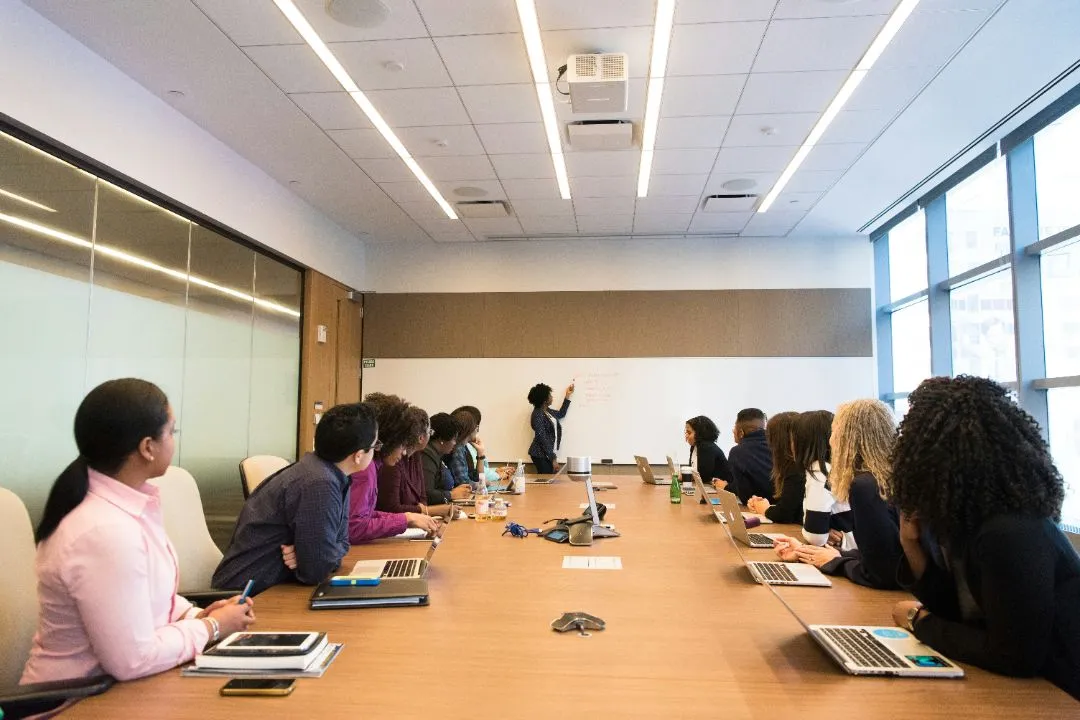
Photo by Shubham Dhage on Unsplash


Discussing strategic initiatives

The conference, jointly hosted by the city’s industry promotion institute Daegu Technopark, local newspaper Daegu Shinmun, and Flata EX, will invite leading experts from the blockchain industry to discuss strategic approaches and initiatives related to blockchain technology.


Incorporating blockchain

The primary focus of the conference will be to deliberate upon development and promotion strategies that can contribute to the growth of the Daegu economy. Special emphasis will be placed on discovering strategies for integrating blockchain technology into areas such as environmental, social, and governance (ESG) management, and administrative processes, thereby fostering a culture of innovation.


Diverse panel of experts

A diverse mix of participants from academia, legal, and government sectors are expected to attend the event, engendering a comprehensive dialogue on the subject. Key attendees will include Hwang Suk-jin, Chairman of the Korean Association for NFT; Jeong Jae-wook, a digital assets attorney at Joowon Law; and Ryu Dong-hyun, the head of Daegu City’s AI and Blockchain Department Division.


Beyond virtual assets

An official from Flata EX told Korea Economy TV that the upcoming forum will offer valuable insights into how blockchain technology can foster innovative work environments. The official added that the discussion will extend beyond the blockchain’s usage in virtual assets and delve into its potential to transform administrative systems and procedures.

More to Read
View All
Policy & Regulation·

Dec 26, 2023

Key appointment sees Turkey’s central bank enhance crypto expertise

Key appointment sees Turkey’s central bank enhance crypto expertiseTurkey’s President, Recep Tayyip Erdogan, has taken a step in integrating blockchain and cryptocurrency expertise into the nation’s monetary policy by appointing Professor Fatma Ozkul to the central bank’s rate-setting committee.Photo by Engin Yapici on UnsplashIncorporating digital financial knowledgeThis decision, which became effective on Saturday, marks a significant move towards incorporating digital financial knowledge within the economic framework of Turkey.As part of Turkey’s economic strategy, President Erdogan has been restructuring the economic management team since his victory in the May general election. This reshuffling included the appointment of ex-Goldman Sachs banker Hafize Gaye Erkan as the central bank’s governor in June.That appointment led to a series of policy rate increases, totaling 3,400 basis points, bringing the rate to 42.5%. Further changes in the Monetary Policy Committee (MPC) occurred in July, reinforcing the trajectory of monetary tightening.Crypto credentialsProfessor Fatma Ozkul, a lecturer at Istanbul’s Marmara University, joins the MPC with a primary focus on accounting, finance and auditing. Notably, she brings expertise in blockchain technology and crypto assets, having conducted courses on these subjects. Her recent work has delved into the implications of blockchain and crypto assets on finance, culminating in the publication of a book on crypto asset accounting in 2022.While Ozkul’s appointment may not immediately alter the current monetary policy direction, it reflects an understanding of the need to incorporate digital financial tools when formulating economic and monetary policy. Her extensive knowledge in digital finance is expected to contribute significantly to the process of setting benchmark interest rates, a critical instrument in controlling inflation within Turkey.President Erdogan’s emphasis on digital banking aligns with Turkey’s proactive steps in this direction. The central bank introduced a digital Turkish lira collaboration platform in 2021 and successfully tested digital lira transactions in late 2022. Additionally, the government is anticipated to submit a draft law regulating crypto assets in the coming year.Crypto adoptionThe political and economic climate in Turkey has shown a growing interest in cryptocurrencies, particularly Bitcoin. Chainalysis, a blockchain analytics company, reports that Turkey recorded nearly $170 billion worth of cryptocurrency transactions between July 2022 and June 2023, ranking fourth globally in terms of raw transaction volumes.A report by KuCoin earlier this year identified a noteworthy increase in the overall number of crypto investors in Turkey over the course of the past 18 months. That growth in adoption was found to be youth-driven. The importance of the Turkish market within the crypto sector is further evidenced by the recent revelation that the Turkish Lira is the most dominant fiat trading pair on leading global crypto exchange Binance.In response to this surge, the Turkish government has been working on cryptocurrency regulations, focusing on licensing and taxes. This regulatory move aims to remove Turkey’s name from the Financial Action Task Force’s “gray list” and align the country with global financial norms.As Professor Ozkul assumes her role, her expertise and input may well play a pivotal part in shaping Turkey’s evolving position and approach where digital assets, blockchain and cryptocurrencies are concerned.

news
Web3 & Enterprise·

Feb 23, 2024

Bithumb’s Burrito Wallet holds Partners Day 2024

Rotonda, a subsidiary of crypto exchange Bithumb that operates Burrito Wallet, announced yesterday that it held “Partners Day 2024.” According to a report by local news outlet Etoday, the event was prepared to share the company’s business plan for this year and its partnership strategies and was attended by 50 stakeholders from 30 companies partnering with Burrito Wallet. The soon-to-be-released service, “Burrito Partners,” was also introduced in the venue.  Following the official launch in February last year, Bithumb’s Burrito Wallet has been collaborating with Web2 and Web3 firms in blockchain service development and co-marketing. Burrito Wallet is dedicated to contributing to bridging Web2 and Web3 ecosystems through forging partnerships.Photo by Christina @ wocintechchat.com on UnsplashSoon-to-be-launched service, Burrito Partners Burrito Partners is Rotonda’s new service to help its partners with marketing efforts. It has been designed to enhance the workflow and boost the quantitative growth of its partners that struggle with a lack of workforce.  Burrito Wallet will leverage Burrito Partners to provide services that can monitor user events, manage follower and marketing indexes, strengthen user community, provide airdrop solutions and secure transaction data, all of which are expected to maximize marketing performance. “By making partnerships with various companies that share the same values with Bithumb’s Burrito Wallet, we have been able to actively expand the blockchain ecosystem,” said Shin Min-chul, CEO of Burrito Wallet. “We are also planning to roll out a rewarding service for users sometime during next month. Burrito Wallet is dedicated to developing a system where all partners can thrive,” he added. 

news
Web3 & Enterprise·

Aug 22, 2025

Circle President visits Seoul for stablecoin talks with exchanges and central bank

Circle President Heath Tarbert, who oversees the issuer of the USDC stablecoin, arrived in Seoul on Aug. 21 for a series of meetings with South Korean cryptocurrency and blockchain industry leaders, as well as the governor of the country’s central bank. Citing industry sources, local outlet Newsis reported Tarbert visited three major exchanges, Upbit, Bithumb and Coinone, shortly after landing, spending roughly an hour at each. Discussions centered on recent developments in Korea’s digital asset ecosystem.Photo by Daniel Bernard on UnsplashGathering insight from exchangesThe trip underscores Circle’s growing interest in South Korea, one of the world’s largest crypto markets by trading volume despite its heavy tilt toward retail investors. Circle is reportedly seeking on-the-ground insight from local trading platforms. An executive from a research firm said the market offers an attractive foothold for global players looking to deepen networks. Previous reports indicated Circle has also begun informally recruiting in South Korea to support initiatives tailored to the local market, and the company is also weighing a direct investment in a domestic crypto firm. Homing in on stablecoinsStablecoins are expected to dominate the agenda with exchanges. USDC is the world’s second-largest stablecoin by market share, behind Tether’s USDT, and all three exchanges already support USDC trading. Upbit and Bithumb have meanwhile indicated their plans to develop Korean won–pegged tokens, recently filing trademark applications for their projects. Given Circle’s position in the sector, one exchange official said local platforms may look to the U.S.-based company as a benchmark, adding that practical knowledge-sharing could be the most meaningful outcome of Tarbert’s visit. Tarbert also attended a dinner with Simon Seojoon Kim, CEO of crypto venture firm Hashed, whose teams span Seoul, Singapore, Bengaluru, Silicon Valley and Abu Dhabi. Circle and Hashed have been in frequent contact, and the gathering offered another forum to exchange views on recent market developments. Talks with the central bank governorOn the policy front, Tarbert met with Bank of Korea (BOK) Governor Rhee Chang-yong at Circle’s request before the dinner. Rhee has signaled openness to the introduction of won-backed stablecoins, while emphasizing prudential safeguards and noting differences with some lawmakers on potential issuers. The BOK head has previously warned that allowing non-bank entities to issue won-backed stablecoins could pose risks, such as circumventing capital rules. The South Korean central bank is working with other agencies to develop a framework that ensures the stability and utility of stablecoins while preventing their use to bypass foreign exchange controls. The meeting between Tarbert and Governor Rhee likely covered regulatory parameters for cross-border remittances using stablecoins and avenues for public-private collaboration to foster a compliant won-stablecoin market. On the following day, Tarbert is slated to meet executives from four major financial groups: Shinhan Financial Group, Hana Financial Group, KB Financial Group and Woori Bank. Kakao Group, the company behind the KakaoTalk messaging app, is also on the itinerary. Representatives from its mobile payment platform, KakaoPay, are expected to take part in the discussions. The talks come as Kakao recently formed a task force to navigate Korea’s evolving stablecoin rules. Separately, Circle listed on the New York Stock Exchange (NYSE) earlier this year under the ticker “CRCL.” The initial public offering (IPO) priced at $31 a share and opened at $69, raising nearly $1.1 billion. As of Aug. 21, the stock closed at $131.80. 

news
Loading