Top

Crypto Oasis Founder Thinks UAE Set Up For Crypto Success

Policy & Regulation·May 15, 2023, 12:44 AM

As the dust settles on 2023's Dubai Fintech Summit, which took place last week, one takeaway offered by the Co-Founder of blockchain ecosystem firm Crypto Oasis is that the United Arab Emirates (UAE) has set itself up for success where crypto business is concerned.

In speaking with crypto publication CoinTelegraph on the fringes of the Dubai Fintech Summit, Crypto Oasis Co-Founder and Managing Partner Saqr Ereiqat suggested that the regulatory infrastructure that the UAE has put in place provides an ideal foundation upon which crypto companies can develop and prosper.
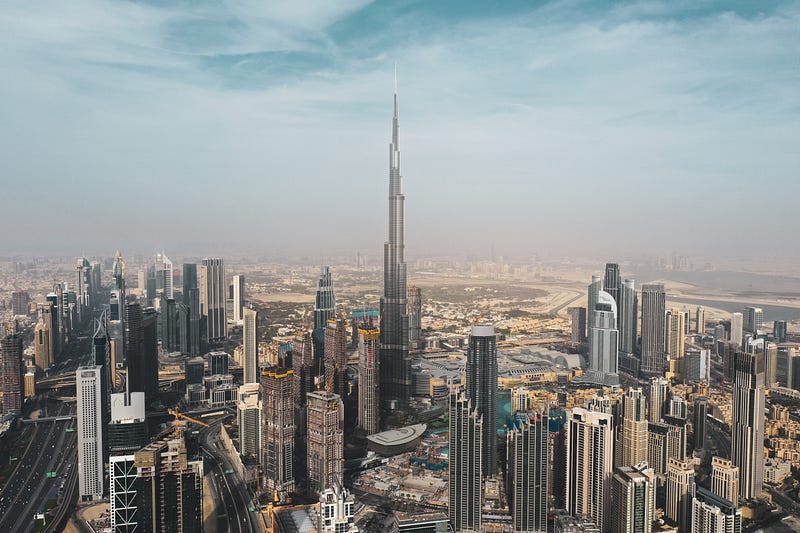
Photo by Mo Ismail on Pexels


Regulatory infrastructure

Ereiqat pointed to some key fundamentals that crypto entrepreneurs and start-up founders should look at when deciding on the location that will best meet their needs and help to optimize their route to market and ultimate success. This includes the regulatory infrastructure.

The UAE authorities and regulators at a national level, together with their colleagues within the regulatory agencies in the Emirates of Dubai and Abu Dhabi, have been doing some heavy lifting in this regard over recent months.

They’ve all been working on establishing a workable regulatory framework, and as part of that, a licensing process. In the case of Dubai, its Virtual Assets Regulatory Authority (VARA) has started to issue preliminary or Minimum Viable Product (MVP) license approvals that enable crypto startups to get started, while providing them with a pathway towards obtaining Full Market Product (FMP) licensing at a later stage.


Talent pool

The other key requirements that Ereiqat set out were digital infrastructure alongside an ability to attract and provide a pool of talent relative to the crypto assets space. In respect of these key considerations, Ereiqat believes that the UAE hits the target in each case.

“The UAE’s regulatory framework is more streamlined and business-friendly compared to the complex and fragmented regulatory environment in the US,” he told the crypto media firm.

To enhance these fundamentals, Ereiqat also alluded to a depth of capital that could potentially find its way into UAE-based crypto businesses, easing these start-ups’ efforts in executing on funding rounds as they look to achieve growth.

Ereiqat maintains that the interest in the region is already evident, citing a data-point that suggests there are 1,800 Web3-centric businesses already operating in the region, with more than 8,000 people working for those start-up businesses. Speaking to that reality further, he said:

“The Dubai FinTech Summit was a significant event that brought together stakeholders from the fintech industry […] The presence of crypto and Web3 leaders and projects at the event is an important indicator of the growing interest and adoption of these technologies in the region.”

This enthusiasm and belief in the existence of the right Web3 business environment in the UAE was echoed at that event by both Coinbase Founder and CEO Brian Armstrong and Ripple Founder and CEO Brad Garlinghouse. Both industry figures featured as keynote speakers at the event. Armstrong alluded to the potential of Coinbase establishing a base in Abu Dhabi while Garlinghouse announced the opening of a Ripple office in Dubai.


More to Read
View All
Policy & Regulation·

Jun 16, 2023

Tether Critics Point to Previous Chinese Securities Backing

Tether Critics Point to Previous Chinese Securities BackingUSDT stablecoin issuer Tether (USDT) has long faced persistent scrutiny and criticism due to the lack of transparency surrounding the assets backing their digital currencies. The latest allegations come in the form of a report by Bloomberg on Friday suggesting that the world’s largest stablecoin was once backed by securities issued by Chinese companies.Photo by Manuel Joseph on PexelsNYAG releases documentsThese findings were based on documents made public by the New York Attorney General (NY AG). The documents disclosed that Tether had listed securities issued by China’s state-owned Industrial and Commercial Bank of China, China Construction Bank, and Agricultural Bank of China as part of its reserves backing the USDT stablecoin.Rumors about USDT’s exposure to Chinese securities have circulated for a number of years. In 2021, a Bloomberg research report revealed that Tether’s reserves reportedly included billions of dollars in short-term loans to China-based companies, as well as a significant loan to the collapsed crypto lender Celsius Network.However, in February 2021, Tether reached a settlement with the NY AG’s office over accusations of providing misleading information about its reserves and losses. To address these concerns, Tether handed over documents such as letters, bank accounts, reserve holdings, and wallet addresses through the law firm Steptoe.Attestation reportTether’s latest attestation report for Q1 2023, released on May 10, offered further details about its reserves. According to the report, Tether’s reserves were valued at $81.8 billion at the end of the quarter, a significant increase from the earlier period of $14.8 billion. These reserves consisted of $53 billion in US Treasuries, $1.5 billion in Bitcoin, and $5.3 billion in loans described as “over-collateralized.”The disclosure of Tether’s previous backing by Chinese securities adds another layer of complexity to the stablecoin landscape, raising questions about the risk exposure and potential impact on the stability of these digital assets. Using Chinese commercial paper to back a US dollar stablecoin is a risky endeavor.It raises the same issues as we’ve seen with the plethora of crypto lenders that went bankrupt in 2022. In those cases, they were using customer money to speculate and turn a profit. That’s fine when it works but when it goes wrong, it is customers who suffer. In its defense, Tether has stated that it only held A1 rated banking sector Chinese commercial paper in 2022 in state-owned Chinese companies like Industrial & Commercial Bank of China Ltd., China Construction Bank Corp., and Agricultural Bank of China Ltd. It reduced this exposure to zero later that year.With the cryptocurrency community and regulators seeking greater transparency and accountability, the industry is likely to face increased scrutiny and calls for enhanced regulations to ensure the integrity of stablecoin operations moving forward.As regulators continue to assess and navigate the evolving crypto market, it remains to be seen how the industry will address these concerns and establish clearer guidelines for stablecoin issuers to ensure the trust and confidence of market participants.

news
Policy & Regulation·

Aug 19, 2023

SEC Seeks to Question Co-Founder of Singapore’s Terraform Labs

SEC Seeks to Question Co-Founder of Singapore’s Terraform LabsThe United States Securities and Exchange Commission (SEC) has taken a step forward in its ongoing case against Singapore’s Terraform Labs by seeking to question Daniel Shin, the Co-Founder of the company.The SEC's intention is to gather evidence related to Chai Corporation, a payments company associated with Terraform and the Terra blockchain. District Judge Jed Rakoff granted the SEC’s request earlier this week, which is part of the regulatory body’s efforts to build a case against Terraform Labs and its Co-Founder, Do Kwon. The decision was based upon a motion originally filed in July.Photo by Bermix Studio on UnsplashRequesting South Korean assistanceThe motion, which was granted on Tuesday, allows the SEC to reach out to South Korea for assistance in questioning Shin and obtaining documents related to Chai Corporation. The regulatory body aims to gain insights into Kwon’s role at Chai, the utilization of the Terra blockchain by Chai, and the disclosures made by Chai regarding its relationship with Terraform.Additionally, the SEC is interested in understanding the reasons behind Chai’s separation from Terraform, as the two companies shared offices and staff until their split in 2020.No opposition filedOn a previous occasion, Kwon unsuccessfully challenged the SEC's attempt to access company records on the basis of a lack of jurisdiction given that Terraform is a Singapore-domiciled company. In June, both Terraform and Kwon attempted unsuccessfully to have the entire action thrown out.On this occasion neither Terraform Labs nor Kwon have opposed the SEC’s motion. In fact, they have even included their own set of questions and document requests. Both the Singaporean firm and its Co-Founder have denied the SEC’s allegations, which were filed earlier this year.The SEC’s lawsuit claims that Terraform’s cryptocurrencies, specifically Terra Luna Classic (LUNC) and Terra ClassicUSD (USTC), were involved in fraudulent activities. The US regulatory body further alleges that Kwon and Terraform falsely promoted the use of the Terra blockchain by Chai for processing and settling transactions.The SEC’s lawsuit also accuses Terraform and Kwon of fabricating transactions involving TerraKRW (KRT), a Korean won-pegged stablecoin, to give the impression that Chai was actively utilizing the Terra blockchain.Collapse falloutTerra, an interconnected crypto ecosystem, faced a collapse in May 2022, resulting in the loss of approximately $40 billion in value and impacting the wider cryptocurrency market. The aftermath of this collapse led to legal actions against individuals associated with Terraform Labs. South Korean prosecutors, for instance, charged Shin with multiple fraud offenses in April, alleging that he had concealed the risks of investing in Terraform’s cryptocurrencies.Kwon’s legal situation is equally complex. He is currently serving a prison sentence in Montenegro for attempting to leave the country using a fake passport. He faces criminal charges in both the United States and South Korea, and both countries have requested his extradition.The ongoing investigation sheds light on the intricate relationships within the Terra ecosystem, having an impact across different jurisdictions. As legal proceedings unfold, the outcome will likely have implications for the regulation and oversight of cryptocurrency and blockchain projects internationally.

news
Web3 & Enterprise·

May 03, 2023

Bybit Extends Service Offering to Include Lending

Bybit Extends Service Offering to Include LendingDubai-headquartered crypto spot and derivatives trading platform Bybit announced on Tuesday that it has expanded the range of services it offers to now also encompass crypto lending.Photo by Traxer on UnsplashHourly interestIn the announcement which has been published to the platform’s website, the company set out the nature of the Bybit Lending product. “With Bybit Lending, users can deposit their unused cryptocurrencies into Asset Pools, which will be lent out to borrowers,” the service update outlines.Expanding on the features that the new service offering brings with it, the crypto platform outlines that customers will have the ability to accrue interest on an hourly basis. That interest will be calculated at a variable rate, with a variance in the rate depending upon the level of borrowing activity. “In extreme cases where there are no borrowers at all, the interest rate could drop to 0%,” the company clarified.Low risk claimsBybit points out that “loaned assets are kept safe by Bybit’s strict risk management system, enabling you to earn returns with peace of mind.” While this is comforting to hear, it remains to be seen to what extent crypto market participants will take this statement at face value.2022 proved itself to be a graveyard for most of the leading crypto lending firms, and with that, such failures also proved to be a graveyard for the hard earned funds of retail market participants in their hundreds of thousands. Many are dubious about the integrity and sustainability of the crypto lending model, at least at a retail level.Withdrawal restrictionsBybit added that the product facilitates flexible redemptions. However, in an accompanying note, it added that the withdrawal of funds is dependent upon “ the funds in the Asset Pool [not being] fully lent out and you have not exceeded your Daily Withdrawal Limit.”It’s important to note that as many of the failed crypto lenders were getting further and further into difficulty in 2022, they added more arduous withdrawal limits and withdrawal conditions as a mechanism to stem the bleeding that was the outward flow of deposits against a backdrop of a deficit in customer funds held by these platforms.In further marketing of the product on Twitter, the company is claiming that customers can benefit from interest rates of up to 16.46%. While one could take the view that limited promotion of exceptionally high interest rates is harmless, the lesson learned from recent crypto lender failures is that such platforms were offering excessive and unsustainable interest rates as a mechanism to reel in retail deposits, only to later proceed to mismanage those funds.Competing offeringsBybit is not alone in offering this service. While a plethora of lending services exited the market via bankruptcy, exchanges such as OKX and KuCoin have their own variations on lending. OKX extends a loan facility to platform users proportionate to digital assets the user has deposited on the platform. Seychelles-based KuCoin offers a lending service across a broad spectrum of crypto assets.The intent of US based platforms Coinbase and Kraken in this regard has been retarded due to the actions of US regulators. Kraken fell foul of the Securities and Exchange Commission (SEC) relative to its staking service and paid a $30 million fine as a consequence. Meanwhile, Coinbase shelved plans to launch lending-based services in September 2021 having been warded off the idea by the SEC.

news
Loading