Top

HKMA forms working group to establish tokenization standards

Policy & Regulation·May 10, 2024, 7:21 AM

The Hong Kong Monetary Authority (HKMA) has outlined that it has established a community initiative relative to its recently launched Project Ensemble tokenization market development effort.


'Project Ensemble Architecture Community'

In a press release on May 7, the Hong Kong regulator set out the establishment of the “Project Ensemble Architecture Community.” Project Ensemble was launched two months ago on March 7. At the time, the regulator described the project as “a new wholesale central bank digital currency (wCBDC) project to render support to the development of the tokenisation market in Hong Kong.”


The HKMA is trying to create an environment in which it can “develop standards” for the emerging tokenization market, with particular emphasis on the use of a wholesale central bank digital currency (wCBDC). The Chinese autonomous territory’s central bank has launched the “Project Ensemble Architecture Community,” with a view towards supporting interoperability between a wholesale CBDC, tokenized money and tokenized assets.


The HKMA has outlined the community's primary objective, stating it aims to provide recommendations on various topics, with initial emphasis on devising a mechanism to facilitate seamless interbank settlement of tokenized deposits through wCBDC for tokenized asset transactions.

https://asset.coinness.com/en/news/1b649cd41e337243a7daecd138198cfa.webp
Photo by Jimmy Chan on Pexels

Public and private sector participants

Furthermore, the working group intends to support the design and execution of Project Ensemble. Notable participants in the "Architecture Community" include the HKMA itself, Hong Kong’s other financial regulator, the Securities and Futures Commission (SFC), the BIS Innovation Hub Hong Kong Centre, the CBDC Expert Group and seven private sector entities. 


Among these are Bank of China (Hong Kong), Hang Seng Bank, HSBC, Standard Chartered Hong Kong, HashKey Group, Ant Digital Technologies and Microsoft Hong Kong. Hashkey Group owns one of two Hong Kong-regulated cryptocurrency exchanges, HashKey Exchange. It also runs a brokerage, asset manager and tokenization platform, amongst other entities. Ant was recently involved in a tokenized deposit trial with HSBC.


Regulatory sandbox

One of the first matters on the agenda for the newly-formed Community is to make recommendations about using a wCBDC for interbank settlement of tokenized deposits. Following that, the project plans to work towards the design and implementation of the Project Ensemble Sandbox which will launch in the coming months.


The HKMA has been actively testing its CBDC and commenced the second phase of the e-HKD pilot in March. This phase of the pilot program is slated to extend until mid-2025.


The journey towards exploring CBDCs in Hong Kong dates back to 2017, with the authorities intensifying their focus on researching a potential e-HKD in 2021, spanning both wholesale and retail levels.


With the participation of key stakeholders from both the public and private sectors, including leading financial institutions and technology firms, the initiative appears to be well-positioned to drive innovation and address the evolving needs of the financial industry in Hong Kong.



More to Read
View All
Web3 & Enterprise·

Jul 02, 2024

Japan's Sony to revamp crypto exchange WhaleFin following acquisition

Japanese consumer electronics conglomerate company Sony appears to be gearing up for a cryptocurrency exchange relaunch following its acquisition of WhaleFin. That’s according to a press release published by Japanese public relations company PR Times. Last year, Sony bought Amber Group, a Singapore-headquartered digital asset and crypto financial services firm, which operates crypto exchange WhaleFin. It now appears that the company plans to revamp the local trading platform.  S.BLOX crypto exchangeAmber Group has been renamed to S.BLOX Co. A statement from WhaleFin confirmed the name change. The rebranding has occurred following the acquisition in August 2023 of Amber Group by Quetta Web, a wholly-owned subsidiary of Sony Group Corporation. It also outlined plans to upgrade the service in terms of user experience through a user interface (UI) design refresh. Furthermore, the service plans on releasing new applications going forward.  Part of the strategy is to leverage Sony Group businesses in order to further bootstrap the crypto exchange. Using this approach, the company believes that it can create new added value in cryptocurrency trading services.  The precise launch date of the renewed WhaleFin crypto exchange has yet to be announced. S.BLOX is registered with the Kanto Local Finance Bureau of the Ministry of Finance. Furthermore, it’s a member of the Japan Virtual and Crypto Assets Exchange Association (JVCEA), which oversees cryptocurrency trading within the Japanese jurisdiction from a regulatory and compliance perspective. The exchange business is understood to have a current capitalization of 1,708,179,531 yen (around $10.5 million).Photo by James Feaver on UnsplashWeb3 focusSony has made a concerted effort to expand its activity in the Web3 space. In March 2023, the company filed a patent that aims to enable players of Sony gaming products to access interactive Web3 gameplay. That application will focus on the use use of NFTs. A month earlier, Sony Network Communications, its internet provider division, partnered with the Astar blockchain development team in order to create an incubation program for startups who are working on decentralized autonomous organizations (DAOs) and NFT-based innovation. The same subsidiary partnered with Japanese blockchain firm Startale Labs last September in order to build Sony’s own public blockchain network. The CEO and founder of Startale Labs, Sota Watanabe, took to the X social media platform on July 1, clarifying that Startale’s external director will be heading up Sony’s new crypto exchange. While Sony has dipped its toe in the water previously relative to Web3 projects, this latest development will see it become more deeply involved in the crypto and Web3 space.  Amber Japan was bought out by crypto finance firm Amber Group in 2022 when it was known at that time as DeCurret. Last year, Bloomberg reported that Amber Group was working towards selling off the enterprise due to difficulties in navigating the strict regulatory environment it encountered within the Japanese market. In a related development, it emerged last month that leading Japanese crypto exchange bitFlyer had acquired FTX Japan, the Japanese subsidiary company of the failed global crypto exchange business.

news
Policy & Regulation·

Oct 27, 2023

CoinFLEX’s Creditors Sue CEO and OPNX in Legal Dispute

CoinFLEX’s Creditors Sue CEO and OPNX in Legal DisputeCreditors of Seychelles-incorporated crypto platform CoinFLEX have taken legal action against its CEO, Mark Lamb, alleging that his involvement in launching the claims trading platform OPNX violated his fiduciary duties to CoinFLEX.Photo by Sasun Bughdaryan on UnsplashDissatisfied CoinFLEX creditorsAccording to the civil action, which was filed in a Hong Kong court earlier this month, they view OPNX as a competing business to CoinFLEX. The lawsuit also implicates CoinFLEX investor Roger Ver.Lamb joined forces with Su Zhu and Kyle Davies, the founders of the now-defunct Singaporean crypto hedge fund Three Arrows Capital (3AC), to introduce a platform for trading bankruptcy claims, initially named GTX (later rebranded as OPNX). CoinFLEX co-founder Sudhu Arumugam also backed the project, with Leslie Lamb, Mark Lamb’s wife, installed as CEO.Lamb and CoinFLEX defended the project, claiming it would enhance transparency in financial markets and benefit CoinFLEX creditors. However, creditors argue that Lamb’s actions indicate a strategic move to distance himself and his associates from CoinFLEX. With that, they’re seeking to prevent him from representing CoinFLEX in the future.Complaint detailsThe creditors of CoinFLEX assert that OPNX was not authorized by CoinFLEX’s board or creditors and that Mark Lamb independently appropriated CoinFLEX’s intellectual property, technology, customer base, and employees to create the claims exchange.They accuse Lamb of entering into a harmful licensing and purchase agreement with OPNX’s parent companies, Open Technologies Holding LTD and Open Technology Markets LTD. Through their lawsuit, the creditors are aiming to nullify these agreements and place OPNX’s assets and profits into a trust.OPNX’s strugglesOPNX has faced difficulties from the point at which it was launched. While Zhu and Davies were once leading figures in the digital assets space, their reputations have been severely tarnished due to the manner of the 3AC collapse and its profound impact on the broader crypto market.In April the platform confirmed backing from various venture capital (VC) entities only for many of the VCs to turn around and deny any such involvement with the project. Having issued an investor and marketplace alert in relation to the firm in April, a short time later the Virtual Asset Regulatory Authority (VARA) in Dubai issued a formal reprimand to the business' founders.VARA followed up in August, applying a $2.7 million fine. OPNX had entered a bid for troubled Singaporean crypto lender Hodlnaut as part of that business restructuring process. The offer was turned down on the basis that the deal involved OPNX’s native OX token, which was deemed to be far too illiquid. A short time later, the OX unit price plummeted.Zhu was arrested in Singapore last month in connection with non-compliance related to 3AC’s bankruptcy, while Davies’ whereabouts remain undisclosed.CoinFLEX’s creditors also accuse Lamb of reaching a settlement agreement with Roger Ver, known as “Bitcoin Jesus.” Ver was one of CoinFLEX’s initial investors but later became entangled in a dispute over an $84 million debt he allegedly incurred on the platform due to market volatility. The lawsuit seeks to recover any benefits Ver received from the settlement.On X, a user called @CoinFLEXReal suggested that it has uncovered evidence that Lamb, Zhu, and Davies “used creditor assets as their personal piggy bank.”

news
Web3 & Enterprise·

Sep 06, 2023

Blockchain Experts Gather at KBW 2023 Side Event to Discuss Future Prospects of South Korea

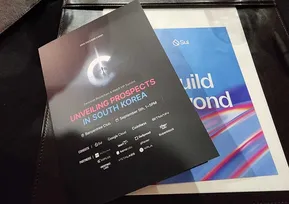
Blockchain Experts Gather at KBW 2023 Side Event to Discuss Future Prospects of South KoreaBlockchain experts from various corners of the industry converged to exchange insights on industrial and technological trends during “Unveiling Prospects in South Korea,” a side event affiliated with Korea Blockchain Week (KBW) 2023. This noteworthy gathering, co-hosted by Sui, Google Cloud, CoinNess, and Bitmain, took place on September 5 at Banyan Tree Club and Spa Seoul.Blockchain compatibility and Web3 adoptionAmong the distinguished speakers at the event, Derik Han, Head of APAC Partnerships at Mysten Labs, the team behind the layer-1 blockchain project SUI, discussed how the SUI project plans to enhance blockchain compatibility through a zero-knowledge (ZK) login feature, similar to single sign-on (SSO). SSO enables users to use a single set of login credentials to gain access to various applications.Han underscored the significance of reducing technical barriers for the widespread adoption of Web3 in our daily lives, and he pointed out that SUI’s ZK login feature would contribute to this goal. Additionally, Han shed light on SUI’s intention to add on-chain features highly favored among Korean gamers.Security tokens and RWAsJo Dong-hyeon, the CEO of Undefined Labs, a developer specializing in on-chain risk rating solutions, emphasized that the Korean decentralized finance (DeFi) market is poised for growth, driven by security tokens and real-world assets (RWAs). He highlighted the significant attention received by the Financial Services Commission’s announcement regarding guidelines for security token offerings (STOs) in February.Jo observed that tokens backed by real-world assets (RWAs) would serve as a bridge between the DeFi space and traditional financial markets, facilitating the development of the former. He also noted that this development would follow the pattern seen in the Korean cryptocurrency market whose liquidity has been supported by young investors.NFT ecosystemsMeanwhile, Kim Min-gu, Head of Web3 Business Development Lab at LG Uplus, a telecom company, expressed their commitment to expanding the Moono NFT ecosystem. This venture, anchored around their octopus character, intends to advance through collaborations with similar NFT projects like Lotte Homeshopping’s pink bear character, Bellygom. Kim highlighted that the company’s primary goal for this year is to make NFTs accessible even to customers who are unfamiliar with cryptocurrencies.Kim further explained that LG Uplus aims to delve into the differences between Web3 NFT communities and their Web2 counterparts. The company’s focus lies in improving the overall usability of its services, without narrowing down its target audience. They are particularly intrigued by the potential of wallets and decentralized applications (dApps) in this pursuit.Banks’ entry into the virtual asset landscapeFollowing this, Leem Min-ho, an analyst at Shinyoung Securities, predicted a strategic expansion by Korean banks, with an emphasis on offering digital asset custody services. This endeavor has been catalyzed by recent developments, including the introduction of security token guidelines in February and the passage of the Virtual Asset User Protection Act in June. These regulatory milestones are gradually shaping a more defined legal framework for virtual assets within South Korea. Leem went on to say that banks, known to favor engaging in business activities within established regulatory boundaries, are poised to concentrate their forthcoming initiatives on approved security tokens, ensuring compliance and adherence to regulatory standards.

news
Loading