Top

Indian Railways to issue NFT train tickets for world’s largest religious festival

Policy & Regulation·January 14, 2025, 6:20 AM

Indian Railways (IR), the state-owned manager of India’s railway network, plans to issue non-fungible token (NFT)-based train tickets to transport pilgrims to Maha Kumbh Mela, the world’s largest religious festival.


The Hindu festival is of particular significance given that it only occurs once every 144 years.


ChainCode Consulting partnership 

According to a report published by Indian news outlet Pune.news on Jan. 13, IR has collaborated with ChainCode Consulting, a Bangalore-headquartered enterprise blockchain development and consulting firm, to provide the digital tickets.


The Polygon blockchain has been chosen as the network upon which the NFT tickets will be minted. The tickets will then be made available to end users via NFTtrace, a real-world assets (RWA) tokenization and traceability platform run by ChainCode Consulting.
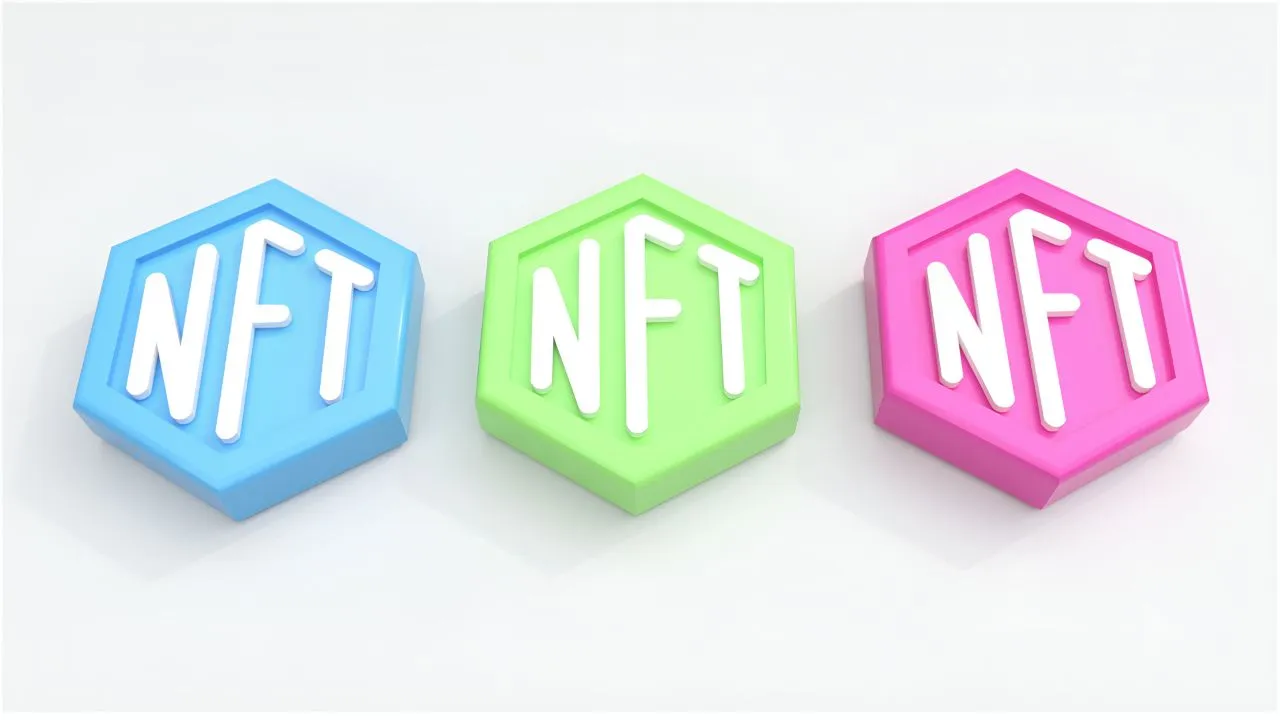
https://asset.coinness.com/en/news/11df152a596654ecf2194a2163635a99.webp
Photo by Choong Deng Xiang on Unsplash

Long-running collaboration

Service users and railway personnel will be free to check the validity of tickets on the public blockchain.


This announcement is just the latest installment of a long-running collaboration between ChainCode Consulting and IR. In March 2024, a similar project was pursued by both parties. On that occasion, the collaboration involved the release of a series of NFT tickets for use on a train line running from Lucknow, the capital of the Indian state of Uttar Pradesh, to the Indian capital, New Delhi. 


In that instance, NFTs were minted on the Hyperledger blockchain. A previous collaboration, earlier in 2024, saw NFTs minted on Polygon for digital tickets covering journeys to the sacred Hindu city of Ayodhya.


Commenting on the choice of Polygon relative to this latest collaboration, Alok Gupta, CEO of ChainCode Consulting, stated:


“By partnering with IRCTC and leveraging the Polygon blockchain, we are enabling a digital-first experience that complements the spiritual and traditional significance of the Mahakumbh while introducing a new level of engagement through NFTs.”


Polygon is an Ethereum ecosystem scaling network. With that, it has fast throughput and low gas fees and it's on this basis that it’s understood that Polygon was chosen in this instance. Aishwary Gupta, global head of payment and fintech at Polygon Labs, the key developer behind the Polygon blockchain, told Cointelegraph that public blockchains are playing an important role in doing away with middlemen and intermediaries. 


The Polygon Labs executive stated that at both state and central government levels in India, Polygon has been used on a number of projects. He added:


”With its low cost and high throughput, we are sure that the NFTs being issued around Maha Kumbh Mela would be yet another great success.”


$94 billion market opportunity

Ticketing remains one of the proposed use cases for blockchain technology that has the potential to gain traction. That potential hasn’t gone unnoticed by ticketing industry leader Ticketmaster. In 2023 the company rolled out token-gated ticket sales. The feature enables artists to reward fans who hold NFTs with access to exclusive pre-sale events, prime concert seating and many other incentives and rewards.


NFT technology offers a solution to a number of issues experienced within the events industry, including ticket scalping, fake tickets and security issues. The live events business is a $94 billion industry, underscoring the opportunity available to be exploited by innovative NFT-based ticketing startups.
 

More to Read
View All
Web3 & Enterprise·

Apr 20, 2023

Koscom Partners with LG CNS to Develop Joint Security Token Platform

Koscom, the technology subsidiary of the nation’s sole securities exchange operator Korea Exchange, has partnered with LG CNS, an information technology service provider, to launch a joint security token platform, according to a Koscom announcement. Task and tech allianceThe collaboration between Koscom and Korean conglomerate LG Group’s affiliate aims to gain a competitive advantage in the increasingly crowded security token market. On Monday, Koscom signed a memorandum of understanding with LG CNS in Seoul to form a task and technology alliance for security token projects.The partnership will combine Koscom’s expertise in building tech-based capital market infrastructure with LG CNS’s blockchain technology to produce fruitful outcomes. The joint project intends to provide distributed ledgers and a joint platform for the issuance and distribution of security tokens. Securities firms operating their own platforms can also choose to use its distributed ledgers. Koscom’s preparationSince last year, Koscom has been conducting research in security token offering and has formed a working group with eight securities firms that have their own security token teams. The working group has been hosting seminars regularly since the second half of last year, and on April 4, Koscom revealed its project plan to 25 other Korean securities firms. LG CNS’s readinessLG CNS has been conducting research and development of security token technologies since last year and has complied with the Korean regulatory framework. The company manages a consortium blockchain network and has completed the development of key technologies for security token services, such as highly secure wallets.Using its corporate blockchain platform Monachain, LG CNS has achieved success in developing multiple projects, such as a pilot for central bank digital currencies involving NH Bank and Woori Bank and a non-fungible token (NFT) trading system for Bithumb Meta, a subsidiary of the major Korean crypto exchange Bithumb.Meanwhile, Koscom will support security token projects of not only securities companies but also fractional investment firms and banks. Currently, Koscom is in talks with relevant entities about building infrastructure.

news
Policy & Regulation·

3 days ago

U.S. seizes web domains tied to Burma-based crypto investment fraud ring

The U.S. Department of Justice said on Dec. 2 that it had seized the web domain tickmilleas.com, which was used to facilitate cryptocurrency investment fraud (CIF) schemes, adding to two others seized last month as part of actions against the same Burma-based network. According to the announcement, the domains were operated by scammers based in Kyaukhat, Burma, who presented the site as a legitimate investment platform in order to solicit deposits from victims.Photo by Markus Spiske on UnsplashPromises of high returns as baitVictims who reported the activity to the Federal Bureau of Investigation (FBI) indicated that the recently seized website displayed fabricated investment returns and showed purported deposits credited to their online accounts. These figures appeared during guided walkthroughs of falsified trades, creating the appearance of a functioning platform. The Justice Department said the domain seizures are among the first actions taken since it established its first district-level CIF strike force, known as the Scam Center Strike Force, three weeks earlier. The unit operates under the U.S. Attorney’s Office for the District of Columbia. According to the DOJ, the group behind the scheme is known as the Tai Chang scam compound. The network is described as being affiliated with the Democratic Karen Benevolent Army (DKBA) in Burma, Trans Asia International Holding Group Thailand Company Limited, and other entities. The U.S. Treasury listed these parties as specially designated nationals on Nov. 12, citing their ties to Chinese organized crime and their involvement in developing scam hubs across Southeast Asia. Russia probes crypto briberyWhile the U.S. case focused on fraud targeting individual investors, a separate development in Russia involved alleged corruption tied to cryptocurrency. DL News, citing a local media report, said Russian prosecutors are seeking to seize a portfolio of luxury assets linked to Georgy Satyukov, a fugitive former employee of the Ministry of Internal Affairs, after investigators concluded he had accepted illicit payments in Bitcoin and Ethereum, described as the world’s largest cryptocurrencies. Russian authorities allege that between March and October 2021, Satyukov received $184 million in Bitcoin and $30 million in Ethereum from operators of the failed WEX crypto exchange in return for shielding them from a criminal investigation. WEX had taken over the operations of the BTC-e trading platform in 2017. Investigators say Satyukov liquidated much of his cryptocurrency holdings and used the proceeds to purchase residential and commercial properties in several cities, as well as high-end cars, luxury watches, and jewelry. They have identified $29.6 million in assets believed to be linked to the alleged bribes, which could be transferred to the Federal Treasury if prosecutors win a conviction. The U.S. domain seizures and the separate corruption investigation in Russia illustrate the varied ways cryptocurrency has been implicated in recent criminal cases. Both developments underscore the continued attention authorities are giving to the risks surrounding digital assets. 

news
Web3 & Enterprise·

Mar 08, 2024

The Seoul AI Innovation Tour 2024 comes to an end, sharing insights on digital finance

The Seoul AI Innovation Tour 2024 – scheduled from March 5 to 7 – came to an end yesterday, Korean media outlet ETNews reported. Under the theme of “Navigating the Future: Unveiling Seoul’s Prowess in AI Innovation,” the event highlighted Seoul’s potential as an AI technology hub and facilitated discussions on global cooperation to foster the Asian fintech and digital asset industry.  The event was jointly hosted by the Korea Fintech Industry Association (KFIA) and The Asian Banker, a Singapore-based consultancy in finance and banking services. Several major Asian banks and fintech industry insiders attended the event, including officials from Permata Bank in Malaysia and Bank SinoPac in Taiwan. Photo by Headway on UnsplashLee Keun-ju, President of the KFIA, stated in his opening speech that cutting-edge technologies such as AI will further accelerate innovation in financial services. He also emphasized how the Korean financial and fintech industry developed at a breakneck speed over the past decade, introducing the landscape of the Korean fintech industry to bank officials.  Sharing insights on fintech and digital asset industry In the initial session, KFIA officials delivered speeches on the current financial environment of Korea and the association’s contributions to the local fintech industry. The following discussions revolved around development strategies for the fintech industry and collaborative efforts between the association and government institutions. In the later part of the event, leading local fintech insiders discussed the outlook of the security token offering (STO) and digital asset industry, sharing strategies to broaden their businesses to overseas markets. 

news
Loading