Top

Trump social media post fuels crypto stock rally in Asia

Policy & Regulation·March 05, 2025, 7:59 AM

Asian stocks related to the digital assets sector recorded hefty gains on March 3, in what was a reaction to a social media post published by U.S. President Donald Trump on Sunday.
https://asset.coinness.com/en/news/83bec574673c456457eef4c1bb1e023e.webp
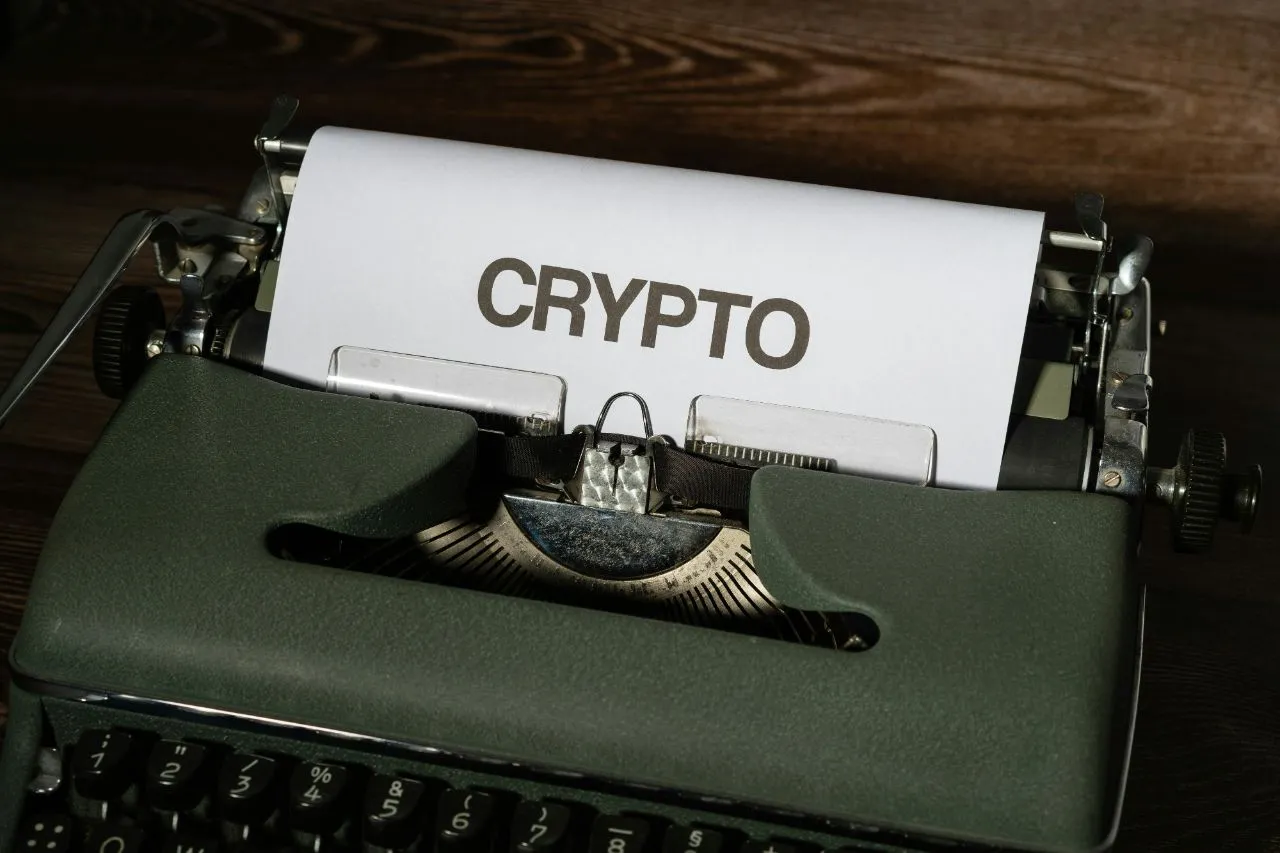
Photo by Markus Winkler on Unsplash

Crypto Strategic Reserve

The U.S. president took to Truth Social, a social media platform owned by Trump Media & Technology Group, to state that “A U.S. Crypto Reserve will elevate this critical industry after years of corrupt attacks by the Biden administration.”


Trump added that an Executive Order (EO) that he had issued recently was related to digital assets, directing a recently-formed Presidential Working Group to move forward on the development of a Crypto Strategic Reserve. Trump went on to outline that this reserve would include crypto assets such as XRP, Solana (SOL) and Cardano (ADA). 


The post fueled double-digit percentage increases for all three assets. However, it also had an impact on specific stocks listed on Asian markets.


Shares in Metaplanet, Japan’s first and as yet only Bitcoin treasury company, closed 21% higher in Tokyo on Monday. The stock surged from its previous trading day close of 3,310 yen to close at 4,010 on Monday.


Shares of Japan's Metaplanet closed up 21.15% on Monday, surging to 4,010 yen from the previous close of 3,310 yen within the first hour of trading upon opening. The company also announced on Monday that it had acquired an additional 156 BTC ($13.4 million) to expand its total holdings to 2,391 BTC.


Potential U.S. listing for Metaplanet

The company had some developments of its own that may have contributed to the rise in the Metaplanet share price. In a statement published by the company on March 3, it announced that it had purchased an additional 156 Bitcoin.


The latest tranche of Bitcoin was purchased at an average price of $85,890. This brings the company’s overall Bitcoin holding to 2,391 Bitcoin.


Metaplanet CEO Simon Gerovich posted on X that Metaplanet is “considering the best way to make Metaplanet shares more accessible to investors around the world.” Gerovich made that comment in the context of having explained that the firm was formally invited by the New York Stock Exchange (NYSE) and the Nasdaq to visit so that they could introduce their platforms.  


While the Metaplanet CEO is not confirming a U.S. stock listing for the company, it appears that it is something that the firm is considering.


Boyaa stock price rise

Boyaa Interactive, a Chinese online gaming company that is also the largest publicly listed holder of Bitcoin in Asia, also saw its stock surge on Monday. The company’s stock, which is listed on the Hong Kong Stock Exchange, rose 23%, closing at HK$4.17. The company confirmed that over the weekend, it added an additional 100 Bitcoin to its treasury, bringing its overall Bitcoin holding to 3,350 BTC.


Beijing-headquartered OKG Tech, a blockchain technology firm, also experienced a surge in its Hong Kong-listed stock, which rose by over 42% on Monday.


Ki Young Ju, CEO of Seoul-headquartered on-chain analytics firm CryptoQuant, warned on X that the crypto market “is increasingly becoming a weapon of the United States.” He added that “coins serving U.S. national interests are likely to work against every country except the United States.”

More to Read
View All
Policy & Regulation·

Jul 27, 2023

Ripple and the Republic of Palau Collaborate to Mint First PSC Stablecoin

Ripple and the Republic of Palau Collaborate to Mint First PSC StablecoinIn a groundbreaking partnership, the Republic of Palau has teamed up with Ripple Labs to introduce its inaugural stablecoin, the Palau Stablecoin (PSC).This occasion was shared by Jay Hunter Anson, the Director of Palau’s Digital Residency Program and a member of Palau’s Ministry of Finance, who took to Twitter on Wednesday to shed light on the collaboration between the Palau National Treasury and Ripple Labs.The event unfolded at the National Capitol in Ngerulmud, Palau, where representatives from both the Palau National Treasury and Ripple gathered to celebrate the successful launch of the Palau Stablecoin. Anson emphasized that this marks a significant step in their joint exploration of the stablecoin’s potential use cases within the Micronesian island nation.Photo by Kanchanara on UnsplashReducing payment costsPalau’s Ministry of Finance initiated the Stablecoin project to address specific needs within the nation’s financial landscape. By sponsoring this project, the ministry aims to reduce payment costs within the Republic of Palau and enhance access to financial services, especially for underserved communities and various socio-economic groups, utilizing digital solutions.Notably, the Palau Stablecoin operates on the XRP Ledger (XRPL), demonstrating Ripple’s technology as the backbone of this financial initiative.Anson’s tweets also shed light on the meticulous approach taken in developing the Palau Stablecoin. Controlled and limited PSC pilot tests have been conducted to assess the effectiveness and efficiency of the solution co-designed with Ripple. These pilot experiments provide valuable insights into the stability and usability of the Palau Stablecoin before its potential public release.Extensive testingAlready, the Palau Stablecoin pilot program has seen volunteer users actively participating in the testing phase. Videos shared by Anson on Twitter showcased smooth transactions at partner vendors in Palau, promptly confirming the transaction receipts.The successful implementation of the Palau Stablecoin pilot program has drawn attention from the XRP community, and anticipation is building for the official joint press release scheduled for July 27, Thursday morning in Ngerulmud, Palau, as Anson revealed.The collaboration between Ripple and the Republic of Palau was initiated at the end of 2021, with launch originally scheduled to take place in 2022. Ripple has claimed to be in dialogue with in excess of twenty governments relative to enabling central bank digital currency (CBDC) issuance.Given that the island state lacks a functioning central bank and the US dollar is recognized as the primary medium of exchange throughout the country, the creation of a USD-backed stablecoin is a significant achievement resulting from the national stablecoin initiative. The president described this as a “step towards our own central bank digital currency.”There has been plenty of activity in Micronesian nations relative to cryptocurrency in recent times. Tonga is understood to be considering introducing bitcoin as legal tender. The Marshall Islands is considering issuing a CBDC although it is being discouraged by the International Monetary Fund (IMF) in that endeavor. Meanwhile, the government of Vanuatu announced its support for the Satoshi Island project.With a strategic focus on addressing financial needs and enhancing accessibility within Palau, this partnership sets the stage for a new era of digital financial solutions for the Micronesian nation.

news
Web3 & Enterprise·

Dec 27, 2023

Blade Entertainment partners with Cardo to venture into tokenized securities industry

South Korean entertainment production company Blade Entertainment has signed a memorandum of understanding (MOU) with Cardo, a firm specializing in custodial services for digital assets, to start a tokenized securities business, according to local news outlet Newspim on Wednesday. Blade Entertainment revealed plans to leverage its IP and content distribution rights to issue fractional investment-based tokenized securities based on underlying assets like waste landfills, electroceuticals and digital therapeutics.Photo by Verne Ho on UnsplashForging the future to tokenized securities"We will do our best to become a leader in tokenized securities by securing various underlying assets and building technology to facilitate valuation modeling for those assets," said Choi Young-in, head of the STO (security token offering) department at Blade Entertainment. "Through this agreement, we will cooperate in multiple ways with Cardo, who has expertise in blockchain and an understanding of financial products, to list our tokenized securities on the Korea Exchange’s (KRX) new securities market."  This market refers to an on-exchange market for new securities based on fractional investments that was recently designated by the South Korean Financial Services Commission (FSC) as a service under the financial regulatory sandbox system, according to a press release on Dec. 13.  The regulatory sandbox is a system run by the Korean government that exempts or suspends existing regulations for a designated amount of time for companies releasing new products and services and regulates them post-mortem if there is a problem.  Strategic collaborationBlade Entertainment said that it sought out Cardo – whose investors include one of South Korea’s major banks Nonghyup Bank – as a business partner to carry out this endeavor due to its accumulated knowledge and expertise in the blockchain sector. Cardo has also previously demonstrated its capabilities in the security token business by providing fintech solutions to financial service firm Galaxia Moneytree. "Currently, due to issues with the valuation of token securities, it is not easy for businesses in this area to operate smoothly, but we plan to issue and distribute tokenized securities of various assets soon," said Sohn Kyung-hwan, CEO of Cardo. "Based on the know-how we’ve accumulated from the two contracts we signed this year agreeing to supply security tokens platforms, we will actively help Blade Entertainment with the planning, design and platform construction of their security token venture to help establish a successful service."

news
Policy & Regulation·

Oct 31, 2023

Terraform Labs Co-Founder Daniel Shin Denies Wrongdoing in LUNA Collapse

Terraform Labs Co-Founder Daniel Shin Denies Wrongdoing in LUNA CollapseShin Hyun-seong, popularly known as Daniel Shin, has refuted accusations against him related to the $40 billion collapse of the stablecoin TerraUSD and its companion token, LUNA, according to a report by local news outlet Newspim. He presented this defense during his initial trial at the Seoul Southern District Court on October 30 (local time).Shin co-founded Terraform Labs, the company responsible for issuing TerraUSD and LUNA. His co-founder, Do Kwon, is currently serving a four-month prison sentence in Montenegro for passport forgery.Photo by Tingey Injury Law Firm on UnsplashProsecution’s allegationsKorean prosecutors allege that since 2018, Shin and his colleagues have concealed the fabricated nature of the “Terra project.” By manipulating trades and releasing misleading information, they purportedly misled investors into thinking the project was successful. It’s believed they sold off their tokens before the LUNA crash in May 2022, earning KRW 462.9 billion ($343.3 million) from these activities. They are suspected of personally taking KRW 376.9 billion from this amount.Prosecutors are focusing on Shin as the potential orchestrator of the LUNA crash. They speculate he began selling LUNA tokens around when Terraform Labs launched the Anchor Protocol in March 2021. This DeFi protocol increased the popularity and value of LUNA tokens. Before the crash, Shin is alleged to have gained at least KRW 154.1 billion.Defense argumentHowever, Shin’s legal team countered by asserting that Shin had cut ties with Kwon in 2020. They argued the decline of TerraUSD and LUNA was due to Kwon’s mishandling of the Anchor Protocol and an external attack, neither associated with Shin. Regarding the exploit, Terraform Labs has pursued legal action in the United States Southern District of Florida, claiming that American market maker Citadel Securities played a part in undermining TerraUSD in May 2022.Defending Shin, his lawyers emphasized that at the inception of the Terra project, there were no legal guidelines specifically for cryptocurrency transactions. Additionally, unlike Do Kwon who kept fleeing abroad, Shin willingly came back to Korea and has been cooperating with the investigation. They also noted he received only 32% of the 70 million LUNA tokens initially promised. Regarding classification, they stated LUNA isn’t legally recognized as a security.Shin’s lawyers further argued the prosecution hasn’t clearly identified victims or adequately outlined the components of fraud in this case. They said the prosecution’s case hinges on viewing LUNA as a security. However, Shin’s legal representatives maintained that under the Korean Capital Markets Act, LUNA isn’t a security, making its trades non-fraudulent.To counter a US court ruling the prosecution presented — that a token is a security — Shin’s defense highlighted that the verdict is from a lower court and remains contested. Earlier, prosecutors had cited a ruling from the United States Southern District Court of New York, which classified the XRP tokens sold to institutional investors as securities.

news
Loading