Top

Coins.ph Suffers 12M XRP Exploit

Policy & Regulation·October 24, 2023, 12:15 AM

Coins.ph, a leading cryptocurrency exchange in the Philippines, is grappling with the alleged loss of over 12 million XRP tokens, valued at $6 million, in a purported exploit.

That’s according to various reports that have been emerging from the Philippines in recent days. The incident not only spotlights serious questions about the security protocols and regulatory oversight of crypto exchanges in the Philippines but it also sparked fears of an impact on market sentiment relative to the XRP unit price.
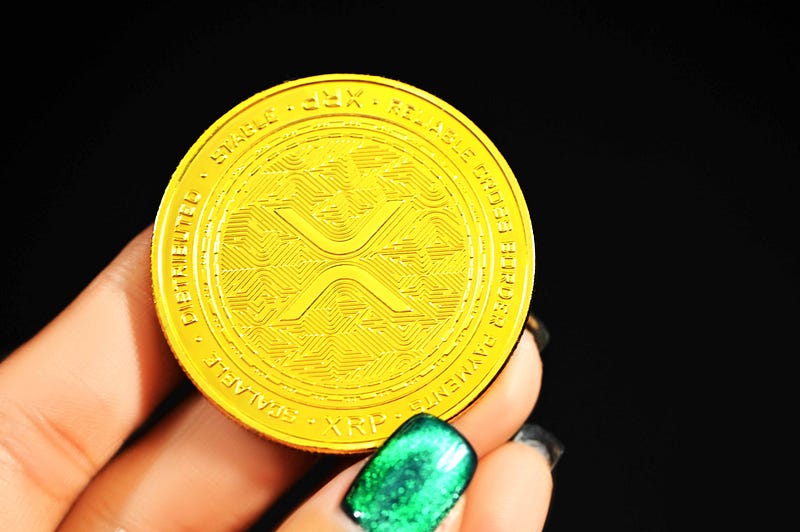
Photo by Kanchanara on Unsplash


Hacker used various platforms

The reports revealed that an exploit targeted Coins.ph, resulting in the unauthorized transfer and exchange of 12 million XRP tokens in a mere 30 minutes. The hacker behind this incident managed to navigate through various platforms, including OKX, WhiteBIT, OrbitBridge, SimpleSwap, ChangeNOW, and Fixed Float, leaving users and investors alarmed.

Coins.ph’s wallet, the focal point of the exploit, has a connection to BitGo, a California-based crypto custody firm, which initiated its activation back in 2018. At present, neither Coins.ph nor BitGo has issued any official statements regarding this reported breach.

The alleged exploit brings to the forefront once again, the importance of robust security protocols and regulatory oversight within the cryptocurrency industry in the Philippines and elsewhere. Coins.ph is a major player in the crypto sector in the Southeast Asian country, having more than 10 million users.

The hacker responsible for the exploit attempted to execute several transactions, trading nearly 13 million XRP tokens, with one transaction seemingly failing to go through. Following the successful acquisition of approximately 12.2 million XRP tokens, the hacker swiftly moved these assets to different exchanges.

Responding to the incident, some platforms promptly blocked or marked the stolen XRP tokens and sought assistance from blockchain analysis firms such as Cristal and Chainalysis. This exploit is being deemed as one of the most substantial thefts of XRP tokens in recent history.

It’s understood that WhiteBIT blocked the movement of some of the XRP that has been implicated in the hack. WhiteBIT told The Block: “WhiteBIT, as soon as received a request from the Philippines-based exchange Coins, promptly reacted and blocked 445,000 Ripple.”


XRP impact

XRP, the native cryptocurrency of the Ripple network, which primarily focuses on facilitating cross-border payments, has been grappling with its price stability in recent times. This has been largely due to the ongoing legal disputes between Ripple and the US Securities and Exchange Commission (SEC) over allegations of conducting unregistered securities offerings.

While it had been speculated initially that the hack would have impacted the XRP unit price, XRP seems to have held up well. At the time of writing, it was trading at $0.526. There has been an overall uplift in the crypto market as a whole over the course of the past 24 hours which may be a contributing factor, with digital asset market cap being up 2.7%.

As the crypto community waits for official responses from Coins.ph and BitGo, the incident serves as a stark reminder of the importance of safeguarding digital assets and enhancing regulatory oversight in an industry that continues to evolve and expand.


More to Read
View All
Web3 & Enterprise·

Aug 10, 2023

Parameta and Solbric Korea to Create First Solar Power Plant Security Token Platform in Korea

Parameta and Solbric Korea to Create First Solar Power Plant Security Token Platform in KoreaSouth Korean blockchain company Parameta (formerly known as Iconloop) said Tuesday it entered a business deal with Solbric Korea, a subsidiary of solar energy innovation company Next Solar Energy, to jointly establish the country’s first solar power plant security token platform that allows investors to make fractional investments in solar energy.Photo by Nuno Marques on UnsplashReceiving approval as an innovative financial serviceIn order to establish such a platform that designates solar power plants as underlying assets, they will jointly apply for a financial regulatory sandbox — a program introduced by the Korean government that offers a special and provisional regulatory exemption for financial services that have been recognized for their innovativeness.Once the platform is recognized under the sandbox as an innovative financial service, the two companies will work together on the issuance and distribution of security tokens.Expanding opportunities to invest in solar energyUltimately, Solbric aims to build a platform that brings security token technology to the solar power sector, which, until now, has presented limited investment opportunities for individual investors in Korea. It will allow them to trade securities and make small-scale, fractional investments in solar power plants.To do so, Solbric intends to leverage the knowledge and expertise of its parent company, Next Solar Energy — an experienced veteran in the solar plant industry.As its partner, Parameta will provide the necessary blockchain technology for constructing and managing the platform based on its security token offering service, Parameta S. This service uses tokens to allow fractional management of real-world assets (RWAs), making it easy to invest in and organize them. This offers more liquidity and flexibility compared to traditional investment methods.“We will focus on providing investment returns to platform users as well as the unique experience of owning various solar power plants,” said Kang Jae-won, the CEO of Solbric Korea.Increased institutional supportThis project is made possible by the recent upturn in institutional support from Korean financial authorities that allows more security token offerings. Last month, the Korean Financial Services Commission ultimately granted regulatory exemptions to several fractional investment firms that have successfully completed the business reorganization as requested by the regulator. The Financial Supervisory Service has also decided to allow fractional investment businesses to apply for investment contract securities.Taking advantage of this momentum, Solbric and Parameta plan to continually explore diverse business opportunities to establish their platform.“We are currently working with various specialized companies, including Solbric, to expand our security token businesses in various fields such as solar power plants, mobility, real estate non-performing loans, carbon emission rights, and electric vehicle batteries,” said Kim Jong-hyup, CEO of Parameta.

news
Policy & Regulation·

May 03, 2023

VCs Say US Crypto Crackdown Opportunity for Asia

VCs Say US Crypto Crackdown Opportunity for AsiaA couple of Hong Kong-based venture capitalists told Bloomberg TV in an interview that aired on Tuesday that the current crypto crackdown in the United States is a boon for Asia and particularly for Hong Kong in establishing itself as a global crypto hub.© Pexels/lalesh aldarwishMartin Baumann, Managing Partner and Co-Founder of CMCC Global, one of Asia’s first VC funds focused purely on blockchain and crypto, said that “Hong Kong has always been a financial capital of Asia and we believe in this location.”Golden opportunityWhile the fund has a global mandate, it believes that investor focus is shifting away from North America towards Asia. Baumann’s colleague, CMCC Global Managing Partner and Co-Founder Charlie Morris said that “the US has been quite negative from the regulatory perspective and it really seems to us that the US is shooting itself in the foot with a machine gun.”Morris elaborated, stating that the US crypto crackdown is handing a golden opportunity to other world regions to lead on blockchain and crypto. Baumann chimed in to clarify that one third of all blockchain equity deals are currently being done in Asia. He maintains that most of the investment community in the West doesn’t appreciate the extent to which capital is being committed into the space by Asian entities.Morris expanded further: “We see places like Hong Kong having a real opportunity at this point in time to bring those firms and entrepreneurs to the city.”Launching $100M blockchain fundAgainst that backdrop CMCC Global is launching a $100 million fund, where funding will be allocated to blockchain projects. Specifically the duo are targeting crypto and blockchain firms at Series A and Series B funding stages. Baumann believes that in tandem with the fact that there’s a lot of innovation emerging in Asia, “there’s plenty of capital sitting on the sidelines waiting for the right entry valuations to pull the trigger.”While Baumann and Morris are majority stakeholders in CMCC Global, the Winklevoss twins (Cameron and Tyler Winklevoss) also have an equity stake in the business. Founders of the Gemini crypto exchange platform, they are investors alongside Hong Kong based Richard Li, who has a net worth estimated to be in the region of $4.6 billion.VC investment into crypto slowed down considerably since the onset of the most recent crypto winter. However, that activity has still been ongoing, something that is entirely different to the 2018 bear market when investment came to a complete standstill. In April, CMCC partnered with Switzerland-based Syz Group with the objective of establishing a funding vehicle with a minimum $50 million fund earmarked for crypto-centric hedge fund investment.Meanwhile, in speculating on the prospects of bitcoin, the CMCC duo expressed the view that double digit gains are well within reach. Morris envisages a Bitcoin unit price of $40,000 in 2023. From a long term perspective the CMCC co-founder suggested that “I can easily see us breaking all time highs and easily breaking $100,000 for bitcoin.”

news
Policy & Regulation·

Dec 26, 2023

Japanese cabinet approves crypto tax reform

Japanese cabinet approves crypto tax reformThe Japanese government has green-lit an amendment to its fiscal 2024 tax reform plan, specifically targeting the taxation of companies holding third-party-issued cryptocurrencies.Photo by Louie Martinez on UnsplashIntroducing tax exemptionAccording to local news sources, this amendment brings about a crucial change by exempting such companies from the year-end mark-to-market valuation tax.The Fiscal Year 2024 Tax Reform Outline, now approved by the Japanese cabinet, marks a departure from the previous tax regime. Under the new framework, companies holding crypto assets will no longer be subjected to mark-to-market valuation at the end of the fiscal year. Instead, they will be taxed solely on the actual profits realized from the sale of virtual currencies and tokens.Alleviating the tax burdenThe primary motivation behind this amendment is to alleviate the tax burden on corporations engaged in the holding and operation of crypto assets. Previously, corporations holding third-party-issued cryptocurrencies were required to record profits or losses based on the difference between market value and book value at the end of the fiscal year. The new reform, however, exempts assets assumed to be held continuously from this mark-to-market valuation.News of moves to implement such reform emerged at the beginning of December. At the time, a report by Nikkei Asia suggested that Japanese lawmakers were working towards addressing issues related to crypto taxation. Japanese regulator, the Financial Services Agency (FSA) had first proposed such changes to the tax code via a 16-page submission on Aug. 31.Signaling investor-friendly approachThis policy shift aligns the taxation of companies with the tax system applicable to individual investors, signaling a more investor-friendly approach. Lawmakers from the Liberal Democratic Party and their coalition partner Komeito had reportedly considered a proposal to exempt corporations from taxes on unrealized crypto gains. This move is seen as Japan’s effort to boost liquidity in the market, putting it in line with other Asian regions striving to become prominent centers of crypto activity.The amendment, influenced by the Japan Cryptoasset Business Association’s (JCBA) call for tax reform, is anticipated to stimulate the growth of local startup businesses utilizing blockchain technology and attract international projects to the Japanese market.The proposal is set to be presented at the regular session of the National Diet (Japan’s national legislature) in January of the upcoming year, where it will require approval from both the House of Representatives and the House of Councilors.Notably, the Fiscal Year 2024 Tax Reform Outline encompasses a broader spectrum of economic policies, including a plan to reduce income tax and resident tax by 40,000 yen per person from June 2024 onwards.News of the crypto tax reform has been well-received by most industry commentators and market participants. Daiki Moriyama, Director of Singapore-based gaming blockchain project Oasys, reacted positively to the development. He told The Block:“The fact that the Japanese government has demonstrated its willingness to grow Web3 business by enacting tax reform for the second year in a row is extremely important to all Web3 business stakeholders around the world.”

news
Loading