Top

Ripple Exec: Clear Regs Helped Japanese Market Withstand Crypto Winter

Policy & Regulation·April 26, 2023, 1:39 AM

Emi Yoshikawa, the Vice President of Strategy & Operations at business-focused crypto solutions provider Ripple, has attributed the Japanese cryptocurrency market’s ability to withstand the recent crypto winter to well-defined regulations.
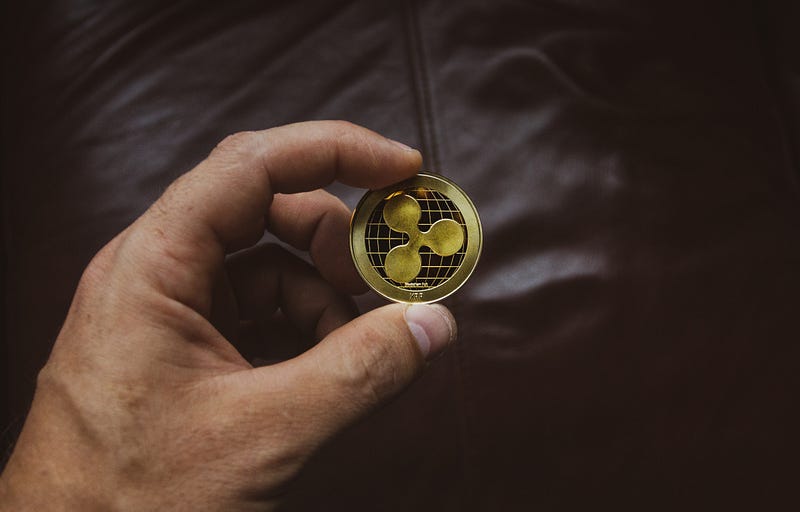
Ripple coin
©Pexels/Worldspectrum


Security breach at Mt.Gox

In a recent interview with Korean blockchain media outlet Digital Asset, Yoshikawa noted that Japan implemented regulations on cryptocurrencies earlier than other countries, in part due to the 2014 security breach at the Tokyo-based Bitcoin exchange Mt.Gox that resulted in investor losses.

The Mt.Gox exploit prompted revisions to the Payment Services Act, which now recognizes cryptocurrencies as a means of payment. Furthermore, the Financial Instruments and Exchange Act was revised in 2020 to give security tokens the same status as stocks. The Japanese government is also exploring the possibility of allowing the domestic circulation of foreign stablecoins.

Although it took several years for companies to enter the market after the regulatory framework was established, the security token market has since expanded, with more businesses now participating.

Yoshikawa credited the Japanese crypto market’s resilience during the recent global crypto winter to clear regulatory guidelines. The recognition of cryptocurrencies as financial instruments enabled the regulation of not only spot trading but also derivatives trading. Japanese exchanges are also required to hold customer funds separately in trust firms, ensuring investor protection. This regulatory environment allowed companies and investors to confidently enter the crypto industry last year.


FTX Japan

FTX Japan’s return of customer assets and resumption of withdrawals in February showcased the effectiveness of these clear regulatory guidelines. Among subsidiaries of the now-defunct crypto exchange FTX, FTX Japan is the only one to have returned customer assets thus far, Yoshikawa emphasized.

While crypto regulations in some areas, such as taxation, remain insufficient, both the Japanese government and entrepreneurs agree that the Web3 industry should develop in a way that benefits the nation’s economy.


Ripple’s projects in Japan

Yoshikawa said that Ripple views the Japanese market as one of its key markets. In 2016, the company formed a joint venture, SBI Ripple Asia, with Japanese financial group SBI Holdings. Through this partnership, Ripple collaborated with several Japanese financial institutions to launch RippleNet and provide liquidity to the payment service.

Japan’s largest remittance technology firm, SBI Remit, has adopted RippleNet and Ripple’s own remittance system On-Demand Liquidity (ODL) to facilitate real-time payments between Japan and Southeast Asian nations. Yoshikawa underlined that Ripple is committed to supporting Southeast Asian workers in Japan who need swift and cost-effective international payments.


More to Read
View All
Web3 & Enterprise·

Nov 21, 2023

NEOPIN and Sevenline Labs collaborate to boost Web3 gaming expansion

NEOPIN and Sevenline Labs collaborate to boost Web3 gaming expansionCentralized decentralized finance (CeDeFi) protocol NEOPIN has entered into a partnership with Sevenline Labs, a Korea-based company specializing in blockchain solutions. This collaboration is aimed at fostering expansion in the Web3 gaming ecosystem.Photo by Alicia Christin Gerald on UnsplashGames of different genres and platformsSevenline Labs is currently operating a Web3-powered esports tournament platform called Miracle Play. Leveraging application programming interfaces (APIs), the platform offers games of different platforms of genres on blockchain networks. It enables mobile, desktop, console and Web3 gamers to engage in diverse tournaments and earn rewards from competitions.Sevenline’s inaugural service, operating on the Polygon Network, has successfully completed a closed beta test specifically targeted at Indonesian communities. Currently, the company is in the process of conducting an open beta test. Looking ahead, Sevenline is planning to extend its support to various chains compatible with Ethereum virtual machines (EVMs). This expansion includes notable blockchain platforms such as Avalanche, Binance Smart Chain, Oasys, Solana and Klaytn. The ultimate objective of Sevenline is to orchestrate large-scale tournaments between different mainnets, with each of them representing a distinct faction.Through the collaboration between NEOPIN and Sevenline Labs, NEOPIN’s global partners will introduce their Web3 games to the Miracle Play platform. This move allows users to voluntarily host and participate in various tournaments, thereby enhancing the visibility and popularity of these games. Concurrently, Web3 gaming companies that have formed partnerships with Sevenline will be incorporated into the NEOPIN ecosystem.Native tokens to be supportedThe integration of the NEOPIN wallet with Miracle Play is a strategic move that aims to attract a global user base, particularly those who have completed Know Your Customer (KYC) and Anti-Money Laundering (AML) checks. This strategy presents a win-win scenario for both NEOPIN and Miracle Play. NEOPIN benefits by gaining access to a dedicated community of Web3 gamers who will actively organize and partake in tournaments on the Miracle Play platform. In return, Miracle Play taps into the decentralized finance (DeFi) user base associated with NEOPIN. Furthermore, both platforms plan to support their native tokens — the NEOPIN (NPT) token and the Miracle Play (MPT) token in the future.Ethan Kim, CEO of NEOPIN, expressed that the partnership will be beneficial in three aspects: attracting Web3 gaming partners, acquiring mutual users and expediting the adoption of the Web3 gaming ecosystem. He emphasized NEOPIN’s commitment to accelerating the global expansion of the NEOPIN ecosystem through these strategic efforts in promoting the Web3 gaming sector.

news
Policy & Regulation·

Feb 21, 2024

Regulatory clarity spurs traditional brokerages’ interest in Hong Kong

In less than a year since Hong Kong regulators gave the green light to crypto exchanges, there's been a noticeable surge of interest among traditional financial institutions and brokerages eager to secure their digital asset licenses for trading.Photo by Florian Wehde on UnsplashTiger BrokersTiger Brokers, a Beijing-headquartered one-stop trading brokerage with nine million international customers, offers one such example. The firm upgraded its Type 1 Hong Kong Securities & Futures Commission (SFC) license in January to include crypto trading for professional investors and financial institutions based in Hong Kong. The move followed an uptick in interest from mainland China-based firms in Q4, 2023.In a recent interview with Cointelegraph, John Fei Zeng, the CFO and director of Tiger Brokers, revealed that the firm currently boasts 865,500 funded accounts in Hong Kong, managing $18.9 billion in assets. Zeng stated: "Residents of Hong Kong will be able to trade virtual assets such as Bitcoin and Ethereum alongside stocks, options, futures, funds, and ETFs [Through Tiger Trade]." He explained that as part of the firm's expansion plans, additional digital assets will be evaluated. HKMA guidance on crypto custodyAs a testament to the regulatory clarity that has attracted firms like Tiger Brokers, on Tuesday Hong Kong's central bank issued guidance for authorized institutions interested in offering custody services for digital assets. The Hong Kong Monetary Authority (HKMA) outlined comprehensive risk assessment procedures and emphasized the importance of robust policies, oversight, and resource allocation to manage custodial activities effectively. Notably, the HKMA's guidance seeks to address concerns stemming from recent industry mishaps, including the collapse of FTX, Terra and Three Arrows Capital (3AC), by mandating stringent safeguards to protect clients' digital assets from theft, fraud or misappropriation. Key requirements include independent systems audits, secure storage practices and transparent record-keeping, underscoring the regulator's commitment to fostering trust and stability in the digital asset ecosystem. Victory SecuritiesIn a similar move to that of Tiger Brokers, Victory Securities, another Hong Kong brokerage, secured a license from the SFC last November to offer crypto trading services for retail investors. The company reported a significant surge in virtual asset transactions and new customer acquisitions, prompting plans to introduce trading discounts to incentivize compliant and safe virtual asset trading services. Moreover, OSL, a licensed Hong Kong crypto exchange, joined forces with Interactive Brokers in November 2023, enabling the latter to offer bitcoin and ether trading to retail investors through its platform. Further underscoring the evolving regulatory landscape, crypto exchange Bybit submitted a retail trading license application in Hong Kong, indicative of the sector's continued growth and maturity. Nevertheless, navigating the regulatory framework isn't without its challenges. Web3 firms eyeing Hong Kong may need to invest up to $25 million in corporate infrastructure and compliance to secure licensing approval, reflecting the stringent requirements imposed by regulators. As Hong Kong continues to refine its regulatory framework and enhance investor protections, the stage is set for further collaboration between traditional financial institutions and emerging crypto players within the Chinese autonomous territory.

news
Web3 & Enterprise·

Jan 03, 2024

SBI and TradeFinex establish 'SBI XDC Network APAC'

Japanese financial services company SBI Holdings has successfully established "SBI XDC Network APAC" in Japan, following through on an intended joint venture with TradeFinex, the driving force behind the XDC Network.Photo by William Warby on UnsplashJV company formationAt the end of September, the two companies outlined the starting point of an intended collaboration. Only three months later, SBI has come back with an update, a press release published on Dec. 27, to detail the progress that has been made thus far. According to that document, the companies established joint venture corporate entity SBI XDC Network APAC Co. Ltd. on Dec. 18. Among the directors of the new company is the President of BITPoint Japan, a wholly owned subsidiary crypto exchange business of SBI. Majority stakeholderSBI will be the majority stakeholder in the venture, holding 60% of the company’s shares while Dubai-based TradeFinex will be the minor partner, with a 40% shareholding. The press release outlines that the stakeholders will “work to expand the use case using the blockchain technology of the XDC Network in global economic activities centered on trade finance and cross-border payments, not just the handling of tokens.” With that, this enterprise-focused blockchain initiative aims to elevate the efficiency of trade finance. Going forward, it endeavors to broaden the applications of XDC Network's blockchain technology in global economic activities, with the emphasis remaining on trade finance and cross-border payments. The XDC Network, inaugurated in 2017, is a community-driven platform tailored explicitly for trade finance and payments. It introduces a smart contract system that streamlines global trade operations by tokenizing real-world assets (RWAs) such as bonds, trade assets and trade documents. Operating on a high-speed, secure and cost-effective blockchain, XDC Network aspires to transform the landscape of trade finance. SBI Group has been actively involved in various services related to the XDC Network, including being the first exchange in Japan to handle XDC tokens. This was made possible through a partnership with SBI VC Trade, a company within the SBI Group specializing in crypto asset exchange services. Corda platform proof of conceptLogo design has been completed for the new entity, while a website has also been launched. Not wasting any time, the new company has already initiated a proof-of-concept (PoC) experiment. The experiment involves connecting the XDC Network with the Corda platform from SBI R3 Japan and the Corda Bridge from IMPEL GLOBAL. The PoC experiment revolves around conducting fiat payments generated by business-to-business transactions in XDC via Corda and the Corda Bridge. Leveraging a hybrid blockchain with both private and public characteristics, the objective is to attempt to offer a seamless one-stop service that settles both private and public aspects simultaneously. The company claims that this approach achieves an efficient and smooth payment method for cross-border transactions, including international trade, outshining conventional fiat currency transactions. 

news
Loading