Top

ICP Planning Hong Kong Hub

Web3 & Enterprise·April 21, 2023, 5:47 AM

The development team behind the Internet Computer Protocol (ICP) is planning on creating a Hong Kong-based hub.

In Twitter comments published on Wednesday, Dominic Williams, the Founder of the Dfinity Foundation, the development team responsible for ICP, stated that as a consequence of his recent visit to Hong Kong and participation in the Web3 Festival, the project “plans for an Internet Computer Hub, probably in Cyberport.”
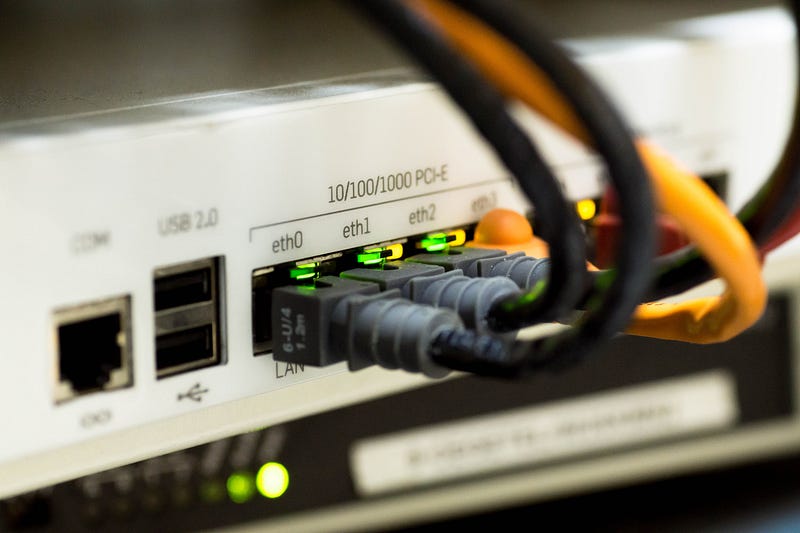
internet cables
©Pexels/Pixabay

ICP is a set of protocols that facilitate independent data centers globally to band together, offering a decentralized alternative to the existing centralized cloud providers. On that distributed basis, it allows users to create websites, apps and various web-based services.

Founded by Williams and the Dfinity Foundation, the project had the backing of venture capital firms Andreessen Horowitz (a16z) and Polychain Capital from an early stage. Cyberport is a 25 hectare multimedia park in Hong Kong’s southern district, consisting of a hotel, four primary office buildings and a retail entertainment complex. It’s home to over 1,900 start-ups and technology companies, making it a creative digital community and technology cluster within Hong Kong.


Giving Silicon Valley a run for its money

Williams had made a keynote address at the Web3 Festival last week. Dfinity expressed the view that enthusiasm for blockchain, Web3 and the ICP project was “off the charts” at the Hong Kong event. It seems that Williams was similarly enthused such that he wants to establish a physical presence for the project in Hong Kong.

Prior to the Web3 Festival event, Williams had also stated that “dynamism in Asia is incredible” . . . “Asia will give Silicon Valley a serious run for its money.” In making a comparison with Silicon Valley, Williams referred to comments he had heard being made by a Taiwanese venture capitalist, suggesting in relation to leading Californian tech companies such as Facebook, “that nobody does any work, it’s like a retirement company.”


ICP Asia Alliance

Another item that Williams noted as a take away from his Hong Kong visit was a recognition by the Dfinity Foundation founder that the formation of an ICP Asia Alliance is a possibility. He stated that “things [are] already happening” to effect this eventuality.

Confirming that work in progress, it appears that Williams met last week with members of TinTin, a Web3 development DAO, as part of his ICP Asia Alliance initiative. It’s understood that as part of the initiative, the ICP Asia Alliance will cooperate with local venture capital firms in Hong Kong, with a view towards promoting and cultivating talent in Asia relative to Web3 and the ICP project.


Building a new internet

As a Swiss non-profit, the Dfinity Foundation launched the ICP blockchain in May 2021. The project has garnered considerable attention from both developers and investors. It also distinguishes itself from many other blockchain projects insofar as it has attracted the involvement of leading tech companies such as Oracle and Samsung.

At the time of publication, $ICP was trading at $6.24, 15% its 2023 high point of $7.34.

More to Read
View All
Web3 & Enterprise·

Jun 05, 2023

Korean Firms Join Forces to Expand the Security Token Market

Korean Firms Join Forces to Expand the Security Token MarketSouth Korean tech firm AIITONE announced today that it signed a memorandum of understanding (MOU) with real estate developer Korea Asset Development to expand security token businesses, according to a report by news agency Newsis.Photo by Shubham Dhage on UnsplashVentures into fintechAIITONE is renowned for its expertise in applying extended reality (XR) technology to smart defense and metaverse projects. In their latest strategic move, they have hired a blockchain tech group to venture into fintech sectors, with a specific focus on security tokens.Real estate expertiseKorea Asset Development, a real estate developer engaged in multiple projects nationwide, is currently involved in the development of upscale housing in Seoul and Busan, high-end residences in Songdo, as well as luxury resorts in Chungcheong and Gangwon Provinces.Through their collaborative endeavors, AIITONE and Korea Asset Development seek to capitalize on their respective technological expertise and knowledge. They plan to share their know-how and establish a comprehensive cooperation framework, specifically targeting content development associated with security tokens. Furthermore, both parties have committed to consistently exploring new areas of cooperation.Security token opportunitiesIn particular, the two companies have identified real estate due to its relatively easier valuation compared to other assets. The market for real estate security tokens in Korea is projected to reach 34 trillion KRW ($26 billion) by 2024. It is estimated that financial services, including real estate, account for approximately 70% of the total security token market size.AIITONE CEO Lee Jin-yup underlined the importance of cooperation with a range of players that bring diverse resources, considering that the security token market involves high-value tangible assets such as real estate, music, and artworks. He said the partnership with Korea Asset Development will help the company secure a competitive edge in the burgeoning real estate security token market.Development in JapanNot just South Korea, but other East Asian nations too are experiencing significant strides in the security token market. Japan serves as a case in point, with companies like Mitsui & Co. Digital Asset Management (Mitsui & Co. DAM) exploring the potential of this emerging market.Mitsui & Co. DAM last month introduced a platform that allows retail investors to access security tokens backed by real-world assets. This initiative opens up previously inaccessible investment opportunities to a broader range of participants.Moreover, the Tokyo Metropolitan Government has taken an active role in supporting security token businesses within its jurisdiction. From May 31, 2023, to February 29, 2024, the government runs a subsidy program for security token projects based in the capital city. Under this program, eligible businesses can receive subsidies of up to 5 million yen ($36,000) per project.

news
Policy & Regulation·

Jan 02, 2024

Chinese authorities provide insight into conviction of RenrenBit founder

China has provided insights into the conviction of Zhao Dong, the influential crypto over-the-counter (OTC) trader and widely known founder of the RenrenBit crypto trading desk. The ‘OTC King’Last Wednesday, China’s Supreme Procuratorate disclosed that Zhao, known as the "OTC King," was handed down a substantial prison sentence for engaging in illegal foreign exchange and crypto business operations. The case is emblematic of China's persistent efforts to clamp down on cryptocurrency trading, even when conducted through less transparent channels like OTC desks, private chat groups and stablecoins.Photo by Hanson Lu on UnsplashTracing fundsIn their comprehensive disclosure, the Chinese authorities outlined the meticulous investigation that led to Zhao Dong's conviction. The focus was on tracing fund movements across Chinese bank accounts, overseas cash pools and the circulation of Tether and Bitcoin. Investigators honed in on accounts associated with Zhao Dong and the chat groups used for trading activities. Their arsenal included detailed bank records, WeChat conversations, testimonies from Zhao's OTC agents and other documentary evidence. The report highlighted that all defendants, including Zhao Dong, confessed to the process of collecting dirhams in cash in Dubai, paying RMB to the other party's designated account, buying Tether with dirhams, and allowing the domestic gang to illegally sell it back for RMB. Seven year sentenceIn one of the alleged schemes, Zhao Dong purportedly orchestrated crypto-fiat trades between Dubai-based entities holding cash piles in United Arab Emirates (UAE) dirhams and Chinese contacts within the country. With numerous related recipients confirming that the funds Zhao received were payments from foreigners, the prosecution's case was made so much stronger. Zhao unsuccessfully argued during three public court hearings that his actions constituted digital currency transactions and not a breach of foreign exchange laws. The prosecution countered with evidence from the group's chat records, emphasizing the nature of foreign exchange in their dealings. The court ultimately rendered a verdict, sentencing Zhao Dong to seven years in prison and imposing a 2.3 million Chinese yuan ($325,000) fine. This conviction serves as a stark reminder of the stringent regulatory stance that China has adopted towards cryptocurrency trading. Zhao Dong was considered one of China's most influential OTC crypto traders. He was a Bitfinex shareholder and founder of the D Fund venture capital fund. He established RenrenBit in August 2018, incorporating the company in Singapore. The influential crypto trader is also believed to have been involved in assisting stablecoin-issuer Tether to launch its Tether Yuan product. However, once the authorities moved against him, RenrenBit was taken offline while Tether scrapped its pursuit of Tether Yuan. Despite his influence, Zhao has ultimately become a symbol of the government's commitment to curbing such crypto trading activities within mainland China. The outcome underscores the severity of China's regulatory crackdown on cryptocurrency trading and sends a strong message to other players in the crypto space within the country.

news
Web3 & Enterprise·

Dec 19, 2023

Coinone adds new security features

Coinone adds new security featuresSouth Korean cryptocurrency exchange Coinone has recently added two new features — “Change Phone Number” and “Lock Account” — on its website and mobile app to bolster user security and convenience, according to local news site Greenpost Korea on Tuesday (KST). This comes after the platform recently rolled out plans to terminate its existing authentication services — identity verification via the Coinone PASS app was suspended on Dec. 4, and the service on the Kakao Pay platform will also be suspended on Dec. 28.Photo by FLY:D on UnsplashRobust protection measures“As the number of malicious smishing and phishing attempts to access customer accounts is increasing, it is essential to strengthen customer security. We will continue to implement security features that allow customers to use our services conveniently and safely,” said Myung-hoon Cha, CEO of Coinone.Enhanced user controlAccording to the exchange, users can change their phone number after completing the identity verification process in the “Change Information” option on the “My Page” tab. Notably, if a user’s account information is unintentionally disclosed, they can utilize the Account Lock feature to protect their account. These two features have been added to Coinone’s mobile app in its latest version upgrade.After announcing plans to suspend authentication via Kakao Pay, Coinone instead introduced authentication services via the KakaoTalk app on Dec. 14, which is generally more commonly used by Koreans. By registering a KakaoTalk mobile certificate on the “Additional Channel Authentication” tab, users can undergo identity verification without the hassle of logging in separately. This latest authentication channel was added as yet another option along with Naver, which was added earlier in August.

news
Loading