Top

Arthur Hayes: Chinese monetary policy could ignite crypto market

Policy & Regulation·November 29, 2023, 3:04 AM

Arthur Hayes, Co-Founder of Seychelles-incorporated crypto exchange and derivatives platform BitMEX, suggests that China could inject a substantial amount of credit into its economy, potentially giving a boost to Bitcoin and the broader crypto market.
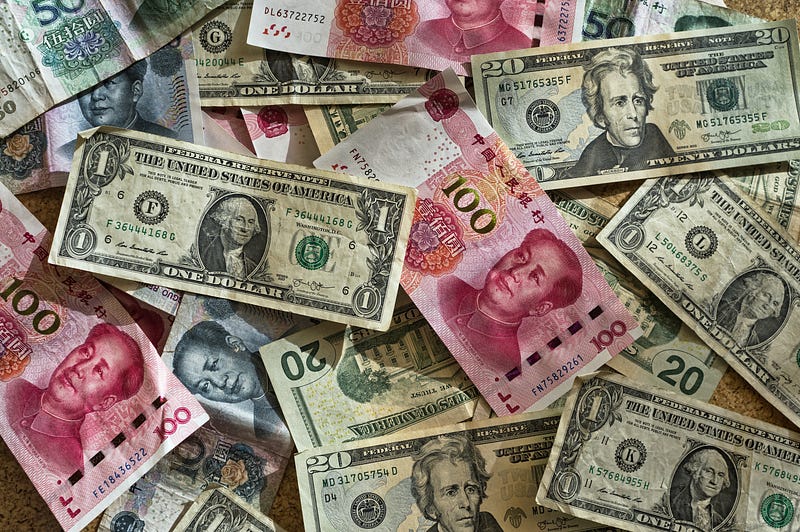
Photo by Eric Prouzet on Unsplash


Potential flood of yuan credit

The firebrand crypto OG outlined his thoughts on the matter in a blog post which was published on Monday. Hayes discussed how, although China has currently made credit expensive in order to hold back credit growth and inspire confidence in the economy, its monetary authorities might be gearing up to flood the economy with yuan credit, creating a favorable environment for cryptocurrencies.

He outlined a series of factors contributing to this potential surge in Chinese credit. He pointed to the interplay between U.S. monetary policy and the Chinese yuan, emphasizing how recent U.S. actions are laying the groundwork for China to issue substantial credit, particularly to its struggling property sector.

Describing U.S. policy as “weakening the dollar by issuing more Treasury bills,” Hayes noted the consequent decline of the dollar index (DXY) throughout November. He argued that the weaker dollar gives China the flexibility to increase yuan credit without significant depreciation, possibly even leading to yuan appreciation.

If the Federal Reserve at a minimum holds rates and better still, starts to cut rates, China will be in a position to pursue the stimulus needed for its property market and for infrastructure spending.


Hong Kong as the gateway to capital markets

According to Hayes, the global monetary dynamics set in motion by these factors could be advantageous for Bitcoin and the broader cryptocurrency market. He explained that the bulk of the financing will trickle down into speculation within the financial markets. If China starts printing yuan, the capital is likely to flow into global markets, supporting the prices of various risk assets.

But how can this happen, given that speculation and crypto trading are prohibited in China? Hayes’ view is that Hong Kong is now China’s gateway to the global capital markets. Wealthy Chinese individuals now bank via Hong Kong. As we have seen, the autonomous Chinese territory has a workable regulatory framework in place and is now actively licensing crypto exchanges and brokers. Consequently Bitcoin and crypto, generally, could be among the risk assets benefiting from an influx of capital.

Furthermore, the BitMex co-founder believes that as yuan credit becomes abundant, the global demand for dollar credit and liquidity may decrease. Given that the dollar is a primary funding currency, a fall in the price of credit could lead to a rise in fixed-supply assets like Bitcoin and gold in dollar terms.

Hayes concluded what is a long and detailed blog post by stating:

“I will continue moving money out of T-bills and into crypto because I want to get in now before it becomes apparent through the data that China’s money printer is going brrrrr.”

He suggested that Chinese New Year, which occurs in mid-February of next year, could be the time in which that extra credit materializes in China. Hayes’ latest assertion comes on the back of a bold claim he made last month when he suggested that bitcoin could reach a unit price of $1 million by 2026.

More to Read
View All
Policy & Regulation·

Jul 14, 2025

Shanghai officials potentially signaling openness to stablecoins

The Shanghai office of a Chinese regulatory body which oversees assets belonging to state-owned enterprises (SOEs) is reported to have held a session dedicated to the topic of digital assets and in particular, stablecoins, fueling speculation of a positive shift in outlook on crypto in China.Photo by Hanny Naibaho on UnsplashOn July 11, Reuters reported that the State-owned Assets Supervision and Administration Commission (SASAC) held the meeting in Shanghai on July 10, with the publication suggesting that the event represented “a marked shift in tone” in the consideration of digital assets in China, bearing in mind that crypto trading and mining are banned within the country. Following the “development trend and response strategies” study session, He Qing, director of the organization, said that there was a need for "greater sensitivity to emerging technologies and enhanced research into digital currencies." The regulator called on Chinese state-backed agencies to consider the adoption of blockchain technology for use cases like real-world asset (RWA) tokenization, supply chain finance and cross-border trade. A policy expert from Shanghai-headquartered securities firm, Guotai Haitong Securities, attended the meeting, outlining details on the history, characteristics and categories of cryptocurrencies and stablecoins, while also discussing global regulatory frameworks. Last month, a subsidiary company of Guotai Haitong Securities, Guotai Junan International (GTJAI), became the first company from the Chinese mainland to be given approval by the Hong Kong securities regulator to offer digital asset trading services. Adapting to the stablecoin trendIn June, state-owned financial newspaper, Securities Times, called on Beijing to adapt “to the trend of stablecoins.” The publication claimed that industry insiders “generally believe that, as an emerging payment tool, the unique advantages and potential risks of stablecoins cannot be ignored, and that the development of [yuan-backed] stablecoins should be sooner rather than later”. The same month, Pan Gongsheng, governor of the People’s Bank of China, acknowledged that stablecoins are playing a role in disrupting global payments infrastructure.  It also emerged recently that JD.com, a Chinese e-commerce giant, and Ant Group, an affiliate company of the Alibaba Group, have been lobbying the Chinese authorities for the authorization of yuan-based stablecoins. On X, Shanghai Macro Strategist, a China strategist, claimed that the recent surge in the Bitcoin unit price had come about as a consequence of this stablecoin-focused SASAC meeting in Shanghai. At the time of writing, BTC has appreciated 9.3% over the course of the past seven days. The strategist suggests that the event is fueling speculation that “the Chinese government may be in the early stages of reassessing its official stance on the crypto industry.” In their monthly report for May, the strategist pointed out that “Beijing’s outright rejection of [Bitcoin] as a legitimate asset” was holding the leading asset back on its path to “reserve status.” The strategist added: “Over the longer term, a shift in China’s stance could prove to be the single most powerful bullish catalyst—elevating Bitcoin from a fringe asset to a globally recognized store of value.”

news
Policy & Regulation·

Apr 17, 2024

South Korea's prestigious university to launch philosophy major dedicated to Bitcoin

Hanyang University, one of South Korea’s most prestigious educational institutions, has embarked on launching a new major dedicated to Bitcoin and cryptocurrencies, named "Bitcoin Philosophy" at its graduate school. Yoon Seong-ho, the vice dean of the College of Humanities, will spearhead organizing the new major and overseeing its courses, according to local media ETNews.  The Bitcoin Philosophy major merges two different academic fields – philosophy and emerging blockchain studies. This unprecedented combination has drawn the attention of many local crypto investors and industry insiders. Typically, crypto or blockchain experts in Korea have educational backgrounds in computer science, software engineering, information security studies or cryptology. Photo by Karolina Grabowska on PexelsHumanistic approach to cryptocurrency The school stated that the planned major will be taking a humanistic approach to Bitcoin and cryptocurrencies, focusing less on their technological aspects. The specifics of the courses, however, are yet to be disclosed.  Hanyang University is no stranger when it comes to blockchain and cryptocurrencies. The institution has already established the Department of Blockchain Computing and Cryptoeconomics back in 2018, which started enrolling students the following year. Currently, around 20 experts from across various fields including engineering, business management, law and medicine, serve as faculty members.  Furthermore, the school is considering a proposal to establish a "Bitcoin Philosophy Research Center" on campus and dedicated courses for the Advanced Management Program (AMP). If approved, admissions for the new crypto major could open as early as next year.  

news
Policy & Regulation·

Sep 26, 2023

Many Countries Are Welcoming Traditional Financial Institutions Into Crypto — When Will Korea…

Many Countries Are Welcoming Traditional Financial Institutions Into Crypto — When Will Korea Catch Up?Although overseas traditional financial institutions are gradually expanding their reach into the crypto market by launching related services and products, this remains challenging for institutions in South Korea, where it is difficult for them to even invest in virtual assets.Photo by NASA on UnsplashMajor developments in other countriesAccording to industry sources, traditional financial companies such as Japan’s largest investment bank and brokerage group Nomura Group, and New York-based investment banking company Citigroup are starting to bring new crypto-related services and products to the market.Laser Digital, the asset management unit of Nomura Group, launched a Bitcoin adoption fund targeting institutional investors, according to an official press release from last Tuesday (local time), which will provide institutional investors with direct and secure access to investments in Bitcoin.Similarly, Citigroup’s Treasury and Trade Solutions (TTS) is piloting its new crypto-based cash management and trade finance service dubbed Citi Token Services, which caters to institutional clients by utilizing blockchain and smart contract technology to provide digital asset solutions. “Digital asset technologies have the potential to upgrade the regulated financial system by applying new technologies to existing legal instruments and well-established regulatory frameworks. The development of Citi Token Services is part of our journey to deliver real-time, always-on, next-generation transaction banking services to our institutional clients,” said Shahmir Khaliq, Global Head of Services at Citi.Earlier this summer, several asset managers in the US, including BlackRock, applied for a spot-traded Bitcoin exchange-traded fund (ETF) with the US Securities and Exchange Commission (SEC), drawing the interest of the industry as a whole. The SEC has been delaying its decision regarding approval for the ETF and will likely do so until its allotted 240-day review period is over, but industry experts predict that the approval will go through for several reasons including BlackRock’s implicit influence as the world’s biggest asset manager and the SEC’s former court loss against Grayscale for its review of the firm’s spot Bitcoin ETF.These developments are made possible through the commonly held opinion that the involvement of traditional financial institutions in the crypto sphere is beneficial for the industry due to their ability to increase liquidity by moving much larger amounts of capital than the crypto market alone.Moreover, many countries around the world already allow institutions to invest in virtual assets. For instance, the US Nasdaq Stock Market has already listed crypto futures-based ETFs such as Bitcoin and Ether, and there are trust products on the market like Grayscale’s Bitcoin Trust that target qualified investors. Countries like Hong Kong have also gradually begun to allow individual investments in virtual assets again, while institutional investment has always been permitted.Roadblocks in KoreaIn contrast, it remains impossible for institutional or corporate investors in Korea to invest in virtual assets, let alone offer virtual asset fund products. Although local asset managers like Mirae Asset Global Investments and Samsung Asset Management have listed Bitcoin-related ETFs in the US and Hong Kong, such products do not exist in South Korea.Korean authorities also banned financial institutions from holding, purchasing, or investing in virtual assets back in 2017 on the grounds that their investment in cryptocurrencies could stimulate investor sentiment. Also, shadow regulation after the enactment of the Act on Reporting and Using Specified Financial Transaction Information in 2021 practically bars local corporations and institutions from using crypto exchanges, though there is no provision that explicitly prohibits opening corporate bank accounts on crypto exchanges.In response to this situation, an anonymous industry insider highlighted the need for a nationwide drive to support virtual assets and Web3 technology. “This is the time to push emerging industries, and we should not overlook industry trends. The current situation is somewhat frustrating,” they said. “Japan was the most conservative country in this regard, but it has recently opened up and subsequently gained momentum. Korea should also take a more progressive approach.”

news
Loading