Top

Thai SEC seeks to revoke license of troubled Zipmex exchange

Policy & Regulation·February 27, 2024, 2:06 AM

Zipmex, the Asian digital asset exchange, faces another setback as the Securities and Exchange Commission Board of Thailand (SEC Board) moves to recommend the revocation of its digital asset business license.


This decision, announced last week, marks the latest in a series of challenges for the exchange, which has struggled to navigate the complexities of the crypto market's downturn.

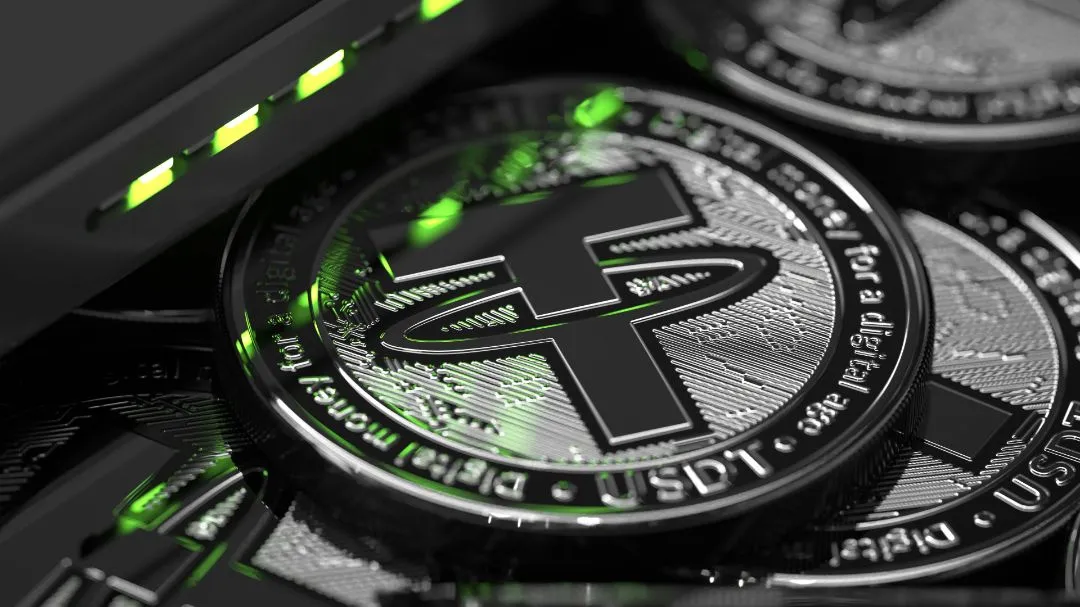
https://asset.coinness.com/en/news/201d5603723ee7a346dc2ec961aed4d8.webp
Photo by Oleksandr P on Pexels

Capital requirements failure

The SEC's recommendation stems from Zipmex's failure to meet the increased net capital requirement and address deficiencies in its personnel and management structure. These shortcomings were deemed unacceptable by the regulatory body, prompting a 15-day ultimatum issued on Feb. 1. Earlier this month, the Commission ordered a halt to Zipmex operations, enforcing a temporary suspension until such time as the company had improved its financial position and applied needed changes to its management structure.

Despite this window for compliance, Zipmex fell short of meeting the specified conditions, leading to the current proposal for license revocation and the imposition of stringent regulatory measures on Thailand's digital asset exchanges.


Business suspension extension

During a meeting on Feb. 21, the SEC further resolved to extend Zipmex's business suspension, initiated on Feb. 1, and allowed clients to request asset returns on the exchange until March 11. Any unclaimed assets after this date will be required to be placed in a "trusted and secured system," with Zipmex obligated to report this to the SEC. Notably, even after the potential revocation of its license, Zipmex will retain its status as a limited company, subject to associated rights, responsibilities and liabilities, including the possibility of legal action.


Zipmex's woes trace back to 2022 when it faced significant challenges due to exposure to failed crypto lender Babel Finance. In July of that year, the exchange suspended withdrawals for weeks due to concerns over its ties to crypto lenders Babel and Celsius, both facing financial distress. Although access to Trade Wallets was restored after three days, Z Wallets remained inaccessible into the following year.


Failed Coinbase and V Ventures deals

In the midst of its troubles, Zipmex attracted interest from Coinbase, albeit without success. While Coinbase made a strategic investment in Zipmex, the acquisition attempt did not materialize as initially intended. Furthermore, Zipmex's financial struggles led it to file for debt relief in Singapore in July 2022, further complicating its position in the market.


The exchange's regulatory challenges continued as it faced scrutiny from the SEC regarding compliance with the Digital Assets Act. Despite attempts to secure acquisition deals, such as the proposed acquisition by Thai investor V Ventures, Zipmex has been unable to alleviate regulatory concerns or stabilize its operations effectively.


Since obtaining its license from the SEC in January 2020, Zipmex has operated in Thailand, Indonesia, Singapore and Australia. However, its inability to address regulatory requirements and financial challenges has cast doubt on its future viability in these markets. 


In November of last year, the company itself announced a temporary cessation of trading in Thailand while it worked towards becoming compliant within that jurisdiction. Earlier this month, Thailand’s SEC took legal action against Akarlap Yimwilai, the former CEO of Zipmex Thailand.

More to Read
View All
Policy & Regulation·

Sep 21, 2023

Overseas Crypto Holdings Declared to Korean Tax Agency Amount to $98B

Overseas Crypto Holdings Declared to Korean Tax Agency Amount to $98BIn a recent press release from the South Korean National Tax Service (NTS), it was revealed that this year, a record 5,419 Koreans declared overseas financial assets amounting to KRW 186.4 trillion. This is a notable jump from the previous year, marking a 38.1% rise in the number of declarants and an impressive 191.3% increase in the declared amount.Photo by Traxer on UnsplashRecord-breaking declarationsThese are the most significant figures reported since the 2011 inception of the overseas financial account reporting system, which requires Korean individuals and entities to disclose their foreign financial holdings, like savings, stocks, collective investment schemes, and derivatives, if their balance exceeds KRW 500 million.The NTS attributed the record-breaking figures to foreign crypto accounts, a new addition to this year’s overseas account declaration.Crypto’s dominanceVirtual assets comprised a staggering 70.2% of the total declared amount, overshadowing all other assets. 1,432 individuals and corporate entities reported crypto holdings amounting to KRW 130.8 trillion (approximately $98 billion).Decline in non-virtual assetsFor non-virtual asset accounts, including deposits, savings, and stocks, the reported figure stood at KRW 55.6 trillion, marking a year-on-year drop of KRW 8.4 trillion, or a 13.1% decline.Call for complianceIn the future, the NTS plans to leverage data shared between countries to rigorously check for potential non-compliance in reporting overseas financial accounts. Those suspected of omissions can expect strict actions, including fines, criminal charges, public name disclosure, and the collection of related taxes.After the reporting deadline, filers may be eligible for a penalty reduction of up to 90%. Importantly, tax agencies worldwide, including the NTS, are gearing up to share information like cryptocurrency transaction details under the Crypto Asset Reporting Framework. In light of this, the NTS strongly encourages those who haven’t yet reported but are obligated to to promptly declare their overseas virtual asset accounts.

news
Web3 & Enterprise·

May 07, 2024

Polaris Office marks 10th anniversary, POLA rises 14%

South Korea-based document management software firm Polaris Office announced the 10th anniversary of its office software (SW) cloud service launch, according to local media News1. Reaching this milestone has coincided with the rising price of its native token, POLA. At the time of writing, POLA is trading at KRW 48.89 ($0.04), up 13.99% from the previous week.  The 10th anniversary of its service launch appears to be a direct cause behind this recent rise in POLA prices, despite the recent downturn in the crypto market. The company said that it recently held an AI (artificial intelligence) talk concert to celebrate its 10-year milestone.Photo by Andrew Neel on UnsplashPOLA as rewards for sharing knowledge Launched in 2020, POLA tokens are distributed as a reward within its platform, Polaris Share Service, which the company describes as "the distributed trading system of incentive knowledge." Here, users can earn POLA by creating content and sharing knowledge on the platform. Cloud-based document management softwarePolaris Office offers a cloud-based service that allows real-time document editing on various operating systems (OS) including mobile, web office, Windows and Mac. Since the outbreak of the COVID-19 pandemic, the company has experienced significant growth in its sales, recording an all-time high annual sales last year. This growth is attributed to the increased adoption of hybrid work environments.  By consolidated standards, Polaris Office recorded KRW 107.9 billion in sales, KRW 6.2 billion in operating profit and KRW 24.4 billion in net profit, marking YoY increase of 346.1%, 277.1% and 91.2%, respectively.  Joining government-led document AI projectMeanwhile, Polaris Office has been designated as a participatory company in the "SW Computing Industry Source Technology Development Project" led by the Ministry of Science and ICT of Korea, as reported by crypto media CoinNess on April 15. In this project, Polaris Office is expected to contribute to advancing the document AI technology. 

news
Policy & Regulation·

Sep 17, 2025

Understanding South Korea’s won-backed stablecoin debate

South Korea is weighing a fiat-backed stablecoin, balancing monetary sovereignty against the fact that global stablecoins are dominated by the U.S. dollar while domestic payments are already near-instant.Photo by DrawKit Illustrations on UnsplashThin domestic need despite sovereignty aimsThe case for a won-pegged token is facing challenging headwinds. As a recent Korea Economic Daily report highlighted, skeptics argue the won's limited global demand and lack of reserve currency status would curb its adoption internationally. Domestically, the need is even less apparent. A study by NH Investment & Securities noted that with retail payments settling in seconds via biometrics or passwords, and with world-leading credit card and bank account penetration, the efficiency gains from a stablecoin are marginal at best. Despite this, the appeal of digital currencies is growing. Transactions in dollar-backed stablecoins USDT and USDC on Korea’s five main exchanges totaled nearly $71 billion between January and August, according to CryptoQuant. This rising adoption presents both an opportunity and a threat. While some analysts believe stablecoins could smooth exchange-rate volatility, the Bank of Korea (BOK) has expressed concern. In a recent working paper, Son Min-kyu of the central bank commented that the widespread use of dollar-backed stablecoins could entrench the dollar's dominance, while also amplifying run risk and market volatility in Treasuries during periods of stress. Scarce short-term collateralSeoul also faces a unique structural hurdle: a shortage of short-term government bonds to use as collateral. Unlike the U.S., where stablecoin issuers rely on a deep market for Treasury bills, Korea’s bond market is dominated by long-dated paper. Kim Pil-kyu of the Korea Capital Market Institute (KCMI) described short-term sovereign bills as vital for a stablecoin’s value preservation, a resource Korea currently lacks. As South Korea deliberates, other major economies are forging ahead on divergent paths. Japan is moving to authorize privately issued stablecoins this fall, while the European Union has brought them under its comprehensive Markets in Crypto-Assets (MiCA) regulation. UK’s cap plan clashes with pro-innovation pushThis regulatory balancing act is also playing out in the U.K., where a policy rift is emerging. According to the Financial Times, the Bank of England has proposed capping individual holdings of widely used stablecoins at £10,000–£20,000, with a £10 million limit for businesses. Industry groups argue the plan would be expensive to implement and could blunt the U.K.’s competitive edge in digital finance. The central bank's caution also contrasts with the government's pro-innovation stance, with finance minister Rachel Reeves recently pledging to promote the use of stablecoins and tokenized securities. For Seoul, the global shift toward tokenized money is undeniable. With seemingly limited domestic demand and various structural challenges, a won-backed stablecoin is, for now, an idea worth watching as the broader financial landscape evolves. 

news
Loading