Top

Regulatory approach sees Singapore move closer to crypto hub status

Policy & Regulation·January 07, 2025, 2:06 AM

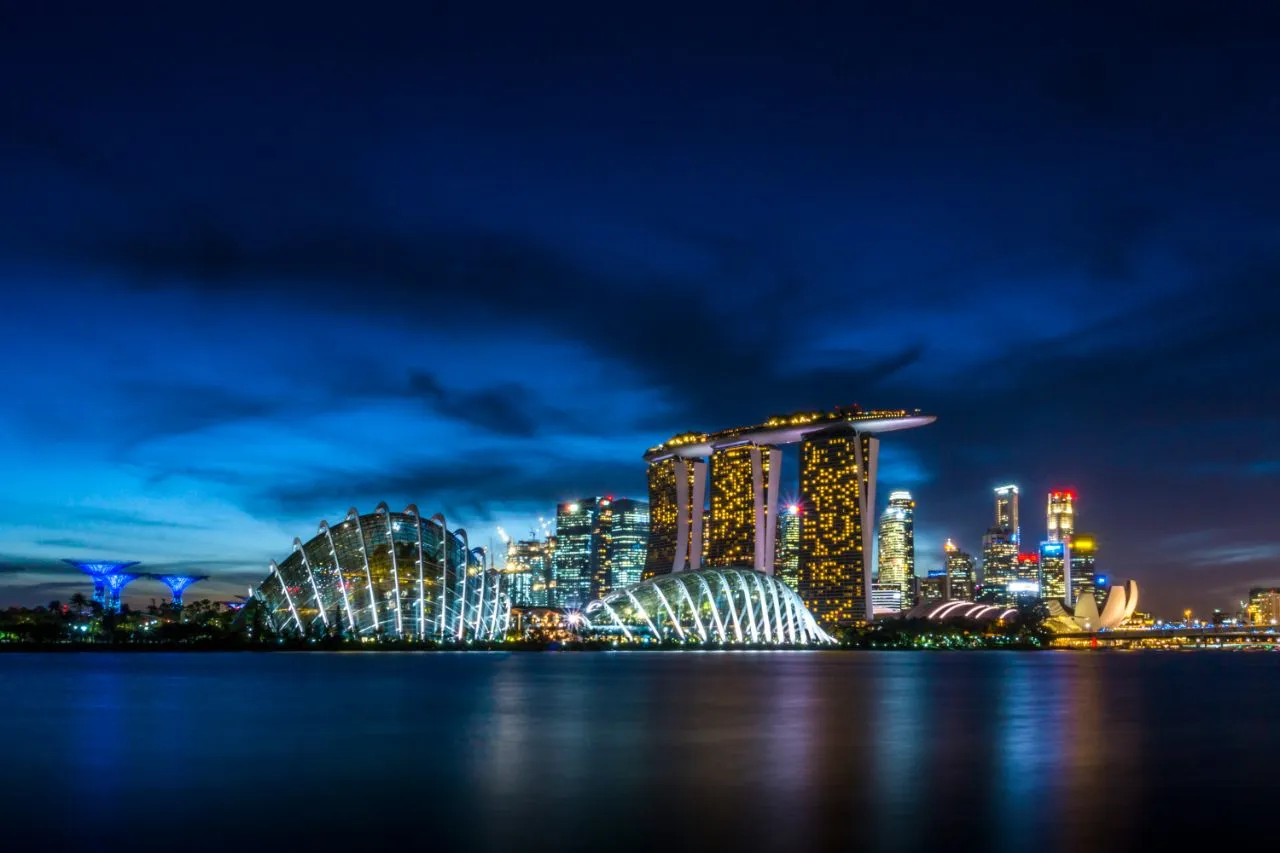
Crypto licensing developments in Singapore over the course of 2024, allied with feedback from industry insiders, suggest that the city-state has furthered its development as a crypto industry hub in the Asia-Pacific (APAC) region.
https://asset.coinness.com/en/news/227f80f6b1863cc163b343e43a2ce003.webp
Photo by Mike Enerio on Unsplash

Doubling up on licensing issuance

According to a report published by Lianhe Zaobao, a Chinese language newspaper in Singapore, the Monetary Authority of Singapore (MAS), had issued twice the number of Major Payment Institution (MPI) licenses in 2024 by comparison with the previous year.


Four licenses were issued in 2023 to Crypto.com, Coinbase, Ripple and Blockchain.com. That compares with 13 licenses issued in 2024 to companies such as GSR, BitGo, Anchorage, Upbit and OKX.


This uptick in licensing signals a regulatory regime that is innovation-friendly, resulting in Singapore becoming a key destination for startup companies in the crypto and Web3 space.


Risk-adjusted regulatory approach

According to William Croisettier, chief growth officer at ZKCandy, Singapore is primed to continue its development as a leading crypto hub for Web3 businesses within the APAC region. ZKCandy is a gaming-focused hyperchain within the zkSync ecosystem that has developed due to a collaboration between the Ethereum layer-2 zkSync network and Southeast Asia’s largest gaming developer, iCandy.


Croisettier spoke to Cointelegraph on the matter recently, stating:


“The country adopts a risk-adjusted approach to crypto regulation, focusing on the biggest digital currencies to protect investors. Singapore also makes it easy for new crypto firms to interact with local banking partners, a provision considered a luxury in other parts of the world.”


Mouloukou Sanoh, co-founder and CEO of Dubai-based Mansa Finance, a DeFi platform that provides liquidity to cross-border payment companies, has also spoken positively about Singapore’s status within the crypto sector. Sanoh stated:


“With its clear regulations and support for innovation, Singapore attracts top companies and talent, fostering a thriving ecosystem. This proactive approach signals a strong commitment to digital finance, contrasting with Hong Kong's more cautious stance.”


Positive study findings

These views correlate with a recent study carried out by ApeX Protocol, a multi-chain liquidity platform. The study applied a ranking to ten jurisdictions based on factors such as jobs created in the blockchain field, the number of crypto exchanges located within a jurisdiction and the number of blockchain-related patents filed.


On that basis, it found that Singapore topped the rankings, ahead of Hong Kong in second place. Singapore was found to have 81 crypto exchanges located within the city-state, over 1,600 blockchain-related patents filed and 2,433 crypto-sector jobs created.


A recent survey conducted by CoinDesk found that from a crypto adoption perspective, Thailand, followed by the United Arab Emirates (UAE) and India, lead the APAC region. Of the 10 countries surveyed, Singapore weighed in in seventh place with a 23% adoption rate, just one percentage point behind Hong Kong with 24%. As Hong Kong and Singapore compete to attract crypto-related business, both still have room for improvement when it comes to the crypto adoption metric in comparison with other Asian countries. 
More to Read
View All
Web3 & Enterprise·

Dec 28, 2023

Bithumb surpasses Upbit in 24h trading volume for first time in four years

The trading volume of South Korean cryptocurrency exchange Bithumb exceeded that of its competitor Upbit as of 10:30 a.m. UTC on Wednesday, as reported by the local news outlet Etnews, which cited data from CoinMarketCap. This shift occurred for the first time in four years. According to CoinMarketCap, as of the specified time, Bithumb's 24-hour trading volume reached KRW 4.93 trillion (approximately $3.8 billion), surpassing Upbit, which recorded a volume of KRW 4.37 trillion. Until 2019, Bithumb was the leading exchange in Korea. However, it ceded its top position to Upbit, which gained a competitive edge through its collaboration with the internet-only bank, Kbank.Photo by Pierre Borthiry - Peiobty on UnsplashZero trading fees and new crypto listingsEarlier in the year, Bithumb initiated a strategic plan with the objective of boosting its trading volume in order to increase its market share in the domestic market to 25%. To achieve this goal, the exchange implemented several key initiatives. One of the significant steps taken was the elimination of trading fees, aimed at attracting more users and increasing transaction volumes. Additionally, Bithumb broadened its cryptocurrency offerings by listing prominent cryptocurrencies such as Tether (USDT) and WEMIX.Questioned sustainability of strategiesIn anticipation of crypto winter giving way to crypto spring, trading platforms are gearing up for more intense competition to increase their market shares. However, there are concerns about the sustainability of strategies like implementing zero trading fees. Critics argue that such policies, while they may temporarily shift market shares, are unlikely to be successful in the long term. This skepticism is largely due to the fact that cryptocurrency exchanges heavily rely on trading fees as a primary source of revenue.  An industry expert has pointed out that unless the cryptocurrency exchanges currently lagging behind develop innovative, paradigm-shifting strategies capable of significantly impacting the market landscape, there's a high likelihood that the ranking order will revert to the previously established, entrenched market order.  In fact, at the time of this publication, Upbit upended Bithumb in 24-hour trading volume, recording KRW 4.4 trillion compared to Bithumb's KRW 3.2 trillion. This data underscores Upbit's strong position in the market, illustrating its continued dominance.

news
Web3 & Enterprise·

Sep 07, 2023

Japanese Financial Giant SBI Extends Use of Ripple’s Remittance Tech

Japanese Financial Giant SBI Extends Use of Ripple’s Remittance TechSBI Remit Co., Ltd., a prominent player in the international money transfer sector and a subsidiary of Japanese financial services conglomerate SBI Group, has unveiled a significant expansion of its collaboration with Ripple in Asia.Photo by Kanchanara on UnsplashPhilippines, Vietnam, and IndonesiaThe strategic alliance between the two companies will enable international remittance services utilizing Ripple’s XRP cryptocurrency as a bridge currency, connecting bank accounts in the Philippines, Vietnam, and Indonesia.The partnership, announced via a statement published to SBI’s website on Wednesday, builds upon SBI Remit’s history of utilizing Ripple Payments for its international remittance services, which dates back to 2017. The company has been a pioneer in Japan, leading the way in offering an international remittance service that leverages XRP as a bridge currency between two sovereign currencies.This latest move underscores SBI Remit’s interest in furthering its exploration and use of XRP-based remittances. In 2021, it introduced a service targeting digital wallets in the Philippines, marking a milestone in using XRP for international remittances in Japan.Simplifying international remittancesThe newly introduced scheme aims to simplify the international remittance process significantly. The process involves SBI Remit initiating a customer’s remittance request, followed by SBI VC Trade facilitating real-time XRP transfers in response to the request. This dynamic approach has been made feasible through a strategic partnership with Tranglo Pte. Ltd., a long-standing Ripple partner. It ensures that customers receive their remittances in their respective local sovereign currencies.SBI emphasized the advantages of using XRP as a bridge currency, highlighting its ability to enable fast and cost-effective money transfers. XRP also boasts excellent scalability, allowing users to seamlessly send funds to Ripple’s global partners. SBI believes that this will enhance its competitiveness in the international remittance sector.Targeting important remittance marketsThe decision to target the Philippines, Vietnam, and Indonesia was not arbitrary. These countries have a substantial share of remittances channeled into bank accounts, making them ideal candidates for XRP adoption. SBI Remit anticipates that the introduction of the XRP-based remittance service will further accelerate cryptocurrency adoption in these nations.Yoshitaka Kitao, chairman and CEO of SBI Holdings, expressed the company’s commitment to transforming international remittance services. The press release also conveyed SBI Remit’s dedication to extending its reach beyond the initial three Asian countries. At the time of publication, XRP was trading at $0.5022.The significance of the announcement was not lost on retail investors with an ongoing interest in XRP. Taking to X (formerly Twitter) one wrote:“Everyone who says Ripple does not utilize XRP, and that nobody uses XRP is WRONG.”At Paris Blockchain Week earlier this year, Monica Long, President of Ripple, stated: “The past couple of years have been a real tipping point for institutional DeFi, where even the biggest of banks are embracing this technology as the future, and they have to adapt or die.” That statement is relevant when this latest expansion of the Ripple/SBI partnership is considered.SBI Remit’s expanded partnership with Ripple marks a significant step in the evolution of international remittance services. By harnessing the power of XRP as a bridge currency, SBI Remit aims to revolutionize cross-border transactions while targeting countries with substantial remittance markets.

news
Web3 & Enterprise·

Nov 24, 2023

Wemade CEO to attend Abu Dhabi Finance Week and Fortune Global Forum next week

Wemade CEO to attend Abu Dhabi Finance Week and Fortune Global Forum next weekHenry Chang, CEO of South Korean blockchain gaming publisher Wemade, will be traveling to the United Arab Emirates to speak at the second annual Abu Dhabi Finance Week — one of the biggest financial and economic events in the Middle East and North Africa (MENA) region — scheduled for Nov. 27 to 30.Photo by Kevin JD on UnsplashExploring the future of financeTouting the theme “Investing in the Transition Era”, this year’s ADFW is organized by Sheikh Khalid Abu Dhabi, Crown Prince of Abu Dhabi and Head of the Abu Dhabi Executive Council. Several organizations such as the Abu Dhabi Global Market (ADGM) and the Abu Dhabi Department of Economic Development are also participating as official partners. More than 10,000 visitors from over 100 countries across the world are expected to attend.Chang will participate as a panelist on Nov. 29 in the “Convergence: Media, Culture and Fintech” panel at Fintech Abu Dhabi, the flagship event of ADFW. The panel will cover topics like the impact of blockchain and decentralized finance (DeFi) technologies on fintech — more specifically, digital payment trends and the future of digital assets and currencies.Wemade’s expansion in the UAEHe will also partake in the Fortune Global Forum 2023, a global conference for CEOs of major global conglomerates also set to be held in Abu Dhabi from Nov. 27 to 29. The forum has been hosted by American business magazine Fortune since 1995 as a platform for member companies of the Fortune Global 500 list to gather and share insights on global issues like innovation and stability and their impact on economic progress. They will also be joined by government officials from various sectors in the UAE, including artificial intelligence, cybersecurity, oil and gas, industrial automation, healthcare and telecommunications.Wemade has been making strides to expand WEMIX3.0, its borderless Web3 mega-ecosystem, in the MENA region. The company opened an office in Abu Dhabi earlier this year.

news
Loading