Top

China mulls yuan-pegged stablecoin approval

Markets·August 21, 2025, 2:33 AM

The Chinese authorities are reportedly mulling over the possibility of approving the use of stablecoins pegged to and backed by the Chinese yuan.


That’s according to a report published by Reuters on Aug. 20, with the publication citing “sources familiar with the matter.”
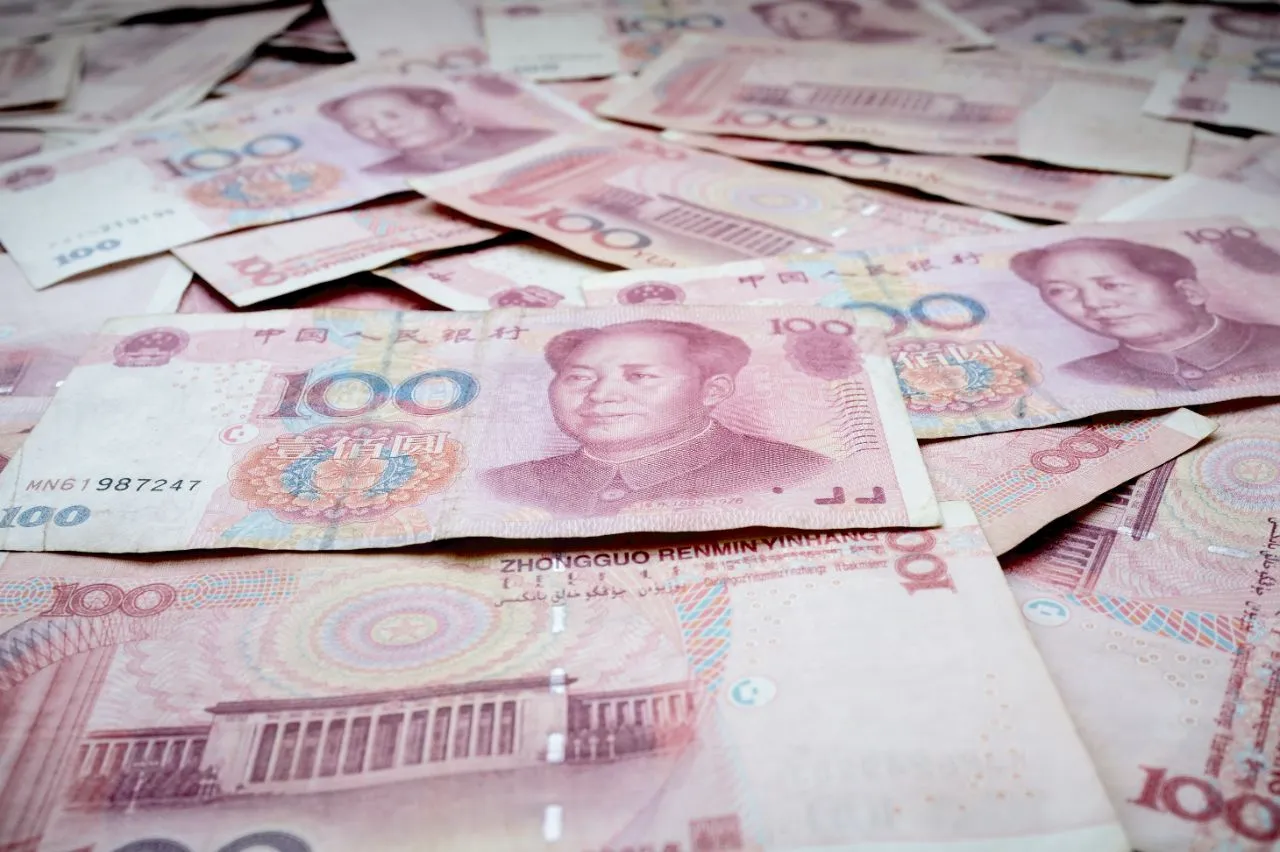
https://asset.coinness.com/en/news/cf8b7f92c82a395ababfae664b500dbc.webp
Photo by Eric Prouzet on Unsplash

Internationalization of the Chinese yuan

China’s State Council, its cabinet and primary administrative authority, has scheduled a review of yuan-backed stablecoins for later this month, a development that could potentially lead to their approval.


The Chinese have been leaders in recent years in the development of a central bank digital currency (CBDC), the digital yuan. The digital yuan was further along in its development than any other CBDC globally, with the Chinese making concerted efforts to bring the digital currency into use at home, with an eye toward global use for international trade.


While the U.S. dollar has enjoyed an extended period as the world’s reserve currency, the weaponization of the currency by the U.S., particularly through the application of sanctions, has led BRICS (Brazil, Russia, India, China and South Africa) nations to consider alternatives.


One of Reuters sources asserted that the Chinese authorities are now homing in on the potential to internationalize the yuan via stablecoins.


Setting the tone for stablecoin use

Members of the Chinese government leadership are expected to establish the tone for stablecoin use following their upcoming review, outlining the parameters within which the Chinese authorities will permit their use.


Reacting to this development, Robin Brooks, a senior fellow at the Brookings Institution, asserted that China’s newfound interest in yuan-backed stablecoins is a sign of “how insecure China is in the global financial system.”

Brooks added that the way to internationalize a sovereign currency is to promote the rule of law and property rights rather than pursue the use of stablecoins, which he described as “ridiculous.” 


Growing global interest

While the Brookings Institution is not directly backed by the U.S. government, the organization is nevertheless a Washington, D.C.-based think tank. Despite Brooks’ objection to the use of stablecoins, China is not the only nation to show interest in using them.

Taking to X, Raphaël Bloch, co-founder of crypto media platform The Big Whale, pointed out that increasingly, nations around the world are embracing stablecoins due to the efficiency of global currency distribution that is possible via public blockchain networks. 


Additionally, stablecoins offer an effective means of government debt financing, given that stablecoin reserves are backed by government bonds.


In the U.S., President Donald Trump has ruled out the pursuit of a CBDC. Last month, the U.S. House of Representatives passed the Anti-CBDC Act to prohibit the development of a CBDC by the Federal Reserve. Instead, Trump has said that a stablecoin regulatory bill working its way through the legislative system will ensure global dominance for the U.S. in the crypto sector.


In June a Deutsche Bank strategist claimed that the legislation would strengthen the U.S. dollar’s global dominance, with several American politicians having since expressed the same view.

Earlier this week, Japan’s Financial Services Agency (FSA) signaled that it is likely to approve the issuance of a yen-pegged stablecoin. Meanwhile, the authorities in South Korea are working on a bill related to won-pegged stablecoins.

More to Read
View All
Web3 & Enterprise·

Jun 21, 2023

Academia, Industry Collaborate on Crypto Accounting Research in Korea

Academia, Industry Collaborate on Crypto Accounting Research in KoreaThe Korean Accounting Association (KAA) and Samil PwC, the South Korean member firm of global accounting company PwC, have joined forces to conduct collaborative research on accounting for cryptocurrency assets, according to a report by local news outlet Maeil Business Newspaper.Photo by Pixabay on PexelsCollaborative effortsUnder this newly formed partnership, the KAA’s crypto asset committee will work closely with Samil PwC to explore a wide range of crypto assets, facilitate the development of financial statements pertaining to these assets for businesses, and implement accounting policies that align with the characteristics of cryptocurrencies.Leading the crypto asset committee is Roh Hee-chun from Soongsil University, while Partner Lee Jae-hyeok from Samil PwC will participate in the study. Until 2028, this collaboration is poised to yield insights and findings on crypto asset accounting.First seminarThe committee is set to hold its first seminar on June 27, serving as a platform for knowledge exchange and fostering deeper understanding among industry professionals. Furthermore, the accountants involved anticipate publishing a paper in an academic journal next year.PwC’s Assurance Leader Oh Kee-won emphasized the accounting firm’s commitment to leveraging its extensive resources in order to produce outcomes that positively impact society.Meanwhile, KAA President-elect Kim Gap-soon highlighted the relative novelty of crypto asset accounting, acknowledging that there is much ground to be covered. The association aims to establish a solid foundation that offers optimal guidance in the field of crypto asset accounting.

news
Markets·

Jun 26, 2025

Aurora Mobile & VMS Group to invest in crypto

Earlier this month, CoinNess reported on a flurry of Asian companies who had announced plans to add crypto to their balance sheets. That trend continued this week with two Chinese companies announcing similar plans. In a press release published on June 24, Aurora Mobile, a marketing technology firm based in Shenzhen, announced its intention to begin to invest in digital assets. The Nasdaq-listed company (JG) outlined that its Board of Directors had approved the investment of up to 20% of the firm’s cash and cash equivalents in various digital assets in a strategic initiative involving Aurora Mobile’s treasury management.Photo by Traxer on UnsplashGaining exposure to emerging asset classIt described the initiative as an example of the company’s “commitment to innovative treasury practices,” focusing on long-term value creation for Aurora Mobile’s shareholders. The firm’s CEO, Weidong Luo, said that the initiative will enable the company to diversify its portfolio, “gaining exposure to an emerging asset class with low correlation to traditional markets.” Luo also asserted that the move would demonstrate that the firm is “aligning with the technological advancements reshaping global finance.” Aurora Mobile indicated that it would look to purchase Bitcoin, Ethereum, Solana, Sui and other tokens. China’s crypto trading banA trading ban on crypto was introduced in mainland China in 2021. With that, it’s unclear how Aurora Mobile will establish its crypto treasury. It may opt to do so through Singapore-based subsidiary EngageLab or through an affiliated corporate entity in Hong Kong. No such ban applies in Hong Kong, where VMS Group, another company which has decided to invest in digital assets, is headquartered. VMS Group is a family office which provides investment solutions and advisory services, while specializing in alternative investments.  According to a report published by Bloomberg on June 23, the company, which has $4 billion worth of assets under management (AUM), intends to allocate up to $10 million to investment strategies run by a decentralized finance (DeFi)-focused hedge fund, Re7 Capital. VMS Group managing partner Elton Cheung told Bloomberg that the investment decision was taken as part of an effort to diversify into more liquid investments. Cheung added: “We thought this was the right time [to invest in digital assets] because of growing demand and because we see clearer legislative and government support from various jurisdictions, as well as large institutional support and endorsement.” Potential partnershipsVMS Group executive Zhi Li, who has been tasked with leading digital asset investments for the company, said that the firm is examining potential partnerships with blockchain payments and infrastructure projects. Li stated that “there is very strong institutional and family interest in getting regulated digital asset exposure,” adding that VMS has “seen the younger generation of families wanting to do something different.” Alongside these investments into cryptocurrencies, demand for crypto-related stocks in Hong Kong is also surging. Shares in publicly-listed licensed digital asset platforms in the Chinese autonomous territory surged by as much as 200% on June 25 as the market reacted positively to the city’s developing digital assets policy.

news
Web3 & Enterprise·

Dec 07, 2023

HashKey on-boards market makers to boost liquidity

HashKey on-boards market makers to boost liquidityHashKey, a licensed crypto exchange in Hong Kong, has unveiled plans to onboard individual and enterprise market makers to enhance liquidity on its platform.Photo by engin akyurt on UnsplashMarket maker programIn an announcement on Tuesday, the exchange disclosed that interested parties, whether individuals or entities, can apply to become market makers on HashKey. To qualify, applicants need to engage in cryptocurrency trading worth a minimum of $5 million per month on the exchange.The exchange outlined that the program aimed to “recognize and incentivize users actively contributing to the liquidity” of the platform.Upon submitting their business plans for review, successful applicants will be invited to enter into a contractual agreement with the exchange’s due diligence team, commencing trading activities from Dec. 28 onwards when the program goes live.Commission free tradingThe exchange aims to encourage liquidity providers by offering a commission ranging between 0.005% and 0.015% of the transaction value, determined by monthly rankings or trading volumes, falling within a tiered structure set out within the program. Market makers demonstrating a trading volume of at least $100 million per month stand to enjoy the highest tier of commission revenue. Notably, all market makers will be exempt from commission fees on their trades.Market makers who participate via the program will be on trial for an initial two-month period. Those who are participating in market maker programs on other platforms currently will be able to avail of equivalent trial fee rates through the HashKey exchange.Service expansion trendThe move by HashKey follows a broader trend in Hong Kong, where regulated exchanges have been expanding their services and forming strategic partnerships since the issuance of the first licenses in August. In a recent development, OSL, another Hong Kong licensed exchange, collaborated with Interactive Brokers on November 28, enabling Hong Kong clients to buy Bitcoin through Interactive Brokers’ investment accounts.Additionally, on November 30, OSL welcomed Victory Securities for crypto trading services on its platform. That move came about following Victory’s acquisition of a retail crypto trading license some days beforehand. Notably, OSL received a $90 million investment from blockchain entity BGX in November.While HashKey has been extending its altcoin offerings, exclusively available to accredited investors meeting a $1 million portfolio requirement, the exchange has been proactive in enhancing user security. On Nov. 16, the platform introduced comprehensive insurance coverage for users’ and enterprise assets stored within its digital wallets in collaboration with fintech firm OneDegree.Earlier this week, it emerged that the platform had experienced an unprecedented surge in daily trading volumes. The surge had been attributed to a token rewards program that the exchange is currently running, that offers the distribution of HSK tokens or EcoPoints.As HashKey opens its doors to market makers, the move is poised to contribute to increased liquidity on the exchange, aligning with the broader trend of Hong Kong’s regulated crypto exchanges expanding their offerings and forming strategic partnerships.

news
Loading