Top

South Korea to mandate disclosure of crypto funds in home purchases

Policy & Regulation·September 09, 2025, 6:22 AM

South Korean authorities will require homebuyers to disclose funds originating from cryptocurrency sales, a move aimed at increasing transparency in the nation's tight real estate market. The new rule is part of a wider government effort to address housing affordability, which is particularly pronounced in Seoul, and to integrate digital assets into its regulatory framework.


The change, announced on Sept. 7 as part of new housing supply measures, will alter the mandatory funding plan submitted during property transactions. Proceeds from digital assets will be listed as a distinct category, similar to funds from stocks or bonds. Officials are also expanding loan disclosure requirements to include business loans and overseas borrowing, closing potential financing loopholes.
https://asset.coinness.com/en/news/db71559f141f43539e2bc0216cd969d5.webp
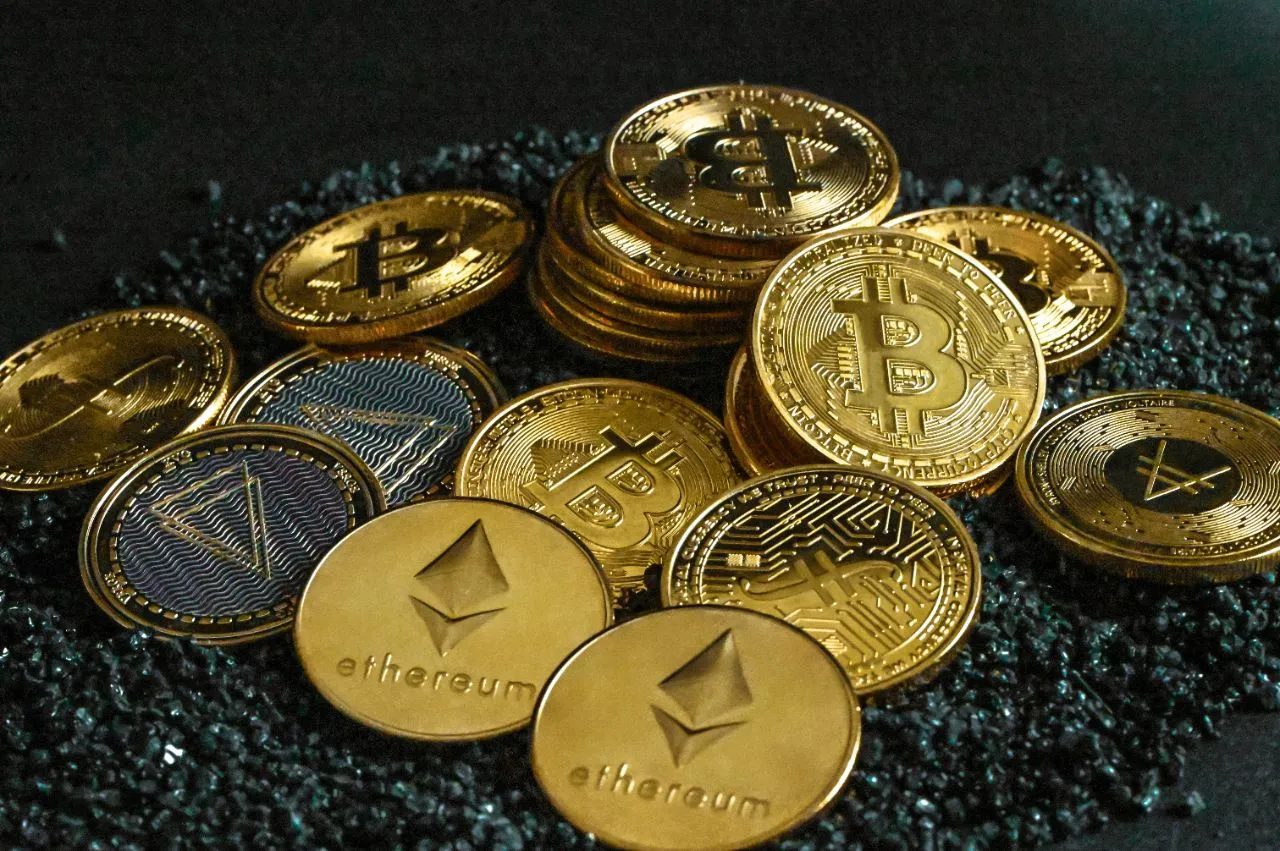
Photo by Traxer on Unsplash

Impact of asset volatility on property values

The policy follows growing evidence that volatility in assets like cryptocurrency can spill over into the property market. A 2024 study cited by Maeil Business Newspaper highlighted that both the COVID-era stock rally and Bitcoin's 2023 price surge had a discernible impact on housing values.


According to Yu Jung-suk, a professor at Dankook University, apartments in Seoul's affluent Gangnam district are particularly sensitive to fluctuations in Bitcoin and the KOSDAQ index. He noted that high-profile property acquisitions by young crypto investors, even if few in number, can significantly sway market sentiment. Professor Yu suggested that regulators may need more comprehensive tools to manage the risks connecting different asset classes.


The government's new measures also seek to cool the capital's housing market, where prices have continued to rise despite a slowdown in growth. In contrast, prices in areas outside Seoul have been declining since 2022. To address the supply-demand imbalance, officials plan to begin construction of 1.35 million new homes in the Seoul metropolitan area between 2026 and 2030.


Stablecoin regulation and CBDC trials advance

Beyond real estate, officials are developing a formal regulatory structure for stablecoins. The Presidential Commission on Policy Planning is reportedly considering a model where a consortium of banks and fintech firms would be granted rights to issue a won-pegged stablecoin.


Supervision for this new system would fall to a proposed Financial Stability Council, a body intended to serve as a central coordinator for financial policy, comprising the finance ministry, the Bank of Korea, and other regulators. The initiative aims to combine the stability of the traditional banking sector with the innovation of non-bank financial companies.


The evolving regulatory environment is attracting attention from global industry leaders. Executives from Tether, the issuer of the USDT stablecoin, met with Shinhan Financial Group CEO Jin Ok-dong in Seoul on Sept. 8. While Tether representatives stated they were monitoring the regulatory climate, they confirmed no specific business plans were discussed.


Separately, the Bank of Korea is moving forward with digital currency experiments. In partnership with government agencies and six major commercial banks, the central bank will launch a pilot program to test the use of a digital currency for distributing state subsidies and vouchers.

 

More to Read
View All
Web3 & Enterprise·

Aug 09, 2023

Ret Games Teams Up with Binance to Support Blockchain Acceleration Program

Ret Games Teams Up with Binance to Support Blockchain Acceleration ProgramKorean Web3 gaming studio Ret Games said Tuesday it has signed a memorandum of understanding (MOU) with Binance, the world’s largest crypto exchange, to support a blockchain company acceleration program spearheaded by Incheon Technopark’s Blockchain Center.Bolstering blockchain startupsThe two firms will team up as a single operator of the accelerator program that will supply Incheon-based startups and small companies with the resources required to grow their blockchain businesses and establish Incheon, a city next to the nation’s capital of Seoul, as a blockchain hub. They will also be joined by a third member of the operator — on-chain risk rating solution developer Undefined Labs.Photo by Shubham’s Web3 on Unsplash“We plan to work with Binance to operate an efficient and innovative acceleration program for Incheon-based startups, fostering their growth and development,” said Kim Sung-yoon, CEO of Ret Games.Binance will provide global networking and business consultations in areas such as business modeling and blockchain technology development, while Ret Games will contribute its blockchain infrastructure and development. Additionally, Undefined Labs will provide comprehensive insights into the blockchain industry, covering technology, market trends, and use cases.Five companies for the acceleration program were chosen by Incheon Technopark — AO2, Bemuse, enterBlock, Swan Electronics, and Asia Auto Pacific. They will begin receiving support worth 20 million KRW (approximately $15,000) starting this month.The operator will be required to monitor the progress of these companies during the course of the program, which will end on November 30.Second operatorThere will also be another operator for the program besides the consortium, which solely consists of venture capital firm Nanuhm Angels. It will enable participants to test their business models by granting them access to Rotonda’s launchpad. Rotonda is a subsidiary of the Korean crypto exchange Bithumb and operates the Web3 Burrito Wallet.

news
Policy & Regulation·

May 22, 2025

Two Russians caught in $42M USDT cross-border transfer case in South Korea

Two Russian nationals have been referred to prosecutors in South Korea for allegedly facilitating the illegal transfer of roughly 58 billion won ($42.2 million) to Russia using USDT, a U.S. dollar-pegged stablecoin. According to a report by KBS News, the Seoul branch of the Korea Customs Service (KCS) announced the charges on May 22, citing violations of the country’s Foreign Exchange Transaction Act. The suspects, a man and a woman both in their 40s, reportedly operated an unauthorized money exchange business to carry out the transactions.Photo by Polina Tankilevitch on PexelsOver 6K transactionsAuthorities suspect the pair of repeatedly using USDT to conduct cross-border transfers between South Korea and Russia. From January 2023 to July 2023, the duo allegedly completed 6,156 illegal remittance transactions, either sending funds abroad or receiving payments on behalf of others, totaling the full 58 billion won in question. Investigators revealed that the two suspects, who hold permanent residency in South Korea and have overseas Korean status, used the messaging app Telegram to solicit clients. When transferring money to Russia, they reportedly collected funds via kiosks in convenience stores that allow users to send money without a bank account. The collected cash was then used to purchase USDT to complete the remittances. According to customs officials, the suspects would either send the cryptocurrency directly to a crypto wallet specified by the customer, or forward it to accomplices in Russia. These accomplices would then convert the crypto to cash and distribute rubles to recipients through local channels. Illicit crypto use by businesses The operation also handled export payments for South Korean businesses. The suspects reportedly accepted payments from Russian importers on behalf of Korean used car dealers and cosmetics exporters. In these cases, associates in Russia would collect ruble payments from importers, convert the funds into USDT and send the cryptocurrency to contacts in Korea. The funds were then exchanged for Korean won and deposited into the accounts of the businesses. Customs officials believe that the group’s services became particularly appealing after the start of the Russia-Ukraine war in 2022. In the wake of U.S. and international sanctions against Russia, legitimate financial channels for cross-border transactions became restricted, prompting some companies and individuals to turn to illegal alternatives. The Korean export companies involved in these transactions have been fined. The Seoul Customs Office emphasized that illegal money exchange operations are often exploited for criminal activities such as drug trafficking, voice phishing and gambling. In response, the agency committed to stronger enforcement and pledged to spare no effort in combating unlawful financial operations. Scams grow inside the borderThe surge in crypto-related financial crimes in South Korea extends beyond cross-border transactions. According to a recent report by Maeil Business Newspaper, Kakao Pay—a local mobile payment platform—has detected around 70,000 cases of malicious apps linked to virtual assets over the past month. Of those, 80% were associated with Ponzi schemes, where fraudsters lure victims with promises of high returns before disappearing with the funds. A Kakao Pay spokesperson noted that new forms of security threats are emerging alongside the rapid growth of the crypto market, adding that the company is prioritizing the development of stronger security systems. 

news
Policy & Regulation·

Dec 14, 2023

U.S. authorities seize crypto tied to Asian ‘pig butchering’ scam

U.S. authorities seize crypto tied to Asian ‘pig butchering’ scamThe United States government has taken control of digital currency valued at approximately half a million dollars from an account linked to a Chinese individual implicated in a Reuters investigation into a crypto-investment fraud originating from Southeast Asia.Photo by Growtika on Unsplash‘Pig butchering’According to Reuters, U.S. officials have disclosed that the seized assets are connected to a crypto-investment scam known as “pig butchering,” where fraudsters manipulate unsuspecting individuals they encounter online, convincing them to invest in fraudulent crypto schemes.The unsuspecting scam victim (the pig) is conned by scammers into handing over money with the promise of an outsized return. Once funds have been handed over, the vast majority of victims are unable to recover their money.According to a document filed by U.S. authorities in federal court in Massachusetts, the U.S. Secret Service confiscated the crypto in June from an account registered to Wang Yicheng. At the time of the seizure, the digital currency was valued at around $500,000. The funds were traced back to a victim in Massachusetts who had initially fallen prey to the scam.In a recent Reuters article, Wang was identified as a businessman who cultivated relationships with members of Thailand’s law enforcement and political elite while serving as the vice president of a Chinese trade group based in Bangkok. The report outlined that a crypto account in Wang’s name had received over $90 million in recent years, with at least $9.1 million linked to a crypto wallet associated with pig-butchering scams, as reported by U.S. blockchain analysis firm TRM Labs.Multi-million dollar scamsOne case highlighted in the report involved a California man who was scammed out of approximately $2.7 million, funds that were channeled into the account in Wang’s name. Another example cited in the U.S. court filing detailed a resident of Cambridge, Massachusetts, who was allegedly defrauded of about $478,000 worth of crypto, which ended up in two crypto accounts, one of which belonged to Wang.The U.S. court filing, part of a civil forfeiture action, seeks court approval to take possession of assets linked to the alleged crime. While no criminal charges have been filed, Acting U.S. Attorney Joshua Levy emphasized the use of civil forfeitures to recover funds stolen through crypto fraud schemes, highlighting law enforcement’s adaptability in the face of cryptocurrency transactions’ seemingly elusive nature.Crypto scammers sanctionedIn a related development, authorities in the United Kingdom reported on Friday that individuals operating pig butchering crypto scams in Myanmar, Cambodia and Laos had been sanctioned, in a move coordinated with their counterparts in the U.S. and Canada, alongside the United Nations Human Rights Organization.Many of these cases are understood to involve human trafficking, where individuals are illegally detained and forced to work on pig butchering crypto scams.

news
Loading