Top

Okto commits $5 million treasury fund to support Vauld users

Web3 & Enterprise·November 07, 2023, 1:08 AM

Okto, the self-custody DeFi wallet app offered by Indian crypto exchange CoinDCX, has pledged a $5 million treasury fund to provide support to Vauld users.

Vauld, a Singapore-based crypto lending platform, brought a halt to all trading, withdrawal and deposit activities in 2022 as it ran into liquidity issues. The business has been undergoing a process of restructuring under the protection of the courts in Singapore ever since.

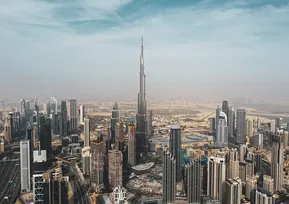
Photo by Towfiqu barbhuiya on Unsplash


Incentivizing user asset transfer

In response, Okto has stepped forward with a proactive approach to assist Vauld users in their transition. Okto is offering a 2% bonus to users who opt to transfer their assets from Vauld to Okto.

Neeraj Khandelwal, the Founder of Okto, emphasized the company’s overarching mission while unveiling this $5 million initiative. He said: “While this $5 million fund represents one of our initiatives to support the crypto ecosystem, our overarching vision is to empower the Web3 community through cutting-edge technology-backed platforms and apps designed to tackle the broader challenges within the ecosystem.”


Self-custody assurance feature

In addition to this incentive, Okto is also offering a self-custody assurance feature. This feature allows users to gain complete ownership of their private keys, ensuring that access to their funds remains exclusively in their hands. Moreover, users can benefit from round-the-clock access to monitor their assets. That delivers a reassuring sense of control and peace of mind regarding the users’ cryptocurrency holdings, against a backdrop of those users having had the experience of being unable to withdraw their funds when the Vauld platform paused trading.

The concept of self-custody is central to what crypto was supposed to be about. It grants complete ownership of assets to the user. Khandelwal outlined that Okto was established on the basis that it could strike a balance between security, convenience and custody. In this way, it felt that it could resolve what could be termed as the crypto wallet trilemma. “Okto’s enduring mission has been to provide users with a secure and user-friendly app, and we will persistently strive to achieve this objective,” Khandelwal added.


Mitigating risk

Launched globally earlier this year, Okto is a keyless, self-custody Web3 wallet that ensures secure access to DeFi services while prioritizing the safety of users’ funds. This all-in-one Web3 app approach eliminates the cumbersome need to safeguard seed phrases, ensuring users have full control of their funds.

Moreover, it mitigates the risk of a single point of failure through its state-of-the-art, custom-built, consensus-driven Multi-Party Computation (MPC) technology. With MPC, private keys required for fund access and control are never fully exposed, guaranteeing the constant security of users’ assets.

Vivek Gupta, Chief Technology Officer at Okto, elaborated on the technology behind Okto’s product offering, stating:

“Okto uses state of the art Multi-Party-Computation algorithms to create users’ private keys. Our MPC algorithm never produces a complete private key. Our MPC algorithm uses three nodes which communicate with each other under proprietary encryption channels and create a unique sensitive material on each node.”

In addition to its security measures, Okto wallet boasts compatibility with multiple Web3 chains such as Polygon, BSC and Avalanche, along with protocols like Stader and WooFi, among others.

More to Read
View All
Web3 & Enterprise·

May 15, 2023

Coin Oasis Founder Thinks UAE Set Up For Crypto Success

Coin Oasis Founder Thinks UAE Set Up For Crypto SuccessAs the dust settles on 2023's Dubai Fintech Summit, which took place last week, one takeaway offered by the Co-Founder of blockchain ecosystem firm Crypto Oasis is that the United Arab Emirates (UAE) has set itself up for success where crypto business is concerned.In speaking with crypto publication CoinTelegraph on the fringes of the Dubai Fintech Summit, Coin Oasis Co-Founder and Managing Partner Saqr Ereiqat suggested that the regulatory infrastructure that the UAE has put in place provides an ideal foundation upon which crypto companies can develop and prosper.Photo by Mo Ismail on PexelsRegulatory infrastructureEreiqat pointed to some key fundamentals that crypto entrepreneurs and start-up founders should look at when deciding on the location that will best meet their needs and help to optimize their route to market and ultimate success. This includes the regulatory infrastructure.The UAE authorities and regulators at a national level, together with their colleagues within the regulatory agencies in the Emirates of Dubai and Abu Dhabi, have been doing some heavy lifting in this regard over recent months.They’ve all been working on establishing a workable regulatory framework, and as part of that, a licensing process. In the case of Dubai, its Virtual Assets Regulatory Authority (VARA) has started to issue preliminary or Minimum Viable Product (MVP) license approvals that enable crypto startups to get started, while providing them with a pathway towards obtaining Full Market Product (FMP) licensing at a later stage.Talent poolThe other key requirements that Ereiqat set out were digital infrastructure alongside an ability to attract and provide a pool of talent relative to the crypto assets space. In respect of these key considerations, Ereiqat believes that the UAE hits the target in each case.“The UAE’s regulatory framework is more streamlined and business-friendly compared to the complex and fragmented regulatory environment in the US,” he told the crypto media firm.To enhance these fundamentals, Ereiqat also alluded to a depth of capital that could potentially find its way into UAE-based crypto businesses, easing these start-ups’ efforts in executing on funding rounds as they look to achieve growth.Ereiqat maintains that the interest in the region is already evident, citing a data-point that suggests there are 1,800 Web3-centric businesses already operating in the region, with more than 8,000 people working for those start-up businesses. Speaking to that reality further, he said:“The Dubai FinTech Summit was a significant event that brought together stakeholders from the fintech industry […] The presence of crypto and Web3 leaders and projects at the event is an important indicator of the growing interest and adoption of these technologies in the region.”This enthusiasm and belief in the existence of the right Web3 business environment in the UAE was echoed at that event by both Coinbase Founder and CEO Brian Armstrong and Ripple Founder and CEO Brad Garlinghouse. Both industry figures featured as keynote speakers at the event. Armstrong alluded to the potential of Coinbase establishing a base in Abu Dhabi while Garlinghouse announced the opening of a Ripple office in Dubai.

news
Markets·

Apr 19, 2023

Crypto Winter Halves Korean Bank Fee Profits

Crypto Winter Halves Korean Bank Fee ProfitsLast year, Korean banks collected only half the amount in fees from crypto exchanges compared to the previous year, according to Korean news agency News1.©Pexels/PixabayDeclining bank fee profitsFiles submitted by the Korean Financial Services Commission to Yun Chang-hyun, a member of the ruling People Power Party, revealed that the five major Korean crypto exchanges paid 20.4 billion KRW (~$15.6 million) in fees to banks last year, which is a 49.4% decrease from the previous year’s 40.3 billion KRW (~$30.7 million). These exchanges (Upbit, Bithumb, Coinone, Korbit, and Gopax) have established agreements with banks to hold real-name bank accounts, which is a legal requirement for exchanges that wish to conduct trades in Korean won.Banks that have provided real-name accounts to crypto exchanges saw an increase in fee profits from 2019 to 2021. However, due to a decline in market sentiment last year, trade volume decreased, resulting in a reduction of bank fees. Last year’s crypto winter is attributable to various factors, including uncertainties in the global economy and collapses of crypto enterprises such as Terraform Labs and FTX.Fees by exchangesIn terms of fees paid to banks by exchanges last year, the largest exchange, Upbit, paid 13.9 billion KRW (~$10.6 million) in fees to Kbank, a mobile banking service provider. Bithumb and Coinone paid 4.9 billion KRW (~$3.7 million) and 989 million KRW (~$750,000) in fees to NH Bank, respectively. It is worth noting that Coinone switched its bank from NH Bank to Kakao Bank last November, paying 72 million KRW (~$55,000) to Kakao Bank in the fourth quarter. Korbit paid 486 million KRW (~$370,000) and 19 million KRW (~$14,500) to Shinhan Bank and Jeonbuk Bank, respectively. Gopax partnered with Jeonbuk Bank to obtain its real-name accounts in April last year.Lawmaker Yun said it was apparent that partnerships were being forged between only a handful of banks and crypto enterprises. Current regulations have to be reviewed to encourage more banks to participate in various blockchain businesses, he added.

news
Policy & Regulation·

Apr 11, 2023

Hong Kong Setting High Bar on Crypto Rules

Hong Kong Setting High Bar on Crypto RulesLucy Gazmararian, a Fintech Advisory Group member of Hong Kong’s Securities and Futures Commission (SFC) and founder of crypto venture firm Token Bay Capital has said that the standards for Virtual Asset Service Providers (VASPs) in Hong Kong are incredibly high.©Pexels/Brayden LawThe Securities and Futures Commission (SFC) has established these strict guidelines as they want the crypto industry to adhere to the same compliance standards as traditional financial firms.Gazmararian made the comments in discussion with Cointelegraph on the fringes of the Hong Kong WOW Summit. Although the bar is set high, Gazmararian maintains that it is not without good reason. The SFC’s approach is to ask VASPs to apply the same standards that existing financial institutions such as huge banks and asset managers must comply with.Short term challengesAccording to a consultation paper released by the SFC on February 20th, licensed VASPs may serve retail investors, but the standard of investor protection measures imposed needs to be considered. Additionally, Anti-Money Laundering (AML) and Know Your Customer (KYC) policies were also discussed.While these high standards may benefit the industry in the long run, Gazmararian believes they may pose challenges for the crypto industry in Hong Kong over the short term. She explained that many crypto businesses are in the startup phase and have funding but not huge amounts. Therefore, complying with the framework may incur significant costs. Gazmararian mentioned the need for local VASPs to have insurance, independent assessment reports, and store crypto in cold storage. It is important to note that these costs may prevent some startups from entering the market, which may have consequences on the industry’s growth in Hong Kong.The Token Bay Capital founder believes that with a solid regulatory framework in place, more well-capitalized financial firms will be willing to help promising startups get off the ground. In her opinion, the companies that receive a license will be upholding the most stringent standards.Ambitions to be global crypto hubThe SFC has encouraged individuals, corporations, and crypto firms to review the 361-page consultation paper and provide feedback. The securities regulator wants these entities to share their views and point to things that may have been missed. According to Gazmararian, the SFC is “absolutely focused” on getting everything right, so they are seeking input from a wide range of sources.Submissions for feedback on the consultation paper closed on March 31. Hong Kong has made significant strides in recent months to establish itself as the world’s next crypto hub. According to a March 20 statement by the Secretary for Financial Services and the Treasury, Christian Hui, more than 80 digital asset firms have expressed interest in establishing a presence in Hong Kong over the last few months. This interest is a testament to the growing importance of the crypto industry and the favorable environment that Hong Kong is creating for its growth.

news
Loading