Top

Indonesia to Launch Blockchain Trials to Enhance Public Services

Policy & Regulation·October 14, 2023, 4:10 AM

In the wake of its recent government-backed cryptocurrency exchange launch, Indonesia is moving further forward to launch trials that employ blockchain technology within its public services sector.

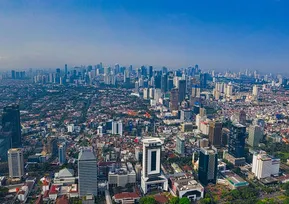
Photo by Bisma Mahendra on Unsplash


Blockchain-based land ownership records

At the recent Blockchain Economy Summit held in Dubai, Tuhu Nugraha, the Principal of the Indonesia Applied Digital Economy and Regulatory Network (IADERN), told Cointelegraph that these trials will encompass the utilization of blockchain-based digital certificates for land ownership and certificates of competence within the education sector.

The executive believes that blockchain’s inherent attributes, which include characteristics such as immutability and transparency, can be harnessed to combat certificate fraud. By anchoring these certificates in blockchain’s secure ledger, the government can efficiently verify the authenticity of various digital certificates, which is a significant leap forward in ensuring the integrity of critical documents.

Nugraha is an advisor to the Indonesian government on blockchain and metaverse technologies. He emphasized the government’s collaborative approach to Web3 technology. Additionally, Nugraha revealed that the Indonesian government is working in close partnership with various blockchain-focused associations to conduct experiments and gather insights into the multifaceted implications of blockchain across diverse sectors. Instead of imposing rigid regulations, Nugraha maintains that the Indonesian government is committed to crafting regulations that spur innovation.

Cointelegraph also spoke with Grace Sabandar, Co-Founder of the Indonesia Blockchain and Metaverse Center (IBMC). Sabandar, an advocate of blockchain’s potential, emphasized the pivotal role of Indonesia’s youthful demographic on the basis that this dynamic demographic is inherently adaptable to new technology.


Youthful demographic to capitalize on Web3

Sabandar made the point that this younger Indonesian demographic has already demonstrated itself to be one of the world’s largest user bases for Web2 social media platforms such as Facebook and Instagram. On that basis, she believes Indonesia is poised to lead in the adoption of Web3 technology. She remarked:

“We want to be the leader, not only the user of technology, because now, because of decentralization, anybody can do something, anybody can create something.”

Furthermore, Sabandar highlighted the crucial educational role played by the IBMC in collaboration with the government, private sector stakeholders, media, and academia. Their mission revolves around enlightening the nation about the manifold benefits of blockchain, emphasizing transparency, the utility of smart contracts in business operations, the essence of decentralization, and other fundamental aspects.


Realizing blockchain and Web3 potential

Earlier this week, a report published by South Korean crypto data platform Xangle in conjunction with Web3 consulting firm Tiger Research concluded that Indonesia has significant potential to grow its Web3 sector.

Reports in recent days have also demonstrated further instances of the use of blockchain technology in the country, with state-owned ID Food collaborating with Singapore’s D3 Labs to establish a blockchain-based fish trading process. In July, South Korean tech company Milk Partners launched its blockchain-based reward points service in Indonesia.

Indonesia’s blockchain development and adoption are being spurred on by the enthusiasm of its tech-savvy youth, collaborative partnerships, and a government dedicated to innovation and transparency. As it paves the way in the Web3 era, Indonesia seeks to leverage blockchain technology to benefit public services, foster trust, and lead by example in the global digital revolution.


More to Read
View All
Policy & Regulation·

Apr 09, 2025

DLD partners with regulator in Dubai to integrate tokenized property

The Dubai Land Department (DLD), a government agency responsible for the registration of real estate in Dubai and the promotion of real estate investments, has signed an agreement with the Virtual Assets Regulatory Authority (VARA), a local regulator, to better integrate tokenized real estate within existing systems. In a statement published on the DLD website on April 6, the government agency set out further details on the collaboration. The purpose of the agreement is to better accommodate fractional ownership of Dubai real estate through tokenization. Photo by Precondo CA on UnsplashLinking fractional ownership to DLD registryTo that end, a governance system will be put in place in order to link the DLD’s land and property registry with tokenized, fractional ownership of property. The parties believe that this approach will lead to greater operational efficiency for stakeholders such as property management firms. Furthermore, greater accommodation of tokenized ownership will lead to enhanced liquidity within the Dubai real estate market.  As a consequence of this improved liquidity and facilitating a more seamless approach in terms of operational efficiency for property management firms, it’s believed that a greater share of global investment in local real estate can be achieved. Broadening the investor baseFractional ownership via tokenized real estate opens the market up to a broader range of potential investors. On this basis, the collaboration can play a role in contributing towards the objectives of Dubai’s Real Estate Strategy 2033, which sets out to boost the local property sector’s contribution towards gross domestic product (GDP). That initiative targets a real estate market value of AED 1 trillion ($272 billion). The DLD said that the initiative also feeds into the broader objectives of the Dubai Economic Agenda (D33), a ten-year plan that has been set out to double Dubai’s economy by 2033, through focusing on innovation, achieving competitiveness at a global level and sustainable growth. Helal Almari, the director general of Dubai’s Department of Economy and Tourism, commented on the partnership, stating that it reflects the future-focused innovation, which he claims Dubai has already become associated with. He added: “Real Estate and Virtual Assets are key pillars of the D33 Economic Agenda D33 and by joining forces DLD and VARA will be creating the blueprint for RE 2.0 in a Decentralised Future Economy.” Almari expressed the belief that putting legal safeguards in place to recognize fractional ownership rights where real estate is concerned will facilitate “more inclusive economic participation” in this market sector.  The DLD recently launched a real estate tokenization pilot project in collaboration with VARA and the Dubai Future Foundation (DFF). At that time, DLD Director General Marwan Ahmed Bin Ghalita recognized the potential that tokenization can bring to the real estate sector. He stated: “By converting real estate assets into digital tokens recorded on blockchain technology, tokenization simplifies and enhances buying, selling, and investment processes.”Last month, Scott Thiel, founder and CEO of Dubai-based real-world asset (RWA) token marketplace Tokinvest, outlined that RWA asset tokenization in the United Arab Emirates (UAE) is gaining momentum. Commenting on this latest development, Thiel said that it’s a demonstration that “the future of real estate investment is onchain.”

news
Policy & Regulation·

Oct 24, 2023

Coins.ph Suffers 12M XRP Exploit

Coins.ph Suffers 12M XRP ExploitCoins.ph, a leading cryptocurrency exchange in the Philippines, is grappling with the alleged loss of over 12 million XRP tokens, valued at $6 million, in a purported exploit.That’s according to various reports that have been emerging from the Philippines in recent days. The incident not only spotlights serious questions about the security protocols and regulatory oversight of crypto exchanges in the Philippines but it also sparked fears of an impact on market sentiment relative to the XRP unit price.Photo by Kanchanara on UnsplashHacker used various platformsThe reports revealed that an exploit targeted Coins.ph, resulting in the unauthorized transfer and exchange of 12 million XRP tokens in a mere 30 minutes. The hacker behind this incident managed to navigate through various platforms, including OKX, WhiteBIT, OrbitBridge, SimpleSwap, ChangeNOW, and Fixed Float, leaving users and investors alarmed.Coins.ph’s wallet, the focal point of the exploit, has a connection to BitGo, a California-based crypto custody firm, which initiated its activation back in 2018. At present, neither Coins.ph nor BitGo has issued any official statements regarding this reported breach.The alleged exploit brings to the forefront once again, the importance of robust security protocols and regulatory oversight within the cryptocurrency industry in the Philippines and elsewhere. Coins.ph is a major player in the crypto sector in the Southeast Asian country, having more than 10 million users.The hacker responsible for the exploit attempted to execute several transactions, trading nearly 13 million XRP tokens, with one transaction seemingly failing to go through. Following the successful acquisition of approximately 12.2 million XRP tokens, the hacker swiftly moved these assets to different exchanges.Responding to the incident, some platforms promptly blocked or marked the stolen XRP tokens and sought assistance from blockchain analysis firms such as Cristal and Chainalysis. This exploit is being deemed as one of the most substantial thefts of XRP tokens in recent history.It’s understood that WhiteBIT blocked the movement of some of the XRP that has been implicated in the hack. WhiteBIT told The Block: “WhiteBIT, as soon as received a request from the Philippines-based exchange Coins, promptly reacted and blocked 445,000 Ripple.”XRP impactXRP, the native cryptocurrency of the Ripple network, which primarily focuses on facilitating cross-border payments, has been grappling with its price stability in recent times. This has been largely due to the ongoing legal disputes between Ripple and the US Securities and Exchange Commission (SEC) over allegations of conducting unregistered securities offerings.While it had been speculated initially that the hack would have impacted the XRP unit price, XRP seems to have held up well. At the time of writing, it was trading at $0.526. There has been an overall uplift in the crypto market as a whole over the course of the past 24 hours which may be a contributing factor, with digital asset market cap being up 2.7%.As the crypto community waits for official responses from Coins.ph and BitGo, the incident serves as a stark reminder of the importance of safeguarding digital assets and enhancing regulatory oversight in an industry that continues to evolve and expand.

news
Policy & Regulation·

Jul 15, 2023

Indonesia’s Financial Regulator Appoints Hasan Fawzi to Oversee Crypto

Indonesia’s Financial Regulator Appoints Hasan Fawzi to Oversee CryptoThe Financial Services Authority (OJK) of Indonesia has chosen Hasan Fawzi, a former executive of the Indonesia Stock Exchange (IDX), as the head of fintech and digital assets oversight and innovation.That’s according to a number of reports published in local and regional news outlets on Thursday. Fawzi, who has served as the Director of the Indonesia Bond Pricing Agency (IBPA) since 2008, brings a wealth of experience in the securities pricing sector. Alongside Fawzi, Lodewik Paulus Agusman, previously responsible for the internal audit department at Bank Indonesia, has also been elected as a member of the OJK Board of Commissioners. These appointments were approved by the House of Representatives Commission overseeing banking and finance.Photo by Tom Fisk on PexelsDigital asset oversightFawzi’s role as the Executive Director for the Supervision of Technological Innovation in the Financial Sector, Digital Financial Assets, and Crypto-assets places him in charge of overseeing peer-to-peer lending platforms, cryptocurrencies, and other components of the evolving industry.Indonesia’s stance on cryptocurrencies remains complex and multi-faceted. While the country is striving to launch a state-backed crypto exchange by mid-2023, as announced by Didid Noordiatmoko, head of the Commodity Futures Trading Regulatory Agency (Bappebti), recent statements by Bali Governor Wayan Koster suggest a tightening of regulations concerning crypto payments.Governor Koster emphasized that foreign tourists who use cryptocurrencies for payments, violate visa provisions, or engage in unauthorized activities will face strict consequences. The Bali Representative Office of Bank Indonesia reiterated that while cryptocurrencies themselves are legal in Indonesia, their use as a payment instrument is not.The appointment of Hasan Fawzi to OJK demonstrates Indonesia’s strategic efforts to strengthen oversight and foster innovation within the fintech and digital asset sectors. Fawzi’s extensive experience in securities pricing and leadership in the Indonesia Stock Exchange make him a valuable addition to the regulatory landscape. As Indonesia navigates the complexities of cryptocurrency usage, it will be fascinating to observe the evolution of regulations and how the country’s financial authorities shape the future of the industry.Controlled innovationThese recent developments highlight Indonesia’s determination to stay at the forefront of financial technology albeit with efforts to retain strict controls over the rollout of that innovation. The country recognizes the importance of effectively regulating emerging technologies while fostering an environment conducive to innovation. With Fawzi at the helm of fintech and digital assets oversight, the OJK aims to strike a balance that protects investors and consumers while promoting technological advancement.As these appointments await final approval from President Joko Widodo, the financial industry and crypto enthusiasts will closely watch Indonesia’s regulatory landscape. The decisions made in the coming months will shape the future of fintech and crypto in the country. Indonesia’s approach to this dynamic sector serves as a case study for other nations seeking to establish oversight and embrace the potential of digital assets. Their international regulatory peers will be monitoring efforts in Indonesia to bring about effective regulation of the digital assets space.

news
Loading