Top

The Current Status of Crypto in Asia

Markets·April 10, 2023, 2:34 AM

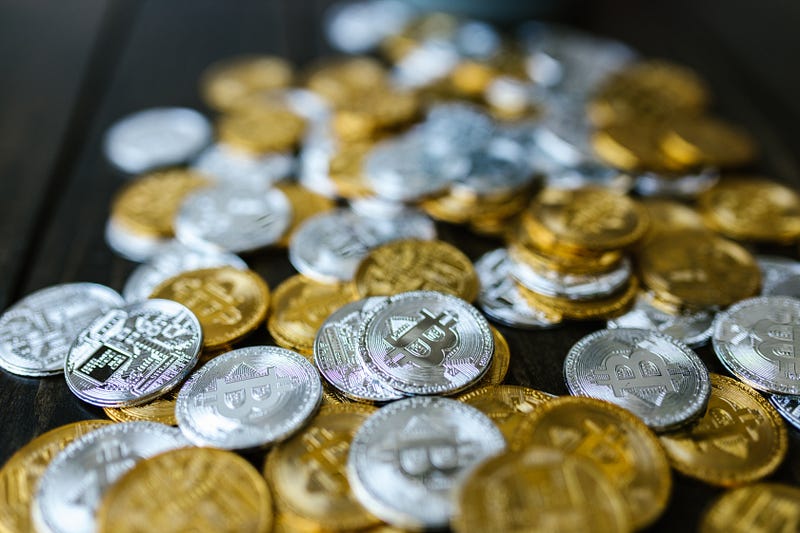
With the United States having taken a very harsh line relative to cryptocurrency of late, there has been a lot of chatter surrounding the likelihood of Asia driving crypto forward. With that in mind, we’ve taken a look at the state of crypto in a number of Asian countries.
©Pexels/RODNAE Productions


Japan

Japan is among the most crypto-friendly developed nations globally, having acknowledged Bitcoin as a legal payment mode and regulated crypto exchanges in 2017. Bitflyer and Bitbank are among the crypto exchanges operating in Japan, which currently has over 23 authorized crypto exchanges.

The country aims to balance consumer protection and innovation by requiring crypto exchanges to register with the FSA, comply with stringent rules on security, anti-money laundering, and reporting, undergo regular FSA audits and inspections, and be part of the Japan Virtual Currency Exchange Association (JVCEA) for self-regulation.

Despite being regulated, Japan’s crypto market is lively, with the Yen ranking second for Bitcoin trading volume by currency. The country has a flourishing crypto community, including blockchain firm LayerX, which requires ChatGPT expertise. Japan is also exploring the potential of central bank digital currencies (CBDCs) and plans to launch a pilot program with private sector partners in 2023 to test their feasibility for various use cases, aligning with the country’s strict approach to crypto.

Japan’s crypto taxation is unfavorable, with crypto gains taxed at the same rates as regular income, potentially reaching up to 55% for higher income brackets. However, Japan is one of the few countries with comprehensive guidelines on crypto taxation, with the NTA providing a detailed document that explains different types of transactions and their corresponding tax calculations.


China

China’s ban on crypto mining led to many miners moving their operations overseas or selling their equipment at a loss. However, China’s crypto-mining industry bounced back, with a 21% share of the global hash rate. While China has a competitive advantage in cheap electricity, regulatory risks remain.

China’s digital yuan is a legal tender fully backed by the People’s Bank of China (PBOC) and pegged to the renminbi. Unlike most cryptocurrencies, it is not decentralized or anonymous but is monitored by the PBOC. Adoption has been slow despite various partnerships and pilot tests, including with WeChat Pay.

China is working with other countries on the Multiple CBDC Bridge project to explore the feasibility of cross-border fund transfers among different currencies. Launching its own CBDC may allow China to reduce its reliance on the US dollar and increase its influence over global trade and monetary policy. However, the success of that endeavor is questionable.


Hong Kong

Hong Kong is a crypto-friendly jurisdiction that faces banking access and mainland influence challenges. Despite difficulties opening local bank accounts after the closure of two crypto-friendly banks, Hong Kong remains committed to fostering its fintech hub status.

The government proposed allowing retail investors to trade cryptocurrencies and ETFs and reviewing property rights for tokenized assets while considering legalizing smart contracts. Crypto purchases for all citizens are due to be legalized in June 2023. These measures should attract more investors and businesses to the city’s crypto industry.

Nonetheless, Hong Kong must overcome hurdles regarding banking access and regulatory uncertainty from mainland China to maintain its attractive status for crypto businesses and investors.


Singapore

Singapore has a supportive crypto ecosystem and regulations with low tax rates, favorable policies, strong financial center reputation, and proximity to other Asian markets. Notable international crypto players with offices in Singapore include Coinbase, Crypto.com and Kraken.

However, Singapore imposes strict rules on crypto service providers to prevent illicit activities, requiring digital payment token (DPT) services to obtain a license under the Payment Services Act or face fines and jail time. Singapore’s crypto industry also faces competition from other jurisdictions, such as Hong Kong and the UAE, offering tax incentives and favorable legal frameworks.


India

India’s crypto industry faces uncertainties due to the lack of a clear regulatory framework and frequent changes in the government’s stance. Despite having a large tech-savvy population and an active crypto community, the industry struggles with regulatory compliance and legal risks. In 2018, the Reserve Bank of India’s ban on banking channels cut off many crypto businesses and users.

The Supreme Court of India later overturned the ban, but draft bills to ban or regulate crypto have since been proposed without official introduction or passage. India recently imposed a preemptive ban on crypto advertising and sponsorships and is exploring the integration of a CBDC. India’s position on crypto leans toward the anti-crypto side, just short of an outright ban.

For brevity, we’ve confined discussion to these five Asian venues. However, it would be remiss of us not to mention that Vietnam has one of the highest levels of crypto adoption in the world while having a crypto trading ban in place. Not so in South Korea where crypto trading is legal, with strict regulation having been put in place. Meanwhile, Thailand’s Securities and Exchange Commission (SEC) has approved four cryptocurrencies as tradable assets, with crypto trading in the country having a legal status.

It’s difficult to figure out precisely how crypto will develop geographically but it seems certain that its future will be molded to some extent in Asia.


More to Read
View All
Web3 & Enterprise·

Jan 25, 2024

Aevo opens up network to other developers

Aevo, the Singaporean crypto derivatives platform, is gearing up to broaden its ecosystem by allowing other protocols to build on its rollup infrastructure. ‘The future is modular’Currently, Aevo exchange is the sole application on its rollup, but according to Julian Koh, co-founder of Ribbon Finance, the platform's parent protocol, the intention is to open it up for other developers. On Tuesday, Koh retweeted a social media post by the company which stated “The future is modular,” adding the comment “build whatever.” Koh told The Block that "the primary angle here is we are currently built on our own rollup — but Aevo exchange is currently the only app on this rollup. Our plan is basically to open this up for other [developers] as well and build an ecosystem around our exchange."Photo by Shubham Dhage on UnsplashTransitioning to CelestiaAevo, specializing in options and derivatives trading, operates on its own Layer 2 network, built using the OP Stack and running atop the Ethereum blockchain. In a cost-saving initiative, the platform plans to transition to Celestia for storing transaction data in the near term. Celestia launched on mainnet last October with the aim of enhancing blockchain scalability. It’s a modular data availability network which securely scales relative to the number of network users. This expansion is part of a broader roadmap set to be unveiled in the coming weeks, as Aevo looks towards achieving aggressive growth. According to DeFi data aggregator DeFiLlama, Aevo has already been hitting ever higher numbers in recent months. Only two months ago, the protocol had $10 million total value locked (TVL). At the time of writing that metric has increased to $50 million. Last month, the platform achieved a new record-high weekly trading volume level in excess of $500 million. Julian Koh attributes this growth in part to Aevo's yield-bearing balances. Users deposit their crypto, which is then sent to MakerDAO to generate yield. In return, users receive a derivative token to trade on the Aevo platform, providing a mechanism for traders to earn yield while actively engaging in trading. 2023 rebrandRibbon Finance, which initially launched Aevo separately, merged the projects under the Aevo branding in July 2023. As part of the rebrand, an Aevo token will be introduced, with a 1:1 exchange rate for RBN token holders during migration. Post-rebrand, Aevo plans to roll out an incentive program aimed at boosting the platform's metrics.  Looking ahead, Aevo plans to delve deeper into yield offerings, drawing inspiration from Ribbon Finance. The platform aims to launch yield strategies in Q1 of this year, allowing users to lock up their crypto in various setups designed to generate returns, with the tokens being unavailable for trading during this period. One notable strategy that has contributed to Aevo's appeal is the pre-launch trading of upcoming tokens. The platform supports trading for tokens expected to launch soon, often through airdrops, providing an opportunity for traders to hedge against airdrops or lock in specific prices before the official launch. The project team membership draws on past experience at Coinbase, Kraken and Goldman Sachs, with academic backgrounds attained from Stanford, MIT and Cornell University. 

news
Policy & Regulation·

Jun 14, 2023

Korea Securities Depository Spotlights the Significance of a Security Token Platform

Korea Securities Depository Spotlights the Significance of a Security Token PlatformDuring a press conference held today in Seoul, Chairman Lee Soon-ho of the Korea Securities Depository (KSD) highlighted the need for developing innovative financial infrastructure, including a security token platform, as reported by local tech news outlet etnews.Photo by JEONGUK -on UnsplashBlockchain-based securitiesIn recent times, there has been a surge in demand for blockchain-based securities, prompting the South Korean government to issue guidelines on security tokens in February of this year. Consequently, securities firms, fractional investment platforms, and technology companies have been collaborating to form consortia.The KSD has been actively studying the legislative and institutional aspects of security tokens to establish a foundation for their widespread acceptance. Furthermore, it has devised a mid-to-long-term roadmap for the security token platform. Since February, the KSD has been spearheading a security tokens council with an aim to develop a business model for a security token platform starting in July.KSD’s roleSpecifically, the KSD intends to provide feedback on subsequent legislative revisions pertaining to security tokens, review security token registrations, and establish methods for managing the total volume of security tokens under the Act on Electronic Registration of Stocks and Bonds.Additionally, the KSD aims to expedite the construction of a new system for the capital market infrastructure. This endeavor entails revamping the operational system to enable flexible responses to internal and external changes, as well as creating a smart workplace suited for the digital era.Since its establishment in 1974, the KSD has played a crucial role in supporting the development of the Korean capital market by providing diverse securities services, including the issuance and distribution of securities. Nonetheless, participants at the conference concurred that the agency needs a fresh vision and strategy to maintain its position in the future.Chairman Lee emphasized that the agency’s 50th anniversary will take place next year, prompting a thorough assessment of its current status and the formulation of a new vision and strategy to adapt to the ever-evolving financial landscape. As part of these efforts, he underscored the recent establishment of a task force dedicated to devising future plans.

news
Policy & Regulation·

May 27, 2023

Study Places Hong Kong as Leader in Crypto Readiness

Study Places Hong Kong as Leader in Crypto ReadinessHong Kong, according to a recent study conducted by Forex Suggest, has emerged as the leading jurisdiction worldwide in terms of its readiness for cryptocurrencies. The study evaluated various factors such as the number of blockchain startups per 100,000 people and the density of crypto ATMs in relation to the population.Photo by Traxer on UnsplashZero capital gains taxThe attractiveness of Hong Kong for investors in the crypto space stems from its advantageous tax policies. The study noted that Hong Kong does not levy capital gains taxes on cryptocurrency, making it an appealing destination for crypto enthusiasts. The United States and Switzerland secured the second and third positions, respectively, in the rankings of the most crypto-ready countries.In recent times, Hong Kong has actively embraced investments from digital asset companies and is poised to implement new regulations for the industry. Effective from June 1, the city’s new rules aim to establish Hong Kong as a global hub for digital assets. These regulations permit licensed cryptocurrency trading platforms to offer services to retail investors while incorporating measures to safeguard individual traders.Global crypto firms are gearing up for that new licensing approach, carving out separate corporate entities in order to meet the regulatory requirements which the Hong Kong regulator, the Securities Futures Commission (SFC), has set. Another Hong Kong regulator, the Hong Kong Monetary Authority (HKMA), is also opening up to embrace digital asset innovation through a pilot project implicating the tokenization of real world assets.Regarding the number of blockchain startups, Hong Kong boasts three startups per 100,000 individuals, securing the second position globally. Topping the list is Switzerland, with an impressive count of 12.9 blockchain startups per 100,000 residents, amounting to a total of 1,128.The study also highlighted that countries such as Hong Kong, Switzerland, Panama, Portugal, Germany, Malaysia, and Turkey impose the lowest taxes on cryptocurrencies. These nations exempt individuals from capital gains taxes on profits derived from cryptocurrency trading.Crypto ATM proliferationWhen considering the prevalence of crypto ATMs, Hong Kong ranks third globally, with two ATMs per 100,000 people, totaling 149 ATMs. The United States takes the top spot with nearly 34,000 crypto ATMs, but when normalized to the population, it has 10.1 ATMs per 100,000 individuals.Regressive measures in USIn contrast to Hong Kong’s favorable environment, regulators in the United States have intensified their efforts to tighten regulations on cryptocurrency exchanges, leading many within the industry to advocate for clearer guidelines. Consequently, several exchanges are exploring jurisdictions that offer more favorable conditions.Forex Suggest emphasized that the report’s findings were based on extensive data analysis, taking into account factors such as tax regulations, legislation, the presence of blockchain startups, and the level of interest in cryptocurrencies. Each jurisdiction received a normalized score out of 10 for each factor, and the overall rankings were determined by averaging these scores.Hong Kong’s position as the most crypto-ready jurisdiction in the world showcases its commitment to fostering innovation and becoming a global leader in the digital asset space. With its advantageous tax policies, growing number of blockchain startups, and forthcoming regulations, the autonomous Chinese territory is solidifying its position as an attractive destination for businesses and investors in the cryptocurrency space.

news
Loading