Top

Cronos Labs launches zkEVM chain testnet

Web3 & Enterprise·December 15, 2023, 2:04 AM

Cronos Labs, the developer behind the Cronos blockchain ecosystem, is charting a new path in the blockchain space by launching a zkEVM chain.


From Cosmos to Ethereum

The Cronos zkEVM chain is being launched in the first instance as a test network. The layer-2 blockchain will rely upon ZK Stack, the software kit developed by Matter Labs. In this way, the project will be extending its scaling roadmap from Cosmos to Ethereum. As Matter Lab’s SVP of Business and Operations, Marco Cora put it:

“When we introduced the ZK Stack, we opened up the door for anyone wanting to build on top of Ethereum to do so by deploying hyperchains. Whether you’re building a specialized Rollup or a general purpose one, hyperchains allow you to tap into Ethereum’s extensive userbase base and liquidity while preserving its robust security and decentralization.”

The journey began with the creation of the first chain in the Cronos ecosystem — a Cosmos appchain developed in collaboration with Singapore-headquartered crypto platform Crypto.com and launched in 2021. Subsequently, Cronos introduced an EVM-compatible chain in 2022, built using the Cosmos SDK. Notably, these new endeavors complement, rather than replace, the earlier established chains.
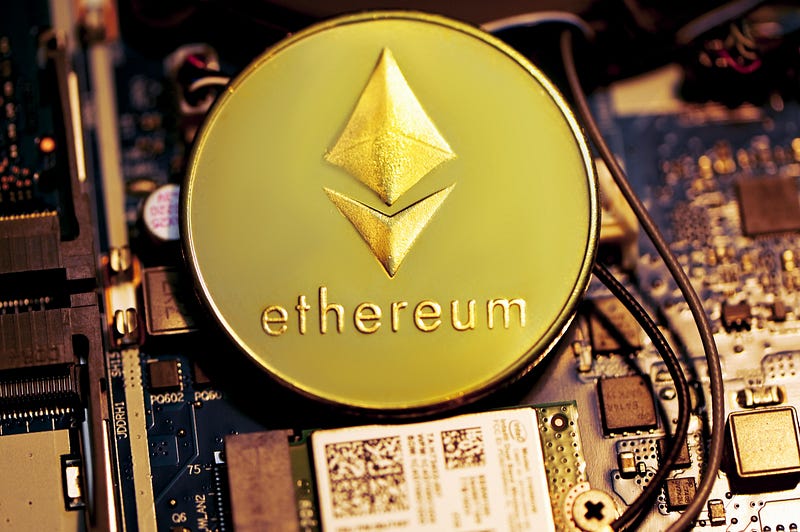
Photo by Kanchanara on Unsplash


The product of collaborative efforts

A significant development in Cronos’ evolution is the introduction of zkEVM, a result of collaborative efforts involving Cronos Labs, Matter Labs and engineering teams from stakeholders Crypto.com and existing dApp developers. The zkEVM testnet is a breakthrough, utilizing Ethereum’s Sepolia testnet and incorporating zkSync’s open-source prover, Boojum — a STARK-based zero-knowledge proof system known for its efficiency in the layer-2 rollup space, with low hardware requirements and fees.

The decision to launch a native Ethereum chain stemmed from challenges in bridging EVM chains and bridging between Cosmos and Ethereum, according to Ken Timsit, Managing Director at Cronos. Timsit emphasized the richness and robustness of the Ethereum developer ecosystem for building DeFi and NFT applications.


Native account abstraction

Hyperchains within the ZK Stack share components, including a native bridge to the Ethereum mainnet and zkSync’s trustless bridging mechanism, ensuring assets remain secured by Ethereum. The implementation of zkSync’s native account abstraction allows transaction fee payments in various cryptocurrencies, including Cronos’ native token (CRO).

Cronos’ zkEVM is anticipated to progress to the mainnet in the second quarter of 2024, marking a pivotal moment in the evolution of hyperchains.

The landscape of hyperchains is expanding, with projects like GRVT and Tradable utilizing the ZK Stack. GRVT, a derivatives exchange, and Tradable, a tech firm focused on bringing private credit on-chain, exemplify the diversity and specialization within this emerging sector. Tradable aims to establish an institutional-focused hyperchain, potentially forming a decentralized chain alongside other institutional partners.

Matter Labs views the zkSync hyperchain as a superior option compared to app-specific chains in Cosmos, emphasizing the scalability and security benefits. Hyperchains, a potential alternative to private blockchain frameworks like Hyperledger or Corda, offer technical scalability with the benefits of Ethereum. However, practical scalability remains a challenge due to cost considerations and the social coordination problem.


More to Read
View All
Web3 & Enterprise·

Mar 13, 2025

SGX to list Bitcoin perpetual futures in H2

Singapore Exchange Limited (SGX), the city-state’s primary asset exchange, is in the process of establishing Bitcoin perpetual futures trading on the platform.Photo by Kanchanara on UnsplashInstitutional product offeringAccording to a report published by Bloomberg earlier this week, the exchange platform intends to launch Bitcoin futures sometime during H2 2025. The product launch will be subject to regulatory approval from the Monetary Authority of Singapore (MAS). A spokesperson for the company told Bloomberg that the product offering will be geared exclusively towards institutional investors and traders in an effort to “significantly expand institutional market access.” Retail access to the product will be prohibited. Once launched, these Bitcoin perpetual futures contracts, being offered through a traditional finance (TradFi) outfit like SGX, will help to blur the lines between TradFi and the emerging crypto sector. Perpetual futures have no expiry date. They offer a means for traders to bet on price changes in an underlying asset while doing away with the need to take ownership of the asset itself. Cautious approachSGX has been cautious in listing crypto assets and derivative products. Last year the firm’s CEO, Loh Boon Chye, said that the time was not yet right for such listings.  His concern back then was that any such product launches would need “sustainable ecosystem support,” adding that “that means demand, that means governance, that means structure.” While spot Bitcoin exchange-traded funds (ETFs) had been approved in the United States at that point, there has been much further development in the crypto-sphere since then, following the election of a pro-crypto administration in the U.S. That event has had knock-on effects globally. Singapore’s SGX isn’t the only traditional exchange platform to respond. Japanese futures exchange, the Osaka Dojima Exchange (ODEX), is gearing up to file an application with the Financial Services Agency (FSA) to list a Bitcoin futures product later this month. Closer to home, an American digital asset marketplace that focuses on institutional trading, EDX Markets, has plans to introduce Bitcoin perpetual futures products to the Singaporean market, according to a report which emerged in January. In May 2024, EDX launched EDXM Global, a settlement platform, in Singapore. This product launch by SGX serves the purposes of decision-makers in Singapore, who have been trying to position the city-state as a digital asset industry hub. Additionally, the move will bring greater acceptance of the digital assets sector from traditional market participants. Crypto perpetual futures contracts were first pioneered by crypto derivatives exchanges like BitMEX back in 2016. Since then, other crypto-native platforms like Binance and OKX have offered these products. In the case of unregulated offshore exchanges, the products have proven to be controversial, as at times, they have been used in a manner that has exposed market participants to counterparty risk. Failed crypto exchange FTX, together with its sister company Alameda Research, relied on the products in their trading activities. SGX, as a seasoned, regulated TradFi operator, which holds an Aa2 rating from Moody’s, is likely to prove to be a more palatable option for institutional players.

news
Policy & Regulation·

Feb 09, 2024

Settlement approved but sealed by judge in BlockFi-3AC case

A settlement agreement between failed crypto lender BlockFi and bankrupt Singaporean crypto hedge fund Three Arrows Capital (3AC) has received approval from a U.S. judge. However, the specifics of the settlement remain sealed, citing concerns raised by yet another failed crypto platform, FTX. Dispute resolvedDuring a hearing on Feb. 6, New Jersey Bankruptcy Court Judge Michael Kaplan resolved the dispute, which saw BlockFi claiming $129 million owed by 3AC, while the Singapore-based firm contended that BlockFi owed it $280 million. Judge Kaplan's decision to keep the settlement agreement sealed stemmed from a perspective that unsealing it would be counterintuitive. BlockFi had filed a motion to seal the settlement terms last month. The U.S. Trustee objected to the seal, asserting that the debtors hadn't provided sufficient justification for sealing the agreement.Photo by mk. s on UnsplashSensitive settlement termsBlockFi justified the need for confidentiality, citing the sensitive commercial nature of the terms, which could potentially impact ongoing litigation involving FTX. The approval of the settlement now paves the way for BlockFi to proceed with distributions from the lending estate to its 100,000 creditors, with the firm owing up to $10 billion. Central to the dispute were preferential payments, transactions made just before bankruptcy that could have given the recipient more than they would have received through court proceedings. The resolution of counterclaims between BlockFi and 3AC follows mediation ordered by Judge Kaplan in October, likely culminating from a two-day hearing starting on Jan. 5 aimed at resolving the matter conclusively. This settlement follows another agreement between 3AC and Genesis, settling $1 billion in claims by 3AC. The company filed for bankruptcy in July 2022, attributing the extreme fluctuations in cryptocurrency markets as the reason for its collapse. Projected 46% 3AC creditor recoveryAccording to a December report to creditors by Teneo, it's estimated that 3AC creditors will receive approximately 45.74% of their claims from the bankrupt estate. As of Dec. 18, 2023, 3AC's assets were valued at $1.16 billion, while recognized claims for distribution stood at $2.7 billion. In an ongoing effort to secure 3AC's assets, a British Virgin Islands (BVI) court froze $1 billion in assets belonging to 3AC's founders, amid the liquidation process. This move is part of a broader strategy to seek recoveries from the founders and Kelly Chen, wife of one of the co-founders. 154 claims totaling $3.4 billion were filed against the 3AC estate, with $200 million not admitted for distribution and $322 million rejected or expected to be rejected. Additionally, claims worth $76 million are currently under dispute. BlockFi, along with eight affiliates, filed for Chapter 11 bankruptcy in November 2022. The firm cited significant exposure, including obligations owed to BlockFi by FTX-linked hedge fund Alameda Research, assets on the FTX platform and an undrawn credit line from FTX. 3AC’s collapse in June 2022, followed by FTX's downfall, led to BlockFi's bankruptcy filing in late November 2022. In a separate development, OPNX, a crypto bankruptcy claims platform launched by 3AC co-founders Su Zhu and Kyle Davies, announced its cessation of operations, with plans to shut down by Feb. 14.  

news
Policy & Regulation·

Apr 08, 2025

Hong Kong establishes rules to enable crypto staking

Hong Kong regulator, the Securities and Futures Commission (SFC), has established guidelines for crypto staking service providers. That’s according to a statement published by the SFC to its website on April 7. The guidance is aimed at licensed virtual asset trading platforms (VATPs) and SFC-authorized funds with exposure to digital assets.Photo by Markus Winkler on UnsplashExpanding service offeringThe regulator points out that the guidance on staking falls in line with its recently announced “ASPIRe” roadmap, which is geared towards ensuring that the Chinese autonomous territory remains relevant in its efforts to maintain its status as a global hub for crypto businesses. Expanding product and service offerings within the crypto sector was one of the five pillars of that plan. Smoothing the way for the offering of staking works towards fulfilling that aspect of the ASPIRe plan. Written approvalIn this guidance, the SFC sets out that licensed service providers must obtain written approval from the regulator before any such product can be offered to investors in Hong Kong. That stipulation applies to both VATPs and authorized funds with digital asset exposure. Additionally, VATPs must retain control over staked assets, with no delegation in the custody of such assets to third parties permitted. In the case of authorized funds that include crypto assets, they must stake virtual asset holdings through licensed VATPs and other authorized institutions. Required disclosuresThe regulator has also stipulated that certain disclosures must be made by licensed exchanges to potential customers in respect of staking products. These include the disclosure of all associated risks, full transparency with regard to fees, minimum lock-up periods and custodial arrangements. Commenting on the provision of this guidance, SFC CEO Julia Leung said that the provision of a greater range of regulated services and products is crucial in order to sustain continued growth of Hong Kong’s virtual asset ecosystem. However, she added that any broadening of the range of services offered “must be done in a regulated environment where the safety of client virtual assets continues to be front and centre of the compliance framework for offering such service.”   The SFC outlined that it recognizes “the potential benefits of staking in enhancing the security of blockchain networks and allowing investors to earn yields on virtual assets within a regulated market environment.” The authorities in Hong Kong are not the only ones who recognize the benefits that the incorporation of staking within crypto investment products can bring. Last month, Robert Mitchnick, head of digital assets at the world’s largest asset manager, BlackRock, told the Digital Assets Summit in New York that Ether ETFs would benefit from the addition of staking.  Mitchnick suggested that the current inability to earn a staking yield within such products is a key limitation. He outlined that such a change is dependent upon relevant regulatory changes being implemented in the U.S. A more crypto-friendly climate in the U.S. since U.S. President Donald Trump took office has resulted in various lawsuits being dropped against companies like Coinbase related to the staking services that had been offered. A number of U.S. Ether ETF issuers, including Franklin Templeton, Grayscale and Bitwise, have put forward proposals to the Securities and Exchange Commission (SEC) to have staking included in these products.

news
Loading