Top

CFX surges as Conflux teases yuan-pegged stablecoin & 3.0 launch

Markets·July 22, 2025, 12:16 AM

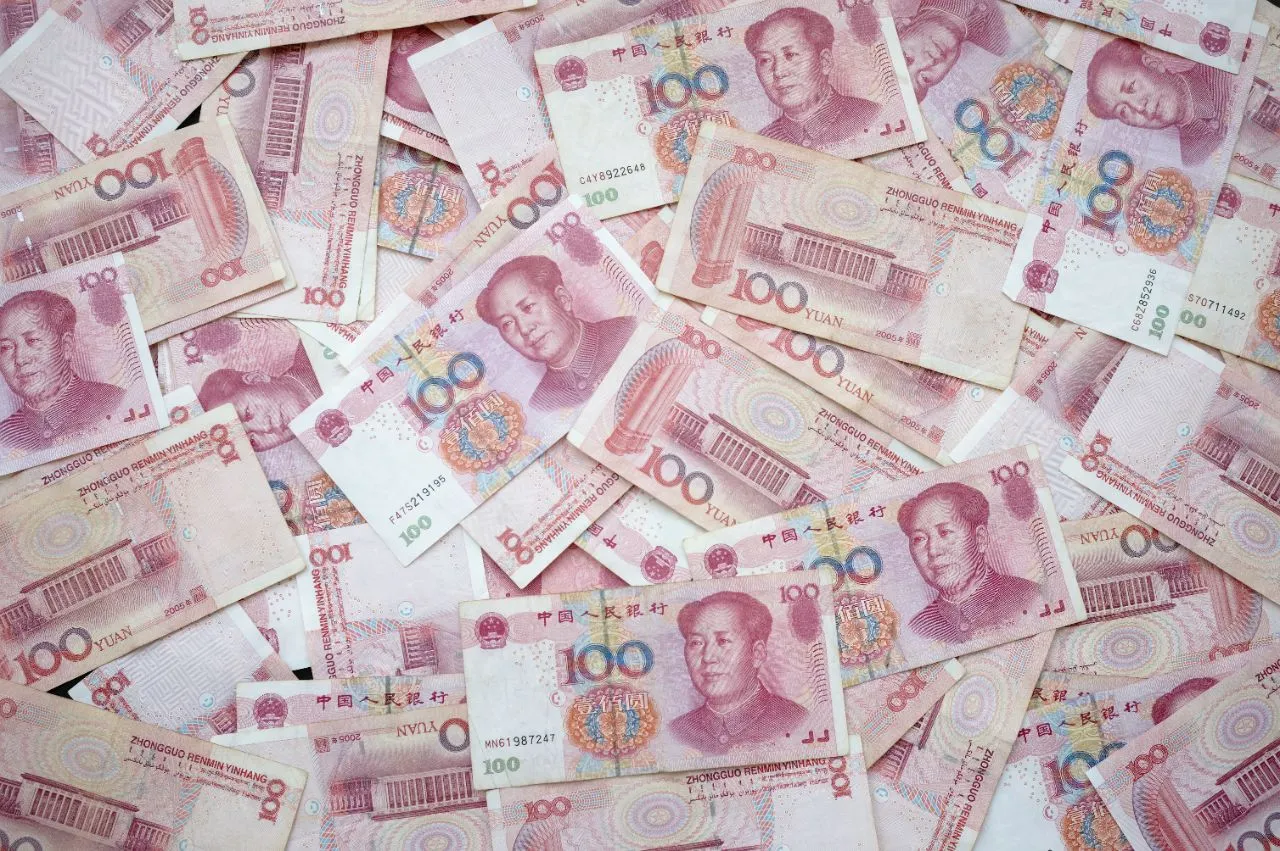
Conflux Network, a layer-1, regulatory-compliant Chinese blockchain focused on borderless transactions, has announced the upcoming launch of the Conflux 3.0 mainnet together with an offshore yuan-pegged stablecoin, resulting in its native CFX token surging.
https://asset.coinness.com/en/news/06040104449a2d7706a51662c1fc5865.webp
Photo by Eric Prouzet on Unsplash

Partnership

notice published on the website of the Shanghai Municipal People’s Government on July 20 reported on the Conflux Tree Graph Technology and Ecological Development Conference, which was held in Shanghai over three days from July 18 to July 20. Over the course of the three-day event, the project announced a partnership with AnchorX, a Hong Kong-based fintech firm specializing in stablecoins, and Shenzhen-based Eastcompeace Technology. 


The purpose of the initiative is to develop a stablecoin pegged to the offshore yuan (CNH), the version of China’s currency that circulates outside the mainland. The report outlined that in recent years, stablecoins and tokenized real-world assets (RWAs) have come to global attention. 


Belt & Road Initiative

Given this backdrop, it was outlined that “creating an independent and controllable high-performance public chain system” could be of great benefit to China and its Belt and Road Initiative (BRI), which sets out to develop infrastructure across 150 countries to facilitate trade with China.


This is not the first point at which AnchorX has collaborated with Conflux. Back in February, the company received in-principle approval from the Astana Financial Services Authority (AFSA) in Kazakhstan to issue CNH-pegged stablecoins. Growing bilateral trade between Kazakhstan and China was cited as the rationale behind the license, given the need for cross-border payments.


At the time, it was outlined that the AxCNH yuan-pegged stablecoin would be issued on the Conflux blockchain. It’s unclear if this same stablecoin is the focus of this latest development or whether an entirely new yuan-pegged stablecoin will be issued.

AnchorX collaborated with Conflux in 2024 to bring about the issuance of AxHKD, a Hong Kong dollar-pegged stablecoin. The stablecoin runs on the Conflux blockchain, with the stablecoin issuer using OKLink Trust as its custodian.


TokenPocket, a multi-chain crypto wallet project, also outlined on X on July 21 that it too is involved in the partnership with Conflux and AnchorX. The project outlined that it will support the growth of stablecoin adoption, the development of cross-border payment solutions and the promotion of tokenized RWAs in international markets through the collaboration. 


Pilot projects

TokenPocket went on to explain that the companies plan to launch pilot projects in Central Asia, Southeast Asia and other regions, building “a compliant, secure, and innovative fintech framework to boost the role of the Conflux ecosystem as critical infrastructure for cross-border trade.”


It was revealed at the conference that the mainnet release of Conflux 3.0 will occur in August. With the implementation of further optimized execution modules, the project expects 3.0 to result in a network throughput of 15,000 transactions per second (TPS). 


These developments over the course of the weekend have had an impact on the unit price of Conflux’s native token, CFX. On July 19, the token was trading at around $0.1043. According to CoinMarketCap data, at the time of writing, it’s trading at $0.2232, a 2.58% increase over the past day.


 

More to Read
View All
Web3 & Enterprise·

Feb 28, 2024

OKX launches OKX TR in Turkey

Leading global crypto exchange platform OKX has officially launched OKX TR, a specialized crypto exchange tailored to meet the needs of users in Turkey. This unveiling, announced on Feb. 27, marks a significant stride in the company’s efforts to offer Turkish users greater access to cryptocurrency trading and decentralized finance (DeFi).Photo by Engin Yapici on UnsplashOKX Wallet integrationOKX TR has integrated OKX's Web3 wallet, providing Turkish users with access to a wide array of features. The wallet offers a user-friendly portal for trading non-fungible tokens (NFTs), utilizing decentralized applications (dApps). Noteworthy features of the OKX Wallet include multi-party computation (MPC) technology and account abstraction (AA), enhancing accessibility for users with varying levels of technical expertise.OKX TR introduces localized features designed to cater specifically to Turkish users, including direct deposits and withdrawals in Turkish Lira, facilitated through strategic partnerships with banking institutions such as Fibabanka, VakıfBank, Ziraat Bankası, İş Bankası, Şekerbank and Türkiye Finans. The platform offers a range of major cryptocurrency pairs for trading, including USDT/TRY, BTC/TRY and ETH/TRY.  Moreover, OKX TR prioritizes user experience by providing round-the-clock customer support in both Turkish and English, attempting to provide prompt assistance and comprehensive guidance whenever needed. Crypto adoption backdropThe platform’s arrival should contribute further towards the burgeoning crypto ecosystem in Turkey, a market boasting a close to 50% adoption rate for cryptocurrencies. A report by OKX rival platform KuCoin back in August of last year found that there had been a significant increase in crypto users in Turkey over the course of the previous 18 months.  It’s believed that crypto adoption in Turkey is being driven partly by its role as a financial lifeline amid economic challenges. The country’s sovereign currency, the lira, has suffered from runaway inflation in recent years. On social media OKX Chief Marketing Officer (CMO) Haider Rafique wrote that the new service offers “lightning fast signup and funding,” alongside the “lowest fees in the market.” Mehmet Çamır, Chairman of OKX TR, outlined that the company had first announced expansion into Turkey in May 2023. Çamır set out the company’s intentions within the Turkish market, stating:"The launch of OKX TR represents more than just an expansion; it signifies our pledge to equip users with a transparent, compliant and user-friendly gateway to the world of blockchain. . . . We can unlock the vast potential of the Turkish crypto community and pave the way towards a future where finance is more inclusive and transparent.” Turkey is in the process of introducing a raft of crypto regulations, primarily with the intention of enabling it to be removed from the Financial Action Task Force’s (FATF) “grey list.” In December, Turkish President Recep Tayyip Erdogan appointed blockchain and cryptocurrency expert Fatma Ozkul to the Turkish central bank’s rate-setting committee.Those moves demonstrate some positive progress from the point of Erdogan’s statement in 2021 when he declared “a war on crypto.” 

news
Policy & Regulation·

Mar 01, 2024

Hong Kong broadens e-CNY testing with focus on cross-border payments

Having made significant strides in undertaking testing of the digital yuan in recent times, Hong Kong is expanding its e-CNY pilot testing while at the same time crafting its own central bank digital currency (CBDC), dubbed the e-HKD.Photo by Simon Zhu on UnsplashIntegrating e-CNY with FPSDuring a recent budget speech Hong Kong’s Financial Secretary Paul Chan unveiled plans to empower Hong Kong residents to bolster their digital yuan wallets through the local “Faster Payment System” (FPS), marking another move forward in bolstering cross-border payment efficiency.FPS is a real-time payment settlement system which enables the user to complete payments across banks through the use of recipient mobile phone numbers and email addresses. The move dovetails with the Hong Kong Monetary Authority's (HKMA) successful completion of the inaugural phase of its e-HKD pilot, propelling it into the second phase. The e-HKD pilot is focusing on retail applications such as programmable payments, offline transactions and tokenized deposits. At the same time as the e-CNY garners momentum, the HKMA is progressing the e-HKD in terms of unlocking the full potential of CBDCs in everyday financial transactions. This consists of the exploration of retail applications in the initial phase, coupled with the transition towards more intricate functionalities in the subsequent phase, underscoring Hong Kong's intent towards driving ever greater CBDC innovation within the Chinese autonomous territory. Streamlining transactionsThe integration of the e-CNY with Hong Kong's FPS promises to streamline transactions and elevate the fluidity of cross-border payments between Hong Kong and mainland China. This initiative follows on from an announcement back in September of last year to expand the e-CNY pilot program in Hong Kong. Financial Secretary Paul Chan aims to forge a bridge between mainland China and international markets, potentially setting a global precedent for CBDC interoperability and utilization. Furthermore, Hong Kong's issuance of the world's premier multi-currency tokenized bond, followed by a subsequent batch of tokenized green bonds, signifies the city's leadership in fusing digital finance with sustainable investment strategies, drawing significant interest from global institutional investors. mBridge initiativeThe collaborative efforts of the HKMA with the Bank for International Settlements and other central banks on the mBridge CBDC project further demonstrate Hong Kong's proactive stance in shaping the trajectory of international finance. Last month, authorities in China outlined yet another initiative that is designed to bring about cross-border use of the e-CNY with Hong Kong. The mBridge initiative, a multi-CBDC platform to support cross-border payments is being harnessed to bring about greater trade using digital currency across various jurisdictions. The project involves the central banks of China, Hong Kong, the United Arab Emirates (UAE) and Thailand. This concerted endeavor, coupled with Hong Kong’s array of digital currency ventures, positions the city at the forefront of CBDC innovation. All of this development comes as China has established new milestones recently, with the completion of an international oil deal using the digital yuan together with similar deals involving gold and iron ore. 

news
Web3 & Enterprise·

Nov 23, 2023

Dunamu likely to extend CEO Lee’s tenure, ensuring continuity in Upbit leadership

Dunamu likely to extend CEO Lee’s tenure, ensuring continuity in Upbit leadershipDunamu, the operator of Upbit, South Korea’s largest cryptocurrency exchange, recently convened a board meeting where a key decision was made to extend the term of Lee Sirgoo as Dunamu’s CEO, as reported by local news outlet Newsis, citing industry sources.Photo by Benjamin Child on UnsplashFinal decision on Dec 5The final decision on the extension of CEO Lee’s term at Dunamu is set to be made at the extraordinary general meeting on Dec. 5. The crypto industry is largely confident about Lee’s reappointment, especially given the presence of major executives, including Chairman Song Chi-hyung, at the recent board meeting.Responding to changing regulationsIn light of these developments, industry insiders are keenly observing whether CEO Lee will maintain Upbit’s market dominance in Korea. A key factor influencing Upbit’s future success will be Dunamu’s strategy in adapting to the changing market conditions, particularly in response to the upcoming Virtual Asset User Protection Act, which is due to come into effect in July next year.One source familiar with the matter said that Lee’s reappointment is almost assured, barring the emergence of any unexpected factors.If confirmed, this will mark Lee’s second reappointment as CEO of Dunamu since his first in 2020. This extension would bring his total tenure to nine years, continuing through 2026, considering that he initially assumed leadership in December 2017.Emphasis on stability and blockchain adoptionThis move likely underscores Dunamu’s prioritization of stability, especially considering Chairman Song’s emphasis on the company’s commitment to the widespread adoption of blockchain technology, as highlighted in the recently convened Upbit D Conference (UDC). Such a focus suggests that the company is leaning more towards maintaining its current status rather than embarking on new ventures.An executive from a Korean crypto research firm observed that Dunamu’s annual UDC event is a significant indicator of the company’s business direction. The person highlighted this by comparing it to last year’s event, where Dunamu officials focused on new initiatives, particularly in the realm of NFTs. This was evident in their collaboration with Levvels, a joint venture between Dunamu and HYBE, the management agency of the popular K-pop boy group BTS.The executive further elaborated that the widespread adoption of blockchain technology requires strengthening the Upbit business, an area in which Lee excels. The research expert suggested that if he had diverted his efforts towards other new projects outside of Upbit, the outcomes might have been different.CEO Lee’s ability to steer Upbit effectively in the burgeoning field of blockchain technology can be attributed to his rich academic and professional journey. He holds a diverse academic background with degrees from Seoul National University, the University of Hawaii at Manoa and Lewis & Clark Law School. His career spans journalism, law and corporate leadership, including roles as a reporter for JoongAng Ilbo, counsel for IBM Korea, CEO of NHN USA and co-CEO of Kakao Corporation.

news
Loading