Top

Laos targets crypto operators’ unpaid fees

Policy & Regulation·November 11, 2023, 12:14 AM

In a bid to enhance state revenues, Laos has turned its focus to the cryptocurrency sector, revealing that operators in the country owe a total of $20 million in fees. The announcement, reported on Thursday by Chinese state news agency Xinhua News, references information from the Lao People’s Army News.
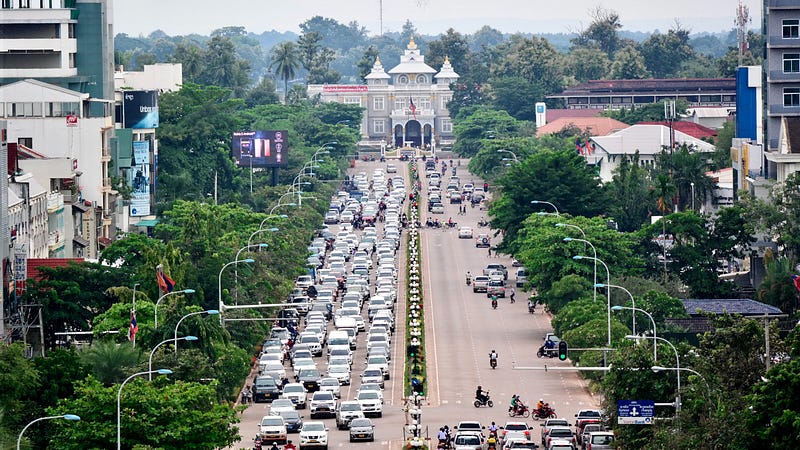
Photo by Alessio Roversi on Unsplash


Loss-making mining activity

Laos had previously granted authorization to 15 blockchain companies to engage in crypto mining or operate as exchanges as part of a strategy to diversify government income sources. However, Prime Minister Sonexay Siphandone disclosed that two of these companies showed no progress in their operations, while others lagged behind in meeting their financial obligations to the state.

It emerged in August that the national electricity supplier, Electricité du Laos, had decided to suspend the supply of energy to crypto miners amid a perfect storm of challenges. Laos has ample hydro electric resources and is a net exporter of electricity. However, a drought this year has challenged it to honor contracts for supply of electricity to the Electricity Generating Authority of Thailand.

To deal with this issue, power supply to Laotian crypto miners was suspended. To compound matters, many mining operators have been struggling financially and were unable to pay their bills.


Debt relief

Siphandone mentioned that since the government initially set the tax obligations, the overall value of cryptocurrencies has experienced a 50% decline. Consequently, Laos has decided to alleviate the burden on crypto companies by reducing the outstanding balance by an equivalent 50%.

Following this decision, the affected companies have commenced the settlement of their fees, and it is anticipated that all outstanding amounts will be fully resolved by the year’s end, according to the country’s Prime Minister. However, he issued a cautionary note, stating that companies failing to make satisfactory progress would face consequences, including the suspension of their operations, imposition of fines or even the revocation of their licenses.


Digital transformation

In May, Laos outlined key aspects of its digital transformation strategy, emphasizing the use of digital technology to generate new fiscal revenue, strengthen foreign exchange reserves, control inflation, and promote sustainable economic growth. The move to reduce crypto companies’ tax burdens amid market volatility underscores Laos’ adaptability to the challenges presented by the dynamic cryptocurrency landscape.

As part of its digital transformation strategy, the Laotian government signed a cooperation agreement with Singapore’s MetaBank. Partnering with another overseas entity, the country has also relied upon the expertise of Japanese fintech developer Soramitsu with regard to a central bank digital currency (CBDC). Soramitsu has played a pivotal role in enabling the issuance of Laos’ Digital Lao Kip.

Early last year, the landlocked Southeast Asian country authorized trading licenses for two crypto platforms. These included Lao Digital Assets Exchange (LDX), a joint venture between Phongsupthavy Group and AIF Group, and Bitqik, a subsidiary company of Simuong Group.


More to Read
View All
Web3 & Enterprise·

Sep 04, 2025

UAE’s RAK Properties to accept crypto payments through Hubpay partnership

RAK Properties has signed a strategic agreement with Hubpay that will allow international buyers to pay for homes in the United Arab Emirates (UAE) using digital assets, the real estate developer said in a Sept. 1 statement on its website. Under the arrangement, customers can settle property purchases with major cryptocurrencies, including USDT, Bitcoin (BTC), and Ethereum (ETH). Payments will be processed on Hubpay’s regulated platform, converted into UAE dirhams, and transferred directly to RAK Properties’ account. The company said it will not handle digital assets directly. Instead, all transactions will be processed by Hubpay and its partners, who are licensed by Dubai’s Virtual Assets Regulatory Authority (VARA), to ensure compliance and transparency. The initiative is aimed at drawing new categories of overseas investors to Ras Al Khaimah, the UAE’s sixth-most populous city, including the developer’s Mina waterfront community.Photo by Precondo CA on UnsplashUAE’s crypto market expands amid rising risksThe move comes amid growing crypto activity in the UAE. A Chainalysis report last year ranked the Middle East & North Africa as the seventh-largest crypto market and noted that the UAE’s decentralized finance adoption was above the global average, citing regulatory clarity. From July 2023 to June 2024, crypto inflows to the UAE leaned heavily toward stablecoins, which represented 51.3% of value received, compared with 44.7% worldwide. Bitcoin’s share was smaller than the global average at 16.5% versus 22.3%, while altcoins and Ethereum showed little difference at 24.4% and 7.8%, respectively. At the state level, the UAE itself has emerged as a significant player. Based on Arkham’s tracking, it is the world’s fourth-largest government Bitcoin holder, with about 6,352 BTC ($703 million). In contrast to the U.S. and U.K., whose holdings largely stem from law enforcement seizures, the UAE’s reserves come from mining through Citadel Mining. The firm is majority-owned by 2PointZero under the International Holding Company (IHC), which is chaired by Sheikh Tahnoun bin Zayed al-Nahyan, the UAE’s national security adviser and a prominent member of the ruling family in Abu Dhabi. As crypto use has grown, so too have the risks. In the first half of this year, the UAE recorded the world’s largest average per-victim losses from crypto crime, with nearly $80,000 stolen per individual, according to Chainalysis. Only the U.S. came close to that figure, while Chile, India, Lithuania, Japan, Iran, Israel, Norway, and Germany rounded out the global top ten. Harmonizing crypto rulesAmid a shifting crypto landscape, regulatory structures in the UAE are continuing to evolve. At the federal level, the Securities and Commodities Authority (SCA) supervises virtual asset services, while the Central Bank of the UAE (CBUAE) oversees payment tokens. The Dubai International Financial Centre and the Abu Dhabi Global Market operate their own frameworks. Last month, the SCA and VARA introduced a cooperation framework to harmonize oversight and allow mutual recognition of licenses, though the system stops short of automatic passporting in order to preserve national security controls. In related developments, the National Bank of Ras Al Khaimah (RAKBANK) became the first bank in the UAE to partner with Bitpanda Technology Solutions, a Vienna-based crypto exchange and digital assets infrastructure provider. The partnership, which builds on earlier work exploring the issuance of digital payment tokens, is expected to give RAKBANK customers access to a variety of crypto use cases. 

news
Policy & Regulation·

Sep 26, 2023

Japan’s Cryptoasset Group Proposes Self-Regulatory Reforms for IEO System

Japan’s Cryptoasset Group Proposes Self-Regulatory Reforms for IEO SystemThe Japan Cryptoasset Business Association (JCBA) has revealed a preliminary draft advocating for reforms in self-regulation to bolster the soundness of the initial exchange offering (IEO) system. This draft has been submitted to the Japan Virtual and Crypto Assets Exchange Association (JVCEA).IEOs serve as a mechanism enabling various enterprises to accrue funds and broaden their user base by orchestrating token sales on cryptocurrency exchanges for Web3 projects. This fundraising method holds the potential to enhance trust as crypto exchanges, supervised by the Japanese Financial Services Agency, undertake evaluations of project feasibility and maintain ongoing oversight.Photo by Takashi Miyazaki on UnsplashPositive regulatory developmentsThe ameliorating regulatory landscape is also a positive development, highlighted by this year’s tax law amendment, which grants exemptions to enterprises’ self-issued tokens from year-end corporate taxation. In Japan, four IEOs have been conducted so far, with the inaugural IEO amassing over 900 million yen (approximately $6 million). The cumulative amount from the four IEOs has surpassed 4.4 billion yen. However, given that the IEO is a relatively nascent fundraising method, improvements in token price stability and operational modalities are required to ensure that businesses and users can engage with it confidently.Enhanced user protectionAgainst this backdrop, JCBA, an organization comprised of various enterprises involving virtual assets and Web3, has been discussing the direction of the IEO system from a corporate viewpoint since May of this year. Establishing price stabilization measures and selling restrictions within the Japanese IEO system will contribute to user protection by allowing investors to manage their assets under domestic regulations. JCBA stated that users will find domestic exchanges more secure in comparison to foreign ones.As this proposal represents an initial draft, deliberated and formulated only within the JCBA, the group intends to consult and assess the feasibility of the self-regulatory rules with each pertinent organization as necessary.Four key pointsThe document submitted by JCBA to JVCEA presented four key points concerning the IEO. Pertaining to pricing, it suggested the diversification of calculation methods customized to each project and the specification of price-related disclaimers. On liquidity, it posited that liquidity objectives should be established at the time of listing, and an environment conducive to securing liquidity should be developed. JCBA also pointed out the necessity of establishing rules for price stabilization measures at the time of listing. Finally, regarding selling restrictions, it was noted that both token issuers and exchanges should adhere to a minimum three-month lock-up period for tokens.

news
Markets·

Nov 21, 2024

Crypto popularity surges in Turkey as security remains top investor concern

A recent survey by Turkish crypto exchange Paribu reveals that 99% of Turkish investors are now familiar with digital assets, a significant rise from just 16% in 2020. Digital assets have emerged as the third most popular investment choice in Turkey, overtaking traditional options like real estate. Investors are now nearly twice as likely to consider digital assets over stocks or mutual funds, a trend seen across other Asian nations, where younger investors are favoring crypto over more conventional investments. In Indonesia, for example, digital asset investors reached 20 million this year, far surpassing the 12 million who trade on the country’s stock exchange. In the U.S., a recent Bank of America survey reported a similar trend, with younger investors increasingly gravitating toward digital assets.Photo by Burak Karaduman on PexelsHigh returns and future potential drive interest in digital assetsThe survey shows that Turkish investors are primarily attracted to digital assets for their high return potential, while some view them as the future of finance. Other motivations include fast transaction capabilities, as well as benefits like censorship resistance. According to Paribu’s spokesperson, Nergis Nurcan Karababa, crypto assets may experience higher adoption rates than traditional financial products, as more individuals anticipate mainstream usage of digital assets in the near future. Security a top priority for Turkish investorsSecurity remains a paramount concern for Turkish investors, particularly given the history of hacks and fraud targeting local exchanges. Paribu’s survey, which polled over 2,000 residents and 541 active traders, found that most Turkish investors demand a strong security system from their trading platforms. In recent years, Turkish exchanges have been targeted by hackers, with high-profile breaches impacting investor confidence. In June, an attack on BtcTurk, the country’s largest exchange, reportedly led to a $55 million loss from multiple hot wallets. An earlier collapse of the Thodex exchange in 2021 saw the disappearance of investor funds valued by Chainalysis at $2.6 billion, although local prosecutors cited a lower figure. Thodex’s founder was sentenced to over 11,000 years in prison, underscoring the severity of crypto-related financial crimes in Turkey. Rise in preference for local exchangesDespite security incidents, Turkish investors increasingly favor local exchanges, with 78% indicating a preference for Turkey-based platforms in 2024, up from 63% last year. This trend aligns with a global shift towards domestic exchanges as investors seek platforms regulated by local authorities, providing easier avenues for legal recourse. The collapse of international platforms like FTX has accelerated this trend, and countries such as Nigeria, India and Indonesia have issued new licenses exclusively for local exchanges, restricting foreign entities from operating within their borders. Turkey’s leading position in the MENA crypto marketTurkey ranks as the largest digital asset market in the Middle East and North Africa (MENA) region and is 11th globally in terms of adoption, according to Chainalysis. Between June 2023 and June 2024, Turkey received $137 billion in digital assets, placing it seventh worldwide for total transaction volume. This growing market highlights Turkey’s role as a key player in the global crypto landscape, as well as the increasing integration of digital assets into mainstream financial activities among Turkish investors. 

news
Loading