Top

Zodia Custody and Blockdaemon Partner on Institutional Staking

Web3 & Enterprise·June 06, 2023, 11:44 PM

London-based cryptocurrency storage provider Zodia Custody, a portfolio company of Japan’s SBI Holdings, has entered into a partnership with blockchain infrastructure provider Blockdaemon relative to crypto staking.
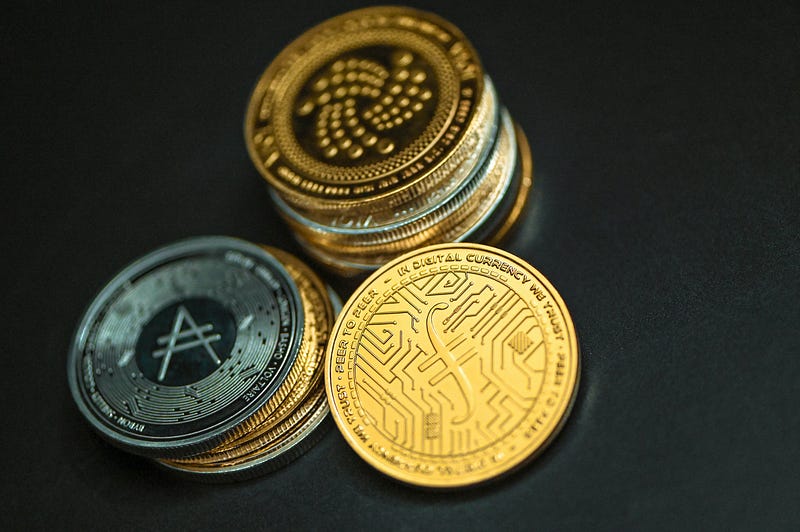
Photo by Traxer on Unsplash


Institutional interest

Blockdaemon announced the crypto staking collaboration, tailored to institutional clients, on Twitter on Tuesday. This move comes as institutional interest in staking, the process of contributing digital assets to support blockchain networks and earning rewards, continues to surge.

Following the Ethereum network’s Shapella upgrade on April 12, the amount of ether (ETH) staked increased by an impressive 4.4 million, reaching a total of 22.58 million ETH (equivalent to $42 billion) as of May 23. This remarkable growth in staked assets reflects the growing confidence in the Ethereum network and the potential for substantial returns.


First bank-owned custodian

Zodia Custody is a subsidiary of the well-known multinational bank Standard Chartered and backed by prominent institutions such as Northern Trust alongside SBI Holdings. It claims the title of being the first bank-owned custodian to provide staking services exclusively to institutional clients. This collaboration enables Zodia Custody to leverage Blockdaemon’s infrastructure to deliver secure and efficient staking solutions, catering to the specific needs of institutional investors.

Blockdaemon has been at the forefront of facilitating seamless integration between traditional financial institutions and the emerging crypto industry. Earlier this year, the company introduced a wallet service targeted at the institutions and crypto custodians. The wallet assists clients in managing their assets securely, eliminating the need for third-party storage solutions. By partnering with Zodia Custody, Blockdaemon expands its portfolio of services, capitalizing on the rising demand for staking among institutional investors.

The firm’s CEO and Founder, Konstantin Richter, stated that the partnership with Zodia “allows stronger security, automation and simplification of the process to participate in staking, truly accelerating Web3 innovation.”


LMAX collaboration

Earlier this month Zodia partnered with digital asset trade execution specialist LMAX Digital to provide a combination of institutional-grade trading infrastructure and custody services to crypto asset manager, Coinshares.

Institutional investors, traditionally cautious about entering the crypto ecosystem, are now becoming more proactive in engaging with digital assets. Staking, with its potential for consistent and predictable returns, has emerged as an appealing opportunity. By participating in staking, institutions not only contribute to the efficient functioning of blockchain networks but also enjoy the rewards associated with validating transactions and securing the network.

The partnership between Zodia Custody and Blockdaemon exemplifies the industry’s efforts to bridge the gap between traditional finance and the rapidly evolving world of cryptocurrencies. As more institutional clients seek exposure to digital assets, it becomes essential to provide them with secure and reliable solutions tailored to their specific requirements.

With demand for staking services continuing to rise, institutional players are recognizing the value of taking a more active part in the crypto ecosystem. With Zodia Custody and Blockdaemon leading the way, the opportunities for institutional clients to engage in staking and reap the rewards are set to expand, further fueling the growth of the entire crypto industry.

More to Read
View All
Policy & Regulation·

Mar 11, 2024

The 3rd Busan Blockchain Regulation-free Zone Steering Committee holds meeting

The local government of Busan, the second-largest city in South Korea, announced in a press release that it held the 3rd Busan Blockchain Regulation-free Zone Steering Committee (Committee) meeting at the Busan Eurasia Platform, a community center located near Busan Station.  The meeting took place last Thursday at 15:00 (KST), attended by 12 Committee members, including Busan’s Vice Mayor for Economic Affairs Kim Kwang-hee, Busan Technopark Chairman Kim Hyung-gyun, Busan International Finance Agency Chairman Lee Myung-ho and Busan Information Industry Promotion Agency Chairman Kim Tae-yeol.Photo by Finn on UnsplashThe meeting was intended to discuss strategies to revitalize the blockchain regulation-free zone (blockchain zone) and to attract new blockchain businesses to the region. Busan has been recently struggling with developing and attracting blockchain technology companies to the region, which has cast doubt on the city’s ability to retain its status as the regulatory sandbox zone.   New 24 members, new commitment to invigorating blockchain zone Established in October last year, the 3rd Committee comprises 24 new members who have expertise in blockchain technology. The Committee aims to raise awareness of the blockchain zone’s potential and foster the blockchain industry within the region.  Kim Sang-min, Vice CEO of healthcare company Erom, was appointed Committee Chairman at the meeting. Known as an expert in the blockchain ecosystem, Kim currently serves as a blockchain policy advisor for Busan and has experience in taking the lead in establishing the Busan Digital Asset Exchange (BDX) last year.  More meetings in store to become a blockchain hub The meeting focused on creating subcommittees in an effort to facilitate the Committee’s seamless operation. Moreover, members reached a consensus on holding meetings at any time when warranted, in both online and in-person formats.  During the meeting, Busan Vice Mayor Kim said the newly launched Committee will contribute to identifying innovative businesses with great potential that require both cutting-edge blockchain technologies and a regulatory sandbox environment. 

news
Policy & Regulation·

Oct 29, 2025

EU bans Ruble-backed stablecoin A7A5 in latest round of Russia sanctions

The European Council has banned all transactions within the European Union (EU) involving the Russian Ruble-backed stablecoin A7A5, according to a press release published Oct. 23. The prohibition targets the stablecoin itself, its developer, its Kyrgyzstan-based issuer, and the operator of a platform that facilitates major A7A5 trades. The package also takes aim at Russian crypto exchanges.Photo by Christian Lue on UnsplashAdditional banking restrictionsThis measure is part of a broader set of economic sanctions against sectors the EU stated assist the Russian invasion of Ukraine, including energy, finance, and defense industries. As part of this financial clampdown, the EU will also impose a ban on five additional Russian lenders starting Nov. 12. One of those lenders, Alfa-Bank, recently began offering Bitcoin buying and selling services, according to an X post by journalist Pete Rizzo. The European body said the new crypto measures address Russia’s increasing use of digital assets to circumvent existing sanctions. Russian banks were cut off from the SWIFT international payment system in early 2022, following the onset of the Russo-Ukrainian war. Reports of Russia using cryptocurrency to finance malign activities have surfaced previously. Earlier this month, Sławomir Cenckiewicz, the head of the Polish National Security Bureau (BBN), told the Financial Times that Russia has employed crypto to finance attacks on EU countries. Cenckiewicz said that a network of agents recruited by Russia’s GRU military intelligence agency and uncovered in Poland in 2023 had been substantially funded with cryptocurrency. Reflecting this concern, lawmakers in Poland’s lower house approved a bill in September to strengthen national crypto oversight, a move also expected to help curb Russian funding channels. Cenckiewicz noted that Polish intelligence agencies are closely monitoring the legislation to prevent loopholes that allow foreign actors to support agents using digital assets. Russia’s evolving crypto policyThe EU’s action comes as Russia itself is attempting to refine its own cryptocurrency rules. According to the Moscow Times, Russia's central bank wants to limit cryptocurrency use strictly to cross-border payments within an experimental legal regime (ELR). The institution continues to reject recognition of cryptocurrency as a legal means of payment and has advocated banning its use for domestic payments and retail investment, while permitting trading only for high-net-worth individuals through licensed platforms. Russia’s finance ministry has expressed a more flexible view, pointing to the scale of crypto adoption among the public. Earlier this year, the central bank estimated that domestic crypto transactions exceeded 1 trillion rubles (about $12.4 billion) per month, and that as of March, wallets linked to Russian users held roughly 827 billion rubles (about $10.2 billion). The finance ministry and the central bank have agreed to tighten supervision of the crypto market, with officials expecting to finalize the new framework before the end of the year. 

news
Web3 & Enterprise·

Dec 27, 2023

Blockchain investment firm Hashed invests $28.4 million in 29 projects in 2023

Hashed, a blockchain-focused investment firm with bases in Seoul and San Francisco, announced on Tuesday (KST) that it has invested a total of KRW 36.8 billion ($28.4 million) in 29 distinct projects over the course of this year, as reported by Korean news outlet Etoday.Photo by Mathieu Stern on UnsplashInfrastructure, gaming and financeThe Web3 investor has distributed its funds across various sectors, allocating 21% each to infrastructure, gaming and finance. Geographically, their investments were also diverse: South Korea has received 38% of the funds, North America 21% and Europe 7%. Other Asian countries, including Singapore, accounted for 34%. Of the 29 investments Hashed undertook, 20 were new additions. The company participated in seed funding rounds for a variety of ventures: Radius, a shared sequencing layer; Decentralised Gaming Ventures, a builder of Web3 games; AnotherBall, the company behind the VTuber platform Izumo; and Delabs Games, a studio focused on Web3 gaming.The remaining nine were follow-up investments. Among these projects were Archway, a Cosmos-based layer 1 blockchain; Payhere, a provider of mobile point-of-sale (POS) systems; and Dfns, an API-first key management solution. Hashed Ventures, the company’s investment arm, oversees two funds: one with a capital of KRW 120 billion and the other with KRW 240 billion. Through these funds, Hashed has invested in a total of 86 portfolio companies. This year, some of their notable investments include public chain project Aptos, Web3 startup Story Protocol and decentralized exchange dYdX. It’s also noteworthy that 55% of the larger fund has been allocated to Korean companies. Blockchain community and talent developmentHashed’s impact in the blockchain sector extends beyond just financial investments. The Web3 company has supported the organization of approximately 80 meet-ups, including university hackathons and academic blockchain conferences. A notable example of their initiatives is Korea Blockchain Week, co-hosted annually with Web3 ecosystem builder Factblock since 2018. This event has become one of Asia’s largest blockchain gatherings, drawing over 10,000 visitors. In addition to these events, Hashed has been keen on nurturing talent in the blockchain space. Their Protocol Camp, a boot camp aimed at developing Web3 builders, has successfully produced 59 developers across five sessions. Furthermore, Hashed Open Research, the firm’s research division, is actively involved in shaping the blockchain landscape. They engage in research, organize seminars, and publish findings, all with the goal of offering policy recommendations and advancing understanding in the field. Hashed has reinforced its management system for portfolio companies, focusing on supporting early-stage startups. Their efforts include building a community dedicated to startup support, aiding in recruitment and business development strategies, providing data analysis services and engaging in promotional activities. Reflecting on the past year, Simon Seojoon Kim, CEO of Hashed, acknowledged that 2023 posed challenges for startups. However, he pointed out that the relatively calm market conditions provided Hashed with opportunities to uncover a range of innovative ideas. These ideas, according to Kim, have the potential to make significant contributions to the development of blockchain infrastructure and its applications in real-world scenarios. Looking forward, Kim expressed optimism about the growth prospects of their portfolio companies in the coming year. This optimism is partly based on the potential approval of spot bitcoin ETFs, which he believes could usher in robust participation from institutional investors. Additionally, Kim anticipates further growth driven by the expected launch of wallets by major global platforms, indicating a promising and dynamic future for the blockchain industry and Hashed’s investments.

news
Loading