Top

Korea’s crypto exchanges resume charging fees, shifting market shares

Markets·March 04, 2024, 8:19 AM

Korea’s prominent crypto exchanges Bithumb and Korbit have recently resumed charging trading fees, local media outlet Edaily reported. However, these changes in fee policies are reinforcing Upbit’s dominant market position while downsizing Bithumb’s and Korbit’s market shares. Meanwhile, the local banks affiliated with crypto exchanges are benefitting from an uptick in fee revenue from the recent bitcoin boom.


According to crypto data intelligence platform CoinGecko on Feb. 28, Upbit accounted for 77.4% of the local market share in crypto transactions, followed by Bithumb (20.43%), Coinone (1.73%), Korbit (0.35%) and Gopax (0.09%). 
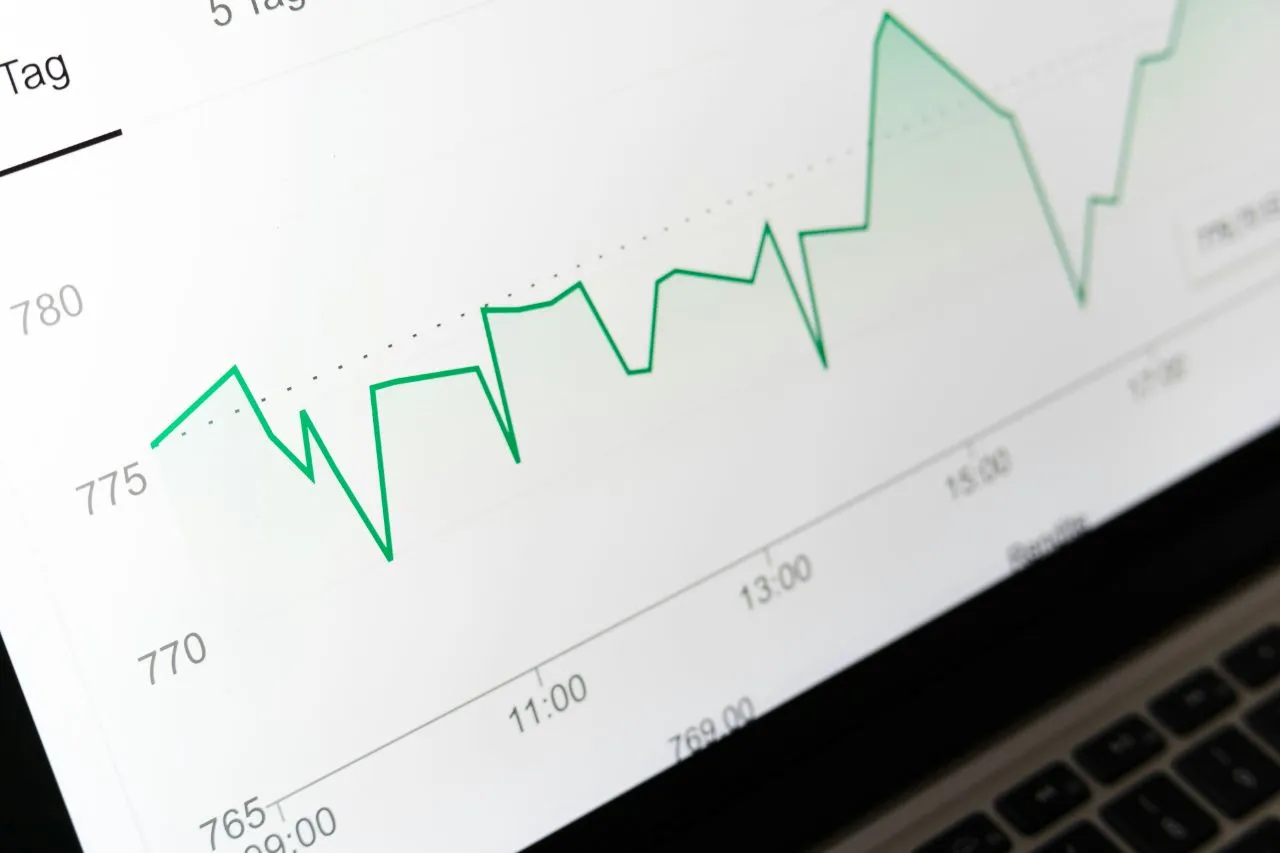
https://asset.coinness.com/en/news/1c1710e2deb775a95dca0ad81d43423a.webp
Photo by Markus Winkler on Unsplash

Shifts in market shares

As of March 2, the market shares of Bithumb and Korbit decreased by 8.59 percentage points and 0.21 percentage points, respectively. Conversely, Upbit’s dominance grew to 86.57%, up by over 9 percentage points.


A Korbit official said it’s too early to pass judgment on Korbit’s market performance, as the exchange’s policies on trading fees could change depending on the market sentiment. The person added that CoinGecko tracks only eight types of tokens traded on Korbit and does not cover all the transactions on the exchange. 


Bithumb had previously benefited from charging no fees, driving up its market share to as high as over 40% in December. Following the decision to impose a fee of 0.04% on Feb. 6, however, the exchange has been experiencing a drop in transaction volume.


Korbit also reinstated trading fees last Thursday, roughly four months after eliminating them on Oct. 10 as a promotional move. However, it's worth mentioning that the newly introduced trading fee is 0.07%, which is lower than the earlier rate of 0.2%.


Meanwhile, Gopax currently exempts fees for users who trade BTC, ETH, XRP and USDC. 


No local regulations on fees for crypto transactions 

At the moment, there are no local regulations on fees for crypto transactions, leaving the task of setting such fees to individual trading platforms. It is known that crypto exchanges in other countries, such as the U.S., set their own rates as well. 
 

More to Read
View All
Policy & Regulation·

Jul 04, 2023

Thai SEC Implements Measures to Protect Crypto Investors

Thai SEC Implements Measures to Protect Crypto InvestorsIn response to the crypto lending crisis that unfolded in 2022, prompting companies like BlockFi and Celsius to declare bankruptcy, Thailand’s Securities and Exchange Commission (SEC) has introduced new regulations aimed at safeguarding investors in the digital assets space.Photo by Jakob Owens on UnsplashDisclosing risk warningsThe guidelines, issued on Monday, require digital asset service providers to provide comprehensive warnings that emphasize the risks associated with cryptocurrency trading. All platforms must prominently display a message stating: “Cryptocurrencies are high risk. Please study and understand the risks of cryptocurrencies thoroughly, because you may lose the entire investment amount.” Prior to utilizing the service, users must consent to and acknowledge the risks.Crypto lending prohibitionIn addition to the risk disclaimer, the new guidelines explicitly forbid service providers from using customer funds for lending or investment purposes. This ban on crypto lending services prevents platforms from offering any returns on deposited crypto to customers. By implementing these measures, the Thai SEC aims to enhance investor protection and shield investors from the risks posed by lending services. The regulations are scheduled to take effect at the end of the month.Today’s guidelines are the product of months of deliberation. Discussions surrounding investor protection regulations commenced on September 1, 2022, when the SEC acknowledged the necessity for security warnings by cryptocurrency businesses to disclose the risks associated with trading digital assets. The prohibition on digital asset operators offering deposit-taking and lending services was deliberated during meetings held on December 1, 2022, and May 11, 2023.Response to crypto platform failuresThe introduction of these investor protection rules follows a significant crisis in the crypto lending sector that unfolded during the bear market of 2022. Several crypto lending firms, which had collected billions of dollars in customer deposits by promising substantial returns, collapsed during this period. Prominent lending companies such as Celsius and BlockFi filed for bankruptcy, resulting in investors’ funds being trapped in lengthy bankruptcy proceedings.The Thai SEC’s proactive approach in implementing these regulations reflects the growing concern for investor welfare within the cryptocurrency industry. By requiring clearer risk disclosures and prohibiting the use of customer assets for lending and investment, the SEC aims to instill greater confidence and transparency in the digital asset service sector.Crypto academyThailand’s SEC has run other initiatives in efforts to better protect investors. In January the Commission launched the SEC Crypto Academy, an e-learning course. The objective of that initiative was to provide investors with a basic understanding of the digital assets space prior to investing. At the time of the launch of the course, the SEC said that “the more you know your investments, the less risk you will have.”These latest regulations not only serve as a protective measure for Thai investors but also set an example for other jurisdictions to evaluate and enhance their own regulatory frameworks. As the crypto industry continues to evolve, prioritizing investor protection becomes crucial in fostering a more sustainable and responsible ecosystem.

news
Web3 & Enterprise·

Jul 20, 2023

Former FTX COO Finds New Role at Sino Global

Former FTX COO Finds New Role at Sino GlobalConstance Wang, previously known for her executive roles at FTX, has recently joined crypto venture capital firm Sino Global Capital.That’s according to sources Bloomberg cited in a recent report as being familiar with the matter. Wang held the role of Chief Operating Officer at FTX and was also the Co-Chief Executive Officer of FTX Digital Markets, the affiliate of the now-defunct crypto exchange, which was based in the Bahamas. Her responsibilities at FTX included overseeing global business expansion, token listings, and public relations and marketing.Following the collapse of FTX and its sister trading firm Alameda Research, Wang has reportedly spent a significant amount of time in China, according to an undisclosed source.Sino Global Capital, founded in 2015 by Beijing-based American investor Matthew Graham, had revealed its early investment in FTX after the exchange’s collapse. The management team stems from a background in consulting, Wall Street, private equity, government, and corporate spheres. A year prior, the venture capital firm launched a $200 million fund with FTX as a key investor. Sam Bankman-Fried, the Founder of FTX, expressed gratitude for Sino Global’s support, stating that they believed in the FTX vision from the beginning and assisted in making it a reality.Photo by Henry Kobutra on UnsplashLawsuitGraham was quite public in his support of FTX and Sam Bankman-Fried. He appeared frequently on podcasts, always explaining that the FTX founder was a genius. On investing in FTX and in projects in general, Graham stated repeatedly that Sino Global maintained a high level of due diligence. Most of the leading venture capital investors in FTX (including Sino Global) have been subject to class action lawsuits filed by creditors. It’s claimed that many of these investors didn’t simply invest capital but also got involved in actively marketing what turned out to be a fraud.In January, the court-appointed management team overseeing the FTX bankruptcy proceedings sought permission to subpoena Wang and other former executives of the company. Court filings indicate that Wang has not been accused of any wrongdoing in relation to the collapse of FTX or Alameda.Prior to her tenure at FTX, Wang briefly worked at the crypto exchange Huobi in Singapore as a Business Development Manager. She also spent two years as an analyst at Credit Suisse.New rolesIn recent months, other former FTX employees have also reappeared in new roles. Amy Wu, who left Lightspeed Venture Partners to lead FTX Ventures, announced her joining Menlo Ventures, one of the oldest venture firms in Silicon Valley. Brett Harrison, former President of FTX US until his sudden resignation in September 2022, has founded a startup with plans to provide a “GPT-4-powered trading algorithm code generator.”The transition of Constance Wang and her fellow FTX alumni into new positions at face value seems like a logical progression. However, all of the FTX c-suite executives remain under ongoing scrutiny. Having brought charges against Bankman-Fried, Caroline Ellison, and Nishad Singh some months ago, Southern District of New York (SDNY) Attorney Damian Williams stated clearly that more arrests would follow.

news
Web3 & Enterprise·

Jan 06, 2024

Etherscan expands through Solscan acquisition

Expanding beyond the Ethereum Virtual Machine (EVM) domain, Malaysia-headquartered Etherscan has officially acquired Solscan, a prominent block explorer within the Solana ecosystem.Photo by Shubham’s Web3 on UnsplashEnhancing cross-chain analysisThe acquisition, announced earlier this week, signifies a noteworthy development within the blockchain industry and is poised to bring about a new interface aimed at enhancing cross-chain analysis. Solscan, based in Singapore with its primary team in Vietnam, was previously majority-owned by TomoChain Lab, a Singaporean blockchain software developer. The deal’s terms were not disclosed and the acquisition places Solscan in the same league as Polygonscan within the family of Etherscan block explorers. Diversifying product offeringEtherscan, established in 2015, stands as one of the earliest crypto projects, initially focusing on the EVM space. The platform offers an explorer-as-a-service product for blockchain explorers, with the acquisition of Solscan marking a significant step in diversifying its offerings. Since its inception in 2021, Solscan has risen as a leading explorer in the Solana ecosystem, catering to over three million monthly users. Providing services such as detailed address, token, transaction information, APIs, dashboards and NFT metadata, Solscan mirrors Etherscan’s services but is tailored for the Solana network. The merger between Etherscan and Solscan is anticipated to bring forth a series of enhancements and innovations, with both platforms benefiting from the integration of additional features. The roadmap for this collaboration outlines improvements in user interfaces, navigation and overall accessibility, promising an enriched user experience. Solscan, in its announcement, assured its commitment to the Solana community, vowing to maintain unparalleled blockchain exploration services. The shared vision of Etherscan and Solscan revolves around providing what Etherscan termed “credibly neutral and equitable access to blockchain data,” underlining their commitment to transparency and fairness in the blockchain space. Matthew Tan, CEO and founder of Etherscan, expressed excitement about the acquisition and highlighted the alignment of Solscan’s expertise in making blockchain data accessible and user-friendly with Etherscan’s mission. The acquisition is expected to contribute significantly to the broader blockchain ecosystem. Solscan serves as a crucial player in the Solana ecosystem, an Ethereum alternative. The platform assists users in viewing information within the Solana blockchain, managing accounts, tracking transactions and exploring investment opportunities across various crypto platforms. Solana resurgenceThis deal comes at a time when Solana’s momentum is evident, ending 2023 on a strong note. In December 2023, NFT sales on the Solana network surpassed those on Ethereum for the first time. Solana has experienced substantial growth in comparison to Ethereum, both in terms of its token’s value and against the U.S. Dollar. The fall of crypto exchange FTX had a large impact on Solana and its ecosystem as FTX had been heavily involved within that community and associated projects. The exchange still holds a sizable amount of locked SOL tokens. Following its collapse, the SOL unit price fell below $10. At the time of writing, it stands at $100. The acquisition of Solscan by Etherscan underscores the resurgence of the Solana ecosystem, with major players in the Web3 space recognizing the value of Solana-based technology. As both platforms collaborate, users can anticipate a more robust and interconnected blockchain exploration experience.  

news
Loading