Top

Bithumb lowers fees and enhances UX to bolster competitiveness

Web3 & Enterprise·April 02, 2024, 5:24 AM

One of South Korea's prominent cryptocurrency exchanges, Bithumb, has doubled down on its effort to solidify its position as a leading crypto trading platform in the country. Bithumb has recently announced its policy to offer the lowest withdrawal fees among all local crypto exchanges, while enhancing its user experience by upgrading the user interface (UI) and adding more features to its app, according to the local media outlet Kyunghyang Games


Already one of the few qualified fiat-to-crypto exchanges in Korea and a member of Digital Asset eXchange Alliance (DAXA) – a consultation group of the top five local crypto exchanges – Bithumb aims to further strengthen its competitiveness in the market. 
https://asset.coinness.com/en/news/e38783996df962fbff7474cc28e41713.webp
Photo by Traxer on Unsplash

Lower withdrawal fees with trading fees already at 0.04%

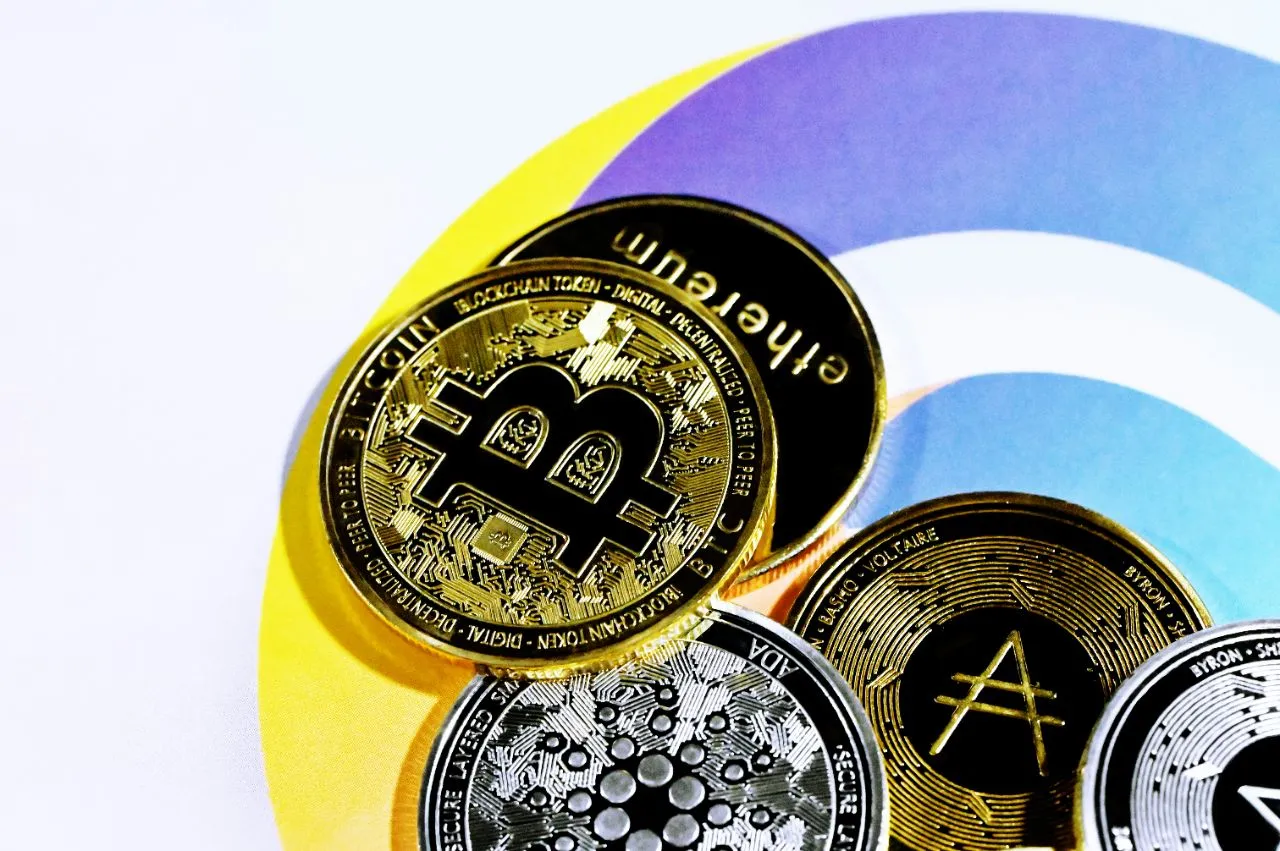
According to the press, Bithumb has announced to offer the lowest withdrawal fees in the local crypto scene to win the hearts and minds of investors. Under the updated fee policy, users are now charged 0.0008 BTC for withdrawing Bitcoin and 0.009 ETH for Ether. The exchange has also been known for offering one of the lowest trading fees at 0.04%. 


Making the deposit limit increase easier

Bithumb has long been getting complaints from users over its relatively unfavorable user experience and cumbersome processes required to increase the deposit limit of their real-name accounts. In response, Bithumb has introduced a new in-app feature that simplifies such procedures, so that users can raise their deposit limit with ease. 


Among users who joined Bithumb in March, those whose initial deposits have passed 30 days and who purchased crypto assets valued at over KRW five million ($3,700), are now eligible for the deposit limit raise, allowing them to deposit and withdraw up to KRW 500 million per day. 


Enhanced user interface and user experience 

One of the newly added features is the "Even Faster Chart," which provides users with four times faster response times following its transition from "Web view" to "Native view." 


Bithumb's Chief Operating Officer (COO), Moon Seon-il, stated that the exchange is improving its service in multiple ways, including offering the lowest fees, supporting multichain transactions and enhancing UI for users. 
 

More to Read
View All
Web3 & Enterprise·

Nov 11, 2023

UBS extends crypto ETF access to clients in Hong Kong

UBS extends crypto ETF access to clients in Hong KongMultinational investment bank UBS Group AG has followed suit with competitors like HSBC, enabling its wealthy clients in Hong Kong to engage in the trading of select crypto-linked exchange-traded funds (ETFs).Photo by Pierre Borthiry — Peiobty on UnsplashRegulatory approval to offer three ETFsThis move, reported by Bloomberg on Thursday, aligns with Hong Kong’s efforts to establish itself as a prominent digital asset hub. Citing an undisclosed source, Bloomberg outlined that three crypto ETFs, namely the Samsung Bitcoin Futures Active, CSOP Bitcoin Futures and CSOP Ether Futures, have received approval from the Securities and Futures Commission (SFC) and will be available on UBS’s Hong Kong platform starting this Friday.The inclusion of these ETFs allows UBS clients to diversify their investment portfolios, offering exposure to the dynamic crypto market. Educational materials will also be accessible to clients, aiding in their understanding of associated risks. While UBS declined to comment on this development, it marks a strategic move by the Swiss bank to tap into the growing demand for crypto-related investment products.In June, Hong Kong’s largest bank, HSBC, moved to expand its offering to include crypto ETFs. It has made available the very same crypto ETFs as UBS is about to offer.Hong Kong’s crypto credentialsHong Kong introduced a comprehensive digital asset regulatory regime on June 1, aiming to safeguard investors while fostering the Chinese autonomous territory’s emergence as a digital financial center. The SFC permits retail investors to trade major tokens on licensed exchanges under these regulations.Despite these regulatory advancements, Hong Kong faced setbacks, notably with the recent issues surrounding the unlicensed JPEX exchange, which led to increased scrutiny. The establishment of a joint task force between the SFC and the police aims to monitor and prevent suspicious activities within the crypto industry.Globally, financial institutions remain cautious about compliance risks in the crypto sector. However, signs of increased engagement are emerging. DBS, Singapore’s largest bank, has expressed its intention to seek a license to offer crypto services to Hong Kong customers. ZA Bank, the largest virtual bank in Hong Kong, plans to provide token-to-fiat currency conversions over licensed platforms. Furthermore, SEBA Bank, backed by the Julius Baer Group, has obtained a license for its unit to offer crypto services in Hong Kong.Unlocking ETF potentialA report published by the Hong Kong Stock Exchange in April claimed that crypto ETFs possess the potential to unlock the next phase of digital asset expansion in Asia. Earlier this week, it emerged that regulators were open to the notion of allowing retail access to spot crypto ETFs in Hong Kong, provided that the necessary regulatory approvals and checks were in place.The inclusion of the CSOP Bitcoin Futures and CSOP Ether Futures funds on UBS’s platform highlights the gradual recovery of the crypto sector from the market rout experienced in 2022. Despite the previous market challenges and collapses, the prospect of the U.S. allowing its first spot Bitcoin ETFs has contributed to a resurgence in the largest token’s price this year. The move by UBS aligns with the broader trend of financial institutions cautiously embracing the crypto economy, indicating a shifting attitude toward these digital assets in the financial mainstream.

news
Web3 & Enterprise·

Aug 08, 2023

Asiastar Entertainment and Codus to Develop Casual P2E Game with NFT Rewards

Asiastar Entertainment and Codus to Develop Casual P2E Game with NFT RewardsAsiastar Entertainment, a Korean company specializing in animation, food products, and toys, revealed plans last Friday to work with its business partner, software and blockchain development firm Codus, to develop a casual play-to-earn (P2E) game that rewards players with NFTs.Photo by Choong Deng Xiang on UnsplashTokenized in-game assets and coin rewardsSpecifically, multiple in-game characters and backgrounds will be tokenized as NFTs for trading. As players progress through the game, they can also earn rewards in the form of TBC — the official tradeable coin issued by TurboChain Foundation, a subsidiary of Asiastar Entertainment. These rewards can be exchanged for gift vouchers and various merchandise, the company said.The two companies plan to leverage Asiastar Entertainment’s Great Q-Bot animation model — a model originally aimed at providing animated educational content for children — to create the P2E game.Watch-to-earn, short-form videosMeanwhile, TurboChain Foundation is gearing up to launch its Turbo Playhouse platform in the latter half of the year. This watch-to-earn, short-form video platform links offline products and online videos with QR codes to allow users to receive TBCs.Asiastar Entertainment also added that it is currently focusing on expanding its business through blockchain-related ventures by taking advantage of its core competencies in this emerging field.

news
Web3 & Enterprise·

Feb 28, 2024

Blockchain game performance is key to Wemade’s future success

South Korea’s securities and investment banking house, Shinhan Securities, has maintained the investment rating for Korean game company Wemade as “hold,” according to local financial media outlet Etoday. Shinhan Securities cited uncertainties in the crypto market outlook and the firm’s need to improve business performance as the ground for its latest investment rating. The performance of the firm’s blockchain games is a significant factor in Wemade’s future success as the overall excitement surrounding mobile massively multiplayer online role-playing games (MMORPGs) cools down.  Shinhan Securities’ head analyst Kang Seok-oh wrote in his analysis report that for Q4 2023, the firm recorded an operation loss of approximately $53 million (KRW 70.8 billion) and a consensus deficit close to $39.4 million (KRW 52.6 billion). Sales for the game company declined during the same period because the revenue from license sales, which was included in the Q3 2023 revenue, was not counted in the Q4 2023 figures, according to the report. Photo by Lorenzo Herrera on UnsplashNew games to enter the Chinese market Wemade is set to roll out more new games relative to last year, with plans to enter the Chinese market with “Mir4” and “MirM,” both of which are based on blockchain technology. Its MMORPG “Night Crows,” which ranked 3rd in mobile game sales last year, is also scheduled for a global launch on March 12. “The Legend of Mir”, the firm’s another new game in the pipeline, will be released in the second half of this year.  Kang said the key question is how much influence the crypto market boom will have on the future performance of the firm’s blockchain games. Furthermore, with the firm’s local sales slowing down following the cease of its referral marketing strategy, keeping its existing services profitable would be another important point, he said.  “Although Wemade keeps making its efforts to enter the Chinese market by signing contracts and obtaining the license permit Version Number from the Chinese government, it seems unlikely that Korean games will enjoy the high popularity they once had before China’s ban on Korean culture. Everything would have to turn out in the game company’s favor to improve its business performance,” Kang said. 

news
Loading