Top

Metaplanet raises funds to fulfill 2027 Bitcoin goal

Web3 & Enterprise·June 10, 2025, 5:15 AM

Japanese Bitcoin treasury company Metaplanet, whose shares are listed on the Tokyo stock exchange (3350/TYO), has taken an important step towards its goal of holding 210,000 BTC by 2027.


‘Asia’s largest-ever equity raise’

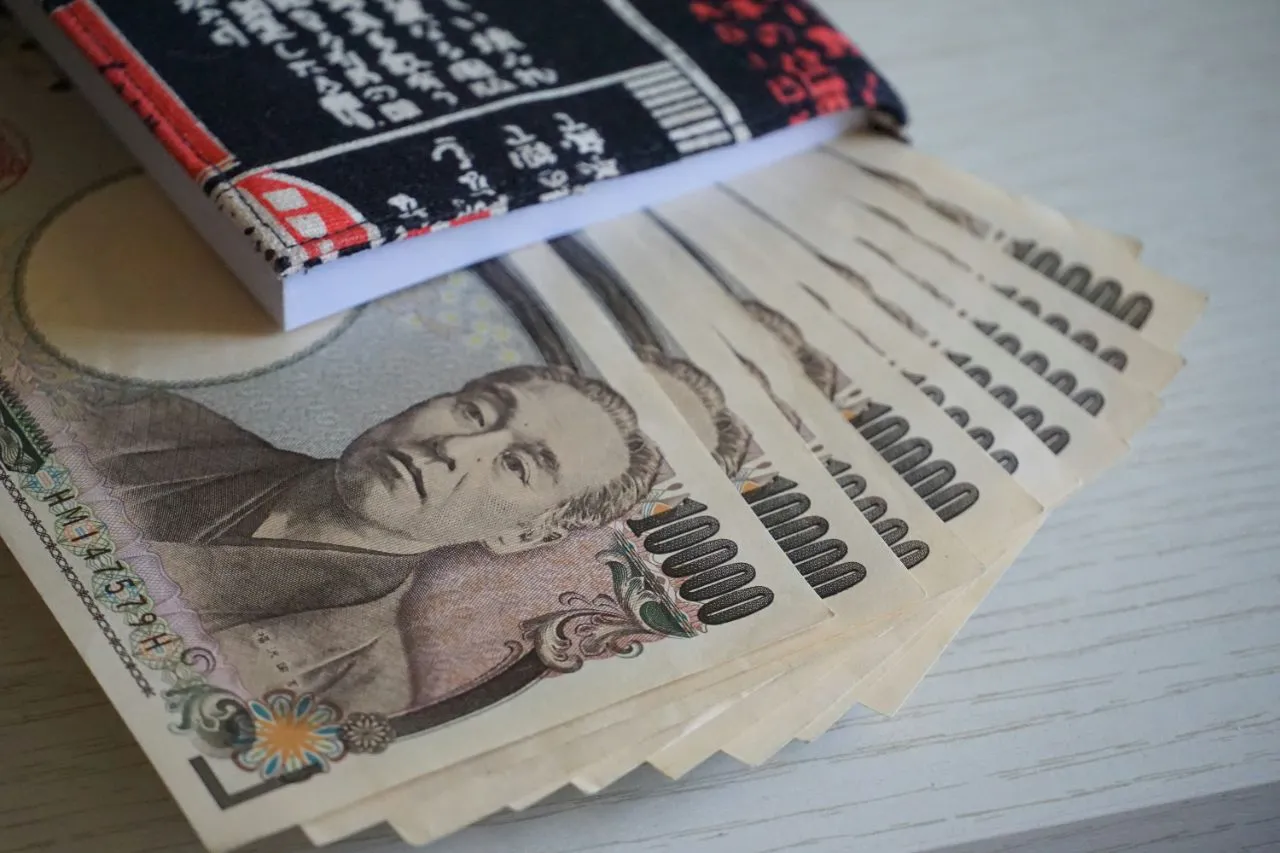
The firm’s CEO, Simon Gerovich, took to the X social media platform on June 6 to outline details of what he termed “Asia’s largest-ever equity raise.” Gerovich stated that Metaplanet had raised 770.9 billion yen ($5.4 billion) by means of moving strike warrants, implicating 555 million shares. Moving strike warrants are a type of equity warrant through which the strike price changes over time. 
https://asset.coinness.com/en/news/6e8bb6216002c99d3d900144f67cfc6d.webp
Photo by Cullen Cedric on Unsplash

Gerovich claimed that the warrants were issued at a premium to the market due to Metaplanet’s “high volatility and deep liquidity.” The Metaplanet CEO stated that the firm is targeting 100,000 BTC by the end of 2026 and 210,000 by the end of 2027.


On June 2, the firm announced that it had acquired its latest tranche of Bitcoin, adding another 1,088 BTC to its corporate treasury. The company paid an average Bitcoin unit price of 15,519,019 yen ($107,000).


Metaplanet has adopted the treasury playbook first pioneered by Michael Saylor’s Strategy (formerly MicroStrategy), acquiring the leading crypto asset through a combination of equity issuance, debt financing and opportunistic buying. 


Russell Okung, a former professional American football player and well-known Bitcoin proponent, took to X on June 6 to highlight that Saylor “lit the match” through Strategy in the United States. 


Okung stated:


“Metaplanet just launched the rocket in Asia. When capital moves, narratives follow.”

He added that “Metaplanet didn’t just buy Bitcoin. They’re directing global attention toward Japan.”


Both Metaplanet and Strategy have appealed to investors who are otherwise not in a position to gain exposure to Bitcoin directly, either as a result of regulatory issues or concerns with regard to the custody of the digital asset. 


Corporate treasuries adopting Bitcoin

In addition to these companies who have led first with a Bitcoin treasury as their primary attraction, other corporates have added Bitcoin to their corporate treasuries while maintaining their focus on other business activities. 


Announcements have come thick and fast over the course of recent weeks, particularly in the Asian region.  A number of Nasdaq-listed companies, including Hong Kong-based Reitar Holdings, Indonesian fintech firm DigiAsia, Malaysia-based Treasure Global and South Korea-based K Wave Media, have all announced the addition of Bitcoin to their corporate treasuries. 


Metaplanet’s new funding round will put it on track to achieve the goal of obtaining 210,000 BTC by 2027, equating to approximately 1% of the entire Bitcoin supply. The Japanese firm’s shares have risen in price by over 275% since the beginning of this year. 

According to BitcoinTreasuries.net, Strategy remains the largest corporate treasury holder of Bitcoin with 582,000 BTC. It’s followed by MARA Holdings, Twenty One, Riot Platforms, Galaxy Digital Holdings and CleanSpark. Tesla, Hut 8 Mining Corp and Coinbase Global also feature prior to Metaplanet which comes in tenth place.


More to Read
View All
Web3 & Enterprise·

Dec 13, 2023

NEOPIN works with Japan’s Jasmy to develop RWA-based DeFi products

NEOPIN works with Japan’s Jasmy to develop RWA-based DeFi productsSingapore-headquartered centralized decentralized finance (CeDeFi) protocol NEOPIN has formed a strategic partnership with Jasmy, a Japanese developer specializing in blockchain-based Internet of Things (IoT) platforms. This collaboration represents a step in their joint effort to expand into the global blockchain market, with a particular emphasis on data assetization.Founded in 2016, Jasmy has a management team in which most have a background with tech conglomerate Sony. In contrast to the dominance of tech giants like Google, Apple, Meta and Amazon over data, Jasmy concentrates on achieving data democratization. This concept empowers individuals to have control over their own data. The growing Japanese firm is convinced that the integration of IoT and blockchain technology is the key to realizing this vision of data democracy.Notably, Jasmy has its native token called JasmyCoin. As a regulated virtual asset in Japan, it is listed on centralized exchanges like Binance, Coinbase, Kraken and KuCoin.Photo by Shubham Dhage on UnsplashReal-world assets and security tokensThrough this partnership, the two will explore joint business ventures involving real-world assets (RWAs) and security tokens. They plan to utilize their combined business networks to expand their ecosystems beyond Korea, Japan and the Middle East. NEOPIN will introduce DeFi products using its native token, NPT, and JasmyCoin. Additionally, NEOPIN will become a validator on Jasmy’s mainnet to support its growth.Their collaboration is poised to boost NEOPIN’s advancement into the Japanese market. NEOPIN has been actively pursuing expansion into Japan since its announcement in August. With the Japanese government advocating for Web3 initiatives, a rise in the creation of tokens from local projects is anticipated, leading to a growing demand for DeFi and wallet services.NEOPIN’s partnerships in JapanAs Japan’s digital asset landscape evolves, NEOPIN is actively working to increase its market share in the country. This effort includes a variety of strategies such as focusing on gaming, developing their mainnet, engaging in local marketing activities and launching DeFi products. NEOPIN has also previously announced partnerships with other entities in the Web3 space, including SBINFT, Lena Network and Rokubunnoni, as part of its broader strategy to strengthen its presence in the Japanese market.NEOPIN’s CEO, Ethan Kim, highlighted the company’s goal to lead in the global RWA market. In partnership with Jasmy, they aim to develop and showcase DeFi products related to RWAs and security tokens. NEOPIN is also committed to strengthening its position in Japan by providing Japanese language support this year and actively forming alliances with promising Japanese blockchain enterprises.Hiroshi Harada, CFO of Jasmy, acknowledged NEOPIN’s proven expertise in the Korean market and expressed enthusiasm about the collaboration between the two companies in the blockchain sector. Harada said that their joint efforts will focus on building networks, developing use cases and expanding the market.

news
Web3 & Enterprise·

May 25, 2023

OCBC Bank Partners With ADDX to Launch Tokenized Note

OCBC Bank Partners With ADDX to Launch Tokenized NoteSingapore’s longest established bank, OCBC Bank, has partnered with blockchain-centric private market investment platform, ADDX, to launch a tokenized equity-linked structured note.Tokenized equity-based productsThe product is significant in that it represents the first tokenized equity-linked structured note that the cornerstone bank has offered. That in itself gives an indication of how conventional finance will mesh with tokenized products as both the conventional finance system and digital assets space evolve over the coming years.An equity-linked note is a debt instrument, normally in the form of a bond. It’s distinct from a standard fixed income security as it’s a market-linked structured product. That means that it performs in sync with a particular equity stock, a basket of equity stocks or with an equity index.ADDX CEO Oi-Yee Choo elaborated on the product offering: “Structured products are designed to provide investors with unique risk and return characteristics that may not be available through traditional investments, and are an attractive option for investors weighing yield-generating options in the current economic climate.”Photo by Shubham Dhage on UnsplashLeveraging tokenizationBy leveraging tokenization, the ADDX platform realizes cost savings, cutting out counterparties from the process. Additionally, tokenization allows fractionalization of assets and financial products, making a product offering accessible to all market participants. In this particular instance, the OCDC/ADDX product is restricted solely to accredited investors.Singapore-based ADDX currently lists in excess of seventy tokenized products on its platform right now. These range from commercial paper, bonds, real estate and equities or equity-based products.On those products it has collaborated with global alternative investment product specialists Investcorp and Hamilton Lane, telecommunications giant Singtel and securities broker CGS-CIMB Securities. Additionally, it has partnered with UOB, Singapore’s third largest bank, and a number of entities owned by state-owned Singaporean investing giant, Temasek.While the conventional finance world has been skeptical of digital assets and the overarching cryptocurrency and blockchain space has had its fair share of setbacks interlaced within its progression, forward-looking TradFi players are conscious of not getting left behind. That’s reflected in the comments of OCBC Bank’s Head of Global Treasury, Kenneth Lai, in relation to the ADDX partnership:”While we already have a comprehensive stable of treasury products which includes sustainability-linked interest rate swaps, cross currency swaps, structured deposits and green bonds, it is important that we continue to innovate and find new channels for our products. We are therefore pleased to be the first Singapore bank to offer an equity-linked structured note in tokenized form on ADDX. It is the first innovation resulting from a longer-term partnership with ADDX, and we are hopeful that it will lead to more diverse product offerings that are relevant and appealing to the global accredited investor base of ADDX.”Further comments by Choo suggest that the two firms have plans to broaden the partnership to encompass a greater range of products. She referred to more structured products being in the pipeline as the duo seek to exploit their combined expertise and capabilities.As it stands today, just $0.3 trillion in global assets are currently tokenized. That number is expected to grow to $16 trillion within seven years.

news
Policy & Regulation·

Nov 18, 2023

Singapore’s MAS gears up for live CBDC pilot

Singapore’s MAS gears up for live CBDC pilotThe Monetary Authority of Singapore (MAS) has unveiled plans to initiate a live central bank digital currency (CBDC) pilot for wholesale interbank settlement in 2024.Photo by Sergio Sala on UnsplashMoving beyond simulationThis pilot will move beyond simulation, involving the actual utilization of a live wholesale CBDC for settling payments between commercial banks. Furthermore, MAS indicated that upcoming pilots may extend to leveraging wholesale CBDCs for the settlement of cross-border securities trade.MAS Managing Director Ravi Menon expressed the significance of this move, stating:“The ‘live’ issuance of central bank digital money for use as a common settlement asset in payments is a significant milestone in MAS’ digital money journey that began in 2016. The issuance of wholesale CBDC reinforces the role that central bank money plays in facilitating safe and efficient payments.”Orchid BlueprintThis announcement is a key component of the Orchid Blueprint, a comprehensive plan detailing the infrastructure essential for facilitating the pilot and future developments. In addition to the wholesale CBDC initiative, the Orchid Blueprint outlines the expansion of trials to encompass tokenized bank liabilities and regulated stablecoins, solidifying Singapore’s commitment to fostering innovation in the digital finance space.As part of the Orchid Blueprint, MAS is set to create a settlement ledger to record digital money transfers. This ledger will incorporate features like programmability and atomic settlement of digital tokens. To enhance user experience, a “Name Service” for customer-friendly wallet addresses and name identifiers is on the agenda. Additionally, a tokenization bridge will be developed to connect existing account-based settlement systems with ledgers compatible with tokenized forms of digital money.Purpose-bound moneyThe Orchid Blueprint introduces a “programmability protocol” based on the concept of “purpose-bound money” (PBM). PBM, a concept considered by the MAS in a whitepaper that it published earlier this year, allows for the specification of certain conditions for the use of digital money, enabling automation of transactions and predefined conditions for settlement. This innovative approach empowers centralized planners to define the conditions for usage, bringing a new level of flexibility to the digital financial landscape.This development aligns with the broader trend of increasing institutional interest in digital currencies and blockchain technology. The move towards live CBDC pilots, tokenization and stablecoins underscores Singapore’s commitment to staying at the forefront of financial innovation. As the Orchid Blueprint unfolds, it sets the stage for a dynamic and technologically advanced financial ecosystem, reinforcing Singapore’s position as a leader in the global digital finance arena.In a related move within the region, crypto firm Paxos recently announced plans to launch a new USD-backed stablecoin in Singapore, receiving in-principle approval from MAS to issue the stablecoin. Meanwhile, International Monetary Fund (IMF) Managing Director Kristalina Georgieva outlined in a keynote speech at the Singapore FinTech Festival earlier this week that CBDCs not only could replace cash but also improve financial inclusion.These concurrent developments indicate the growing convergence of traditional financial systems with the expanding digital currency landscape.

news
Loading