Top

Finblox Launching Tokenized US Treasury Bonds

Web3 & Enterprise·June 14, 2023, 12:09 AM

Hong Kong-based cryptocurrency firm Finblox has unveiled a groundbreaking solution aimed at meeting the growing demand among crypto investors for traditional assets that generate yields. By launching tokenized rights to US Treasury Bills (T-Bills), the company seeks to bridge the gap between the crypto and traditional financial worlds.

In a tweet thread posted on Tuesday, the company set out some detail on the product offering it has been working on. In collaboration with smart-contract vault OpenEden, Finblox aims to tap into the trillion-dollar market of Web3 users. Finblox is a crypto app, with the enterprise being backed by leading venture capital firms such as Dragonfly Capital, Sequoia Capital, and Saison Capital. This innovative offering provides crypto investors with access to a highly secure AAA-rated financial asset, leveraging the advantages of blockchain technology.
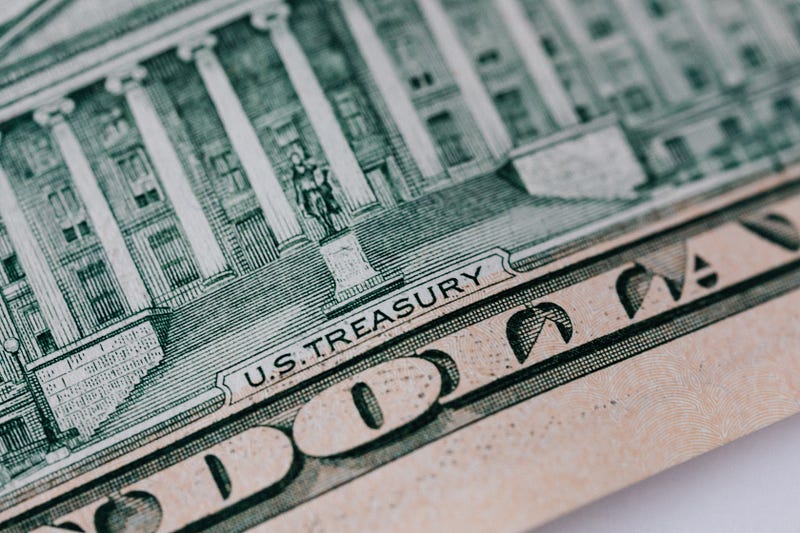
Photo by Karolina Grabowska on Pexels


Yield generation

Unlike stablecoins, which have failed to deliver substantial returns, and crypto lending, which carries notable risks as recent defaults and insolvencies in the digital asset sector have shown, tokenized US T-Bills provide a reliable investment option.

By converting the rights to these assets into digital tokens that can be traded and held within the blockchain ecosystem, Finblox enables fractional ownership. This means that users can invest small amounts and still earn proportional yields, opening up investment opportunities to a wider range of individuals.

Through the Finblox platform, users can directly benefit from the yield generated by these tokenized T-Bills. Historically, Treasury Bills have been regarded as blue-chip financial assets, offering reliable returns and serving as a benchmark for global financial markets.


OpenEden integration

To ensure transparency and security, Finblox has integrated the T-Bill vault of Singapore-based OpenEden with decentralized blockchain Chainlink. This integration provides on-chain verification, guaranteeing that Finblox’s T-Bill tokens are backed by US Treasury securities, USDC stablecoins, and US dollars on a 1:1 basis.

Finblox founder Peter Hoang emphasized the seamless and secure bridge that T-Bills offer between traditional and emerging markets in an interview with Tech in Asia. He stated: “With T-Bills, we are offering users a real-world asset while also benefiting from the custody of a regulated financial institution. It’s a seamless and secure bridge for both traditional and emerging markets, bringing safer yields to a wide range of users.”

To access Finblox’s T-Bill tokens, investors need to follow a straightforward process. Initially, they must obtain USDC from a reputable exchange, either through Finblox or other exchanges. Once the know-your-customer (KYC) verification process is completed, users can swap their USDC for T-Bills within the Finblox platform.

To enhance transparency, Finblox makes its wallets publicly available, enabling users to track deposits and withdrawals and verify the accuracy of transactions. The company also holds working capital in hot wallets to facilitate withdrawals below 2% of the entire pool, ensuring swift processing within three business days.

It’s understood that Finblox will market the product offering to users in the Philippines, Indonesia, India, and Vietnam, among other jurisdictions within Asia.


More to Read
View All
Web3 & Enterprise·

Jul 07, 2023

South Korean Firms Combine Strengths to Draw Hobbyists into the Metaverse

South Korean Firms Combine Strengths to Draw Hobbyists into the MetaverseCom2Verse, the metaverse subsidiary of South Korean game developer Com2uS, has formed a partnership with Somssidang, a leading hobby sharing platform, and Hana Bank, a prominent financial institution, to attract hobbyists to the metaverse.That’s according to a report by local news agency Newsis. This collaboration aims to create an infrastructure within Com2Verse’s metaverse that offers hobby classes and extends financial support to class providers.Photo by Steve Johnson on UnsplashSeminars and classes in metaverseThrough the combined expertise of the partnering companies, they strive to deliver engaging seminars and interactive classes in the metaverse, while actively promoting and expanding its ecosystem.Com2Verse plans to enable its metaverse users to partake in virtual as well as face-to-face courses offered by Somssidang. This will establish an environment conducive to the growth of hobby-related businesses, effectively bridging the gap between the physical and virtual realms. Somssidang, on its part, aims to expand its operations by providing high-quality content materials, such as classes by distinguished experts, to Com2Verse.Somssidang, boasting a user base of 1.2 million, stands as Korea’s largest hobby platform. The platform is currently offering a wide range of hobby classes, both online and in-person, across the nation. In addition to organizing lectures, Somssidang sells a wide range of do-it-yourself kits, as well as tickets for concerts, exhibitions, and tours. Furthermore, Somssidang provides specialized hobby workshops that are specifically tailored to meet the needs and preferences of business customers.Financial groundworkHana Bank, in collaboration with Com2Verse, will lay the financial groundwork necessary to support the metaverse. This partnership includes extending financial assistance to small business participants within the metaverse and promoting recreational activities for socially marginalized groups.CEO statementsCom2Verse CEO Lee Kyoung-Il expressed his conviction that the company’s metaverse will go beyond the traditional realm of online classes, offering educational courses that exceed expectations. He also emphasized the metaverse’s capacity to provide a diverse range of services, enabling users not only to enjoy their hobbies but also to achieve personal fulfillment. Somssidang CEO Jeong Myeong-won affirmed the platform’s commitment to developing content and services tailored specifically to the metaverse.Kim So-jung, Deputy President of Hana Bank, said this opportunity would converge cultural and financial sectors to realize our daily lives onto the metaverse. Kim added that Hana Bank is committed to ongoing strategic cooperation with the other two partners to deliver innovative financial services and fulfill its social responsibilities.

news
Policy & Regulation·

Jul 24, 2023

Shanghai Embraces Blockchain, AI, and Digital Yuan with New Guidelines

Shanghai Embraces Blockchain, AI, and Digital Yuan with New GuidelinesIn a bid to stay at the forefront of technological advancements, the government of China’s largest and most populous city, Shanghai, has issued a set of guidelines aimed at promoting the widespread adoption of blockchain, the metaverse, and the digital yuan.Photo by Edward He on UnsplashIntegrating blockchain technologyThe objective of the measure is to further the use of these technologies across various industries within the city. Leading enterprises across a range of industry sectors, such as automotive, commodity trading, and e-commerce, are now required to look to incorporate these technologies into their operations.The guidelines, which were published last Tuesday, outline the government’s commitment to providing support for platforms that seek to enhance digitalization in production, operations, and management processes. Additionally, they emphasize the development of information technology services centered around big data, blockchain, the Internet of Things, artificial intelligence, and the mobile Internet.Bolstering commodity tradingA key focus for the government is the establishment of a robust internet system to bolster its local commodity trading service. This move is driven by a reliance on “the national financial factor market,” which aims to upgrade the over-the-counter derivatives platform for bulk commodities and strengthen the linkages between futures and cash.Furthermore, the guidelines pave the way for expanding e-commerce service platforms for industrial products, setting up a digital transformation service platform, and fostering the development and application of data resources.Shanghai’s status as China’s financial hub makes it an ideal testing ground for innovative technologies like blockchain and AI. However, China’s approach to cryptocurrency is more complex. It involves support for blockchain technology while at the same time applying strict measures against crypto trading and mining.Aligning with central government policyThe Chinese government’s support for blockchain technology stems from its recognition of blockchain as the underlying foundation of cryptocurrencies. Judging by the blockchain initiatives forwarded by the central government and regional Chinese administrations in recent months, it’s clear that China is keen to develop leadership in the use of blockchain across various sectors. It takes a different view, however, when it comes to projects related to decentralized cryptocurrencies and crypto trading.In recent years, China has cracked down on cryptocurrency activities. In 2013, the government banned initial coin offerings (ICOs), a fundraising method used for cryptocurrency projects. Subsequently, cryptocurrency exchanges were banned in 2017, followed by a prohibition on cryptocurrency mining in 2021.Several factors contribute to the Chinese government’s cautious approach to cryptocurrency. One major concern is financial stability, as crypto can be exploited for illicit activities like money laundering. According to a recent report, Chinese authorities are redoubling their efforts in pushing back against the use of crypto as they’re finding that it is being used to exploit capital control loopholes.These recent guidelines from Shanghai’s administrators aim to capitalize on the transformative potential of emerging technologies while ensuring prudent regulation and control over cryptocurrency-related activities in line with current central government policy emanating from Beijing.

news
Policy & Regulation·

Apr 11, 2023

Malaysia Looking to Wean Itself Off Dollar Dependency

Malaysia Looking to Wean Itself Off Dollar DependencyAccording to Prime Minister Anwar Ibrahim, China is willing to engage in discussions with Malaysia regarding the creation of an Asian Monetary Fund. This proposal, which has been circulating for decades, aims to decrease the dependence on the US dollar.©Pexels/Sergei StarostinAsian Monetary FundAnwar highlighted the necessity to minimize reliance on the dollar and the International Monetary Fund and proposed the establishment of this fund at the Boao forum in Hainan last week. He stressed that the fund would aid in diversifying the financial landscape of Asia and improving its resilience against economic challenges.Following a state visit to China last week, Anwar stated that “there is no reason for Malaysia to continue depending on the dollar.” The Prime Minister told the Malaysian parliament on Tuesday that China’s President Xi Jingping was receptive to the idea of an Asian Monetary Fund and welcomed further discussions on such a proposal.Anwar Ibrahim, serving as both the Finance Minister and Prime Minister of Malaysia, stated that the country’s central bank is already taking measures to allow for negotiations between Malaysia and China using their respective currencies, the ringgit and renminbi.The robustness of the US dollar poses a significant challenge for Malaysia and other Asian countries, particularly as Malaysia is a net importer of food. In September 2022, the Bloomberg dollar index reached an all-time high, leading to a decline in the value of the ringgit and other Southeast Asian currencies to levels not seen in decades.As a result, Anwar Ibrahim’s proposal for a shift towards bilateral trade negotiations with China using the ringgit and renminbi holds the potential to alleviate some of the region’s dependence on the dollar and reduce the impact of its fluctuations.International shift away from dollarThis development comes as other officials in the region, particularly Singapore, have been discussing strategies to manage the effects of a dominant US dollar that has weakened local currencies and been used as an instrument of economic power by the United States.There has been a raft of deals struck in recent weeks all pointing towards an international shift away from the US dollar as the global reserve currency. Russia has agreed with China to trade in renminbi. A major trade deal was struck recently between China and Brazil that will see the two countries trade in reals and renminbi. Major oil producer Saudi Arabia has made similar soundings and signed similar deals with Beijing.Bitcoin as a reserve currencyAll of this recent upheaval has brought further consideration of bitcoin acting as a reserve currency back into view. It’s expected that even if there is a shift away from the US dollar, the renminbi won’t be capable of acting as a single dominant global reserve currency. Taking to Twitter on Wednesday, Bloomberg Intelligence Crypto Market Analyst Jamie Coutts suggested that bitcoin’s performance in Q1, 2023 marks “a significant milestone in its ascendancy as a potential global reserve asset.”Coutts believes that it marks the first occasion that the leading cryptocurrency has acted as a safe haven asset during a liquidity crisis. Bitcoin remains at an early stage of development. Nobody expects that it could serve as the global reserve currency at this point. However, it is not unreasonable to anticipate it increasingly growing into a role as a reserve currency used for international trade and settlement. Especially so, as issues bubble over relative to banking and a desire to escape the clutches of US dollar domination.

news
Loading