Top

Bitcoin layer-2 project Elastos sees ELA token surge

Markets·December 21, 2023, 1:37 AM

Singaporean blockchain developer Elastos has unveiled its BeL2 layer-2 network set to run on top of the Bitcoin blockchain, eventually prompting a token price surge.


50% increase

The project aims to address challenges such as transaction volume limitations and the complexity of programmable contracts within the Bitcoin ecosystem. Despite the initial muted response from the crypto community after the late November announcement, Elastos’ native token, ELA, has experienced an extraordinary surge on Wednesday. Over the course of the past 24 hours, the token’s unit price has jumped from $2.06 to $3.09. That represents a 50% increase.

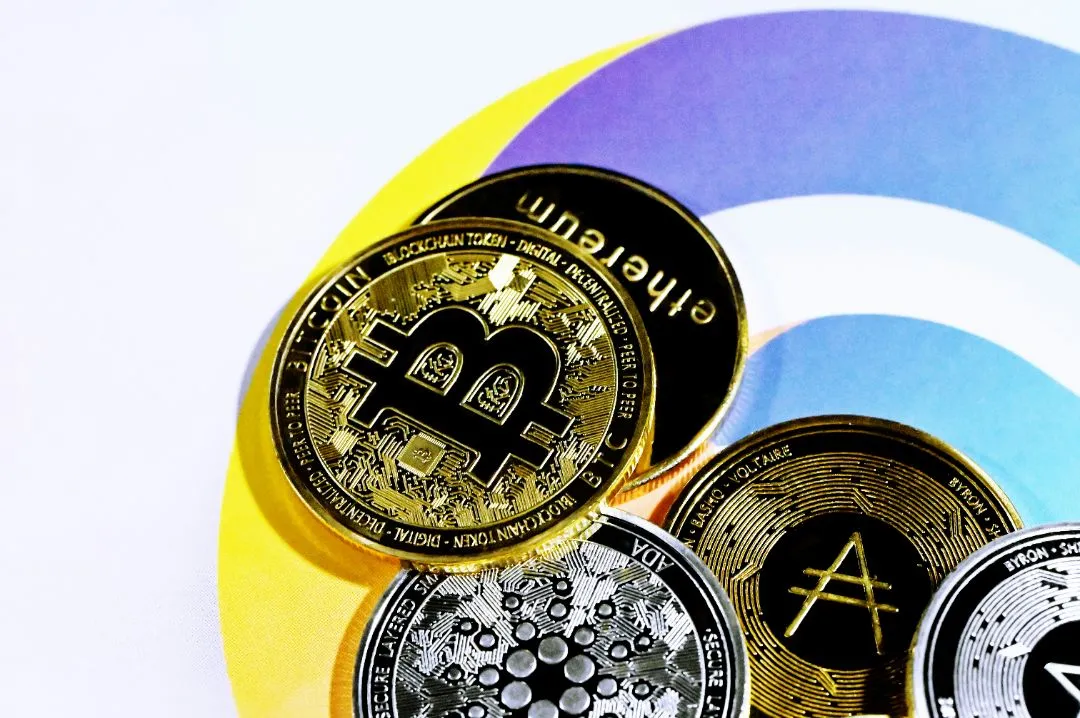
Photo by Kanchanara on Unsplash


Bringing smart contracts to Bitcoin

On Dec. 2, the project released its BeL2 whitepaper, describing it as “a transformative approach to enhancing Bitcoin’s functionality.” BeL2 has the potential to bring about significant advancements by leveraging SmartWeb technology to introduce staking solutions and incorporate zero-knowledge proof technology.

A zk proof is a cryptographic method through which one party can prove to another party that a particular statement is true, all the while avoiding the leakage of any additional information aside from confirming the statement is true. Up until now, zk proofs have been largely the preserve of Ethereum-centric projects.

Alongside zk proofs, BeL2 will utilize Bitcoin-powered Ethereum Virtual Machine (EVM) smart contracts. This approach is expected to expedite transactions within the network and introduce governance through a decentralized model.


BeL2 roadmap

The roadmap for BeL2 includes a three-month development phase for a proof-of-concept, followed by an additional three months dedicated to the decentralization of relayers. These relayers, acting as third-party services facilitating communication and data transactions between different blockchain networks, play a crucial role in the overall implementation of BeL2.

Elastos envisions BeL2 as a Layer 2 network built on Bitcoin, introducing sophisticated BTC transactions on its blockchain. Beyond staking, the network aims to provide direct yield and affordable transactions on native decentralized applications. The move marks a significant shift, allowing Bitcoin holders to stake their assets directly, unlocking potential value exceeding $700 billion.

Looking ahead, Elastos plans to chart the decentralized finance (DeFi) course on BTC by enabling smart contract deployment and irreversible digital agreements between participants.

As interest in Bitcoin continues to rise, driven by innovations like inscriptions and spot ETF discussions in the United States, Elastos’ BeL2 initiative is garnering greater attention, relative to the potential to usher in a new era of possibilities for the world’s most popular digital currency.

The project was founded in 2017 by Rong Chen, a former senior software engineer at Microsoft. Taking to the X social media platform earlier this month, Chen wrote:

“I don’t see any other paths to the final #Web3 destination except:

(1) A #BTC merge mining blockchain, plus smart-contract sidechains as needed;

(2) A #SmartWeb operating system (OS) to facilitate personal node to own data, plus personal-node to personal-node direct communication links;

(3) Personal Cloud Compute (#PC2) Runtime sandbox, so individuals are on the same footing as big brothers;

(4) Digital goods software-development-kits (embedded OS #SDKs), entrusting your data to nobody else but yourself, i.e., your own code to check access tickets/tokens before loading and rendering data.”

The Elastos ecosystem employs three-layer consensus mechanisms: auxiliary proof-of-work, proof-of-integrity and bonded proof-of-stake. It’s hoped that the project can improve upon the original layer-2 solution for Bitcoin, the Lightning Network, which has had issues in terms of scalability and centralization risk.

More to Read
View All
Web3 & Enterprise·

Apr 02, 2024

Bithumb lowers fees and enhances UX to bolster competitiveness

One of South Korea's prominent cryptocurrency exchanges, Bithumb, has doubled down on its effort to solidify its position as a leading crypto trading platform in the country. Bithumb has recently announced its policy to offer the lowest withdrawal fees among all local crypto exchanges, while enhancing its user experience by upgrading the user interface (UI) and adding more features to its app, according to the local media outlet Kyunghyang Games.  Already one of the few qualified fiat-to-crypto exchanges in Korea and a member of Digital Asset eXchange Alliance (DAXA) – a consultation group of the top five local crypto exchanges – Bithumb aims to further strengthen its competitiveness in the market. Photo by Traxer on UnsplashLower withdrawal fees with trading fees already at 0.04%According to the press, Bithumb has announced to offer the lowest withdrawal fees in the local crypto scene to win the hearts and minds of investors. Under the updated fee policy, users are now charged 0.0008 BTC for withdrawing Bitcoin and 0.009 ETH for Ether. The exchange has also been known for offering one of the lowest trading fees at 0.04%.  Making the deposit limit increase easierBithumb has long been getting complaints from users over its relatively unfavorable user experience and cumbersome processes required to increase the deposit limit of their real-name accounts. In response, Bithumb has introduced a new in-app feature that simplifies such procedures, so that users can raise their deposit limit with ease.  Among users who joined Bithumb in March, those whose initial deposits have passed 30 days and who purchased crypto assets valued at over KRW five million ($3,700), are now eligible for the deposit limit raise, allowing them to deposit and withdraw up to KRW 500 million per day.  Enhanced user interface and user experience One of the newly added features is the "Even Faster Chart," which provides users with four times faster response times following its transition from "Web view" to "Native view."  Bithumb's Chief Operating Officer (COO), Moon Seon-il, stated that the exchange is improving its service in multiple ways, including offering the lowest fees, supporting multichain transactions and enhancing UI for users.  

news
Web3 & Enterprise·

Dec 12, 2023

HTX experiences $258 million outflow post-hack

HTX experiences $258 million outflow post-hackHTX, the digital-asset trading platform associated with Chinese-born crypto mogul Justin Sun, has witnessed a substantial net outflow of $258 million since resuming operations after a significant security breach.According to Bloomberg, data from DefiLlama indicates that the outflow occurred between the exchange’s restart on Nov. 25 and Dec. 10, signaling unease among some clients following last month’s cyberattack. In November, HTX reported a loss of $30 million in crypto tokens due to the breach, prompting a temporary suspension of withdrawals and deposits.Towards the end of last month, the platform re-enabled withdrawal services for major cryptocurrencies, gradually bringing the exchange back to full service, supporting withdrawal of all digital assets.Photo by Amritanshu Sikdar on UnsplashMultiple hacksJustin Sun is also associated with the Poloniex exchange and the HECO Bridge, a network established by HTX for blockchain transfers. Both Poloniex and HECO fell victim to hacks in November, resulting in the theft of approximately $200 million in crypto. It’s worth noting that hackers had previously stolen $8 million from the HTX platform in September.HTX, which was formerly known as Huobi up until a business rebrand in September, boasts an average trading volume of $1.5 billion in the past 24 hours, securing its position as the fifteenth largest exchange when measured in terms of trading volume.Increased vigilanceIn the wake of several high-profile crypto platform failures in 2022, digital-asset investors are increasingly vigilant about monitoring flows and reserves at virtual currency exchanges. In particular, that trend gained momentum after the FTX platform’s collapse last year due to fraud.November turned out to be the most damaging month this year so far in terms of platform digital asset theft. Exit scams and exploits encountered during the month totaled a staggering $363 million in losses.In October, the UK’s Financial Conduct Authority (FCA) included HTX, alongside KuCoin, on a warning list, due to their promotion of services in the UK, without having obtained the required regulatory approvals.A third of reserves in BitcoinDefiLlama data reveals that Bitcoin constitutes the largest portion of HTX’s reserves, accounting for approximately 33%. Tron’s TRX token, launched by Sun in 2017, represents around 32% of the reserves. HTX’s native exchange coin, HT, makes up 14%, followed by a Sun-backed token named stUSDT at 12%.In August, Travis Kling, Founder of Ikigai Asset Management, had this warning relative to Sun and HTX:”Justin Sun is a criminal. There’s a hole in Huobi, a hole in TUSD and a hole in Tron DeFi. Act accordingly.”TRX, at the center of U.S. fraud allegations against Sun, prompted a March lawsuit by the Securities and Exchange Commission (SEC), accusing him and his firms of market manipulation to inflate the token’s trading activity. Sun dismissed the suit on the X social media platform back in March, stating that it “lacks merit.” On Sunday, Sun claimed that the Tron blockchain network which he founded had reached a new milestone of 200 million users.Despite security firm BlockSec reporting the recovery of the $8 million stolen in September, hackers still appear to control the $30 million taken last month. The ongoing situation raises concerns about the security measures and resilience of HTX in the face of persistent cyber threats.

news
Web3 & Enterprise·

Jan 15, 2024

Conan Korea launches open beta service for decentralized storage network

Conan Korea has launched an open beta service for OceanDrive, a desktop platform that contains a network of decentralized computer storage for users to share and explore their digital assets, according to an article published by South Korean news outlet Asia Times on Monday (KST). In comparison to cloud storage, which is subject to service provider policies, has no reward system, and relies on centralized servers, OceanDrive distributes storage across multiple nodes, is equipped with user-controlled access and encryption, and provides incentives for participation and contribution.Photo by Shubham's Web3 on Unsplash"The blockchain market is currently transitioning from NFTs to decentralized physical infrastructure networks (DePIN), which combines digital currency and physical infrastructure. OceanDrive is a platform optimized for the DePIN paradigm and is now making its market debut after four years in development,” explained Pyo Se-jin, CEO of Conun Korea.  Global collaborationThe project aims to create a vast network of storage resources scattered across the globe, all while providing users with cost efficiency, rewards and opportunities for collaboration and sharing of knowledge.  "We hope that this open beta service will give people a chance to experience OceanDrive’s user-friendly system and recognize its difference from cloud storage," Conun Korea said. "We are currently working on implementing OceanDrive into a popular Korean fashion boutique as well as a major online educational institution."      2024 plansThrough this open beta service, the company plans to build a blockchain network infrastructure platform of the highest quality by overcoming the shortcomings of OceanDrive and maximizing its advantages so it can be used not only domestically, but abroad as well.

news
Loading