Top

Thailand approves crypto income tax exemption

Policy & Regulation·March 15, 2024, 3:07 AM

In a move aimed at boosting the Web3 sector, the adoption of investment tokens and the enhancement of startup financing, the Thai government recently approved a tax break for individuals holding such tokens.
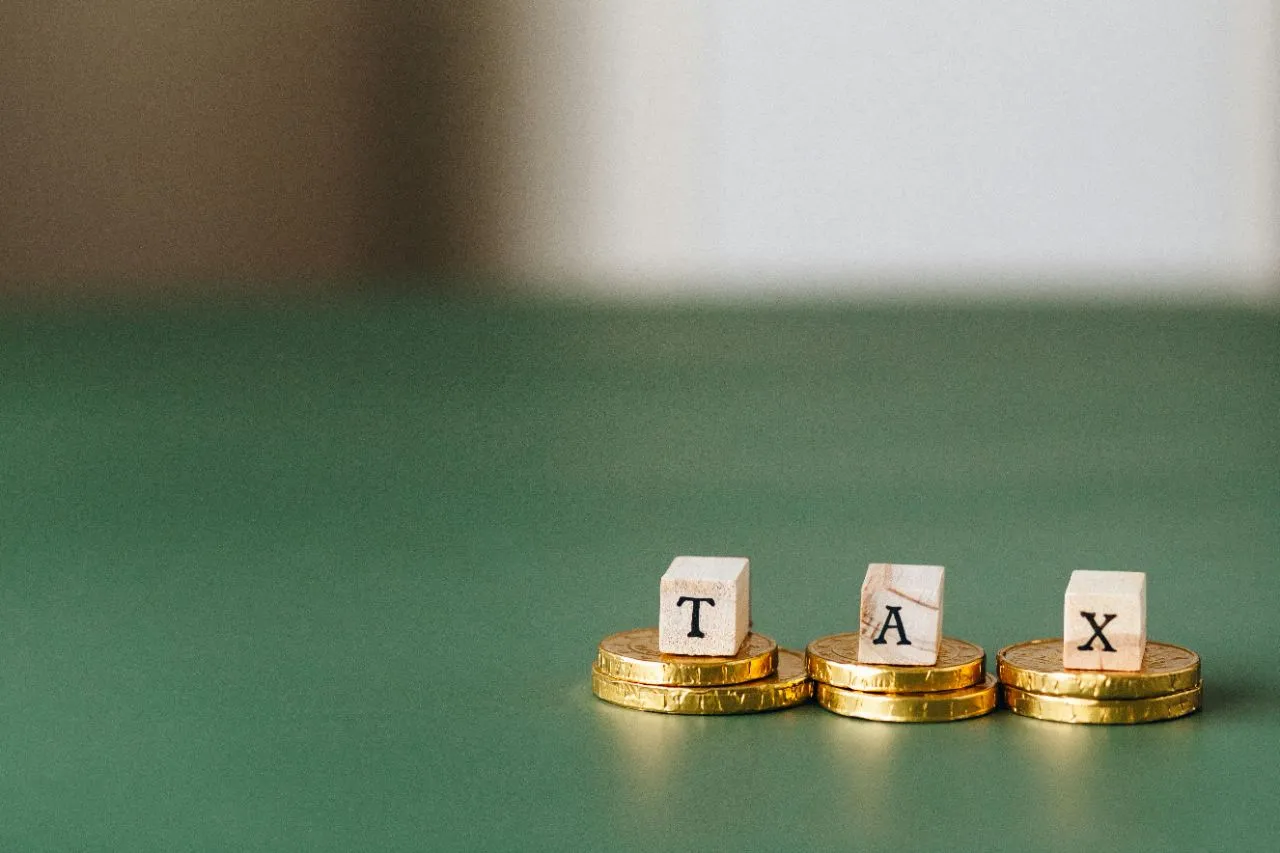
https://asset.coinness.com/en/news/7b422a9b7d84b80a4f1c60f6e2723d5d.webp
Photo by Nataliya Vaitkevich on Pexels

Incentivizing crypto-based fundraising

The decision, reported by local media as having been made on March 12, signifies a significant step towards incentivizing the use of investment tokens for fundraising purposes. Under the new regulations, capital gains derived from holding investment tokens will be exempt from personal income tax calculations.


This exemption applies even if a 15% withholding tax had previously been deducted. The endorsement of this tax break by Thailand's cabinet underscores the government's interest in fostering economic growth and enhancing investment opportunities in the region.


Kulaya Tantitemit, Director-General of Thailand's Revenue Department, emphasized the strategic importance of these tax measures, which have been made retrospectively effective from Jan. 1. The initiative is expected to stimulate fundraising activities through investment tokens, injecting vitality into the economy and paving the way for increased investment and job creation.


However, it's worth noting that the tax break will only apply to individuals who refrain from seeking full or partial refunds of the deducted tax or claiming a deducted tax credit. Additionally, the government has extended tax incentives to investment token issuers, waiving corporate income tax as announced on March 7.

Last month, the Thai Finance Ministry announced the exemption of digital asset trading activity from value-added tax (VAT). The VAT exemption is similarly designed to encourage the use of digital assets as an alternative fundraising mechanism.


Potential $3.7B boost

Deputy Government Spokesman Rachada Dhnadirek highlighted the significance of this move in diversifying fundraising avenues for firms, complementing traditional methods. The government anticipates that investment tokens will contribute approximately $3.7 billion to the economy over the next two years.


While the recent tax break signals a positive step towards fostering a crypto-friendly environment in Thailand, the country's approach to crypto taxation has faced scrutiny from industry stakeholders in the past.


Efforts by the Thai Revenue Department to tighten oversight and impose taxes on cryptocurrency trading were met with resistance from industry players concerned about the potential stifling effect on the sector's growth. In January 2022, the government's proposal to impose a 15% capital gains tax on crypto traders drew significant public backlash, leading to its suspension on Feb. 1 of the same year.


Despite these challenges, Thailand has demonstrated a willingness to adapt its regulatory framework to accommodate the burgeoning crypto industry. Measures such as exempting traders on authorized exchanges from a 7% value-added tax (VAT) on crypto transactions, announced on March 8, 2022, underscore the government's efforts to create a conducive environment for crypto-related activities.


The political backdrop in Thailand more recently is likely to be aiding the country in taking a more progressive stance where crypto is concerned. Last year, the country elected Srettha Thavisin as Prime Minister. In a prior role as CEO of real estate developer Sansiri, Thavisin oversaw the company’s involvement in digital asset-related activities. In January, Thailand’s Securities and Exchange Commission (SEC) removed the investment ceiling imposed on retail investors relative to participation in initial coin offerings (ICOs).

More to Read
View All
Markets·

Dec 19, 2023

Analysts expect crypto market cap to triple or more next year

Analysts expect crypto market cap to triple or more next yearThe Korbit Research Center, affiliated with South Korean cryptocurrency exchange Korbit, published a report last Friday that provides projections for the crypto market in 2024.The paper includes contributions from its team, notably head of research Peter Chung, as well as research analysts Choy Yoon-young, Kang Dong-hyun and Kim Min-seung.Peter Chung predicts that the total market capitalization of cryptocurrencies could soar to $5 trillion, more than three times greater than its current level of $1.6 trillion. He attributes this potential growth to three key factors: the possibility of the U.S. Federal Reserve easing its monetary policy, the potential approval of spot bitcoin and ether exchange-traded funds (ETFs), and the anticipated Bitcoin halving event expected in April 2024.Photo by Pierre Borthiry — Peiobty on UnsplashFactors driving crypto market growth in 2024Peter Chung suggests that the growth of the crypto market will be driven by the expanding utility of virtual assets. He believes that once ETFs for bitcoin and ether are approved, these cryptocurrencies will become more versatile as investment options. This, in turn, is expected to enhance their reputation and foster wider adoption, having a significant influence on the broader crypto ecosystem beyond the two most dominant cryptocurrencies.Real-world assets and financial firmsChoy anticipates that the U.S. Securities and Exchange Commission (SEC) will approve spot bitcoin and ether ETFs by the first half of next year. On a different note, Kang focuses on the importance of blockchain technology, particularly emphasizing real-world assets (RWAs) and roll-up solutions. Kang highlights that since RWAs are closely linked with traditional financial institutions, an influx of capital from these entities is likely to boost the RWA market. This interaction between traditional finance and blockchain technology could be a key driver of growth in the sector.Regulatory changes and landscape shiftKim Min-seung, another analyst from the team, forecasts that upcoming regulatory developments could alter the dynamics of the cryptocurrency market. A notable development in this regard is the forthcoming implementation of the Virtual Asset User Protection Act in South Korea, set for July next year. According to Kim, these changes might result in a scenario where only competitive cryptocurrencies survive.Kim elaborates that the perception of virtual assets is poised for a shift. Currently, crypto investors tend to base their decisions on expectations of arbitrary cryptocurrency inflation. However, once new regulations are implemented, investors are likely to start assessing the actual value of virtual assets more critically. This shift in approach could lead to a more value-driven and stable cryptocurrency market, as speculative tendencies might decrease and a focus on intrinsic value increases.According to local news outlet website The Asia Business Daily, Peter Chung anticipates further growth in the cryptocurrency market next year, following its rebound this year. He suggests that this growth trajectory will not only continue but also attract increased attention from the public.

news
Web3 & Enterprise·

Aug 22, 2025

Circle President visits Seoul for stablecoin talks with exchanges and central bank

Circle President Heath Tarbert, who oversees the issuer of the USDC stablecoin, arrived in Seoul on Aug. 21 for a series of meetings with South Korean cryptocurrency and blockchain industry leaders, as well as the governor of the country’s central bank. Citing industry sources, local outlet Newsis reported Tarbert visited three major exchanges, Upbit, Bithumb and Coinone, shortly after landing, spending roughly an hour at each. Discussions centered on recent developments in Korea’s digital asset ecosystem.Photo by Daniel Bernard on UnsplashGathering insight from exchangesThe trip underscores Circle’s growing interest in South Korea, one of the world’s largest crypto markets by trading volume despite its heavy tilt toward retail investors. Circle is reportedly seeking on-the-ground insight from local trading platforms. An executive from a research firm said the market offers an attractive foothold for global players looking to deepen networks. Previous reports indicated Circle has also begun informally recruiting in South Korea to support initiatives tailored to the local market, and the company is also weighing a direct investment in a domestic crypto firm. Homing in on stablecoinsStablecoins are expected to dominate the agenda with exchanges. USDC is the world’s second-largest stablecoin by market share, behind Tether’s USDT, and all three exchanges already support USDC trading. Upbit and Bithumb have meanwhile indicated their plans to develop Korean won–pegged tokens, recently filing trademark applications for their projects. Given Circle’s position in the sector, one exchange official said local platforms may look to the U.S.-based company as a benchmark, adding that practical knowledge-sharing could be the most meaningful outcome of Tarbert’s visit. Tarbert also attended a dinner with Simon Seojoon Kim, CEO of crypto venture firm Hashed, whose teams span Seoul, Singapore, Bengaluru, Silicon Valley and Abu Dhabi. Circle and Hashed have been in frequent contact, and the gathering offered another forum to exchange views on recent market developments. Talks with the central bank governorOn the policy front, Tarbert met with Bank of Korea (BOK) Governor Rhee Chang-yong at Circle’s request before the dinner. Rhee has signaled openness to the introduction of won-backed stablecoins, while emphasizing prudential safeguards and noting differences with some lawmakers on potential issuers. The BOK head has previously warned that allowing non-bank entities to issue won-backed stablecoins could pose risks, such as circumventing capital rules. The South Korean central bank is working with other agencies to develop a framework that ensures the stability and utility of stablecoins while preventing their use to bypass foreign exchange controls. The meeting between Tarbert and Governor Rhee likely covered regulatory parameters for cross-border remittances using stablecoins and avenues for public-private collaboration to foster a compliant won-stablecoin market. On the following day, Tarbert is slated to meet executives from four major financial groups: Shinhan Financial Group, Hana Financial Group, KB Financial Group and Woori Bank. Kakao Group, the company behind the KakaoTalk messaging app, is also on the itinerary. Representatives from its mobile payment platform, KakaoPay, are expected to take part in the discussions. The talks come as Kakao recently formed a task force to navigate Korea’s evolving stablecoin rules. Separately, Circle listed on the New York Stock Exchange (NYSE) earlier this year under the ticker “CRCL.” The initial public offering (IPO) priced at $31 a share and opened at $69, raising nearly $1.1 billion. As of Aug. 21, the stock closed at $131.80. 

news
Web3 & Enterprise·

Oct 28, 2024

Binance Thailand CEO identifies Thai market shift from retail to institutions

The focus of Thailand’s crypto market is moving towards institutional business rather than retail. That’s the view of Nirun Fuwattananukul, CEO of Binance Thailand. Changing regulatory landscapeFuwattananukul laid out his thoughts on the matter in an opinion piece published by the Bangkok Post on Oct. 25. The Binance executive believes that the regulatory conditions are changing in the country such that institutional involvement in digital assets will become more likely. Fuwattananukul pointed to a proposal that was put forward by the Thai Securities and Exchange Commission (SEC) earlier this month. The proposal, published on Oct. 9, seeks to permit mutual and private equity funds in Thailand to invest in various crypto products, including the spot Bitcoin exchange-traded funds (ETFs) that were launched in the United States earlier this year. Back in June, the Thai SEC green-lighted the launch of homegrown spot Bitcoin ETFs. In August, the regulator launched the Digital Asset Regulatory Sandbox, inviting interested parties to test crypto-related services within a controlled environment. Fuwattananukul described the SEC’s new rules opening institutional access to digital asset products as a “vital step in the maturation of Thailand’s cryptocurrency landscape.” The Binance Thailand CEO added that “by allowing more institutional funds to participate, the SEC is enabling a diverse range of investment strategies and helping digital assets gain broader acceptance in the mainstream.”Photo by Vadim Artyukhin on UnsplashPotential regional crypto hubIt’s based on this rationale that the Binance executive perceives a shift in focus within the crypto market in Thailand, with the likelihood of more money flowing into the space from institutional sources than from retail.  The entry of institutional money could lead to a “more mature ecosystem,” while further legitimizing Bitcoin and the crypto space more broadly. Extending that line of thought, Fuwattananukul suggests that this change of focus to institutional involvement could lead to positioning Thailand as a regional digital asset hub.RWA tokenizationThe Binance Thailand executive also identified the tokenization of real-world assets (RWAs) as an area that’s trending right now. He cites it as an example of the convergence of TradFi and digital assets markets. Fuwattananukul stated: “Tokenisation brings 24/7 trading, increased liquidity, and cross-border accessibility, which could reshape traditional financial markets and make investment opportunities more inclusive.” Back in January, Thailand’s SEC introduced new rules that lifted restrictions on retail investors accessing two classes of tokenized RWAs. The change affected real estate-backed tokens or tokens linked to real estate revenues. Prior to the rule change, retail investors couldn’t invest more than $8,415 in such tokenized assets. In collaboration with Gulf Innova, a subsidiary of Gulf Energy Development, Binance launched Binance Thailand as a joint venture in January. The SEC had awarded the business a trading license in 2023.

news
Loading