Top

HKMA forms working group to establish tokenization standards

Policy & Regulation·May 10, 2024, 7:21 AM

The Hong Kong Monetary Authority (HKMA) has outlined that it has established a community initiative relative to its recently launched Project Ensemble tokenization market development effort.


'Project Ensemble Architecture Community'

In a press release on May 7, the Hong Kong regulator set out the establishment of the “Project Ensemble Architecture Community.” Project Ensemble was launched two months ago on March 7. At the time, the regulator described the project as “a new wholesale central bank digital currency (wCBDC) project to render support to the development of the tokenisation market in Hong Kong.”


The HKMA is trying to create an environment in which it can “develop standards” for the emerging tokenization market, with particular emphasis on the use of a wholesale central bank digital currency (wCBDC). The Chinese autonomous territory’s central bank has launched the “Project Ensemble Architecture Community,” with a view towards supporting interoperability between a wholesale CBDC, tokenized money and tokenized assets.


The HKMA has outlined the community's primary objective, stating it aims to provide recommendations on various topics, with initial emphasis on devising a mechanism to facilitate seamless interbank settlement of tokenized deposits through wCBDC for tokenized asset transactions.

https://asset.coinness.com/en/news/1b649cd41e337243a7daecd138198cfa.webp
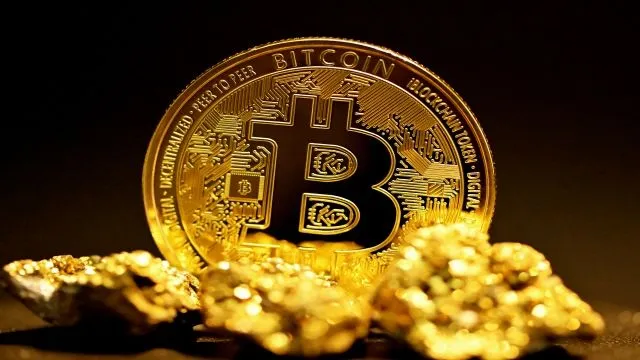
Photo by Jimmy Chan on Pexels

Public and private sector participants

Furthermore, the working group intends to support the design and execution of Project Ensemble. Notable participants in the "Architecture Community" include the HKMA itself, Hong Kong’s other financial regulator, the Securities and Futures Commission (SFC), the BIS Innovation Hub Hong Kong Centre, the CBDC Expert Group and seven private sector entities. 


Among these are Bank of China (Hong Kong), Hang Seng Bank, HSBC, Standard Chartered Hong Kong, HashKey Group, Ant Digital Technologies and Microsoft Hong Kong. Hashkey Group owns one of two Hong Kong-regulated cryptocurrency exchanges, HashKey Exchange. It also runs a brokerage, asset manager and tokenization platform, amongst other entities. Ant was recently involved in a tokenized deposit trial with HSBC.


Regulatory sandbox

One of the first matters on the agenda for the newly-formed Community is to make recommendations about using a wCBDC for interbank settlement of tokenized deposits. Following that, the project plans to work towards the design and implementation of the Project Ensemble Sandbox which will launch in the coming months.


The HKMA has been actively testing its CBDC and commenced the second phase of the e-HKD pilot in March. This phase of the pilot program is slated to extend until mid-2025.


The journey towards exploring CBDCs in Hong Kong dates back to 2017, with the authorities intensifying their focus on researching a potential e-HKD in 2021, spanning both wholesale and retail levels.


With the participation of key stakeholders from both the public and private sectors, including leading financial institutions and technology firms, the initiative appears to be well-positioned to drive innovation and address the evolving needs of the financial industry in Hong Kong.



More to Read
View All
Policy & Regulation·

Sep 19, 2023

JPEX Exchange Scandal Sees Crypto Regulation Under Scrutiny in Hong Kong

JPEX Exchange Scandal Sees Crypto Regulation Under Scrutiny in Hong KongWhile Hong Kong has been developing steadily as a crypto sector hub, the focus in the Chinese autonomous territory has turned towards regulation after a recent scandal involving an unlicensed cryptocurrency exchange.Photo by Ihor Saveliev on UnsplashOngoing investigationYesterday we reported on some arrests relative to problems experienced at crypto exchange JPEX. The fallout continues on Tuesday, with the Hong Kong police now understood to have arrested eight individuals, including social media influencers who promoted the exchange and JPEX employees, on allegations of fraud. This illicit activity in and around the JPEX exchange has affected over 1,600 investors, implicating more than $150 million in assets.JPEX, in response to mounting pressure, announced the suspension of trading on its platform. In a statement, the exchange mentioned ongoing negotiations with third-party market makers to address liquidity shortages. However, JPEX also accused an unidentified third-party market maker of maliciously freezing funds, further complicating the situation.Politicians and regulators speak outResponding to the incident via a press conference on Tuesday, Hong Kong’s Chief Executive, John Lee, emphasized the significance of investing in virtual assets through licensed platforms. Lee stated:“This incident highlights the importance that when investors want to invest in virtual assets, then they must invest on platforms that are licensed.” He also pledged that the Securities and Futures Commission (SFC) would closely monitor the situation to ensure investor protection.Elizabeth Wong, the Head of the SFC’s fintech unit, revealed that an investigation was underway to determine whether JPEX had violated anti-money laundering laws. The SFC had already declared JPEX unlicensed, prompting numerous complaints from investors who were unable to withdraw their virtual assets or experienced unexplained reductions in their balances.Assets frozenHong Kong authorities have taken decisive action against those involved in the scandal. They have frozen bank accounts valued at 15 million Hong Kong dollars ($1 million) and seized three properties valued at 44 million Hong Kong dollars. The police have reported receiving 1,641 complaints related to JPEX, involving a staggering $1.2 billion Hong Kong dollars. By last Wednesday, the SFC had received in excess of 1,000 complaints and at that point, they notified the general public.The JPEX scandal has drawn attention to the need for stronger cryptocurrency regulations in Hong Kong, a region that has become attractive to cryptocurrency firms since mainland China banned cryptocurrency transactions in 2021. In mainland China, trading cryptocurrencies on foreign exchanges from within the country remains illegal.Hong Kong’s response to cryptocurrency regulation has evolved. Beginning on June 1, the SFC started accepting applications from cryptocurrency exchanges, allowing licensed operators to serve retail investors, provided they understand the associated risks. Previously, only professional investors had access to such exchanges. Currently, only two exchanges in Hong Kong, OSL Exchange and Hashkey Exchange, have received approval to operate.As Hong Kong reevaluates its approach to cryptocurrency regulation, the crypto sector will hope that it strikes a balance between fostering innovation and protecting investors from fraud and market manipulation.

news
Markets·

Feb 07, 2024

Positive market sentiment ahead of Bitcoin halving

Seychelles-incorporated crypto exchange platform Bitget recently released findings from a study on Bitcoin's upcoming halving, revealing that the vast majority of surveyed investors predict bitcoin will achieve a new all-time high (ATH) in 2024. Separately, other market commentators and analysts appear to be bullish on bitcoin ahead of the scheduled cut in Bitcoin mining rewards.Photo by Kanchanara on Unsplash84% anticipate new bitcoin ATHThe study, based on anonymized data from 9,748 participants worldwide, focused on investor perceptions surrounding the halving's impact on their investment decisions. 84% of participants anticipate a new ATH for bitcoin during the next bull run, with only East Europe showing a percentage lower than 80%. Over 50% predict bitcoin's price to be between $30,000 and $60,000 by the time the halving occurs in April. Meanwhile, 30% foresee the bitcoin unit price going higher than $60,000. Off the back of the data that has arisen via the study, Bitget managing director Gracy Chen suggested that it is indicative that 2024 will be a significant year for the bitcoin market. Crypto investment plansApproximately 70% express plans to increase their crypto investments, with the highest conviction in the Middle East and North Africa (MENA) and East Europe regions. Western European investors are characterized as "short-term cautious" and "long-term optimistic." In addition to the Bitget study, many market commentators appear to have arrived at a similar conclusion. In July of last year, Standard Chartered Bank forecasted a 2024 unit price for bitcoin of $120,000. The bank reaffirmed that view last month, going further still in stating that by 2025, it expected bitcoin to reach a price of $200,000, largely due to capital inflows into spot bitcoin exchange-traded funds (ETFs), which were approved in the United States in January. Broader market sentimentTaking to social media on Monday, crypto analyst Charles Edwards of Capriole Investments proposed a potential 500% price return for bitcoin if a bullish halving pattern plays out. Edwards envisions bitcoin reaching $280,000 in 2025. Like Standard Chartered, he cites the January bitcoin ETF launch as the driving force, likening it to a "second halving." He argues that major technological developments have historically seen quicker rates of adoption. Crypto trading analyst Michaël van de Poppe predicts a pre-halving surge to $48,000 and an eventual breakout toward an all-time high in Q3/Q4 of 2024. The next Bitcoin halving is expected in April 2024, historically associated with increased scarcity and subsequent price surges. Pseudonymous macroeconomist @Micro2Macr0 took to the X social media platform on Monday, stating:"Only 2.5 months till the #Bitcoin #Halving. The world is getting more unstable and you have the greatest hedge ever invented sitting in front of you. What are you waiting for?"  Meanwhile, "British HODL" warned that recent developments may result in a break from previous trading patterns. He stated:"Everyone says 12 months after the halving the shock starts for #Bitcoin price. . . . I think there is a high likelihood that the ETF’s change the cycle you’re expecting. Be aware of that.”

news
Markets·

Mar 13, 2024

Korean banks see over $1.5B outflow in funds to crypto market

Recently, the top five Korean banks have seen a significant outflow of funds in their demand deposits – worth about KRW 2 trillion ($1.52 billion) – to crypto markets as local investors are rushing to withdraw their money from banks to invest in the crypto and stock markets. The recent surge of Bitcoin to KRW 100 million prompted the funds’ outflow, local media Etoday reported. This is a substantial turn from just a week ago, when these banks saw a KRW 23.5 trillion increase in their demand deposits just in a month.  The previous rise in demand deposits at banks, however, was also driven by local investors who used these accounts as a “station” to temporarily store their money for future crypto investments. These accounts are highly liquid, since users can deposit or withdraw funds at any time without incurring penalties from banks.Photo by Emile-Victor Portenart on UnsplashBank deposits flowing into crypto Data from the five banks –  KB Kookmin Bank, Shinhan Bank, Hana Bank, Woori Bank and NH Nonghyup Bank – show that their combined demand deposits totaled KRW 612.4 trillion on Friday, down KRW 2.2 trillion from late last month.  The crypto investing trend has prompted investors to withdraw their funds not only from demand deposit accounts, but also from fixed deposit and installment savings accounts. During the same period, the five banks’ fixed deposits saw a KRW 5.1 trillion decline from KRW 886.2 trillion to KRW 881 trillion, with installment savings decreasing by KRW 2.5 trillion, from KRW 33.2 trillion to KRW 30.6 trillion.  In particular, NH Nonghyup Bank, which offers real-name accounts to the crypto exchange Bithumb, has witnessed a decline of over KRW 2 trillion in its demand deposits over the past week. Shinhan Bank also reported an increase in dealing with more crypto assets.  Bullish crypto and stock market With Bitcoin prices hitting a new high, the U.K. bank Standard Chartered forecasts that Bitcoin could eventually reach $200,000 by 2025. The excitement around crypto has boosted the amount of cryptocurrencies traded against the Korean won across the top five crypto exchanges in Korea, reaching KRW 78 trillion.  Korean stock markets are also signaling a bullish sentiment, with the amount of investor deposits exceeding KRW 53 trillion this month. Investor deposits refer to customer deposits at securities companies saved for investment purposes or those left unclaimed after selling stocks.  Declining interest rates Meanwhile, local savings products with over 4% interest rates are no longer to be seen. According to the Korea Federation of Banks, a one-year savings product with the highest interest rate among the top five local banks offers an annual rate of 3.55%.  Online-only banks, which typically offer relatively higher rates than other traditional banks, are rapidly lowering rates on their saving products. The highest annual rate for Kakao Bank’s fixed deposits products stands at 3.5%, down by 0.1 to 0.2 percentage points depending on their maturity.  Kbank has also decreased rates for fixed deposits by 0.05 percentage points, lowering the rate for its flagship fixed deposits product from 3.7% to 3.65%. 

news
Loading