Top

CFX surges as Conflux teases yuan-pegged stablecoin & 3.0 launch

Markets·July 22, 2025, 12:16 AM

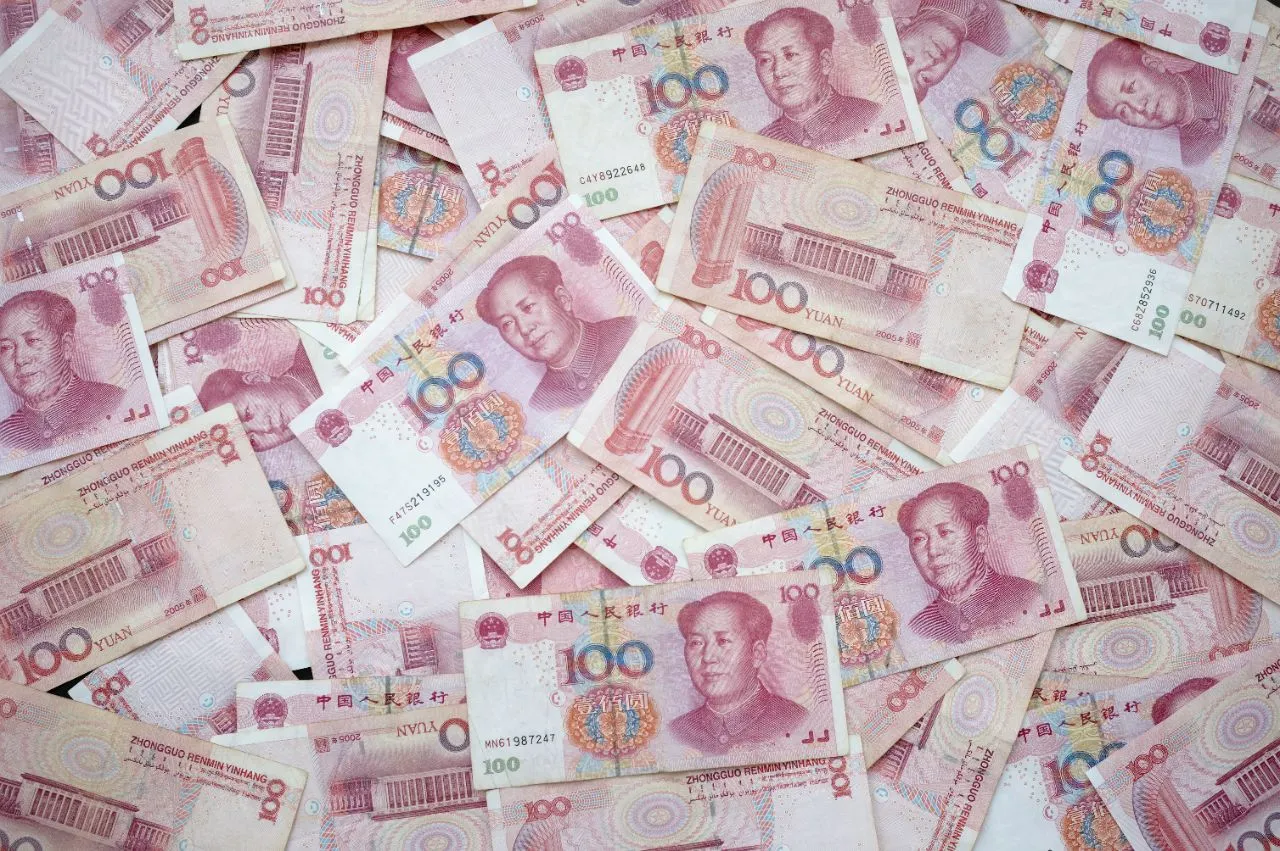
Conflux Network, a layer-1, regulatory-compliant Chinese blockchain focused on borderless transactions, has announced the upcoming launch of the Conflux 3.0 mainnet together with an offshore yuan-pegged stablecoin, resulting in its native CFX token surging.
https://asset.coinness.com/en/news/06040104449a2d7706a51662c1fc5865.webp
Photo by Eric Prouzet on Unsplash

Partnership

notice published on the website of the Shanghai Municipal People’s Government on July 20 reported on the Conflux Tree Graph Technology and Ecological Development Conference, which was held in Shanghai over three days from July 18 to July 20. Over the course of the three-day event, the project announced a partnership with AnchorX, a Hong Kong-based fintech firm specializing in stablecoins, and Shenzhen-based Eastcompeace Technology. 


The purpose of the initiative is to develop a stablecoin pegged to the offshore yuan (CNH), the version of China’s currency that circulates outside the mainland. The report outlined that in recent years, stablecoins and tokenized real-world assets (RWAs) have come to global attention. 


Belt & Road Initiative

Given this backdrop, it was outlined that “creating an independent and controllable high-performance public chain system” could be of great benefit to China and its Belt and Road Initiative (BRI), which sets out to develop infrastructure across 150 countries to facilitate trade with China.


This is not the first point at which AnchorX has collaborated with Conflux. Back in February, the company received in-principle approval from the Astana Financial Services Authority (AFSA) in Kazakhstan to issue CNH-pegged stablecoins. Growing bilateral trade between Kazakhstan and China was cited as the rationale behind the license, given the need for cross-border payments.


At the time, it was outlined that the AxCNH yuan-pegged stablecoin would be issued on the Conflux blockchain. It’s unclear if this same stablecoin is the focus of this latest development or whether an entirely new yuan-pegged stablecoin will be issued.

AnchorX collaborated with Conflux in 2024 to bring about the issuance of AxHKD, a Hong Kong dollar-pegged stablecoin. The stablecoin runs on the Conflux blockchain, with the stablecoin issuer using OKLink Trust as its custodian.


TokenPocket, a multi-chain crypto wallet project, also outlined on X on July 21 that it too is involved in the partnership with Conflux and AnchorX. The project outlined that it will support the growth of stablecoin adoption, the development of cross-border payment solutions and the promotion of tokenized RWAs in international markets through the collaboration. 


Pilot projects

TokenPocket went on to explain that the companies plan to launch pilot projects in Central Asia, Southeast Asia and other regions, building “a compliant, secure, and innovative fintech framework to boost the role of the Conflux ecosystem as critical infrastructure for cross-border trade.”


It was revealed at the conference that the mainnet release of Conflux 3.0 will occur in August. With the implementation of further optimized execution modules, the project expects 3.0 to result in a network throughput of 15,000 transactions per second (TPS). 


These developments over the course of the weekend have had an impact on the unit price of Conflux’s native token, CFX. On July 19, the token was trading at around $0.1043. According to CoinMarketCap data, at the time of writing, it’s trading at $0.2232, a 2.58% increase over the past day.


More to Read
View All
Web3 & Enterprise·

Mar 31, 2025

HashKey & Bosera launch world’s first tokenized money market ETFs

HashKey Group, a Hong Kong-headquartered digital asset financial services firm, has partnered with Bosera Asset Management (International) Co., the Hong Kong subsidiary of Chinese asset management firm Bosera Asset Management, to launch the world’s first tokenized money market exchange-traded funds (ETFs). In a press release published by PR Newswire on behalf of HashKey Group on March 28, HashKey outlined that the two funds are titled “Bosera HKD Money Market ETF (Tokenised Class)” and ”Bosera USD Money Market ETF (Tokenised Class).”While the products were launched last Friday, they won’t officially go live until April. Both products have been approved by Hong Kong’s Securities and Futures Commission (SFC). Photo by Vighnesh Dudani on UnsplashArising out of Project EnsembleThis latest product offering has its origins in Project Ensemble, an initiative launched by the Hong Kong Monetary Authority (HKMA) back in March 2024. The original aim of Project Ensemble was to support the development of the tokenization market in Hong Kong. The SFC got involved later that year, collaborating with the HKMA in the launch of a regulatory sandbox aimed at advancing the tokenization of assets in various financial sectors. In October 2024 it emerged that HashKey was participating within that sandbox, with these new products arising from those efforts. The company claims that these tokenized products improve upon what’s currently on offer via traditional finance, providing greater transparency and operational efficiency, thanks to the use of blockchain technology.  HashKey Tokenisation, the tokenization arm of the firm, takes care of full-process design and execution for tokenized issuance. Subsequently, these products will be deployed on HashKey Chain, a regulatory-compliant, institutional-grade layer-2 network geared towards bridging the gap between traditional finance and Web3. On that subject, HashKey Group Chairman and CEO Dr. Xiao Feng stated:"Bringing money market ETFs on-chain through blockchain technology is a crucial step for traditional finance to embrace Web3.” Looking towards the future, Feng added that the company expects “more traditional financial institutions to actively enter the crypto finance sector through innovative tokenisation products.”Anna Liu, CEO of HashKey Tokenisation, told the South China Morning Post (SCMP) that “the biggest advantages of this product are that the underlying assets are mature and high-quality, and it fully considers security and regulatory compliance while reducing investor costs and improving overall liquidity.” Liu added that the firm hopes that this product offering is the first of many, paving the way for subsequent tokenized real-world asset (RWA) offerings. Last month, Hong Kong-based digital asset platform OSL launched a tokenized mutual fund, the ChinaAMC HKD Digital Money Market Fund. The retail tokenized fund has been issued by China Asset Management (Hong Kong), with Standard Chartered Bank (Hong Kong) acting as tokenization agent, digital platform operator and administrator. In the U.S., financial services company Fidelity Investments recently filed documents with the intention of rolling out a tokenized U.S. money market fund. BlackRock, the world’s largest asset manager, launched its tokenized money market fund, BUIDL, last year. The fund is expected to surpass a market cap of $2 billion in the coming weeks.

news
Web3 & Enterprise·

Jan 24, 2024

Alchemy Pay expands on-ramp services via Bitcoin.com

Singapore-based payment solution provider Alchemy Pay has launched its fiat-crypto on-ramp payment services on the popular web portal Bitcoin.com.Photo by Kanchanara on UnsplashNew local payment methodsAccording to a recent press release, the integration offers a direct-to-customer plugin, providing access to a diverse range of cryptocurrencies. The move aims to enhance Bitcoin.com's reach, particularly in Asian and Latin American markets, by incorporating new local payment methods. Bitcoin.com emphasized the significance of Alchemy Pay's integration, suggesting that it represented a streamlined transition between fiat and crypto with an expanded array of local payment options. This development aligns with Bitcoin.com's goal of meeting the needs of its user base in Asia and Latin America. Alchemy Pay's payment gateway facilitates transactions using major credit cards such as Visa, Mastercard, Discover and Diners Club across 173 countries. Additionally, the platform supports domestic transfers and mobile wallet payments in developing markets. Alchemy Pay attempts to make the know-your-customer (KYC) process frictionless, coupling that service offering with low fees and competitive conversion rates. The firm’s overriding mission is to make cryptocurrency transactions as convenient as typical online payments. Focusing on industry partnershipsAlchemy Pay has been pursuing industry collaborations at an ever increasing rate over the course of the past year. The network boasts over 300 fiat payment channels, enabling checkouts beyond card payments to include various local mobile wallet options. Last month, it clinched a deal with global payment processor, Worldpay. That collaboration facilitates Alchemy Pay service users in leveraging Worldpay’s extensive Visa and Mastercard payment rails. Back in July, it struck a similar deal with global payments processor, Checkout.com. The company has also been active in the United States. Within that market, it has secured money transmitter licenses in the states of Iowa and Arkansas. It’s understood that the firm has more such licensing applications in the works in other U.S. states. At the end of November, Alchemy partnered with self custody and multi-coin wallet project Trust Wallet, enabling the wallet providers 70 million users in engaging in crypto transactions involving fiat payments. VERSE tokenBitcoin.com's native Token VERSE was launched in December 2022, acting as the platform’s rewards and utility token. The VERSE token has been enabled as a supported cryptocurrency as part of the Alchemy Pay platform integration. The utility token serves as a method of payment in its own right within the Bitcoin.com ecosystem and beyond, unlocking rewards along different tiers, and providing access to exclusive platform services. Users worldwide can leverage the VERSE DEX, Bitcoin.com's decentralized exchange, to swap cryptocurrencies without reliance on third-party custodians. Bitcoin.com’s goal is to simplify the process of buying, spending, trading, investing, earning and staying informed about cryptocurrency and the future of finance. Millions of users utilize Bitcoin.com's multi-chain digital wallet app for various crypto-related activities.  Meanwhile, Alchemy Pay supports transactions in 173 countries. The ramp, a one-stop solution for buying and selling crypto and fiat, can be seamlessly integrated by platforms and dApps as needed. 

news
Policy & Regulation·

Oct 21, 2024

Leader of Japan’s DPP commits to crypto tax cuts ahead of election

Yuichiro Tamaki, leader of Japan’s Democratic Party for the People (DPP), has outlined that if elected the party will introduce a crypto tax plan that will bring about the lowering of taxation on crypto gains to 20%. Tamaki’s comments come ahead of the Asian nation's elections, which are due to be held on Oct. 27. Taking to the X social media platform on Oct. 19, Tamaki wrote: “If you think crypto assets should be taxed separately at 20% instead of treated as miscellaneous income, please vote for the Democratic Party for the People. There will be no tax when exchanging crypto assets with other crypto assets.”Photo by Liger Pham on PexelsCrypto taxation reformThe DPP leader added that he would be appreciative of people spreading the word and letting the broader Japanese public know about this commitment that is being made in respect of crypto taxation reform. The reduction to 20% would bring the treatment of crypto in line with that of the stock market in Japan, where gains are already taxed at the 20% tax rate. The DPP leader included a graphic within his X post that provided further detail. It outlined that a loss carry-forward deduction could be applied by the taxpayer within a three-year timeframe.  A tax exemption would apply when it comes to the exchange of crypto assets. The DPP is also in favor of increasing the permitted leverage multiple from 2x to 10x relative to crypto trading. Finally, the party supports the introduction of spot crypto exchange-traded funds (ETFs) in Japan. Focusing on developing Web3In response to an X user, Tamaki claimed that the DPP would consider a reduced taxation policy to be inclusive of other financial income in the future. However, for right now, the DPP leader said that the focus was on making Japan “a strong nation in the Web3 business.” Another Japanese crypto community member suggested that the proposed tax cut would lead to an increase in tax revenues, based upon the assertion that many people don’t file tax returns simply because tax calculations are too difficult right now. While the plan is positive for Japan’s crypto community, the DPP is unlikely to be in a position to implement such a plan. The party currently holds just seven of the 465 seats in the National Diet, the Asian nation’s House of Representatives.  Tax reform guidelinesCurrently, the applicable tax rate applied to crypto revenues can reach as high as 55% in Japan. At the end of August Japan’s Financial Services Agency (FSA) unveiled new tax reform guidelines for 2025. One component of those proposals was the suggestion that the crypto tax rate should be reduced to 20%. With that, if Tamaki’s DPP can’t influence matters, the regulator’s proposals may be of sufficient weight to have the matter addressed. The approach taken to the taxation of crypto in various jurisdictions is having a bearing in terms of the competitiveness of those locations relative to the development and further roll-out of Web3 technologies. Earlier this month, the United Arab Emirates took a positive step forward by exempting crypto from value-added tax (VAT). Meanwhile, in Indonesia the local regulator is moving towards a re-evaluation of what is considered to be a harsh taxation policy relative to crypto. 

news
Loading