Top

South Koreans warm to stablecoins as interest surges, but central bank urges caution

Policy & Regulation·October 15, 2025, 6:57 AM

South Korea is moving closer to the global stablecoin trend as public curiosity and real-world trials accelerate, even as the country’s central bank signals it wants tight guardrails.


A recent analysis from Shinhan Card, reported by Money Today, finds that internet searches for “stablecoin” in South Korea jumped 403% in the first half of this year compared with the previous six months, based on data from major portals such as Google and Naver. Mentions on social media rose 359% over the same period. The spike reflects growing expectations that U.S. dollar-pegged tokens could make cross-border payments faster and cheaper by enabling near-instant settlement at prevailing foreign-exchange rates.


Interest has been reinforced by user reviews of actual payment experiences, which climbed between May and July. Crypto-linked cards, including RedotPay and Bybit’s offerings, are already usable domestically and allow top-ups with leading stablecoins such as USDT and USDC. One user described buying a cup of coffee at a local shop with a RedotPay card via Apple Pay. The small purchase underscores how crypto rails are edging into routine spending.

https://asset.coinness.com/en/news/d97517d1e46f023b776a4d4ab7b20b17.webp
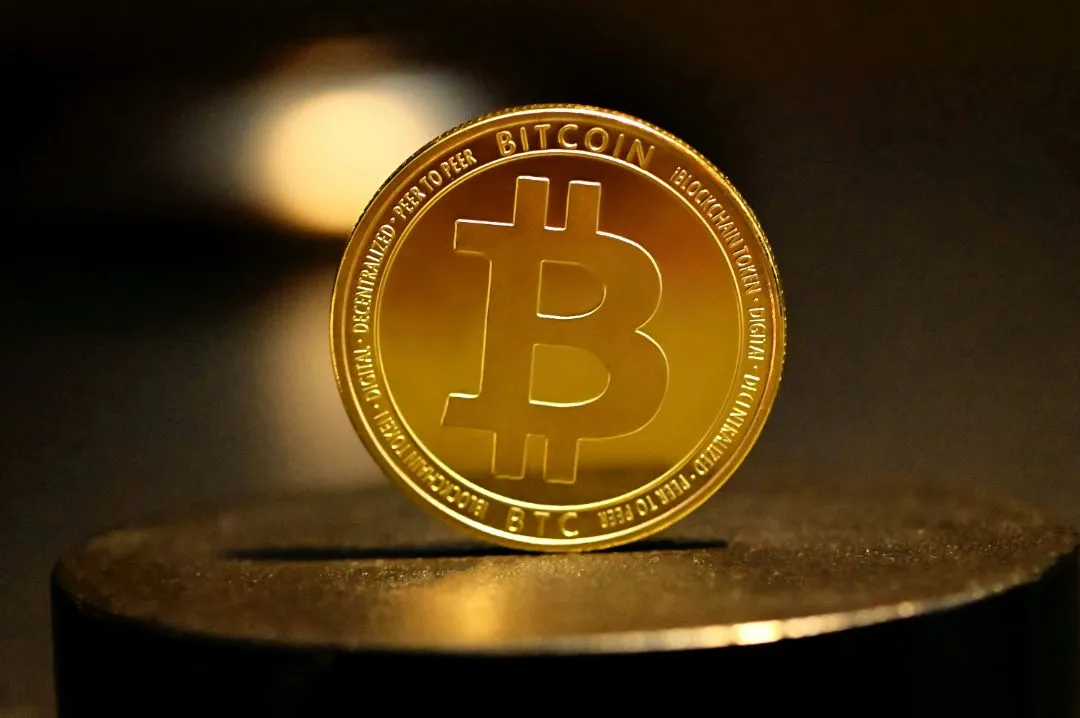
Photo by Oat Appleseed on Unsplash

From curiosity to checkout

Trading venues remain the main arena. According to CryptoQuant, transactions in USDT and USDC on the country’s five leading exchanges totaled nearly $71 billion from January through August, underscoring stablecoins’ central role in crypto liquidity and price discovery.


Stablecoin interest in Korea shows a skew toward younger users and men, with men making up 74% of related searches and women 26%. By age, people in their 20s–40s accounted for 66% of searches, while those aged 50 and above represented 34%.


Public debate is widening alongside adoption, with some online commenters predicting that stablecoins could chip away at the influence of traditional card networks. At the same time, banks, card companies, and exchanges are bracing for the arrival of a won-pegged counterpart, as the government and parliament prepare a regulatory framework and aim to introduce a bill as early as this month. Domestic card issuers, drawing on their merchant networks and settlement systems, are already exploring how to integrate won-backed tokens in ways that maximize convenience and scalability.


Adoption meets skepticism

Skeptics counter that Korea’s existing payments infrastructure is already world-class, leaving only marginal gains for a won stablecoin. They also argue that cross-border benefits would be modest because the won lacks reserve-currency status and broad global demand.


The Bank of Korea (BOK) has struck a notably conservative tone. Governor Rhee Chang-yong has previously questioned the benefits of a won-denominated stablecoin and warned of risks to the monetary system. Earlier this month, in documents submitted to a lawmaker and reported by The Herald Business, the BOK advised that parliament consider granting it authority to require issuers to deposit reserves at the central bank when necessary. According to the bank, such a measure would strengthen user protection during heavy redemptions, curb money-supply growth outside its control, and ensure that any seigniorage benefits flow to the public.


That approach could reduce issuer profits, since deposits at the BOK would not earn interest, just as is the case for commercial banks. The documents also recommend sizing reserves to match the total stablecoin supply, while clarifying that not all of it would necessarily need to be held at the central bank.


Issuance path and next steps

As for who should issue a won-pegged token, the BOK favors starting with a consortium of banks, citing their track record on compliance and the need for a controlled pilot that lets regulators assess and mitigate risks before widening access.


The developments suggest a country exploring how stablecoins might integrate into an already sophisticated payments network. Consumers are showing interest, exchanges are handling large flows, and regulators are shaping the legal framework that will define the place of any future won-based digital currency.


 

More to Read
View All
Web3 & Enterprise·

Jul 20, 2023

WEMIX Listed on Crypto Exchange CoinDCX, Strengthening Presence in India

WEMIX Listed on Crypto Exchange CoinDCX, Strengthening Presence in IndiaWEMIX, the utility coin of blockchain game platform WEMIX Play, has now been listed on India-based cryptocurrency exchange CoinDCX, according to a press release. WEMIX Play is operated by South Korean gaming company Wemade.Photo by Naveed Ahmed on UnsplashWEMIX/USDT & WEMIX/INREstablished in 2018, CoinDCX earned unicorn status two years ago, becoming the first Indian crypto exchange to accomplish this feat. With a current valuation of approximately $2.5 billion, CoinDCX offers trading support for over 80 cryptocurrencies and provides decentralized financial (DeFi) services to a customer base of 15 million global users. CoinDCX users can trade WEMIX against USDT and INR, where USDT stands for a stablecoin issued by crypto giant Tether and INR for Indian Rupee.WEMIX made its debut on the Indian market in February through its listing on Bitbns, another cryptocurrency exchange. The token’s addition to another trading platform in India indicates the growing presence of the WEMIX ecosystem in the region.India’s Web3 landscapeIndia is a prominent market for non-fungible tokens (NFTs) and blockchain technology. As of April, investments in the Indian Web3 ecosystem had reached $1.3 billion. The country also boasts the world’s third-largest talent pool for Web3 development. Currently, more than 450 Indian startups are making their mark on the global stage, demonstrating expertise in DeFi services, gaming, NFTs, and metaverses.Looking ahead, WEMIX aims to further expand its reach by pursuing listings on additional crypto exchanges. This strategy will enable gamers worldwide to trade the WEMIX token with their respective fiat currencies.

news
Policy & Regulation·

Dec 20, 2023

Crypto emerges as topic in Indonesian election campaign

Crypto emerges as topic in Indonesian election campaignAs Indonesia gears up for its upcoming presidential election, the country’s crypto market has become a focal point for political discourse. Gibran Rakabuming Raka, a vice presidential candidate and the eldest son of President Joko Widodo, recently unveiled his plans to foster expertise in blockchain and crypto within the Southeast Asian nation.Chosen as the running mate for presidential candidate Prabowo Subianto, the 36-year-old politician aims to elevate tech education in Indonesia, opening avenues for the younger generation, particularly in the realm of digital assets. According to a report by Indonesian online news portal detikNews, while speaking at a political gathering on Dec. 10, Gibran asserted:“We are preparing blockchain experts, we are preparing cyber security experts, we are preparing crypto experts.”Photo by Nick Agus Arya on UnsplashCrypto potentialIndonesia has emerged as being ahead of the curve in terms of crypto adoption, ranking seventh on Chainalysis’ 2023 global crypto adoption index. With an estimated 18 million crypto investors, the country boasts a robust industry association that also functions as a self-regulatory body.Local news media reported in October that the Southeast Asian country has seen a 10.1% year-on-year increase in the number of crypto investors. At the time, Tirta Karma Senjaya, Head of the Commodity Futures Trading Regulatory Agency, said, "Growth in the number of crypto investors in Indonesia continues to increase, but investors are still looking for the right time to buy crypto.”Private sector entities have also identified the raw potential. In the same month, Web3 consulting firm Tiger Research, in partnership with South Korean crypto data platform Xangle, produced a report which identified significant potential for the development of Indonesia’s Web3 market. There are over 30 crypto exchanges operating in the country, acting as the primary channel through which growth in crypto is propelled in Indonesia.Capitalizing on crypto interestThe government, under President Widodo, has actively sought to capitalize on this crypto enthusiasm, going as far as establishing a local “stock market” dedicated to crypto assets.Gibran’s proactive stance on crypto education aligns with his broader vision of positioning Indonesia at the forefront of the global digital revolution. The country’s rapidly growing tech landscape and crypto adoption make it an opportune space for fostering expertise in these cutting-edge technologies.As the presidential election approaches, Gibran’s commitment to cultivating a pool of crypto experts underscores the potential influence of the crypto industry in shaping Indonesia’s economic future.An international topicCrypto is increasingly becoming an important topic in elections globally. In the United States, many of the presidential candidates, particularly within the Republican Party, have publicly expressed their interest in crypto and blockchain. Yesterday, Ripple CEO Brad Garlinghouse took to the X social media platform on the subject, stating:”Team @Ripple is putting a stake in the ground, leading the charge with other industry leaders to support pro-innovation and pro-crypto candidates in the 2024 US election cycle. The US cannot afford to continue taking a back seat on the global stage.“With Indonesia’s election frontrunners, Prabowo and Gibran, expressing interest in the sector, it remains to be seen how this focus on crypto will resonate in the upcoming political debate on Feb. 4.

news
Web3 & Enterprise·

Mar 08, 2024

Travel booking startup targets Bitcoin investors with cashback offer

Travala.com, the Cayman-incorporated company that provides crypto-native travel booking service, has unveiled an enticing offer for Bitcoin investors, involving cashback paid in the leading cryptocurrency in collaboration with the AVA Foundation. This initiative, announced by the firm on the X social media platform on March 7, aims to reward travelers who pay for their bookings in Bitcoin, encompassing an array of travel options, from flights to hotels and activities spanning across three million destinations globally.Photo by Kanchanara on Unsplash10% BTC cashbackUnlike traditional cashback systems, where waiting periods for rewards can be lengthy, Travala.com ensures swift crediting of Bitcoin cashback into users' accounts within 24 hours after the completion of their trips. As part of this offer, cashback will be paid to the value of 10% of the customer’s spend, payable in Bitcoin. Since its establishment in 2017, Travala.com has positioned itself at the intersection of cryptocurrency and travel, offering a diverse platform for bookings across various properties, activities and airlines. With support for over 90 digital currencies, the platform remains focused on cryptocurrency adoption, while aiming to provide value and flexibility for its users. Mass adoption opportunityJuan Otero, CEO of Travala.com, emphasized the growing appeal of Bitcoin to mainstream audiences, buoyed by recent developments like the approval of the first Bitcoin spot exchange-traded fund (ETF) in the United States. Otero sees this initiative as a means to broaden the adoption of crypto for everyday transactions, providing travelers with an efficient way to utilize reward programs. The move towards Bitcoin-based rewards reflects the early stages of an industry-wide shift in travel loyalty programs. With traditional points-based systems losing traction, there's a burgeoning demand for innovative incentive schemes. Steve Hipwell, a contributor to the AVA Foundation, highlighted the success of the AVA Smart Program, which has already distributed over $2.1 million worth of travel rewards in AVA tokens to customers who completed trips booked through Travala.com. By integrating direct Bitcoin rewards, the aim is to capture an additional segment of travelers seeking ways to save on their journeys. Bitcoin stands out as one of the top three payment methods on Travala.com, accounting for approximately 9% of travel bookings on the platform. In 2023, travelers splurged over $5 million in BTC on flights, hotels and activities. Travel Tiger NFTsAccess to Travala's BTC cashback scheme comes with a degree of exclusivity. Users must possess a Travel Tiger NFT and stake 2,500 AVA tokens to activate Smart Diamond membership. This exclusivity stems from the limited availability of Travel Tiger NFTs, with only 1,000 in existence. These NFTs, minted on the Ethereum blockchain, serve as randomly generated utility collectibles. Market data from OpenSea places the floor price of Travel Tigers at 2.85 ETH, roughly valued at $11,165 at the time of writing. This tie-up with the AVA Foundation is not Travala’s first partnership. In November 2023 the company struck a deal with travel industry meta-search giant Kayak, allowing it to integrate with Kayak and enable platform users to search more effectively for travel deals. Back in 2019, the company had struck a similar partnership with accommodation booking platform Booking.com. 

news
Loading