Top

Blockchain Solutions Provider Block Odyssey Launches NFT Ticket Service, “MakeDrop”

Web3 & Enterprise·August 01, 2023, 2:50 AM

Korean blockchain solutions startup Block Odyssey said Monday it is launching an NFT-based ticket issuance service dubbed “MakeDrop” in an effort to revolutionize ticketing and event services in the era of Web3.
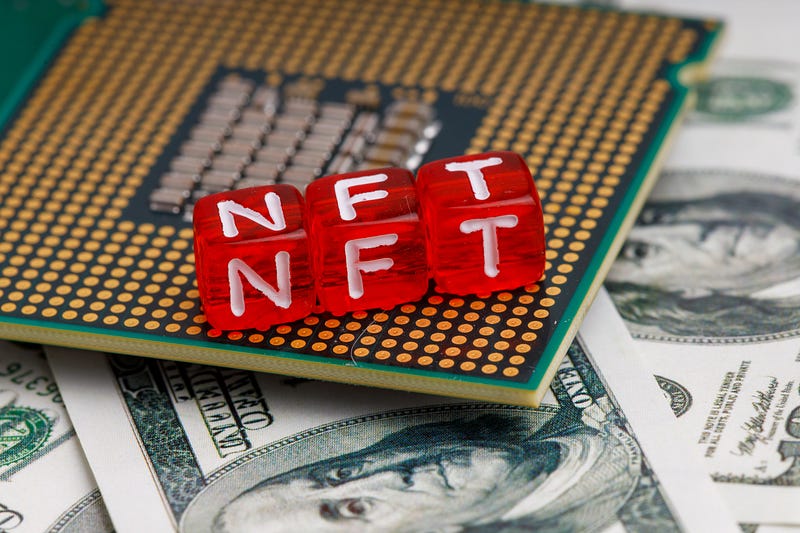
Photo by Andrey Metelev on Unsplash


Limitations of traditional digital tickets

Until now, major ticket reservation platforms have made it challenging for event organizers to streamline the ticketing process for events such as corporate or campus gatherings, concerts, festivals, and more.

Event organizers have thus had to manually send notifications via text messages and emails, print paper tickets, and directly manage overall ticket sales and distributions. The absence of tools to identify ticket holders from attendees also makes it difficult to accurately determine participation and contribution ratios.


Blockchain meets ticketing

But with the rapid advancement of digitized ticket issuance, NFT tickets have been gaining traction as a transparent and secure solution to such challenges. These tickets are verified and stored on a blockchain, setting them apart from traditional forms of digital tickets such as barcodes.


About MakeDrop

Block Odyssey’s MakeDrop is an open service that allows anyone to easily create, issue, and manage one-of-a-kind NFT tickets with individual ownership rights and transaction history. If secondary ticket transactions occur, all ownership changes can be verified on the blockchain, making it possible to block attempts at fraudulent or repetitive secondary trading.

The service is particularly convenient for users, as they can automatically generate a wallet address for storing their NFTs by logging in to social media accounts without having to install a separate cryptocurrency wallet.

As for event organizers, they can swiftly issue mobile tickets without using third-party ticket reservation platforms. Ticket invitations are sent to recipients via KakaoTalk, South Korea’s most popular messaging app, making the service more accessible as well. Those who have not received an invitation can still apply for participation if the event is public. Upon acceptance by the organizer, they will receive an approval notification through KakaoTalk, Block Odyssey explained.

Participants can then present the NFT ticket’s QR code on the day of an event, and organizers can conduct real-time validation using the QR check feature provided by MakeDrop.

Notably, while traditional ticket reservation platforms often do not share ticket holder information with event organizers, MakeDrop allows independent information management for all events. This allows organizers to identify low-engagement or idle members and offer more benefits to loyal participants.

As part of its website launch promotion, MakeDrop is currently holding an event to distribute 100,000 free NFT tickets. The company also plans to release a mobile app in the future after incorporating user feedback and enhancing functionalities.


More to Read
View All
Policy & Regulation·

Jun 12, 2023

Legislator Invites Coinbase to Set Up Shop in Hong Kong

Legislator Invites Coinbase to Set Up Shop in Hong KongHong Kong continues to position itself as a favorable destination for the cryptocurrency industry, with the latest evidence of that coming in the form of an invitation to US-headquartered crypto exchange Coinbase to set up a base in the autonomous Chinese territory from one of its legislators.In a bold move showcasing its progressive stance on cryptocurrencies, Johnny Ng, a member of Hong Kong’s Legislative Council, has extended an invitation to Coinbase and other crypto exchanges to establish their operations in the region. Ng took to Twitter on Saturday to express his support and offer assistance to “all global virtual asset trading operators,” emphasizing the potential for stock listing opportunities.This invitation came at the end of a week which saw major industry players like Binance and Coinbase face legal action from the United States Securities and Exchange Commission (SEC).Photo by Ben Cheung on PexelsContrasting approachesHong Kong stands in stark contrast to the cautious approach adopted by many Western countries when it comes to cryptocurrencies. In January 2023, Paul Chan, Hong Kong’s Financial Secretary, reaffirmed the government’s commitment to building a robust ecosystem for crypto and fintech. Since then, Hong Kong has been actively developing regulations and implementing compliance measures to foster the growth of the cryptocurrency industry.Recently, the Hong Kong Monetary Authority (HKMA) announced its intention to lay the foundation for a retail central bank digital currency (CBDC). This initiative, revealed on June 9, aims to explore the benefits of CBDCs as a means of everyday payment transactions and to facilitate customer access to cryptocurrency exchanges.Crypto hub ambitionsNg’s invitation to Coinbase exemplifies Hong Kong’s ambition to become a leading digital hub for the crypto industry. Several crypto exchanges, including OKX and Huobi, have already applied for virtual asset service provider licenses in the region, demonstrating their confidence in Hong Kong’s favorable regulatory environment.Hong Kong’s crypto-friendly approach has also attracted interest from prominent international technology companies. In January, Samsung, the South Korean tech giant, announced plans to launch a Bitcoin futures active exchange-traded fund on the Hong Kong Stock Exchange.Furthermore, reports emerged in mid-February suggesting that Chinese government officials have granted strategic approval to Hong Kong’s pro-crypto initiatives. This recognition from Chinese authorities further underscores the significance of Hong Kong’s efforts in the crypto space and their potential impact on the broader digital currency landscape.Coinbase going globalLong before the arrival of last week’s lawsuit against Coinbase, the company had indicated that it was broadening its horizons. Some weeks back, SEC Chair Gary Gensler appeared on Capitol Hill in Washington, D.C., and Coinbase Founder and CEO Brian Armstrong chose that moment to outline that the company would look to operate overseas if the regulatory environment didn’t change in the US.In the intervening weeks, Coinbase has extended its product offering in Singapore, indicating its interest in establishing a base in Abu Dhabi while obtaining crypto licensing in Bermuda.With its proactive regulation, dedication to fostering industry growth, and growing interest from global players, Hong Kong is poised to become a prominent player in the cryptocurrency world. Despite the ongoing scrutiny faced by Coinbase and other exchanges in the United States, Hong Kong presents an attractive alternative for these companies to expand their operations and tap into the region’s thriving crypto ecosystem.

news
Web3 & Enterprise·

Jul 01, 2023

Hong Kong Insurer Expands Into Digital Assets

Hong Kong Insurer Expands Into Digital AssetsOneDegree, a leading virtual insurer in Hong Kong, has successfully raised US$55 million in its latest funding round to support the expansion of its digital assets insurance portfolio, according to an announcement made by the company on Thursday.The round saw participation from existing investors such as Gobi Partners, Sun Hung Kai, and Bitrock, as well as new investors. This marks OneDegree’s fifth fundraising effort since its establishment in 2016 and brings its total funds raised to over US$97 million. $28 million of this Series B round had been raised in 2021.Digital asset insurance will be offered under the name “OneInfinity” by the firm in partnership with global insurance behemoth Munich Re. The product is being targeted at digital asset trading platforms, custodians, asset managers, and technology providers. While the company doesn’t insure DeFi projects right now, it aspires to do so in the future.Photo by Kindel Media on PexelsLeading Hong Kong online insurerAs one of the four purely online insurers licensed by the Hong Kong Insurance Authority, OneDegree is at the forefront of the authority’s push to integrate technology into the insurance sector to enhance services and reduce costs. The company is not permitted to hire agents, and all sales must be conducted online or through mobile apps.Alvin Kwock Yin-lun, Co-Founder of OneDegree and former JPMorgan banker, expressed his gratitude for the strong support received during this challenging fundraising environment. Kwock attributed the successful round to the company’s robust revenue growth in various insurance segments, including pet, home, fire, medical, and digital assets coverage. He expects OneDegree to achieve profitability next year.Digital asset insurance importanceHighlighting the importance of digital asset insurance, Kwock pointed out that in 2022, approximately US$3.8 billion worth of digital assets were compromised globally, out of a total global cryptocurrency market capitalization of US$1 trillion. He estimated that the market for digital asset insurance premiums would surpass US$1 billion annually in the coming years.To capitalize on this growing demand, OneDegree has been focusing on providing insurance coverage to virtual asset trading platforms and operators. The company introduced its cryptocurrency insurance by offering a HK$100 million cover to Hong Kong Digital Asset Exchange in November 2021.Kwock emphasized that the recent regulatory regime introduced by the Securities and Futures Commission (SFC) on June 1 will further drive the demand for digital asset insurance. He believes OneDegree is well-positioned to offer comprehensive coverage for the risks faced by digital asset operators, as the company possesses the necessary expertise and experience.Looking ahead, OneDegree plans to expand its presence across Asia and offer innovative products such as InsurTech and cybersecurity software-as-a-service solutions.OneDegree’s expanding presence in Asian markets relative to digital assets is to be welcomed. The digital assets space has had its fair share of collapses that may have been prevented with the involvement of a digital asset insurance specialist, and failing that, the application of such a product would naturally prevent losses suffered by market participants.

news
Policy & Regulation·

Nov 04, 2023

SEC seeks summary judgment against Terraform Labs

SEC seeks summary judgment against Terraform LabsThe U.S. Securities and Exchange Commission (SEC) is making a strong push for a summary judgment in its ongoing legal battle against Singapore’s Terraform Labs and its co-founder Do Kwon. Such an outcome would spare the need for a protracted trial.According to a motion filed by the SEC on Thursday, the record shows that there is “no genuine dispute as to any material fact and that the moving party is entitled to judgment as a matter of law.”Photo by Caleb Fisher on UnsplashRelying on the Howey TestThe SEC’s filing underscores its central argument that Kwon and Terraform Labs were involved in the sale of securities. The document categorically states:“There is no dispute that purchasers made an investment of money, either through fiat currency or crypto assets, for each crypto asset — LUNA, wLUNA, MIR, and UST, thereby satisfying the first prong of Howey.” The Howey Test refers back to a U.S. Supreme Court case — SEC v. Howey — which took place in 1946. The case set a precedent and has subsequently become the cornerstone of determining what is or is not a security in the United States.This argument hinges on the idea that funds were pooled in a common enterprise with the expectation of profits primarily derived from the efforts of the promoters.Citing fraud as well as unregistered securitiesThe SEC’s assertion is two-fold, contending that not only did Terraform and Kwon engage in selling securities, but they also engaged in fraudulent activities and disseminated misleading information. The SEC reiterates these claims in its filing, emphasizing that the defendants committed fraud by duping investors about the stability of UST.They allegedly falsely attributed the algorithm for price stabilization while orchestrating clandestine third-party interventions. This purported deception made their claims regarding the algorithm’s effectiveness deceptive and involved the omission of crucial information. The fallout from Terra’s collapse in May of the previous year resulted in the destruction of substantial investor wealth, totaling billions of dollars.Similar defense team filingThe SEC’s move to seek summary judgment comes in the wake of a similar filing by Kwon’s defense team last Friday. Kwon is currently serving a sentence for document forgery in Montenegro, a situation stemming from his arrest at an airport with forged passports.Notably, Terraform’s co-founder, Daniel Shin, who is currently on trial in South Korea, has attributed the collapse of Terraform Labs to Kwon’s mismanagement. Shin has claimed his separation from the company and its activities occurred two years before its eventual collapse.In this legal battle that holds significant implications for the cryptocurrency and blockchain space, the SEC continues to emphasize its position, asserting that Kwon and Terraform Labs engaged in the sale of securities through deceptive means. The outcome of this case could have far-reaching consequences, setting precedents for future regulatory actions in the industry.

news
Loading