Top

Bitmain to Launch Filecoin Token Mining Machines

Web3 & Enterprise·July 22, 2023, 2:16 AM

Bitmain, the well-known Chinese manufacturer of Bitcoin mining machines, has made a significant announcement that marks its entry into the Filecoin ecosystem.


FIL token mining

According to that announcement made by the company on social media on Friday, the company is set to launch FIL token mining machines, which are expected to have a hash rate of up to 4,300T each and will be available for purchase at $38,888 per unit.

Filecoin, created by Protocol Labs, was originally designed as a blockchain-based collaborative digital storage and data redemption solution. As an open-source, public cryptocurrency and digital remittance system, Filecoin has garnered significant attention in the market.
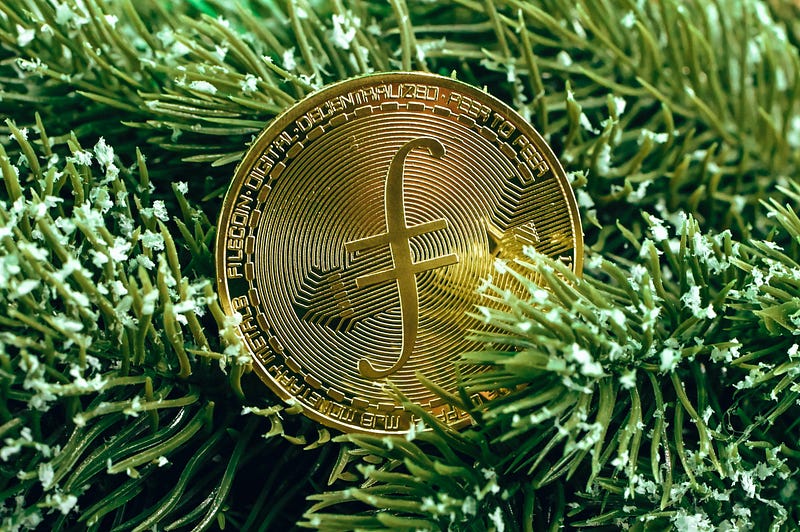
Photo by Traxer on Unsplash


Delegated staking

Along with the mining machine development, Bitmain has introduced a delegated staking service with a low monthly fee of 0.5%. This service offers traders an opportunity to earn more through staking with minimal computational energy. Delegated staking allows users to delegate their staking rights to validators or staking pools, enabling them to partake in the rewards generated by these validators.

According to a recent report by crypto market intelligence firm Messari, Filecoin’s data storage market continued to grow in Q2, 2023. Active data storage deals grew 64% when compared with the previous quarter. That deal flow resulted in increased revenue from fees, which was up 91%. Further development of the Filecoin protocol resulted in the recent introduction of the Filecoin Virtual Machine (FVM). That runtime environment for smart contracts has enabled new use cases, including liquid staking, decentralized computing, and perpetual storage.

Bitmain’s venture into the Filecoin ecosystem not only supports the development of FIL token mining machines but also offers hope for FIL token holders who experienced losses. The FIL unit price peaked at $190 during the 2021 crypto bull market. The company’s involvement has positively influenced Filecoin’s price.

Meanwhile Bitmain continues to be a major player in the crypto mining equipment space. 2021 has not been without its blemishes for the company though, as in April the Beijing-based company was fined $3.7 million by the Chinese authorities for a violation of Chinese tax regulations.


Bitmain hashrate dominance

Earlier this month, US bitcoin miner TeraWulf purchased 18,500 mining machines from Bitmain, with a view to deploying them at its 43 MW Lake Mariner mining facility in New York State in the US. The deal had a value of $75 million.

A recently published report by crypto intelligence firm Coinmetrics outlined that the majority of the Bitcoin hashrate is being processed by Bitmain’s S19 miner model. Three Bitmain miner models are responsible for 76% of the entire Bitcoin network’s hashrate, the report states.


More to Read
View All
Policy & Regulation·

Nov 28, 2023

Korea considers legal recognition of virtual assets as trust assets for investor protection

Korea considers legal recognition of virtual assets as trust assets for investor protectionSouth Korea’s Ministry of Justice (MOJ) is assessing whether customers’ virtual assets on cryptocurrency exchanges should be legally recognized as trust assets. This classification would give users priority in claiming their virtual assets in case of an exchange’s bankruptcy, thus strengthening investor protection. There’s a noted concern about potential disputes in such bankruptcy situations, as users’ digital assets are typically considered to be in the custody or storage of these platforms.Photo by Daniel Bernard on UnsplashLegal study by Seoul National UniversityAccording to a Tuesday report by local news outlet ChosunBiz, citing industry and legal sources, the MOJ has initiated a legal study on this subject. The research is being conducted by the Seoul National University R&DB Foundation, which started the project earlier this month.Through this study, the MOJ is expected to examine the legal classification of cryptocurrency as property. This review is significant because, for cryptocurrencies to be held in a trust, they must be legally recognized as property. Meanwhile, the upcoming Virtual Asset User Protection Act, set to come into effect next July, mandates that only cash deposits made by users be segregated from the assets of the exchange itself.In Korea, under the current provisions of the Capital Markets Act, virtual assets are not recognized as being held in a trust. Instead, staked cryptocurrencies are seen as being under custodial management or storage. In such arrangements, only a debtor-creditor relationship concerning virtual assets is acknowledged, differing from the legal framework of a trust.Prioritization of rightsIf a cryptocurrency exchange becomes insolvent and enters liquidation, the current legal framework could end up prioritizing the rights of the exchange’s creditors or shareholders over those of the crypto investors. This situation has faced criticism for its inadequate protection of investors. However, if the crypto assets were considered to be held in trusts, it would enable users to acquire “rights to foreclose outside bankruptcy.” This means users would have the right to receive priority reimbursement for their crypto assets, offering them a higher level of protection in the event of an exchange’s bankruptcy.Regarding this development, an official from the MOJ said that while the study is a fundamental legal review focused on exploring ways to protect users through the application of trusts for various cryptocurrency transactions, including those involving decentralized finance (DeFi), it is too early to provide specific details at this stage.

news
Web3 & Enterprise·

Dec 28, 2023

ZA Bank gears up for retail crypto app offering

Hong Kong-based ZA Bank has published a “2023 in review” blog post that suggests that the virtual bank is preparing to bring virtual asset trading to retail customers through its ZA Bank App.Photo by David McBee on PexelsEmbracing retailIn the blog article which was published to its website last week, Hong Kong’s largest virtual bank expressed its dedication to bolstering Hong Kong’s aspiration to emerge as a global hub for Web3. As the city embraces a new licensing regime for virtual asset trading platforms, ZA Bank unveiled its plans to introduce fiat currency-based virtual asset trading services for retail investors through the ZA Bank App. The bank first aired the notion of such an offering back in May. Its renewed coverage of the topic would seem to suggest that such a product offering is much closer to launch. Additionally, the bank anticipates the launch of its U.S. stock trading service after obtaining necessary approvals, promising a stream of innovative and exciting services in the future. Regulatory trendNews of the bank’s proposed retail offering aligns with moves being made by local regulators over the course of recent months to enable retail access to crypto-based products within the Chinese autonomous territory. In June, a regulatory framework was put in place by the Securities and Futures Commission (SFC) to enable licensed virtual asset platforms to market to retail investors. In recent days it has emerged that regulators are prepared to accept applications for spot crypto exchange-traded fund (ETF) products which would be made available to retail investors. Banking the crypto sectorZA Bank also announced that it has been providing banking support to more than 80 Web3 companies since the beginning of this year, aligning with its commitment to “Banking for Web3,” introduced in April. Notable among the roster of supported companies is OKX Hong Kong, with ZA Bank serving as the trusted banking partner for locally licensed virtual asset trading platforms (VATPs) such as HashKey and OSL. The bank, which was established by ZhongAn Online and Beststar in 2018, has served an important banking role in respect of the digital assets sector in Hong Kong in 2023. While the authorities in Hong Kong appear to have pulled out all of the stops over the course of the past year to nurture crypto business, banking was identified as an area of difficulty. In June, the Hong Kong Monetary Authority (HKMA) explicitly questioned the reluctance of some major banks to extend services to crypto companies, applying pressure on them to do so. Given that background, ZA Bank, being a first mover in embracing the industry, has played an important role in Hong Kong. ZA Bank’s impact is evident in its notable market presence, with one in 10 Hong Kong adults choosing the institution for their banking needs. The ZA Bank App earned the distinction of being the highest-rated banking app on Hong Kong’s Google Play in 2023. The bank has surpassed HKD 10 billion in customer deposits and secured the top spot in Asia in the Sia Partners 2023 International Mobile Banking Benchmark, maintaining the sixth position globally. 

news
Web3 & Enterprise·

Dec 15, 2023

Exploring the motivations behind Crescendo’s multi-million dollar investment in LINE NEXT

Exploring the motivations behind Crescendo’s multi-million dollar investment in LINE NEXTIn a move that has made headlines as the largest investment made in the Asian blockchain and Web3 industry this year, Seoul-based private equity firm Crescendo Equity Partners has decided to invest $140 million in LINE NEXT, the NFT business arm of Tokyo-based Internet giant LINE Corporation. According to South Korean news outlet DealSite, this can be seen as a strategic decision to leverage LINE’s global network, which dominates the Japanese market. Considering Crescendo’s track record of successful investments in various IT companies, the industry is keen to see whether the firm can replicate this success in the rapidly growing blockchain sector.Photo by Pepi Stojanovski on UnsplashConsortium takes controlAccording to the South Korean Financial Supervisory Service’s (FSS) Data Analysis, Retrieval and Transfer (DART) System on Thursday (local time), Crescendo’s special purpose company (SPC) established to manage the LINE NEXT investment dubbed Ludwig Holdings will act as a third party in the investment by providing KRW 130 billion in paid-in capital. Other financial investors will also contribute KRW 52 billion through a consortium formed with Crescendo, bringing the total investment amount to KRW 182 billion, or approximately $140 million.As a result of this capital increase, 795,401 new shares will be issued. Crescendo’s consortium will thus secure a 50% stake plus one more share, making it the largest shareholder group. However, among individual shareholders, LY Corporation will maintain its position as the single largest shareholder. The existing number of shares was 795,400. Crescendo plans to utilize its third fund, which raised KRW 1.1 trillion in 2021, to provide the funds by next February.Smooth transitionAlthough the consortium has become the largest shareholder group, there is no indication of an immediate change in LINE NEXT’s current management board. This decision is likely because blockchain development companies should be run by executives who are familiar with the unique ins and outs of the blockchain industry. The firm’s current CEO, Ko Young-su, is an IT expert who had been responsible for financial technology (fintech) operations at LINE Corp.Web3 expansionThrough the investment, LINE NEXT plans to popularize Web3 by expanding its global platform and developing new services. This includes DOSI, a global mobile NFT marketplace app for trading digital products, which will be integrated with LINE’s Japanese NFT marketplace LINE NFT. DOSI’s launch is scheduled for January next year.Navigating uncharted territoryMany believe that LINE NEXT’s ambitions for dominating the blockchain sector aligning with Crescendo’s tradition of investing in promising IT companies is sufficient justification for the major funding decision. However, some observers find the development surprising, considering the fact that it is rare for private equity firms in Korea to make such large investments in blockchain firms — an industry that has mostly been an unpopular choice for investors, likely due to its close association with crypto assets. Indeed, Crescendo’s interest in the company may have been partly driven by the fact that it is more focused on blockchain technology itself rather than crypto.“Crescendo seems to have focused on LINE’s global network, which pushed it to invest in its subsidiary. Considering the popularity of NFTs and other related projects last year, expanding this area of business seems plausible,” said an anonymous source from the investment banking industry. “Peter Thiel [the billionaire entrepreneur and venture capitalist who sponsored Crescendo] is known to have a keen interest in blockchain technology and is actively making investments in the sector, which probably made the decision-making process much smoother.”This development signifies yet another shift in the evolving business landscape, where parts of the industry that have not been traditionally associated with blockchain are increasingly recognizing the potential of its role in the future of industry and technology.

news
Loading