Top

Bitget Targets MENA Business Expansion

Web3 & Enterprise·July 21, 2023, 1:13 AM

Bitget, the Seychelles-based cryptocurrency derivatives exchange, is setting its sights on the Middle East and North Africa (MENA) as the region emerges as a fast-growing crypto hub.

The firm announced its expansion plans via a press release which was published on Thursday. With countries like the United Arab Emirates (UAE) and Bahrain embracing crypto, more exchanges are taking notice and entering the market. Bitget has now joined the ranks of a series of crypto companies seeking to establish a foothold in the region.

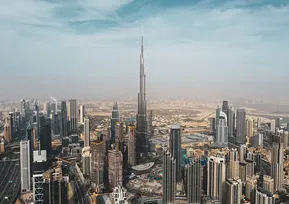
Photo by Kyle Glenn on Unsplash


Increasing crypto adoption and interest

Citing the region’s impressive crypto adoption rate, which accounted for 9.2% of global transactions between 2021 and 2022, Bitget is capitalizing on the growing interest in digital assets. The UAE alone experienced a remarkable 400% increase in registered crypto businesses over two years, driving a surge in global digital asset trading by 10%. Moreover, blockchain-related educational programs have tripled in the region, which contributes to 8% of the overall mining hash rate. All of these are creating a favorable environment for Bitget’s expansion.


Dubai office

To support its entry into the Middle East, Bitget has opened an office in the heart of Dubai and has already hired 60 new employees for various mid and back-office positions. The company aims to scale its Middle East team further, with plans to hire 30 to 60 more professionals over the next two years.

Bitget is not alone in recognizing the potential of the Middle Eastern market. Bybit, another major cryptocurrency exchange, recently obtained local licenses to operate in the digital assets space in the UAE, having moved its global headquarters to Dubai in April.

OKX, one of the largest exchanges by volume, also received a Minimal Viable Product (MVP) Preparatory License from the Dubai Virtual Assets Regulatory Authority (VARA). Binance is also eyeing the Middle East, with Binance Dubai poised to become the primary focus for the company’s development efforts, given regulatory challenges in Europe and the US.


Global expansion strategy

Bitget’s expansion into the Middle East is part of its broader global scaling strategy. The company has already registered as a Virtual Asset Service Provider (VASP) in Poland and Lithuania, and it launched a localized Turkish website earlier this year.

Founded in 2018, Bitget boasts a user base of over 8 million users across more than 100 countries, offering copy trading services. The company’s move to the Middle East showcases its determination to tap into new markets and solidify its position as a global player in the cryptocurrency exchange landscape.

There’s been a lot going on at Bitget in recent months, in addition to these regional expansion plans. In May the company announced a corporate social responsibility project named “Blockchain4Youth,” cleverly identifying the importance of connecting with the younger demographic which is far more likely to drive crypto and blockchain adoption.

Earlier this month it launched a crypto loans product offering while last week it provided transparency via its proof of reserves initiative, demonstrating a 223% level of reserves and outlining that the company is debt free.

More to Read
View All
Policy & Regulation·

May 15, 2023

Crypto Oasis Founder Thinks UAE Set Up For Crypto Success

Crypto Oasis Founder Thinks UAE Set Up For Crypto SuccessAs the dust settles on 2023's Dubai Fintech Summit, which took place last week, one takeaway offered by the Co-Founder of blockchain ecosystem firm Crypto Oasis is that the United Arab Emirates (UAE) has set itself up for success where crypto business is concerned.In speaking with crypto publication CoinTelegraph on the fringes of the Dubai Fintech Summit, Crypto Oasis Co-Founder and Managing Partner Saqr Ereiqat suggested that the regulatory infrastructure that the UAE has put in place provides an ideal foundation upon which crypto companies can develop and prosper.Photo by Mo Ismail on PexelsRegulatory infrastructureEreiqat pointed to some key fundamentals that crypto entrepreneurs and start-up founders should look at when deciding on the location that will best meet their needs and help to optimize their route to market and ultimate success. This includes the regulatory infrastructure.The UAE authorities and regulators at a national level, together with their colleagues within the regulatory agencies in the Emirates of Dubai and Abu Dhabi, have been doing some heavy lifting in this regard over recent months.They’ve all been working on establishing a workable regulatory framework, and as part of that, a licensing process. In the case of Dubai, its Virtual Assets Regulatory Authority (VARA) has started to issue preliminary or Minimum Viable Product (MVP) license approvals that enable crypto startups to get started, while providing them with a pathway towards obtaining Full Market Product (FMP) licensing at a later stage.Talent poolThe other key requirements that Ereiqat set out were digital infrastructure alongside an ability to attract and provide a pool of talent relative to the crypto assets space. In respect of these key considerations, Ereiqat believes that the UAE hits the target in each case.“The UAE’s regulatory framework is more streamlined and business-friendly compared to the complex and fragmented regulatory environment in the US,” he told the crypto media firm.To enhance these fundamentals, Ereiqat also alluded to a depth of capital that could potentially find its way into UAE-based crypto businesses, easing these start-ups’ efforts in executing on funding rounds as they look to achieve growth.Ereiqat maintains that the interest in the region is already evident, citing a data-point that suggests there are 1,800 Web3-centric businesses already operating in the region, with more than 8,000 people working for those start-up businesses. Speaking to that reality further, he said:“The Dubai FinTech Summit was a significant event that brought together stakeholders from the fintech industry […] The presence of crypto and Web3 leaders and projects at the event is an important indicator of the growing interest and adoption of these technologies in the region.”This enthusiasm and belief in the existence of the right Web3 business environment in the UAE was echoed at that event by both Coinbase Founder and CEO Brian Armstrong and Ripple Founder and CEO Brad Garlinghouse. Both industry figures featured as keynote speakers at the event. Armstrong alluded to the potential of Coinbase establishing a base in Abu Dhabi while Garlinghouse announced the opening of a Ripple office in Dubai.

news
Web3 & Enterprise·

Jan 27, 2024

OKX to shut down mining-related services

Leading crypto exchange platform OKX has disclosed plans to discontinue its mining pool services, marking a strategic shift for the platform.Photo by engin akyurt on UnsplashService shutdown within one monthThe move, outlined by the firm in a notification to platform users on Friday, involves ceasing new user registrations effective immediately. Existing users will be granted access to the mining pool until Feb. 25. All mining pool-related services on OKX will be completely halted by Feb. 26. Mining Pools data reveals that OKX holds the 36th position among the top 70 bitcoin-focused mining pools, boasting a total hash rate slightly exceeding 496 TH/s. The decision to phase out mining pool services was attributed to "business adjustments," as communicated by OKX, though further details were not provided regarding the specific nature of these adjustments. Previously, OKX's mining pool supported various proof-of-work cryptocurrencies and offered staking services. However, over recent years, many supported assets had been terminated. Presently, the website only displays bitcoin, litecoin and ethereum classic pool services. Once accounted for 5% of all BTC blocks minedOKX's bitcoin mining pool had once accounted for around 5% of the blocks mined on the network. However, a setback occurred on October 16, 2020, when the crypto exchange temporarily suspended withdrawals due to one of its private key holders “cooperating with a public security bureau in investigations.” This led to a significant drop in hashpower connected to the pool, from 9,000 PH/s to 20 PH/s. The pool's current 528 TH/s now represents less than 0.0001% of bitcoin’s total hash rate. Industry trend formingThis strategic move by OKX reflects the evolving landscape of the crypto industry and the challenges faced by mining pools, particularly in the context of regulatory and operational adjustments within the market. The decision may even amount to a formative trend, given that global crypto exchange platform rival KuCoin made a similar move back in August. At the time, KuCoin outlined its plans to temporarily suspend its bitcoin and litecoin mining pools. Although it suggested a temporary halt to such services, there was no indication of when such mining-related services would resume. A company spokesperson stated:“We will see if it is needed to restart based on the market and users’ demand in the future.” Bitcoin halving pressuresOKX’s decision to discontinue mining pool services comes ahead of bitcoin's anticipated fourth halving in April, which is expected to reduce miner rewards from 6.25 to 3.125 BTC. The halving is casting a shadow over the mining sector. Miners' business cost per bitcoin mined is going to increase significantly. Some industry commentators speculate that the break-even point for miners will reach an unsustainable level. NASDAQ-listed Riot Blockchain, in particular, is being singled out as potentially being susceptible due to its cost structure. Miners have had a difficult couple of years, working their way through the bear market component of the last market cycle. That period saw leading miner Core Scientific declare bankruptcy. The company has since restructured and has been relisted on the NASDAQ.  

news
Web3 & Enterprise·

Jun 20, 2023

SK Geo Centric Launches Korea’s First Blockchain-Based Plastic Recycling Platform

SK Geo Centric Launches Korea’s First Blockchain-Based Plastic Recycling PlatformSK Geo Centric, a chemical affiliate of South Korea’s second largest conglomerate SK Group, has announced today the launch of the country’s first blockchain-based plastic recycling platform. This endeavor aims to ensure the safe and widespread use of recycled plastics by customers.Photo by mali maeder on PexelsAddressing environmental pollutionPlastic recycling has emerged as a promising solution to address environmental pollution. However, concerns have been raised about the source and safety of collected plastic waste. Recognizing the demand from customer manufacturers who utilize recycled plastic, SK Geo Centric developed the new platform to provide more comprehensive information than what is required by the International Sustainability and Carbon Certification (ISCC) PLUS, which the company previously obtained.The ISCC PLUS certification is a voluntary program designed for circular products, including chemicals and plastics, derived from using renewable energy sources. It is administered by ISCC, an independent multi-stakeholder initiative based in Germany. While adhering to the same certification standards as ISCC EU, ISCC PLUS allows for customization to meet the requirements of other markets.Blockchain techSK Geo Centric’s innovative platform utilizes blockchain technology to record and store every step of the plastic recycling process, ensuring transparency and traceability. Intermediate producers and end-users can access the complete history of recycled plastic by scanning the QR code on the product. Information such as the types, sources, and proportions of plastic waste used in a product, as well as the quality of materials, will be readily available.The history records will be stored in the form of non-fungible tokens (NFTs), providing proof of authenticity for the product. This information can be shared via email among the relevant parties. Manufacturers can now demonstrate to their customers the specific recycled materials used in their products.Market growth and efficient distributionSK Geo Centric believes that the systematic management of history records will enhance the credibility of the plastic recycling market, leading to its growth. Transparent records of high-quality and safe plastic waste will facilitate trading. Furthermore, real-time information on the recycled plastic market will enable efficient distribution within the industry.Recycling facilityIn addition to the platform, SK Geo Centric plans to establish the Advanced Recycle Cluster in Ulsan, a city in southern Korea, later this year. The presence of this plastic recycling facility is expected to expand the scale of the recycling market and attract more participants.Na Kyung-soo, CEO of SK Geo Centric, highlighted the importance of trust among market participants in fostering the development of the recycled plastic sector. The company is committed to improving its platform to earn the trust of its customers.

news
Loading