Top

The Current Status of Crypto in Asia

Markets·April 10, 2023, 2:34 AM

With the United States having taken a very harsh line relative to cryptocurrency of late, there has been a lot of chatter surrounding the likelihood of Asia driving crypto forward. With that in mind, we’ve taken a look at the state of crypto in a number of Asian countries.
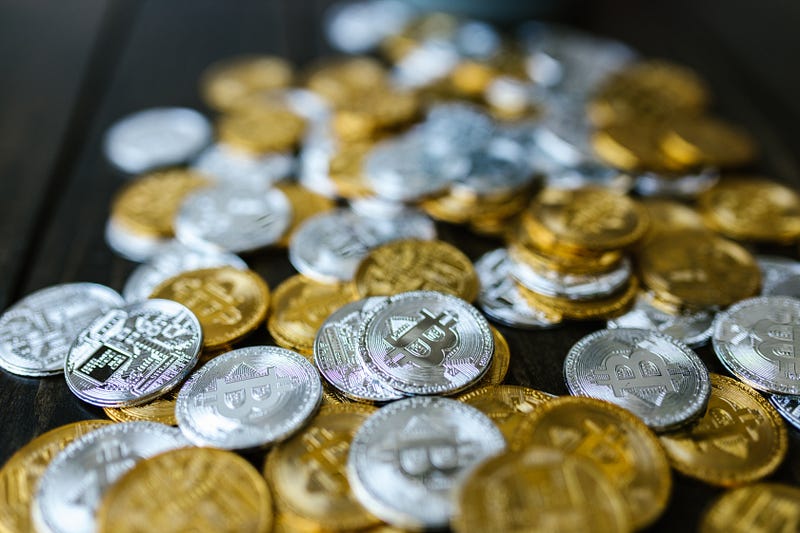
©Pexels/RODNAE Productions


Japan

Japan is among the most crypto-friendly developed nations globally, having acknowledged Bitcoin as a legal payment mode and regulated crypto exchanges in 2017. Bitflyer and Bitbank are among the crypto exchanges operating in Japan, which currently has over 23 authorized crypto exchanges.

The country aims to balance consumer protection and innovation by requiring crypto exchanges to register with the FSA, comply with stringent rules on security, anti-money laundering, and reporting, undergo regular FSA audits and inspections, and be part of the Japan Virtual Currency Exchange Association (JVCEA) for self-regulation.

Despite being regulated, Japan’s crypto market is lively, with the Yen ranking second for Bitcoin trading volume by currency. The country has a flourishing crypto community, including blockchain firm LayerX, which requires ChatGPT expertise. Japan is also exploring the potential of central bank digital currencies (CBDCs) and plans to launch a pilot program with private sector partners in 2023 to test their feasibility for various use cases, aligning with the country’s strict approach to crypto.

Japan’s crypto taxation is unfavorable, with crypto gains taxed at the same rates as regular income, potentially reaching up to 55% for higher income brackets. However, Japan is one of the few countries with comprehensive guidelines on crypto taxation, with the NTA providing a detailed document that explains different types of transactions and their corresponding tax calculations.


China

China’s ban on crypto mining led to many miners moving their operations overseas or selling their equipment at a loss. However, China’s crypto-mining industry bounced back, with a 21% share of the global hash rate. While China has a competitive advantage in cheap electricity, regulatory risks remain.

China’s digital yuan is a legal tender fully backed by the People’s Bank of China (PBOC) and pegged to the renminbi. Unlike most cryptocurrencies, it is not decentralized or anonymous but is monitored by the PBOC. Adoption has been slow despite various partnerships and pilot tests, including with WeChat Pay.

China is working with other countries on the Multiple CBDC Bridge project to explore the feasibility of cross-border fund transfers among different currencies. Launching its own CBDC may allow China to reduce its reliance on the US dollar and increase its influence over global trade and monetary policy. However, the success of that endeavor is questionable.


Hong Kong

Hong Kong is a crypto-friendly jurisdiction that faces banking access and mainland influence challenges. Despite difficulties opening local bank accounts after the closure of two crypto-friendly banks, Hong Kong remains committed to fostering its fintech hub status.

The government proposed allowing retail investors to trade cryptocurrencies and ETFs and reviewing property rights for tokenized assets while considering legalizing smart contracts. Crypto purchases for all citizens are due to be legalized in June 2023. These measures should attract more investors and businesses to the city’s crypto industry.

Nonetheless, Hong Kong must overcome hurdles regarding banking access and regulatory uncertainty from mainland China to maintain its attractive status for crypto businesses and investors.


Singapore

Singapore has a supportive crypto ecosystem and regulations with low tax rates, favorable policies, strong financial center reputation, and proximity to other Asian markets. Notable international crypto players with offices in Singapore include Coinbase, Crypto.com and Kraken.

However, Singapore imposes strict rules on crypto service providers to prevent illicit activities, requiring digital payment token (DPT) services to obtain a license under the Payment Services Act or face fines and jail time. Singapore’s crypto industry also faces competition from other jurisdictions, such as Hong Kong and the UAE, offering tax incentives and favorable legal frameworks.


India

India’s crypto industry faces uncertainties due to the lack of a clear regulatory framework and frequent changes in the government’s stance. Despite having a large tech-savvy population and an active crypto community, the industry struggles with regulatory compliance and legal risks. In 2018, the Reserve Bank of India’s ban on banking channels cut off many crypto businesses and users.

The Supreme Court of India later overturned the ban, but draft bills to ban or regulate crypto have since been proposed without official introduction or passage. India recently imposed a preemptive ban on crypto advertising and sponsorships and is exploring the integration of a CBDC. India’s position on crypto leans toward the anti-crypto side, just short of an outright ban.

For brevity, we’ve confined discussion to these five Asian venues. However, it would be remiss of us not to mention that Vietnam has one of the highest levels of crypto adoption in the world while having a crypto trading ban in place. Not so in South Korea where crypto trading is legal, with strict regulation having been put in place. Meanwhile, Thailand’s Securities and Exchange Commission (SEC) has approved four cryptocurrencies as tradable assets, with crypto trading in the country having a legal status.

It’s difficult to figure out precisely how crypto will develop geographically but it seems certain that its future will be molded to some extent in Asia.


More to Read
View All
Web3 & Enterprise·

Feb 15, 2024

Game company behind XPLA blockchain witnesses growth in revenue last year

Com2uS Holdings, the South Korean game publishing company behind Layer 1 blockchain XPLA, disclosed today that its revenue last year saw a 22.5% increase from 2022, reaching KRW 142.3 billion ($106.7 million). On the back of the revenue growth, the company's consolidated operating loss narrowed to KRW 14 billion, improving from 2022’s KRW 26.4 billion. Additionally, the net loss decreased to KRW 16.5 billion, down from the previous year’s KRW 70.6 billion. The operating loss for the fourth quarter stood at KRW 16.5 billion, showing an improvement from 2022 Q4's KRW 20.9 billion. During the same period, revenue reached KRW 21.4 billion, and the net loss was recorded at KRW 8 billion.Photo by Andrey Metelev on UnsplashGame sales and marketing expensesCom2uS Holdings attributed the increase in profits to game sales growth, which was encouraged by the release of more games. However, the company also noted a decrease in income from investments in associates and an increase in marketing expenses, which were driven by the launch of new games. Last year's operating expenses totaled KRW 156.4 billion. Labor costs, which constitute the largest portion of operating expenses, experienced a year-on-year decrease of 6.2%, amounting to KRW 46.7 billion. In contrast, there was an increase in spending across three areas: commissions rose by 43.8% to KRW 30.7 billion, loyalty expenses increased by 26.6% to KRW 25.1 billion and marketing saw a jump of 134.9% to KRW 21.1 billion. According to a report from local news agency Yonhap, Jung Chul-ho, CEO of Com2uS Holdings, emphasized at the earnings presentation today that the company is committed to growth in game publishing, blockchain projects and platform initiatives, all directed towards enhancing the company's value.Triple-A games on XPLA blockchainAs part of the company’s blockchain endeavors, the XPLA platform is set to focus on improving user convenience and incorporating major content, including a variety of triple-A games. Looking ahead, Com2uS Holdings anticipates that its idle role-playing game, Soul Strike, will contribute to the company's revenue for the first quarter. Since its debut last month, Soul Strike has been attracting attention not only in Korea but across Asia. The game publisher also outlined its global release plans for the MMORPG, Zenonia Chronobreak. Gamers in Taiwan can expect access to the game in the second quarter, while those in Japan and others will be able to play in the fourth quarter.

news
Policy & Regulation·

Aug 31, 2023

EOS Granted Whitelist Approval by Japanese Regulators

EOS Granted Whitelist Approval by Japanese RegulatorsThe open-source layer-1 blockchain platform EOS has secured whitelist approval from the Japan Virtual and Crypto Asset Exchange Association (JVCEA).The EOS Network Foundation, an entity established with a view towards supporting and safeguarding the development of the EOS blockchain network, announced the approval via a blog post published to its website on Wednesday.EOS raised eyebrows with a staggering $4 billion initial coin offering (ICO) back in 2018. This approval will likely act as a shot in the arm for the project, given the period of relative stagnation that has followed the ICO.Photo by Paul MARSAN on UnsplashEOS price respondsThe approval paves the way for EOS to be traded against the Japanese yen, potentially opening up new avenues for the cryptocurrency’s adoption and utilization. The endorsement has had an immediate impact on the EOS token’s value, driving its price up by 5.54% over the course of the past seven days in a surge of market activity.At the time of writing, the EOS token is trading at $0.622 with an accompanying market capitalization of $696 million. This positive market response underscores the significance of regulatory greenlights in the cryptocurrency sphere.Mid-September trading launchThe Japanese Financial Service Authority (FSA) will oversee the regulation of EOS trading on local Japanese crypto exchange BitTrade, a well-established platform in the Japanese crypto space. The anticipated commencement of EOS token trading on BitTrade is slated for mid-September.The EOS development team is coming out the better end of its interaction with regulators in this instance. However, that hasn’t always been the case. In 2019 the Securities and Exchange Commission (SEC) in the United States fined technology company Block.one, which at that time was responsible for the EOS ICO. All things considered, the sanction was recognized by most in the crypto space as being very much on the lighter end.Fostering Web3 growthJapan’s crypto ecosystem has been actively seeking ways to integrate and foster the growth of the Web3 industry. Its regulators have been lauded more recently, given that Japanese customers of failed crypto platforms like FTX were protected from those failures due to regulatory rules that insisted upon crypto platforms ring-fencing and safeguarding user funds.There have also been several initiatives taken to collaborate with international regulators on developing regulatory standards relative to digital assets. Earlier this month, the Japanese Financial Accounting Standards Foundation (FASF) met with the Korea Accounting Institute (KAI) to work on establishing accounting standards for digital assets.Japan’s Financial Services Authority (FSA) is also participating in Singapore’s Project Guardian, an initiative driven by the Monetary Authority of Singapore (MAS) to explore the potential of digital assets.Prime Minister Fumio Kishida’s supportive stance on Web3, describing it recently as “the new form of capitalism,” further reinforces Japan’s ambitions to establish itself as a hub for cryptocurrency activities. This regulatory nod for EOS could potentially mark the beginning of a broader trend, attracting more projects and investments to the Japanese crypto sector.

news
Web3 & Enterprise·

Nov 07, 2023

Kloint and Korea University to develop on-chain data analysis solutions

Kloint and Korea University to develop on-chain data analysis solutionsKloint, a company specializing in the tracking of virtual asset transactions, revealed on Tuesday a partnership with the College of Informatics and the Center for Information System Security at Korea University. The collaboration is set to focus on the joint development of algorithms and platforms for on-chain data analysis.Photo by Shubham Dhage on UnsplashSharing insights on regulatory frameworksAs part of this initiative, Kloint and Korea University will cooperate to understand the domestic and international demand for on-chain data analysis. They will also exchange insights on the regulatory and policy frameworks that govern the technologies involved.Growing crypto-related criminal activitiesThe collaborative effort between Kloint and Korea University is set against a backdrop where, with the expansion of the cryptocurrency market, there has been a corresponding uptick in its use for criminal activities like money laundering, drug trafficking, and embezzlement.Traditional techniques used by government bodies, such as the public prosecutor’s office and financial regulators, have proven expensive and increasingly ineffective in tracking virtual assets as they struggle to keep pace with the sophisticated methods now used to circumvent detection.Kloint was co-founded last September by three blockchain technology firms: Fair Square Lab, S2W and Ozys. With a vision set on the horizon, Kloint is gearing up to supply government entities and virtual asset service providers (VASPs) with analytical platforms and reporting services. In the more immediate term, the company is focusing its efforts on developing solutions for data collection and analysis tailored to the Korean cryptocurrency market.

news
Loading