Top

Bitcoin layer-2 project Elastos sees ELA token surge

Markets·December 21, 2023, 1:37 AM

Singaporean blockchain developer Elastos has unveiled its BeL2 layer-2 network set to run on top of the Bitcoin blockchain, eventually prompting a token price surge.


50% increase

The project aims to address challenges such as transaction volume limitations and the complexity of programmable contracts within the Bitcoin ecosystem. Despite the initial muted response from the crypto community after the late November announcement, Elastos’ native token, ELA, has experienced an extraordinary surge on Wednesday. Over the course of the past 24 hours, the token’s unit price has jumped from $2.06 to $3.09. That represents a 50% increase.
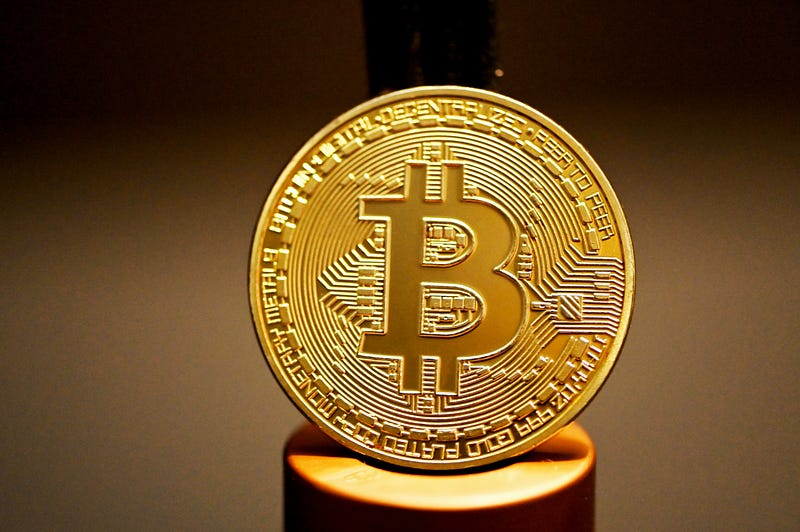
Photo by Kanchanara on Unsplash


Bringing smart contracts to Bitcoin

On Dec. 2, the project released its BeL2 whitepaper, describing it as “a transformative approach to enhancing Bitcoin’s functionality.” BeL2 has the potential to bring about significant advancements by leveraging SmartWeb technology to introduce staking solutions and incorporate zero-knowledge proof technology.

A zk proof is a cryptographic method through which one party can prove to another party that a particular statement is true, all the while avoiding the leakage of any additional information aside from confirming the statement is true. Up until now, zk proofs have been largely the preserve of Ethereum-centric projects.

Alongside zk proofs, BeL2 will utilize Bitcoin-powered Ethereum Virtual Machine (EVM) smart contracts. This approach is expected to expedite transactions within the network and introduce governance through a decentralized model.


BeL2 roadmap

The roadmap for BeL2 includes a three-month development phase for a proof-of-concept, followed by an additional three months dedicated to the decentralization of relayers. These relayers, acting as third-party services facilitating communication and data transactions between different blockchain networks, play a crucial role in the overall implementation of BeL2.

Elastos envisions BeL2 as a Layer 2 network built on Bitcoin, introducing sophisticated BTC transactions on its blockchain. Beyond staking, the network aims to provide direct yield and affordable transactions on native decentralized applications. The move marks a significant shift, allowing Bitcoin holders to stake their assets directly, unlocking potential value exceeding $700 billion.

Looking ahead, Elastos plans to chart the decentralized finance (DeFi) course on BTC by enabling smart contract deployment and irreversible digital agreements between participants.

As interest in Bitcoin continues to rise, driven by innovations like inscriptions and spot ETF discussions in the United States, Elastos’ BeL2 initiative is garnering greater attention, relative to the potential to usher in a new era of possibilities for the world’s most popular digital currency.

The project was founded in 2017 by Rong Chen, a former senior software engineer at Microsoft. Taking to the X social media platform earlier this month, Chen wrote:

“I don’t see any other paths to the final #Web3 destination except:

(1) A #BTC merge mining blockchain, plus smart-contract sidechains as needed;

(2) A #SmartWeb operating system (OS) to facilitate personal node to own data, plus personal-node to personal-node direct communication links;

(3) Personal Cloud Compute (#PC2) Runtime sandbox, so individuals are on the same footing as big brothers;

(4) Digital goods software-development-kits (embedded OS #SDKs), entrusting your data to nobody else but yourself, i.e., your own code to check access tickets/tokens before loading and rendering data.”

The Elastos ecosystem employs three-layer consensus mechanisms: auxiliary proof-of-work, proof-of-integrity and bonded proof-of-stake. It’s hoped that the project can improve upon the original layer-2 solution for Bitcoin, the Lightning Network, which has had issues in terms of scalability and centralization risk.

More to Read
View All
Policy & Regulation·

Oct 11, 2023

Hong Kong Police Issue Warning as Binance Users Lose Funds to Phishing Scam

Hong Kong Police Issue Warning as Binance Users Lose Funds to Phishing ScamHong Kong has witnessed a surge in phishing scams targeting Binance users, prompting local law enforcement to issue a cautionary advisory.Photo by Serey Kim on UnsplashCyberDefender warningThe warning was issued by Hong Kong police via its CyberDefender Facebook page on Monday. Over the past two weeks, at least 11 Binance customers in Hong Kong fell victim to phishing scams, collectively losing over $446,000 (equivalent to HKD 3.5 million). These scams primarily involve fraudulent text messages.According to Hong Kong police, these fraudulent text messages claim to be from Binance and ask users to verify their accounts by clicking on a link provided within the message. On Facebook, the warning stated:“Recently, fraudsters posing as Binance sent text messages claiming that users must click the link in the message to verify their identity details before a deadline, otherwise their account would be deactivated.”Upon clicking the phishing link and entering their login credentials to “verify” their accounts, victims unwittingly grant fraudsters full access to their Binance accounts. This modus operandi mirrors the tactics commonly employed in phishing scams.CZ chimes inBinance CEO Changpeng Zhao (CZ) also joined in the cautionary chorus, issuing a warning to customers on his X account.The crypto sector in Hong Kong has been facing challenges recently, largely related to the recent JPEX fraud case. The losses incurred from the JPEX exchange scandal have swelled to an estimated $180 million, with over 2,300 victims filing complaints with local authorities.The JPEX scandal led to multiple arrests in Hong Kong and prompted authorities to intensify their efforts against illegal crypto activities. The Securities and Futures Commission (SFC) of Hong Kong introduced regulations mandating the licensing of all crypto exchanges operating within its jurisdiction earlier this year.To date, only two exchanges, HashKey and OSL, have secured licenses under this regulatory framework. Numerous other crypto exchanges in Hong Kong have submitted license applications, but Dubai-headquartered JPEX, despite heavily promoting its application for a Hong Kong license, failed to submit an application to the local regulator. In the wake of the JPEX scandal, the SFC published a comprehensive list of companies seeking crypto licenses and expanded its list of suspicious platforms.Cyber security firm Kaspersky found earlier this year that phishing related to crypto trading is on the rise in Asia, particularly in the Philippines. Binance’s CZ has had to issue warnings where phishing is concerned on previous occasions. He did so in July when the founder of decentralized crypto exchange (DEX) Uniswap was hacked.In February of last year, CZ came out again to warn users of a massive SMS-related crypto phishing scam. Back in 2018 a serious attempt was made to compromise the credentials of Binance platform users via phishing techniques.As phishing scams continue to pose a significant threat to crypto users in Hong Kong, and with the aftermath of the JPEX debacle still reverberating through the industry, vigilance and caution remain paramount for participants in the region’s crypto ecosystem.

news
Policy & Regulation·

Sep 26, 2024

Potential positive impact of monetary stimulus in China

Many commentators in the crypto space were pointing to a lowering of interest rates last week by the Federal Reserve in the United States as being a positive development for the pricing of digital assets. However, the introduction of a stimulus package to revive the Chinese economy may also have a role to play. Stimulus packageBloomberg reported on Sept. 24 that People’s Bank of China Governor Pan Gongsheng had cut a key short-term interest rate. Furthermore, the Bank of China governor plans to implement a reduction in the reserve requirements that are applied to the country’s banks. The Reserve Requirement Ration (RRR) will be cut by 50 basis points, which will mean that $142 billion will be freed up for new lending.  Additionally, a package of measures has been introduced to rejuvenate China’s beleaguered real estate market, lowering the borrowing costs related to $5.3 trillion in mortgages.Photo by Eric Prouzet on UnsplashBullish for crypto?Jamie Coutts, chief crypto analyst at financial research platform Real Vision, took to X to comment on the development. Coutts wrote: “The bottom is in for global central bank liquidity for this cycle. Sit back and watch the other CBs fall into line. In a credit-based fiat fractional reserve system, debasement is a feature, not a bug.” Coutts signed off with a “Bitcoin” hashtag, with the inference that the development will have positive implications for Bitcoin. Similarly, market analysts at Singaporean crypto-asset trading firm QCP Capital perceive the move as being bullish for crypto and risk assets more generally. QCP Capital analysts stated: "We believe more easing is coming from the People's Bank of China (PBoC), and they have communicated as much, and combined with the U.S. Federal Reserve joining the global cutting cycle, all major central banks, except Bank of Japan, are now ready to inject more liquidity into the market. The macro space continues to look more and more bullish for risk assets, including crypto."  Taking that consideration further, the QCP Capital analysts suggest that market participants in the crypto space may be caught off guard by a resultant uptick in crypto pricing, stating: "We know how explosive crypto prices can be, and with so many bullish catalysts, we think the next move higher will leave many people surprised and sidelined.” Fed rate cutsMany market commentators were similarly enthused last week following an announcement in the U.S. by Jerome Powell, Federal Reserve Chairman, of a 50 basis point rate cut, with the suggestion that further cuts may be implemented going forward. However, not all market pundits are of the same view. Some believe that small interest rate cuts occurring in an overall high rates environment won’t move the needle and that it’s only in a zero rates environment where Bitcoin and crypto skyrocket.  Arthur Hayes, co-founder of BitMEX and Chief Investment Officer (CIO) at the Maelstrom Fund, asserted in his keynote speech at TOKEN2049 in Singapore last week that he wasn’t enthusiastic about rate cuts driving crypto.  “While I think a lot of people are looking forward to a rate cut, meaning that they think the stock market and other things are going to pump up the jam, I think the markets are going to collapse a few days after the Fed’s rates,” he stated. Markets didn’t collapse subsequently although it seems that they are responding to this latest monetary stimulus introduced by China.

news
Policy & Regulation·

Aug 03, 2023

Korean Financial Watchdog Warns Investors Against Crypto Scams

Korean Financial Watchdog Warns Investors Against Crypto ScamsThe South Korean Financial Supervisory Service (FSS) issued a press release today to warn investors against fraudulent cryptocurrency investment schemes.406 reported scams in two monthsBetween June 1 and July 30, the FSS received a total of 406 reports of crypto scams that lured individuals with false promises of high returns. Some of these perpetrators went to the extent of misrepresenting themselves as employees at crypto exchanges or project foundations. The FSS installed a virtual asset scam report center two months ago, which will run until this year’s end, as an interim measure before the implementation of the Virtual Asset User Protection Act in July of next year.Photo by Growtika on UnsplashSix scam typesTo strengthen its efforts, the FSS has shared six reported case types with the public and has issued investment warnings accordingly. Investors are advised to exercise caution when dealing with unlisted cryptocurrencies at low prices, as accurately determining their value can be challenging. Similarly, the FSS cautions against investing in cryptocurrencies sold at low prices with trading restrictions, as this could lead to difficulties in liquidating tokens if the price drops.The FSS also emphasizes the importance of being wary of cryptocurrencies with low trading volumes, as they can experience drastic price fluctuations due to limited activity. To prevent falling victim to impersonation scams, investors are urged to be cautious of individuals claiming to be employees of domestic virtual asset service providers or presenting official documents to solicit investments.Furthermore, the financial watchdog stresses the risks associated with suspicious requests associated with electronic wallets, particularly connecting to them via unsolicited emails, as they pose a high risk of being hacked.Lastly, the watchdog warns against falling for promises of high returns linked to cryptocurrencies endorsed by celebrities or well-known companies, as these may be illegal deposit-taking activities performed by unlicensed entities. The FSS advises investors to remain vigilant, conduct thorough research, and approach investment opportunities with skepticism to protect themselves from potential crypto scams.

news
Loading