Top

Kazakhstan plans CryptoCity as pilot project for crypto payments

Policy & Regulation·May 30, 2025, 5:09 AM

The Central Asian republic of Kazakhstan is planning to establish a pilot project that will enable the use of crypto as a means of exchange for goods and services within a specific zone.


That’s according to a statement published on Akorda.kz, the official website of the President of Kazakhstan. The statement incorporates the text of a keynote speech delivered by President Kassym-Jomart Tokayev at the Astana International Forum. Tokayev stated:


“We are planning to create a pioneering pilot zone called CryptoCity where cryptocurrencies might be used for purchasing goods, services, and even beyond.”

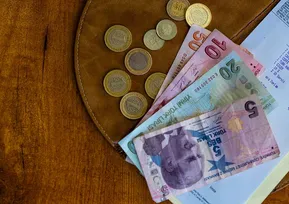
https://asset.coinness.com/en/news/9ad2218d9c3622c0f96c2e990994dc2c.webp
Photo by Engin Akyurt on Pexels

Working towards digital transformation

The initiative forms part of Kazakhstan’s efforts to make progress in terms of digital transformation, as well as an aspiration to become an IT hub within the Eurasia region. 


For the purposes of the pilot program, the use of cryptocurrencies for the payment of goods and services has been authorized by the government within a pre-defined sandbox environment. Alatau City, an urban development located north of the Kazakhstani city of Almaty, has been chosen for the pilot scheme.


Alatau has been established as a special economic zone and planned to become a hub for new technology and knowledge, alongside global tourism. It hosts the Innovation Technology Park together with the Kazakhstan National Nuclear Center, Institute of Nuclear Physics and the Physics & Technology Institute.


It’s envisaged that the existing technology and knowledge base within Alatau will support its expansion into the area of crypto payments and blockchain development.


In addition to crypto payments, other blockchain-based technologies related to taxation systems, investment and decentralized identity systems will be nurtured and encouraged within the Alatau special economic zone.


Potential Eurasian crypto hub

In a recent opinion piece published by the Russian-language government-backed newspaper Kazakhstanskaya Pravda, Kanysh Tuleushin, Kazakhstan’s vice minister of digital development, suggested that the Central Asian republic has the potential to position itself as the region’s leading crypto hub. 


Tuleushin also suggested that crypto mining operators could help to modernize the country’s energy sector, playing a role in stabilizing the country’s power grid, while making use of surplus electricity. Kazakhstan had proven to be a popular destination for Bitcoin miners in the past. However, the sudden influx of miners following a ban on the activity in China in 2021 was unplanned for. 


The surge in electricity demand put the country’s electricity grid under pressure, leading to blackouts in some cases. In 2023 President Tokayev signed legislation into law that limited the energy use of domestic crypto miners. Despite that negative experience, it appears that Tuleushin has seen the benefits that the activity can bring when regulated and planned for.


Back in March, it emerged that lawmakers in Kazakhstan had proposed the creation of a crypto bank. One obstacle to the creation of the bank is a lack of a crypto regulatory framework. According to a report published earlier this month, the National Bank of Kazakhstan is now in the process of preparing a regulatory framework for digital assets.
More to Read
View All
Markets·

Oct 23, 2025

Hong Kong to launch spot Solana ETF ahead of U.S.

A spot Solana (SOL) exchange-traded fund (ETF) is set to debut in Hong Kong next week, according to the South China Morning Post. Managed by ChinaAMC (HK), the Hong Kong subsidiary of Chinese financial services company China Asset Management, the product will begin trading on Oct. 27 and will be available against both Hong Kong and U.S. dollars. The Hong Kong listing comes amid growing global interest in Solana-based investment products. While this marks a first for the city, the first country to trade a spot Solana ETF was Canada, where four products from 3iQ, Purpose, Evolve, and CI Financial went live on the Toronto Stock Exchange in April 2025.Photo by GuerrillaBuzz on UnsplashU.S. institutions await regulatory approvalIn the U.S., institutional interest is also high, though a product has yet to be approved. According to Bloomberg senior ETF analyst Eric Balchunas, 23 separate ETP filings for Solana have been submitted in the U.S. This matches Bitcoin, with both assets having the highest number of filings among 35 cryptocurrencies tracked, out of a total of 155 crypto ETP filings overall. The push for exchange-traded products mirrors rising institutional investment in the Solana ecosystem itself. Several firms have recently established corporate SOL treasuries. Forward Industries spent $1.6 billion on its treasury and filed with the U.S. Securities and Exchange Commission (SEC) to raise up to $4 billion from share sales to acquire more SOL. Similarly, Sharps Technology announced a collaboration with Coinbase Global to expand its reserve strategy, and an SEC filing showed that Citadel and its affiliates hold a portion of the outstanding shares in DeFi Development Corp. (DFDV), another SOL treasury firm. Uniswap expands to Solana networkSolana's platform has also seen wider technical integration. On Oct. 16, the decentralized exchange Uniswap began supporting the network, allowing its users to connect Solana wallets and swap SOL tokens. Uniswap stated the move helps address fragmentation issues by supporting both Solana and Ethereum, the two largest DeFi ecosystems. According to DefiLlama data, SOL currently boasts $10.88 billion in total value locked (TVL) in decentralized finance, while ETH TVL amounts to $83 billion. Separately, the Solana team recently promoted the network's technical resilience. Following a recent Amazon Web Services (AWS) outage, the team shared an analysis on X indicating a 97.6 resilience index, noting that only 77 of its 1,295 nodes were affected, suggesting a 6% dependency on AWS. Market performance lags despite growthDespite these developments, the price of SOL, the sixth-largest cryptocurrency by market capitalization, has not reflected the positive sentiment in the short term. Trading at roughly $186, SOL is down 13.74% over the past month, according to Kraken data. The asset remains 36.49% below its all-time high of $293.31, which was reached on Jan. 19, 2025.

news
Web3 & Enterprise·

Oct 15, 2024

Gate Ventures, Boon Ventures launching $20M crypto fund

Gate Ventures, the investment arm of Gate.io, a global cryptocurrency exchange with its origins in China, has gotten together with Thailand’s Boon Ventures and Movement Labs, to launch a $20 million fund aimed at supporting projects that utilize the Move programming language, as well as interoperability with the Ethereum ecosystem.  Accelerating Move-based blockchain adoptionMovement Labs is a developer of modular Move-based blockchains. A press release published on PR Newswire on Oct. 13 outlined that the firms intend to direct the fund towards a number of key areas. Firstly, its objective will be to accelerate the adoption of Move-based blockchain solutions. Secondly, the fund will be directed towards supporting projects which enhance security and performance in decentralized networks. A further objective is the extension of support to projects which bridge Move and Ethereum virtual machine (EVM) ecosystems. The final key objective has been set out to drive innovation in Web3 infrastructure and applications. Gate Ventures Managing Partner Kevin Yang claimed that the $20 million fund “marks a significant milestone in [the company’s] mission to drive forward-thinking solutions in the Web3 ecosystem.” Yang added that in collaborating with Movement Labs and other forward-thinking entities within the Web3 sector, the company is “paving the way for the future of decentralized technology.”Photo by Nino Steffen on UnsplashMentorship & hackathonsWeb3 startups supported by the fund will be given access to a mentorship program, while hackathon events will also be organized. Furthermore, there will be an opportunity for selected startups to participate in a research grant program relative to blockchain interoperability. Gate Ventures garnered attention within the industry recently, with the announcement in August that it had entered into a partnership with Abu Dhabi’s Blockchain Center. That collaboration has led to the establishment of Falcon Gate Ventures, a $100 million Web3 innovation fund.Last month, the company participated in the Series A funding round of Kroma, an Ethereum layer-2 network project. While interoperability is singled out as a key objective of this fund, Movement Labs has been working towards that goal recently. Last week, the firm appointed an omnichain interoperability protocol project, LayerZero, as an interoperability provider. It’s envisaged that the partnership will enable developers using the Move programming language to create decentralized applications that can run across various blockchain networks, including EVM. While Facebook parent company Meta developed the Move programming language, Movement Labs has worked towards developing its use further. Earlier in the year, Movement partnered with Aptos Labs, a firm that was founded by ex-Meta employees that has built out a network based on Move, in another effort to bring about blockchain interoperability relative to EVM and non-EVM networks. A spokesperson for Movement Labs told Cointelegraph that “the ultimate goal is to create an integrated blockchain environment where developers can build across platforms without sacrificing security or performance.” Back in April, Movement raised $38 million in a Series A financing round which was led by Polychain Capital. At the time, Movement Labs Co-Founder Rushi Manche said that he and his co-founders “started building Movement to increase the velocity of innovation in crypto where the next Facebook can be built on-chain by developers who do not have the resources for large development teams and expensive auditors.”

news
Web3 & Enterprise·

Sep 02, 2023

TRYB Emerges as Turkish Alternative to Dollar-Pegged Stablecoins

TRYB Emerges as Turkish Alternative to Dollar-Pegged StablecoinsIn a market typically dominated by dollar-backed stablecoins like Tether (USDT) and USD Coin (USDC), a new player has emerged in Turkey to operate alongside those dominant stablecoins.According to a report by CoinDesk on Friday, BiLira’s TRYB stablecoin, pegged to the Turkish lira (TRY), has rapidly climbed the ranks to become the world’s second-largest non-US dollar-pegged stablecoin. It currently trails Tether’s euro-pegged EURt, which according to Coingecko data, currently holds a market cap of $221 million. In just three weeks, TRYB has skyrocketed, quadrupling its market cap to $136.10 million.Photo by Oleksandr P on PexelsMarket cap volatilityHowever, TRYB's market cap had fallen off a cliff on Friday, dropping from $135 million earlier in the day to $40 million. TRYB, an Ethereum-based stablecoin, offers a unique proposition in that it is pegged to the Turkish lira, allowing users to exchange 1 TRYB for 1 TRY. The stablecoin offering, which is administered by Istanbul-based BiLira, is underpinned by 100% fiat reserves held in Turkish banks.The Turkish lira has earned its reputation as one of the most volatile fiat currencies globally, often experiencing fluctuations against the US dollar. Over the course of the last five years, the currency has lost 94% of its value when benchmarked against the performance of the US dollar.In response to this volatility, TRYB has found its purpose as a medium of exchange. It can act as a gateway to transition user’s Turkish lira into cryptocurrencies and vice versa. This trend aligns with the global use of stablecoins as the foundation of crypto trading pairs, providing traders with a stable asset while sidestepping fiat currency’s unpredictability.Exiting the liraThe US Federal Reserve acknowledged the significance of stablecoins in December 2022, highlighting their role in facilitating crypto trades, serving as collateral for crypto loans, and minimizing inefficiencies tied to fiat-to-crypto conversions. In fact, stablecoins account for over 80% of the trading volume on centralized exchanges, attesting to their pivotal role in the crypto ecosystem.It’s likely that the Lira-pegged stablecoin will act as a means to access other cryptocurrencies and US dollar-pegged stablecoins like USDT and USDC, rather than be considered as a rival or replacement. That’s by virtue of the ongoing difficulties of the Turkish sovereign currency which it tracks. So long as the lira continues to erode in terms of buying power, it’s likely that citizens will be looking for avenues to escape from that erosion of value.Increased interest in cryptoGiven this monetary backdrop in Turkey, it shouldn’t surprise anyone to learn that interest in crypto is on the rise. In a recent report published by Seychelles-based cryptocurrency exchange KuCoin earlier this week, a significant increase in the number of crypto investors in Turkey over the course of the past eighteen months has been identified.The report found that 52% of the adult Turkish population have participated in crypto-related investments. Over the past 18 months, the number of Turkish adults embracing crypto has risen to that 52% level from 40%.

news
Loading