Top

CFX surges as Conflux teases yuan-pegged stablecoin & 3.0 launch

Markets·July 22, 2025, 12:16 AM

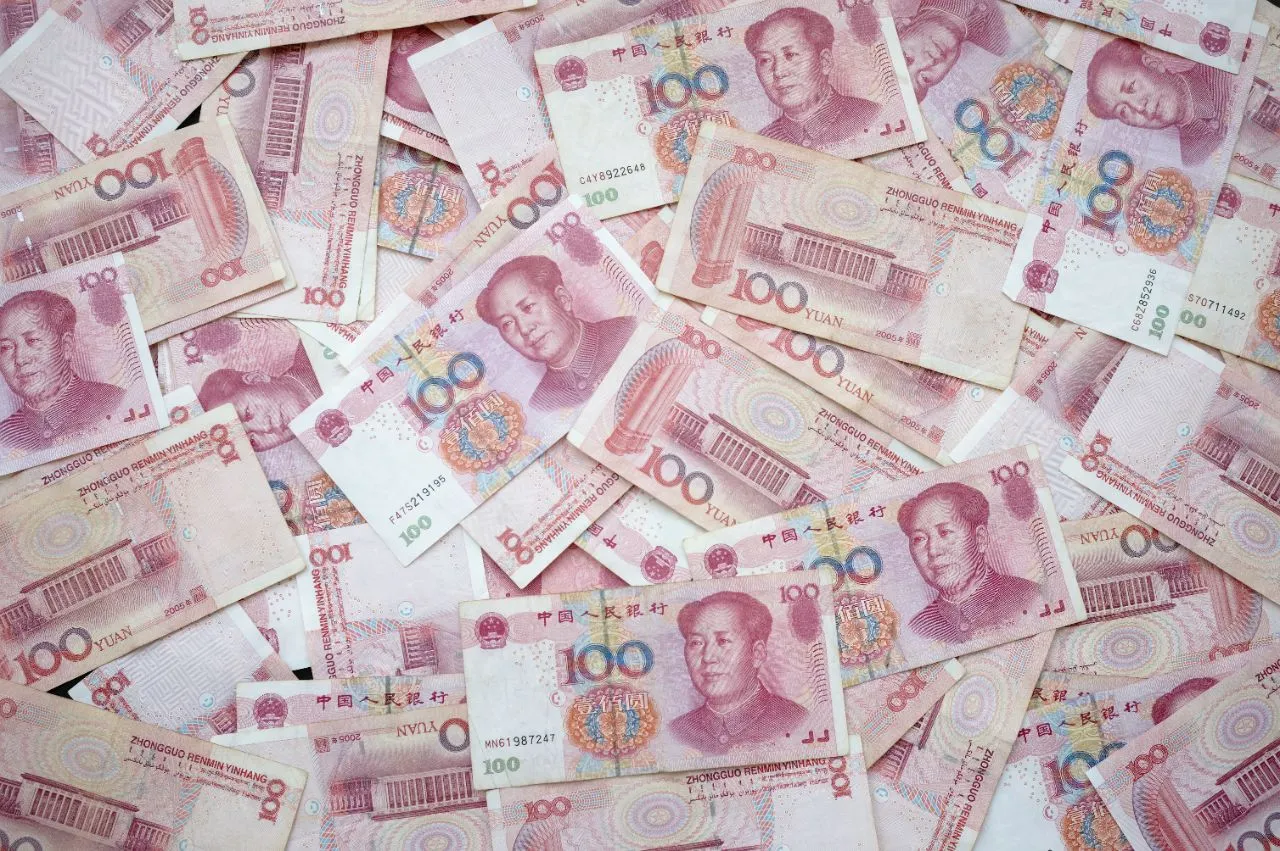
Conflux Network, a layer-1, regulatory-compliant Chinese blockchain focused on borderless transactions, has announced the upcoming launch of the Conflux 3.0 mainnet together with an offshore yuan-pegged stablecoin, resulting in its native CFX token surging.
https://asset.coinness.com/en/news/06040104449a2d7706a51662c1fc5865.webp
Photo by Eric Prouzet on Unsplash

Partnership

notice published on the website of the Shanghai Municipal People’s Government on July 20 reported on the Conflux Tree Graph Technology and Ecological Development Conference, which was held in Shanghai over three days from July 18 to July 20. Over the course of the three-day event, the project announced a partnership with AnchorX, a Hong Kong-based fintech firm specializing in stablecoins, and Shenzhen-based Eastcompeace Technology. 


The purpose of the initiative is to develop a stablecoin pegged to the offshore yuan (CNH), the version of China’s currency that circulates outside the mainland. The report outlined that in recent years, stablecoins and tokenized real-world assets (RWAs) have come to global attention. 


Belt & Road Initiative

Given this backdrop, it was outlined that “creating an independent and controllable high-performance public chain system” could be of great benefit to China and its Belt and Road Initiative (BRI), which sets out to develop infrastructure across 150 countries to facilitate trade with China.


This is not the first point at which AnchorX has collaborated with Conflux. Back in February, the company received in-principle approval from the Astana Financial Services Authority (AFSA) in Kazakhstan to issue CNH-pegged stablecoins. Growing bilateral trade between Kazakhstan and China was cited as the rationale behind the license, given the need for cross-border payments.


At the time, it was outlined that the AxCNH yuan-pegged stablecoin would be issued on the Conflux blockchain. It’s unclear if this same stablecoin is the focus of this latest development or whether an entirely new yuan-pegged stablecoin will be issued.

AnchorX collaborated with Conflux in 2024 to bring about the issuance of AxHKD, a Hong Kong dollar-pegged stablecoin. The stablecoin runs on the Conflux blockchain, with the stablecoin issuer using OKLink Trust as its custodian.


TokenPocket, a multi-chain crypto wallet project, also outlined on X on July 21 that it too is involved in the partnership with Conflux and AnchorX. The project outlined that it will support the growth of stablecoin adoption, the development of cross-border payment solutions and the promotion of tokenized RWAs in international markets through the collaboration. 


Pilot projects

TokenPocket went on to explain that the companies plan to launch pilot projects in Central Asia, Southeast Asia and other regions, building “a compliant, secure, and innovative fintech framework to boost the role of the Conflux ecosystem as critical infrastructure for cross-border trade.”


It was revealed at the conference that the mainnet release of Conflux 3.0 will occur in August. With the implementation of further optimized execution modules, the project expects 3.0 to result in a network throughput of 15,000 transactions per second (TPS). 


These developments over the course of the weekend have had an impact on the unit price of Conflux’s native token, CFX. On July 19, the token was trading at around $0.1043. According to CoinMarketCap data, at the time of writing, it’s trading at $0.2232, a 2.58% increase over the past day.


 

More to Read
View All
Web3 & Enterprise·

Mar 05, 2025

RWA tokenization gaining momentum in UAE

Real-world asset (RWA) tokenization, the conversion of tangible assets into digital tokens on a blockchain, is gaining momentum in the United Arab Emirates (UAE), according to a number of industry professionals working in the sector.Photo by ZQ Lee on Unsplash‘No lack of demand’Scott Thiel, founder and CEO of Dubai-based RWA token marketplace Tokinvest, recently outlined to Cointelegraph that the company is experiencing “no lack of demand” for tokenized RWAs. Thiel believes that demand is coming from real estate developers and large property owners who “want to explore how they can use this as an alternate means of financing or selling their property.” The Tokinvest CEO explained that a booming property market in the UAE,  particularly in Dubai, is contributing towards RWA tokenization demand in the country. He stated: “What’s the hottest real estate market in the world? Well, I think today it’s probably Dubai, and so, everyone would like to own a piece of this or to get access to the economic benefits of being a participant in that marketplace.” RWA tokenization dealsLast year, Liv Digital Bank, a subsidiary of Emirates NBD, the second largest bank in the UAE, signed a deal with RWA tokenization firm Ctrl Alt. At the time, Ctrl Alt CEO Matt Ong pointed to a Boston Consulting Group report that forecast a $16 trillion business opportunity with regard to the tokenization of global illiquid assets by 2030. In January, MANTRA, a layer-1 blockchain project that focuses on RWA tokenization, inked a $1 billion deal with Damac Group, an Emirati property development company. The objective of the partnership is to bring transparency, security and access to Damac’s assets using blockchain. Last month, MANTRA was awarded a Virtual Asset Service Provider (VASP) license by Dubai regulator, the Virtual Assets Regulatory Authority (VARA). MANTRA Co-founder and CEO John Patrick Mullin described the license award as “a validation of our purpose, which is to provide developers and institutions with a purpose-built RWA Layer 1 Blockchain, that’s capable of adhering to real world regulatory requirements.” Proactive regulationIt is with regard to regulation that many in the industry feel that the UAE is gaining the upper hand where RWA tokenization is concerned. Tokeninvest’s Thiel provided input into the formulation of VARA’s regulatory framework back in 2022. He said that the authorities there have taken a proactive approach to digital asset regulation, with a genuine desire to provide regulatory clarity. The Tokinvest CEO was sufficiently impressed by the regulatory approach in the UAE to relocate the company there. Back in January, VARA awarded the company a trading license for its tokenized RWA marketplace. Commenting following the announcement of the Damac deal, MANTRA’s Mullin complimented the UAE authorities on their business-friendly approach: “The UAE has shown time and again that they can lead the crypto industry in innovation.”  In a series of posts on X recently, Julian Kwan, CEO and founder of IXS, a Singapore-based institutional bridge for tokenized RWAs, cited the Damac tokenized real estate deal while asserting that tokenized “RWAs are no longer a concept — they are an unstoppable financial movement.”

news
Policy & Regulation·

Aug 28, 2023

Dunamu Loses Lawsuit Seeking $19M in Corporate Tax Refunds After Venture Status Removal

Dunamu Loses Lawsuit Seeking $19M in Corporate Tax Refunds After Venture Status RemovalDunamu, the operator of South Korea’s largest cryptocurrency exchange Upbit, lost a 24.8-billion-won (approximately $18.7 million) corporate tax lawsuit, according to local news outlet The Korea Economic Daily. This legal action emerged after Dunamu was removed from the list of registered venture firms in December 2018. The Seoul Administrative Court ruled that since Dunamu was no longer a venture, it was not eligible for the associated tax benefits.Photo by Tingey Injury Law Firm on UnsplashLosing venture statusIn September 2017, Dunamu obtained certification as a venture company from the Ministry of SMEs and Startups. However, this certification was revoked in December of the following year. This revocation was due to an amendment to the Enforcement Decree of the Venture Businesses Act in October 2018, which resulted in the exclusion of “blockchain-based crypto asset trading and brokerage” from the venture business classification. Consequently, the withdrawal of this certification rendered the company ineligible for government tax incentives.Tax refund request deniedIn August 2020, Dunamu took action by formally requesting a refund of KRW 24.8 billion in taxes previously paid to the tax office. The foundation of its claim rested on its entitlement to venture company tax benefits up until the corporate tax period of 2018. However, its request was turned down, leading Dunamu to escalate the matter by initiating an administrative case against the tax authorities, following an unfavorable decision by the Korean Tax Tribunal.Meanwhile, an amended version of the Act on Special Cases Concerning Taxation Restrictions, which excluded cryptocurrency-related industries from benefiting from tax reductions, went into effect in January 2019. Pointing to the effective date of this act, Dunamu argued that the company should be entitled to benefits applicable up until the corporate tax cycle of 2018. Furthermore, Dunamu highlighted its legal action, which had led the administrative court to suspend the effects of the venture company certification revocation from December 31, 2018, to January 18, 2019.Court’s stanceDespite these arguments, the court rejected Dunamu’s argument and upheld that tax relief could not be granted for the tax year encompassing the date of the removal of its venture status. Additionally, the court affirmed that the tax authorities’ decision was valid since the venture status had been revoked in 2018, regardless of the amended Taxation Act’s implementation.In disagreement with the court’s ruling, Dunamu has filed an appeal against the decision.

news
Policy & Regulation·

Nov 18, 2025

Japan to classify crypto as financial instruments, seeks 20% tax rate

Japan’s financial authority has decided to regulate cryptocurrencies under the Financial Instruments and Exchange Act, classifying them as financial instruments. According to a report by The Asahi Shimbun, the Financial Services Agency (FSA) intends to include this reclassification in an amendment scheduled for submission during next year’s regular Diet session. Under the revised framework, local crypto exchanges will be required to provide detailed disclosures on the 105 tokens they handle. This includes the existence of issuers, underlying technologies such as blockchain, and price volatility risks. The proposed regulations will also subject these classified cryptocurrencies to insider trading rules. Issuers and individuals affiliated with exchanges will be prohibited from trading based on material non-public information, such as the suspension of trading or an issuer’s potential bankruptcy.Photo by Karola G on PexelsToken coverage in JapanAlthough the regulatory list contains 105 tokens, data from the Japan Virtual and Crypto Assets Exchange Association (JVCEA), cited in a New Economy report, indicates that Japanese exchanges currently list 119 cryptocurrencies, leaving unclear how the remaining digital assets will be regulated.  To enhance investor protection, the FSA will mandate specific disclosure requirements for issuers that use token launches for fundraising. These entities will be required to report on their latest business activities and future issuance plans annually. This legislative push follows a discussion paper published by the FSA in April, which proposed dividing crypto assets into two distinct categories. The first category includes tokens issued for raising capital, while the second comprises established cryptocurrencies that are not primarily used for issuer fundraising, citing Bitcoin (BTC) and Ethereum (ETH) as primary examples. Tax cut from 55% to 20%In parallel with these regulatory changes, the FSA plans to request tax reforms similar to those applied to traditional stock trading. Under Japan’s current tax code, taxes on cryptocurrency gains can reach as high as 55%. The agency proposes reducing this rate to a flat 20% in next year’s tax reform. Responding to the news on X, Changpeng Zhao, the founder and former CEO of Binance, welcomed Japan’s initiative to lower crypto taxes. However, he noted that the proposed 20% rate remains high compared to other jurisdictions, many of which do not levy capital gains taxes on crypto at all. Crypto ETF CFDs set to closeThe government’s move to tighten regulations is already reshaping the financial product landscape. One immediate impact is visible in contracts for difference (CFDs) linked to crypto ETFs. As reported by FinanceFeeds, IG Securities, the Japanese subsidiary of the London-listed IG Group, announced changes to its offerings. The firm will stop accepting new orders for CFDs tied to BlackRock’s iShares Bitcoin Trust and its Ethereum equivalent on Dec. 1. Open positions are scheduled to be automatically closed on Jan. 31 of next year. If clients do not settle their holdings prior to this date, the final settlement will be calculated based on the official closing price of that final day. This discontinuation adheres to an FSA decision that derivatives referencing Bitcoin or Ether ETFs must be regulated as crypto-related derivatives rather than standard ETF products. These instruments, now under the crypto-related derivative classification, fall under stricter rules regarding investor protection, operational oversight, and licensing. Japan’s latest regulatory and tax initiatives reflect a broader effort to bring clarity and investor protection to the country’s growing crypto market. As the framework evolves, the industry will be watching how the new rules influence participation and market structure. With lower taxes and stricter oversight on the horizon, both investors and exchanges may need to adjust, potentially reshaping liquidity and Japan’s overall appeal while prompting trading platforms to rethink their product offerings. 

news
Loading