Top

Chinese Central Bank Official Emphasizes Need for Digital Yuan Retail Payments

Policy & Regulation·September 05, 2023, 12:11 AM

A senior official from the People’s Bank of China (PBOC) has underscored the importance of making China’s digital yuan, commonly referred to as the e-CNY, accessible in all retail payment scenarios within China.
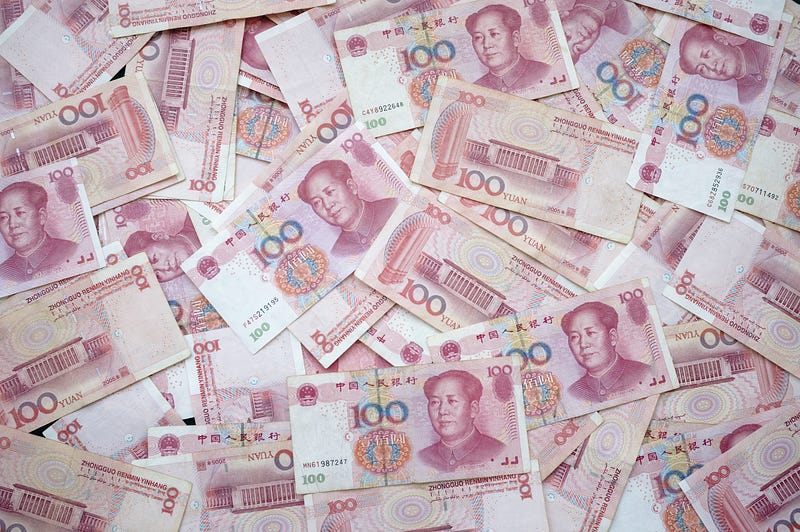
Photo by Eric Prouzet on Unsplash


Streamlining retail e-CNY payments

The remarks were delivered by Changchun Mu, Head of the Digital Currency Research Institute, during a trade forum in Beijing. Mu emphasized the need for standardizing QR codes in payment systems, particularly those dominated by giants like WeChat Pay and Alipay.

Local media reported on Sunday that the central bank official highlighted that various wallet providers, including WeChat, Alipay, commercial banks with mobile banking apps, and other payment apps associated with e-CNY operations, must remain vigilant about complying with relevant financial regulations and obtaining the necessary licenses. He stressed that the initial step in this process should involve the adoption of the digital yuan as the preferred payment method for all retail transactions.


Standardizing QR code payments

Mu explained that in the short term, authorities can start by unifying QR code standards on a technical level to achieve barcode interoperability. In the long run, he suggested that they will steadily implement the upgrade of payment tools.

The move towards standardizing QR code payments aligns with the central bank’s commitment from the previous year to promote universal QR payment codes. This initiative aims to allow consumers to make payments by scanning a unified barcode. Currently, QR code payment systems are widely prevalent in China, with WeChat Pay and Alipay being dominant players.

The PBOC has been actively testing the e-CNY, having introduced a pilot app in January 2022. The digital yuan pilot programs, initiated in late 2019, have expanded to encompass at least 26 locations across 17 provincial-level cities and regions, including major cities like Beijing, Shanghai, Shenzhen, and Suzhou, according to state media Xinhua.

The extent of China’s promotion of its digital yuan has been unmatched despite the fact that most central banks globally have had ongoing central bank digital currency-related (CBDC) projects open for a number of years already.

Recent months have seen the launch of a whole host of initiatives to further the use of the CBDC. These initiatives have included integration of the currency into the education system in Jiangsu province, the installation of digital yuan ATMs in Hainan, among many other such projects, and paying state employees with the currency in Changshu. That said, despite these efforts, widespread adoption of the e-CNY remains a work in progress.


Bringing about e-CNY integration

Mu also emphasized that the existing interbank payment and settlement systems function effectively, indicating that there is no immediate need to replace them with the CBDC system. Instead, he suggested that seamless integration could be achieved by ensuring comprehensive interoperability between the e-CNY and existing electronic payment tools and commercial bank deposit systems.

Moreover, at a wholesale level, Mu proposed the use of the digital yuan for settlement within the financial market infrastructure. Smart contracts could also be leveraged for such activities, thereby enhancing efficiency in wholesale payments.

Mu’s remarks underscore the Chinese central bank’s determination in advancing the development and adoption of the digital yuan while ensuring it remains integrated into the existing financial ecosystem.


More to Read
View All
Policy & Regulation·

May 12, 2023

LDP Working Group Proposes Web3 Industry Plan to Japan’s Prime Minister

LDP Working Group Proposes Web3 Industry Plan to Japan’s Prime MinisterJapan’s ruling Liberal Democratic Party (LDP) announced that its Working Group for Digital Society Promotion presented a proposal related to the Web3 industry to Prime Minister Kishida Fumio on Tuesday. The information was made public on the party’s website and later reported by the Korean crypto media outlet Tokenpost.Photo by Jezael Melgoza on UnsplashImproved crypto regulationsThe comprehensive 35-page study favorably reviewed the enhanced cryptocurrency regulations implemented by the Japanese government following the 2014 Mt. Gox breach and the 2018 Coincheck hack. The study credits these improved regulations for nurturing Japan’s robust Web3 ecosystem, which received global attention amidst the recent crypto winter. This term refers to a period marked by a sustained downturn in cryptocurrency values.Japanese crypto exchanges demonstrated prudence by refraining from listing most of the problematic tokens on their platforms, thereby averting panic within the market. This cautious approach was supported by Japanese law, which mandates crypto exchanges to securely store customers’ staked tokens separately. As a result, they were shielded from the repercussions of the FTX bankruptcy, which arose due to a liquidity crisis of FTT, the global crypto exchange’s native token.Significance of security tokensThe paper optimistically projected that Japan could lead the way in passing through the crypto winter ahead of other countries, citing the nation’s track record of overcoming numerous challenges in the industry. The authors highlighted the exit of speculative projects from the sector, balanced by the rise and continuous growth of new blockchain-based businesses. The report underscored the significance of tradable security tokens, which leverage blockchain technology to represent assets or rights.The adaptable nature of blockchain technology was emphasized, particularly its potential to incentivize social activities like volunteering. This versatility enables the broader public to actively participate in monitoring and addressing issues related to deteriorating infrastructure, thereby reducing associated management costs across society.Crypto taxationThe proposal also addressed the issue of crypto taxation, arguing for enhancements to the token investment environment to bolster blockchain-driven businesses. Currently, Japan taxes tokens held by corporations, discouraging domestic investment and stifling the growth of the Japanese Web3 ecosystem. To rectify this, the paper suggested exempting tokens issued by a third party from taxation if they are not intended for short-term trading.Moreover, the authors addressed the high taxation rates facing retail investors in Japan, which can reach up to 55% on income from crypto trading. This stricter tax regime compared to other countries has led many taxpayers to seek investment opportunities abroad. The authors suggested improvements to create a more investor-friendly environment.Token listing procedureThe proposal also included recommendations concerning token listings. In Japan, crypto exchanges are currently obligated to undergo a preliminary review conducted by the Japan Virtual and Crypto Assets Exchange Association (JVCEA) before listing tokens. It was suggested that the review process should be further refined to enhance efficiency.Yen stablecoinsThe authors emphasized the importance of introducing and circulating yen stablecoins to foster the growth of the Japanese Web3 industry, necessitating the development of a sustainable business model for these stablecoins.Content & Web3Furthermore, the proposal underscored the need for clear guidelines to discourage gambling behaviors and promote responsible usage within the NFT space. It advocated for the establishment of an industry organization bridging the content industry and the Web3 industry, which would facilitate collaboration and collective efforts towards a robust NFT ecosystem in Japan. Measures to protect Japanese content and data from unauthorized monetization by foreign entities were also recommended.According to an industry official who spoke with Tokenpost, Japan’s extensive preparations for the Web3 initiative have instilled confidence in the sector. The official highlighted that the country is currently exploring ways to establish connections between these new projects and existing industries, with the goal of maximizing their economic potential and generating fruitful outcomes.

news
Web3 & Enterprise·

Jan 22, 2024

FSN and Fingo join hands to pursue tokenized securities business

South Korean digital marketing firm FSN has entered into a strategic alliance with Fingo Company, the operator of the music copyright platform Fingo, to jointly work on a tokenized securities project based on the recently raised funds, according to local news site Newsis on Monday (KST).Photo by Chris Liverani on UnsplashUnlocking synergiesThrough this partnership, FSN and Fingo aim to collaborate on a token securities project. As both companies have experience in leveraging IP, they are expected to apply their expertise to the new business. In particular, FSN operates several IP-based Web3 projects such as Sunmiya Club and Bellygom NFT through its subsidiary Finger Labs, through which the firm has been demonstrating its competitive edge. Fingo also owns a variety of content-based IPs and is cooperating with major domestic securities companies. The two firms’ business capabilities are thus expected to create great synergy in the market. Fingo’s service allows anyone to share revenue made from music, a concept referred to as music revenue sharing, which was once limited to creators or singers only. Last year, it took a step into the tokenized securities sphere by signing a business deal with Mirae Asset Securities, the country’s largest asset manager, to establish a token securities service and launch innovative financial investment products. FSN has been gearing up to take on this collaborative project, namely a recent success in raising a total of KRW 10 billion (approximately $7.5 million) in funding. The company explained that with this considerable funding paired with its knowledge of Web3 and blockchain technology and experience in collaborative partnerships, it will be equipped to settle into the tokenized securities market seamlessly. Charting new horizons"As we have secured large-scale funding under stable conditions, we expect to successfully pursue new businesses, including that in tokenized securities," FSN CEO Lee Sang-seok said. "We will steadily expand new businesses by establishing partnerships with companies with competitiveness in various areas, starting with Fingo Company, which has a competitive edge in tokenized securities and music IP," he said.

news
Policy & Regulation·

Mar 11, 2024

The 3rd Busan Blockchain Regulation-free Zone Steering Committee holds meeting

The local government of Busan, the second-largest city in South Korea, announced in a press release that it held the 3rd Busan Blockchain Regulation-free Zone Steering Committee (Committee) meeting at the Busan Eurasia Platform, a community center located near Busan Station.  The meeting took place last Thursday at 15:00 (KST), attended by 12 Committee members, including Busan’s Vice Mayor for Economic Affairs Kim Kwang-hee, Busan Technopark Chairman Kim Hyung-gyun, Busan International Finance Agency Chairman Lee Myung-ho and Busan Information Industry Promotion Agency Chairman Kim Tae-yeol.Photo by Finn on UnsplashThe meeting was intended to discuss strategies to revitalize the blockchain regulation-free zone (blockchain zone) and to attract new blockchain businesses to the region. Busan has been recently struggling with developing and attracting blockchain technology companies to the region, which has cast doubt on the city’s ability to retain its status as the regulatory sandbox zone.   New 24 members, new commitment to invigorating blockchain zone Established in October last year, the 3rd Committee comprises 24 new members who have expertise in blockchain technology. The Committee aims to raise awareness of the blockchain zone’s potential and foster the blockchain industry within the region.  Kim Sang-min, Vice CEO of healthcare company Erom, was appointed Committee Chairman at the meeting. Known as an expert in the blockchain ecosystem, Kim currently serves as a blockchain policy advisor for Busan and has experience in taking the lead in establishing the Busan Digital Asset Exchange (BDX) last year.  More meetings in store to become a blockchain hub The meeting focused on creating subcommittees in an effort to facilitate the Committee’s seamless operation. Moreover, members reached a consensus on holding meetings at any time when warranted, in both online and in-person formats.  During the meeting, Busan Vice Mayor Kim said the newly launched Committee will contribute to identifying innovative businesses with great potential that require both cutting-edge blockchain technologies and a regulatory sandbox environment. 

news
Loading