Top

Parameta and Solbric Korea to Create First Solar Power Plant Security Token Platform in Korea

Web3 & Enterprise·August 10, 2023, 5:55 AM

South Korean blockchain company Parameta (formerly known as Iconloop) said Tuesday it entered a business deal with Solbric Korea, a subsidiary of solar energy innovation company Next Solar Energy, to jointly establish the country’s first solar power plant security token platform that allows investors to make fractional investments in solar energy.
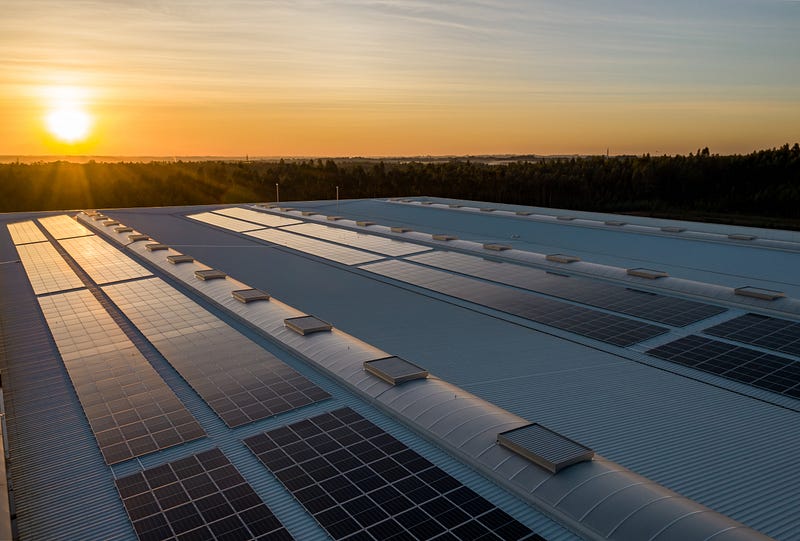
Photo by Nuno Marques on Unsplash


Receiving approval as an innovative financial service

In order to establish such a platform that designates solar power plants as underlying assets, they will jointly apply for a financial regulatory sandbox — a program introduced by the Korean government that offers a special and provisional regulatory exemption for financial services that have been recognized for their innovativeness.

Once the platform is recognized under the sandbox as an innovative financial service, the two companies will work together on the issuance and distribution of security tokens.


Expanding opportunities to invest in solar energy

Ultimately, Solbric aims to build a platform that brings security token technology to the solar power sector, which, until now, has presented limited investment opportunities for individual investors in Korea. It will allow them to trade securities and make small-scale, fractional investments in solar power plants.

To do so, Solbric intends to leverage the knowledge and expertise of its parent company, Next Solar Energy — an experienced veteran in the solar plant industry.

As its partner, Parameta will provide the necessary blockchain technology for constructing and managing the platform based on its security token offering service, Parameta S. This service uses tokens to allow fractional management of real-world assets (RWAs), making it easy to invest in and organize them. This offers more liquidity and flexibility compared to traditional investment methods.

“We will focus on providing investment returns to platform users as well as the unique experience of owning various solar power plants,” said Kang Jae-won, the CEO of Solbric Korea.


Increased institutional support

This project is made possible by the recent upturn in institutional support from Korean financial authorities that allows more security token offerings. Last month, the Korean Financial Services Commission ultimately granted regulatory exemptions to several fractional investment firms that have successfully completed the business reorganization as requested by the regulator. The Financial Supervisory Service has also decided to allow fractional investment businesses to apply for investment contract securities.

Taking advantage of this momentum, Solbric and Parameta plan to continually explore diverse business opportunities to establish their platform.

“We are currently working with various specialized companies, including Solbric, to expand our security token businesses in various fields such as solar power plants, mobility, real estate non-performing loans, carbon emission rights, and electric vehicle batteries,” said Kim Jong-hyup, CEO of Parameta.

More to Read
View All
Policy & Regulation·

Sep 20, 2023

Korean Crypto Expert Claims NFTs and Security Tokens Shouldn’t Be a Priority for Investors Yet

Korean Crypto Expert Claims NFTs and Security Tokens Shouldn’t Be a Priority for Investors YetAlthough there has been a lot of speculation recently regarding the prospects of non-fungible tokens (NFTs) and security tokens as lucrative investment opportunities, these topics should not be of concern yet, said Kim Dong-hwan, CEO of Korean crypto consulting firm Wonder Frame, at Tuesday’s 2023 FNTimes Investment Forum hosted in Seoul by the Korean Financial Times.Photo by Markus Winkler on UnsplashFrom a price-to-earnings perspective, these types of investments should not be of priority to the average investor, Kim said, stating that this argument is rooted in historical context. Bitcoin, the kingpin of cryptocurrencies, had its first breakthrough in 2012 when its price was around $13. Since then, its value has skyrocketed nearly 2,000 times. Those who profited from Bitcoin then went on to invest in Ethereum, the second-largest cryptocurrency by market capitalization. Ultimately, the money earned from Bitcoin was constantly circulating in the crypto market.Grappling for liquidityHowever, Bitcoin’s liquidity — the frequency at which assets are bought and sold, which can be deemed the most important aspect of investing in and trading cryptocurrencies — is currently down. Liquidity in the crypto market usually flows in order from Bitcoin first, to altcoins, then to NFTs, Kim explained, because investments in NFTs are made by people who hold cryptocurrencies, not Korean won. Therefore, NFTs, which have now experienced more than a 90% decline from their peak, must depend on Bitcoin’s price recovery for their own resurgence.Securing liquidity for security tokens is also difficult, considering the fact that while these assets share common characteristics with cryptocurrencies, they are subject to strict regulatory oversight by financial authorities such as the Korea Exchange. Therein lies the difficulty in forecasting the prospects for security tokens.Kim thus questioned whether there would be market makers or liquidity providers that would be willing to boldly step into the role of satisfying the market, given the close scrutiny of authorities such as Korea’s Financial Services Commission (FSC) and Financial Supervisory Service (FSS). Although crypto exchanges like Upbit act as market makers by facilitating daily trading worth trillions of won, speculation suggests that securities firms that are responsible for supplying security token liquidity may find it challenging to do the same.Weak investments and negative perceptions of DeFiAnother concern for security tokens is fractional investments, which tend to be concentrated on assets of lower value. “Security tokens are fundamentally about dividing underlying assets and then selling them. However, in many cases, these underlying assets are of lower value or have no choice but to be traded this way,” Kim said.Kim also mentioned the regulatory hurdles hindering decentralized finance (DeFi) in general, despite its reputed appeal. “DeFi is perceived by international organizations like the Financial Stability Board (FSB), the US Federal Reserve System, and the European Union (EU) as a public enemy that causes financial instability in the real world,” he said.Taking all these factors into consideration, Kim recommended against investing in security tokens or NFTs at this time, given the current situation where even Bitcoin’s liquidity is at an all-time low. He suggested that, with market interest rates approaching 5%, unless there is a specific need to invest in virtual assets, it may be better to explore investment options positioned for higher interest rates.Kim is an industry expert who has previously written articles for crypto news site CoinDesk Korea for four years and has taken on the role of Chief Business Development Officer (CBDO) at Blitz Labs, a virtual asset research firm. He founded Wonder Frame in 2022, where he currently works as a professional consultant.

news
Web3 & Enterprise·

Sep 15, 2023

Viver Boosts Business Expansion with Blockchain Integration

Viver Boosts Business Expansion with Blockchain IntegrationViver, a luxury watch trading platform and subsidiary of Dunamu, which operates the Upbit cryptocurrency exchange in South Korea, is gearing up to expand its business by securing operating funds and implementing blockchain technology to enhance the transparency and security of trades.Photo by Caramel on UnsplashIn particular, designated services in which Viver plans to incorporate blockchain technology include the management of transaction history and the authentication of buyers and sellers, which can be used for watch appraisals and guarantees.“We do not plan to introduce services incorporating blockchain right away this year, but we are exploring ways to bring Dunamu’s strengths in blockchain to Viver,” the platform explained.From acquisition to nurturing growthAfter its establishment in February 2021, Viver was soon acquired by Dunamu, which injected KRW 9.5 billion (approximately $7.2 million) into the company on June 30 of that same year.Since then, the platform has been receiving continued financial support from Dunamu. It received KRW 2 billion in operating funds last year and an additional KRW 5 billion last Wednesday through board approval. In total, Viver has received approximately KRW 16.5 billion in funding from Dunamu over the past two years. “We decided to inject these operating funds to facilitate business growth,” Dunamu explained. The company also filed for trademark rights to Viver in July.This move contrasts with Dunamu’s actions in the first half of the year, where it divested its entertainment subsidiary, rrr Entertainment, for KRW 3 billion and its video production subsidiary, Knowmerce, for KRW 2.7 billion.In its first year of establishment, Viver recorded a net loss of approximately KRW 433 million, followed by a net loss of KRW 3.8 billion in 2022. While it has not yet achieved a turnaround in financial performance, the platform is facing promising outlooks as it has witnessed a substantial tenfold increase in its user base over the past year. Furthermore, since the launch of the service in August last year, the number of products directly listed by sellers as of July this year spiked nearly thirty times, with monthly trade count and transaction volume increasing almost fifteen times.Solid leadership and the beginnings of monetizationViver’s efforts to grow as a commerce service have been led by CEO Moon Jae-yeon and Chief Operating Officer Seo Hee-seon. Moon is known for his expertise in the management of commerce platforms through his experience working at eBay Korea and Coupang. Seo has similarly worked at notable companies such as BGF Retail, Interpark, eBay Korea, and 11th Street.Since Tuesday, Viver has started implementing service fees, signaling its move toward monetization. While transaction fees are still free due to an ongoing promotional event, order management fees are set at 2%, and sellers are now responsible for shipping costs.“Since our platform facilitates brokered trades, there are costs involved in order management, shipping, and our own evaluation and diagnostics processes. We have started charging fees for some of these costs so we could provide an improved trade experience,” Viver explained in regard to these changes.Viver also has its own magazine section, where it recently unveiled a special article for its 100th issue outlining its most popular and expensive high-end timepieces.

news
Web3 & Enterprise·

Mar 14, 2024

OKX scores payment institution license in Singapore

Leading cryptocurrency exchange OKX has acquired an in-principle approval from Singapore’s financial regulatory authority for a Major Payment Institution (MPI) license through its local arm, OKX SG.Photo by Mark Stoop on UnsplashEnabling broader service offeringAccording to a blog post published by the company on March 12, OKX confirmed the receipt of in-principle approval for the coveted license. The MPI license, issued by the Monetary Authority of Singapore (MAS), Singapore's primary financial regulatory body, represents an important step forward for the company. Once granted the full license, OKX will be empowered to offer digital payment token services and facilitate cross-border transfers within Singapore. A plethora of OKX executives took to social media to comment on the achievement. Hong Fang, President of OKX, expressed the company's long-standing interest in Singapore, describing it as a cornerstone of its global strategy. Fang emphasized Singapore's appeal to entrepreneurial ventures, citing its tech-savvy populace as early adopters. She praised the country's regulatory framework as "clear and thoughtful," enabling businesses like OKX to cultivate sustainable growth over the long term. With this regulatory approval, OKX intends to concentrate on bolstering its spot product offerings in the Singaporean market. Fang outlined plans to forge local banking partnerships to enhance customer experiences and expand service offerings in the future. In summarizing the company’s outlook, Fang wrote that OKX is looking to “build locally. Be compliant. Invest long-term.” OKX CEO Star Xu suggested that the firm intends to be a “long-term member of the Singapore fintech community” as a consequence of the approval. Global market expansionThe company’s CMO, Haider Rafique, pointed out that this latest license approval follows hot on the heels of further expansion in venues like Dubai, Argentina and Turkey. The in-principle license approval follows OKX's recent acquisition of a conditional license from Dubai’s cryptocurrency regulatory authority. On Jan. 16, the Virtual Assets Regulatory Authority (VARA) of Dubai granted OKX a license, enabling the exchange to provide regulated services as a virtual asset service provider within the region.On Feb. 27 the firm launched OKX TR, catering to the needs of crypto users in Turkey. In the same month, the company launched its services within the Argentinian market. MPI-licensed entities like OKX enjoy the privilege of facilitating multiple payment services, surpassing volume limitations prescribed for standard payment firms. This flexibility allows OKX to transcend the prescribed limits of three million Singapore dollars ($2.2 million) for individual payment services and a monthly cap of SG$6 million ($4.4 million) for multiple services. Joining OKX in the pursuit of regulatory compliance, BitGo, a prominent crypto custody business, also received an in-principle approval from MAS. BitGo announced on Jan. 10 that it had secured initial approval, subject to fulfilling additional requirements stipulated by the regulator. Several other notable cryptocurrency entities, including Crypto.com, Coinbase and Ripple, have already obtained complete payment institution licenses in Singapore. OKX's attainment of in-principle approval underscores the ongoing drive among market participants towards regulatory compliance and expansion into key markets. The move should help the firm to position itself well for further market growth as the digital assets space continues to progress.

news
Loading