Top

KuCoin Halts Bitcoin and Litecoin Mining Pools Amidst Strategic Shift

Web3 & Enterprise·August 03, 2023, 12:16 AM

In an announcement on Tuesday, Seychelles-based cryptocurrency exchange KuCoin revealed its decision to temporarily suspend its Bitcoin and Litecoin mining pools, effective from 16:00:00 on August 15, 2023 (UTC).
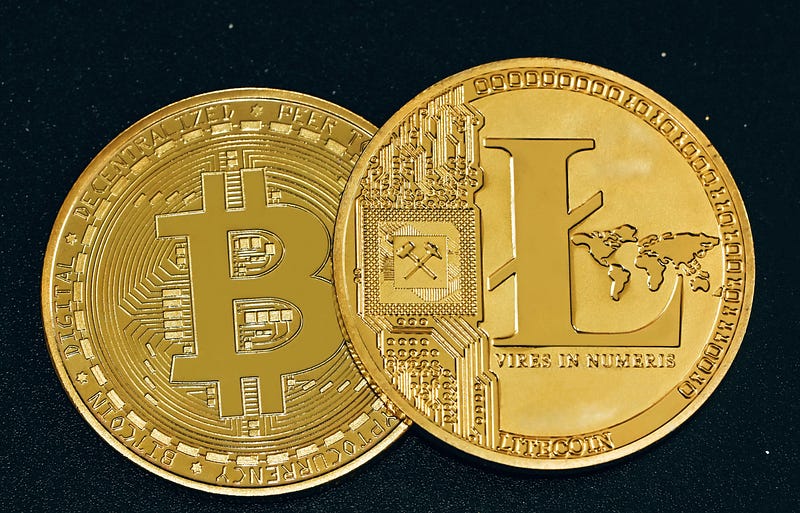
Photo by Traxer on Unsplash


Changing business strategy

This move is attributed to KuCoin’s evolving business strategy, although specific details remain undisclosed. The exchange expressed its regret for any inconvenience caused and extended gratitude for users’ continued support.

It appears that the company wants to focus on core business activities and for that reason, it’s terminating its mining pool activity. That said, the discontinuation was described in its statement as being “temporary” although that has been left open-ended with no indication of if or when it would bring the service back into operation.

The company is open to the idea of revisiting the facilitation of mining pools in the future. “We will see if it is needed to restart based on the market and users’ demand in the future,” a spokesperson for the company told The Block.

To ensure miners’ uninterrupted earnings during the suspension, KuCoin advised users engaged in cryptocurrency mining to transition their Bitcoin (BTC) and Litecoin (LTC) miners to alternative mining pools before the specified suspension date. Additionally, the exchange emphasized the importance of backing up and preserving mining records and related data, recommending users complete these actions before August 27.

Presently, the KuCoin Bitcoin mining pool maintains a hash rate of 9.08 exahash per second (EH/s), while the Litecoin pool operates at 3.90 terrahash per second (TH/s). These figures contribute to the broader hash rate landscape, where the entire Bitcoin network boasts a hash rate of 349.19 EH/s, compared to the Litecoin network’s 792.16 TH/s.


Workforce reduction

It is clear that the company is in the process of adjusting to current market conditions. Last week, rumors surfaced of a plan to effect a workforce reduction. That prompted KuCoin’s CEO Johnny Lyu to respond, clarifying that the exchange’s operations are running smoothly. Dismissing layoff speculation, Lyu highlighted the exchange’s steady expansion and strong growth as demonstrated by the H1 2023 report. The report showcased an increase in users and new listings, underscoring the platform’s vitality and development.


Mandatory KYC

In recent months, KuCoin has also implemented mandatory Know Your Customer (KYC) requirements, obligating users to undergo verification processes. Existing customers who fail to complete KYC procedures will be unable to make deposits. With over 20 million registered accounts, the exchange felt that it needed to improve on its level of regulatory compliance and security measures.

It’s highly likely that an action taken by authorities in New York in the United States in March prompted KuCoin’s decision to tighten up on KYC. At that time, the New York Attorney General said that action was being taken against KuCoin due to its failure to register as a securities and commodities broker-dealer.

As KuCoin undergoes these changes, the suspension of its mining pools raises questions about the broader implications for its business strategy and the potential impact on miners within its ecosystem. That said, the firm is not alone in making changes, with most crypto exchanges having had to adjust to a business and regulatory environment that has changed considerably since the 2021 crypto bull run.


More to Read
View All
Web3 & Enterprise·

Aug 24, 2023

Dunamu’s Luxury Watch Trading Platform Thrives with Blockchain Edge

Dunamu’s Luxury Watch Trading Platform Thrives with Blockchain EdgeViver, a luxury watch trading platform and subsidiary of Dunamu, which operates the Upbit cryptocurrency exchange in South Korea, has been experiencing continued success amidst an ever-growing interest in luxury items as real-world assets and lucrative investment drivers.Photo by Christian Wiediger on UnsplashLeveraging blockchain technology and a showroom experienceThis success can be attributed to the platform’s commitment to taking advantage of Dunamu’s cutting-edge blockchain technology and infrastructure, setting it apart from other luxury platforms and boosting competitiveness in the market.Another major factor is the Viver showroom in Gangnam, southern Seoul, which allows visitors to try on and purchase watches, get their own watches polished and checked, and speak with a professional watch curator.Moon Jae-yeon, CEO of Viver, unveiled plans to surpass global competitors like the US’ Watchbox and Europe’s Chrono24 within five years by growing the app into a global vertical commerce platform focused on luxury watches.Rolex’s finest dominate Viver’s diverse collectionIndeed, Viver has become a popular trading hub for timepiece enthusiasts and investors across the country, and the platform recently revealed in a special article for its 100th magazine issue that its best-selling watch is the Rolex Submariner — a globally renown line of high-end divers’ wristwatches.Different models from the Submariner line have taken up the top three ranks of most sold watches. Coming in first is the Submariner Date in Oystersteel, priced at KRW 16.5 million (approximately $12,500) on Viver, which accounted for 16.5% of total sales. Following close in second place with just two fewer watches sold and a 16.2% share of sales is the Submariner in Oystersteel, which is set apart by its lack of a date indicator. Last but not least, the Submariner Date in Oystersteel and yellow gold took up 13.7% of sales.The watch sold the fastest on the platform was the Rolex Datejust 41 in Oystersteel and white gold. Sporting the iconic Jubilee bracelet and fluted bezel, the timepiece took just a minute and 42 seconds from registration to sale.Though Rolex has evidently claimed its superlative title as the platform’s most popular brand, Audemars Piguet secured its own as the most expensive. The priciest timepiece to ever be sold on Viver is the Royal Oak model for KRW 130 million.Exponential growthThe platform also added four new brands in June — Patek Philippe, Omega, Cartier, and Vacheron Constantin. Consequently, total transaction value, product registrations, and product purchases in July increased by 34%, 116%, and 36%, respectively.As a result of these combined efforts, both monthly trade count and transaction volume on Viver have spiked by more than 15 times since its establishment last August, while the number of users has grown by about 10 times over the past year.The number of products directly registered by sellers also increased by about 30 times compared to the first month since the platform’s launch.

news
Web3 & Enterprise·

Apr 19, 2023

Korean Game Developers to Benefit from Higher NFT Trading Volume

Korean Game Developers to Benefit from Higher NFT Trading VolumeKorean game companies preparing to launch web 3.0 games are expected to benefit from the higher non-fungible token (NFT) trading volume, according to Korean news outlet Financial News.©Pexels/Tony LitvyakA report from decentralized app analytics platform DappRadar states that the NFT trading volume reached $4.7 billion in the first quarter this year, up 137.04% from the previous quarter. This volume is the highest since the second quarter of 2022.This year’s strong NFT market so far is good news for Korean game developers, which were negatively affected by a slowdown in the crypto industry last year due to various factors, including the Terra USD collapse and the bankruptcy of crypto exchange FTX.In fact, many game and content companies are expanding their ecosystems by tokenizing their game items and intellectual property (IP) rights.NexonOne such example is Nexon, the developer of the massively multiplayer online role-playing game MapleStory. Based on its IP rights, Nexon is creating the MapleStory Universe, an NFT-based blockchain ecosystem. The MapleStory Universe will enable trading of NFTs, which users can obtain while hunting or accomplishing quests. Its first major project, a personal computer game named “MapleStory N,” will be launched to attract gamers worldwide.NetmarbleNetmarble, another Korean game company, will launch Modoo Marble 2: Metaworld on Wednesday for global gamers. The popular mobile board game will be rolled out on the MBX ecosystem operated by Netmarble’s blockchain subsidiary Marblex. Participation in the board game and involvement in the Metaworld would allow users to earn Meta Cash as rewards, which can then be swapped for different virtual assets. The trade of buildings and land within the game would likely be facilitated through the use of NFTs.Com2uS HoldingsCultural content company Com2uS Holdings is also making its own efforts to expand its blockchain ecosystem. Its subsidiary Com2uS Platform recently forged a partnership with animation firm Daewon Media to strengthen its NFT business based on Daewon’s popular IP rights.A game industry official said NFT trading can address issues that caused concerns for gamers who doubted the legitimacy and price of items they traded. The official further elaborated that incorporating elements like NFTs and the metaverse would enhance the gaming experience and excitement for gaming enthusiasts.

news
Web3 & Enterprise·

Sep 13, 2023

Korean Securities Firms Unite to Build Shared Security Token Infrastructure

Korean Securities Firms Unite to Build Shared Security Token InfrastructureShinhan Securities, KB Securities, and NH Investment and Securities are gearing up to sign a memorandum of understanding (MOU) later this month to establish a security token consortium, according to South Korean news outlet MoneyToday.Photo by Louie Nicolo Nimor on UnsplashShared infrastructureThe primary objective of this consortium is to create a shared infrastructure for their security token operations. This initiative marks the first instance where the nation’s major securities firms are getting together to set up a security token consortium. Until now, securities companies have typically sought collaborations with banks, fractional investment firms, or blockchain technology companies, showing reluctance to cooperate with their direct competitors over concerns of potential loss of competitiveness.An expert within the securities industry underscored the paramount importance of securing control over the infrastructure, particularly given that the security token market has not materialized. The expert further stated that once a collaborative network is built among the leading securities firms, it is likely to set the standards for the entire market. Meanwhile, the precise details of the plan have not yet been finalized.Challenges in prior initiativesSince the South Korean Financial Services Commission revealed the security token guidelines in February, the securities sector has been deliberating the creation of a shared network that would be accessible to all industry participants. This kind of system is considered ideal as it facilitates flexible expansion and cost efficiency. However, the discussion came to a halt due to conflicts between the Korea Securities Depository, the Korea Financial Investment Association, and fintech firm Koscom.Meanwhile, installing an independent network is not very feasible, given that it not only incurs significant costs upfront but also has limited potential for expansion. This is why these industry leaders devised an alternative strategy in which they can collectively share the financial burden. In addition, Shinhan, KB, and NH plan to explore joint business models with the aim of maximizing the utility of their security token infrastructure.

news
Loading