Top

U.S. crypto fund targets Asian investors for new $800M growth equity fund

Web3 & Enterprise·May 11, 2023, 12:00 AM

Dan Tapiero, the New York-based founder of 1RoundTable Partners and 10T Holdings, is on a mission to raise between $700 million and $800 million for his upcoming fourth fund, with a recent focus on Asian investment interest.

A recent report by Deal Street Asia pointed out that Tapiero has turned his attention to the potential of inward Asian investment, not least through his recent one-week business trip to the region in early December.

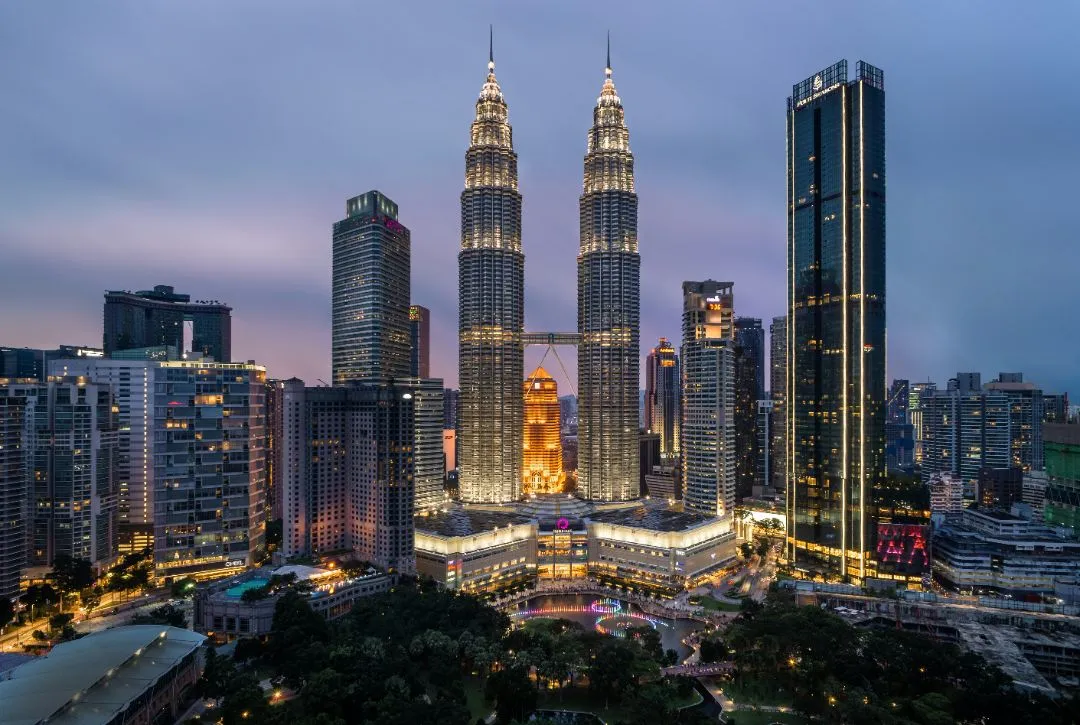
Photo by Towfiqu barbhuiya on Unsplash


Investment vehicles

1RoundTable Partners was Tapiero’s original investment vehicle, positioning itself as a growth equity fund building a portfolio focused exclusively on growth-stage blockchain and crypto projects. 10T Holdings was established more recently, targeting mid to late stage digital asset ecosystem (DAE) firms as part of its equity fund. Earlier this year, 10T was reported by Bloomberg to have $1.2 billion under management while seeking another $200 million in new funding.

10T Holdings has fully deployed its three previous funds, forming a portfolio of 24 active DAE companies, including Gemini, Animoca Brands, Yuga Labs and Deribit. Tapiero’s cautious approach to valuations has been rewarded. He turned down opportunities in FTX and Celsius Network at their peaks prior to both entities failing spectacularly in 2022.


Crypto equity fund resilience

The crypto industry faced challenges, including the collapse of FTX, leading to tighter regulations and reputational damage. Venture investments in the sector saw a decline, with statistics from Galaxy Digital Holdings indicating that Q3 2023’s venture investments were below $2 billion, the lowest since Q4 2020.

Tapiero is undeterred and is actively raising his fourth growth equity fund, focusing on “digital asset ecosystem (DAE) companies.” This fund, managed under 1RoundTable Partners, will primarily invest in mature DAE companies with $40–50 million in annual revenue and a market valuation exceeding $400 million. Tapiero’s strategy of targeting lower-risk, growth-stage opportunities aligns with his hedge fund legacy.


Asian investor focus

Tapiero is actively seeking new investors in Asia for Fund IV, targeting a first close in Q1 2024. His efforts are focused on addressing the lack of growth-stage capital, particularly in Asia, where confidence in digital assets has strengthened due to crypto-friendly regulations.

The veteran macro investor, who founded Gold Bullion International in 2009 prior to turning his attention to the digital assets space, sees a window of opportunity in the secondary market. Having already invested about $660 million through 10T Holdings, he notes that investors may have only a “six-month window” to capture discounted opportunities.

In an interview with Bloomberg earlier this month, Tapiero outlined his view that Q4, 2023 will be the crypto sector’s “best quarter since the bull market.” He added:

“We think that the bear market finished in Q4 2022. We had a sideways move for a while and then in July [2023] things sparked off with Larry Fink’s [BlackRock CEO] comments.”

As Tapiero navigates the crypto landscape with a strategic focus on growth and risk management, his approach appeals to traditional investors, including major pension funds. Fund IV represents a step toward contributing to the ongoing evolution of the digital asset ecosystem. It’s on that basis that the investment industry veteran is targeting Asian limited partnerships (LPs).

More to Read
View All
Web3 & Enterprise·

May 02, 2023

Blockchain Tech Enhances Korean Meat Industry’s Trading System

Blockchain Tech Enhances Korean Meat Industry’s Trading SystemThe Korean meat industry is leveraging blockchain technology to optimize its meat trading system.©Pexels/mali maederOn Tuesday, the MOOxMOO Foundation, a Korean blockchain-driven supply chain management provider, announced its strategic partnership with meat processing company PMD, according to the Maeil Business Newspaper.Inefficient distributionThe partnership aims to enhance the transparency of the meat trading system and address issues of inefficient intermediary distribution, particularly regarding payments, settlements, and deliveries. This goal will be achieved through the foundation’s meat trading platform MOOxDEAL, which will utilize soulbound tokens (SBTs) to verify identities of supply chain participants.Rising meat demandThe OECD-FAO Agricultural Outlook 2022–2031 stated that in 2021, world meat imports are estimated to have reached 40 million metric tons (Mt), with poultry imports leading the way. Brazil, the European Union and the United States were among the top meat exporting countries, meeting a significant portion of the increased import demand.Meat consumption is projected to grow by 15% by 2031, driven by an expected 11% increase in the global population. Global meat supply is projected to reach 377 Mt by 2031, though growth will not be as rapid as the previous decade.The amount of protein available from poultry, pork, and beef is expected to increase globally by 16%, 17%, and 8%, respectively, by 2031, with poultry being the main contributor to overall meat production growth. The majority of meat production growth is set to occur in developing regions.Costs onto consumersDespite increasing global meat production, the unsuitable distribution structure in Korea may shift costs onto consumers.Through the partnership, the MOOxMOO Foundation looks forward to addressing the inefficiencies of intermediary distribution and benefiting consumers. The foundation also envisions its platform contributing to the Korean meat industry by optimizing both business to business (B2B) and business to consumer (B2C) trading.

news
Web3 & Enterprise·

Dec 30, 2023

Japan's Monex acquires majority stake in Canadian crypto firm

Monex Group, a well-known securities broker in Japan’s financial services sector, is delving further into the digital currency space through the acquisition of a majority stake in 3iQ Digital Holdings, a Canadian crypto asset management company. Whilst the acquisition was announced via a joint press release on Thursday, the specific details of the deal were not disclosed.Photo by sebastiaan stam on UnsplashAchieving growth through cryptoYuko Seimei, the CEO of Monex Group, emphasized the long-term strategy of strengthening their asset management business. By incorporating 3iQ into their portfolio, the aim is to achieve substantial growth by catering to the evolving crypto asset management needs of institutional investors and crypto exchanges globally. Monex Group is already a key player in the Japanese crypto landscape, owning the Coincheck exchange. Coincheck is one of the largest cryptocurrency exchanges in Japan. It has regained market dominance after a cyber attack resulting in the theft of $534 million in digital assets in 2018. Monex collaborated with Japanese telecommunications firm NTT DOCOMO in October, forming Monex Securities as a holding company containing Coincheck, while selling NTT DOCOMO a 49% stake. ETF focusThe acquisition of 3iQ marks Monex’s strategic move to extend its exposure to the North American crypto industry. This adds to the conglomerate’s existing presence in the United States through the ownership and operation of TradeStation, an American brokerage firm. 3iQ, operating under a Canadian license, has come to prominence in the crypto-sphere for launching two exchange-traded funds (ETFs) in Canada. Notably, it introduced Bitcoin and Ethereum ETFs on the Toronto Stock Exchange, showcasing innovation in a region where regulatory approval is awaited by U.S.-based companies. Spot bitcoin ETFs have been hotly tipped to offer the next form of crypto adoption, potentially facilitating the in-flow of massive amounts of money currently within the domain of traditional finance. While the focus has been largely on the United States in that regard, other centers such as Hong Kong are similarly gearing up towards offering spot ETF crypto products to both institutions and retail investors. Amid that background, this acquisition by Monex didn’t go unnoticed by ETF sector professionals. Bloomberg Intelligence ETF Research Analyst James Seyffart took to social media platform X on Thursday to draw attention to the deal. Frederick Pye, the Chairman and CEO of 3iQ, expressed enthusiasm about joining forces with Monex Group. With Monex already owning Coincheck, a crypto exchange powerhouse in Japan, Pye highlighted the potential synergy. The collaboration is seen as an opportunity to enhance Coincheck’s offerings, particularly for institutional investors. Pye characterized the partnership as a groundbreaking collaboration that promises to reshape the crypto industry. Monex’s acquisition of 3iQ is aligned with its broader vision of being a key player in the global crypto asset management landscape. The move not only expands their reach into North America but also positions them to capitalize on the growing demands of institutional investors in the evolving digital currency market.

news
Policy & Regulation·

Jun 27, 2025

Hong Kong releases ‘LEAP’ framework for digital assets

The Financial Services and the Treasury Bureau (FSTB), a policy bureau attached to the government of the special administrative region of Hong Kong, has released a new digital assets policy statement, incorporating its “LEAP” framework for the digital assets industry within the city. The document, outlining the government’s objectives and guiding principles relative to the digital assets sector, builds on its first policy statement for the industry which it published in October 2022.Photo by Harry Shum on PexelsA ‘LEAP’ towards an integrated digital assets ecosystemThe FSTB suggests that this new policy statement builds upon foundational initiatives pioneered through the initial policy statement, asserting that “Hong Kong is poised to 'LEAP' towards a trusted, sustainable, and deeply integrated [Digital Assets] ecosystem embedded within the real economy.” The government agency also suggested that this “Policy Statement 2.0” also builds on the “ASPIRe” digital asset regulatory roadmap introduced by the Securities and Futures Commission (SFC) in February, outlining the next phase of digital asset sector development in Hong Kong. Strengthening global hub statusThe government has set out to home in on strategic measures to bring about greater liquidity in digital asset markets and diversify digital asset product offerings, while strengthening the Chinese autonomous territory’s position as a global hub for the digital asset sector. “LEAP” is an acronym for the proposed initiatives that underpin the new framework, including: - Legal and regulatory streamlining- Expanding the suite of tokenized products- Advancing use cases and cross-sectoral collaboration- People and partnership development The framework focuses heavily on the tokenization of real-world assets (RWA), with particular emphasis on bond tokenization. In February 2023, Hong Kong pioneered the issuance of the world’s first-ever tokenized government green bond. Building on that, it now seeks to bring about the regularization of the issuance of tokenized government bonds. The Hong Kong government would also like to see tokenization efforts expanding into “a broader range of assets and financial instruments.” It cited sectors such as precious metals, non-ferrous metals and renewable energy as candidates for tokenization. Promoting tokenized ETFsThe authorities are also encouraging tokenized exchange-traded funds (ETFs), with plans to introduce a stamp duty waiver for these products as an incentive. Additionally, the Hong Kong government is interested in nurturing the development of secondary market trading of such tokenized ETF products, whether that’s through digital asset trading platforms or other channels. The framework considers the further development of stablecoins. The city’s new licensing regimen for stablecoin issuers commences on Aug. 1. The FSTB maintains that stablecoins have the potential “to transform payments, supply chain management, and capital market activities by offering a cost-effective and efficient alternative to traditional systems.” In order to capitalize on this potential, the Hong Kong government, together with the city’s regulators, intends to enable licensed stablecoin issuers in the city “to explore and implement different stablecoin use cases.” Cyberport, a Hong Kong business park and digital technology incubator that hosts in excess of 1,650 startups, will also extend its support through its incubation ecosystem to further the objectives set out in the Hong Kong government’s new digital assets policy statement.

news
Loading