Top

Philippines leading charge in Asia amid global bitcoin payment surge

Markets·January 09, 2024, 2:47 AM

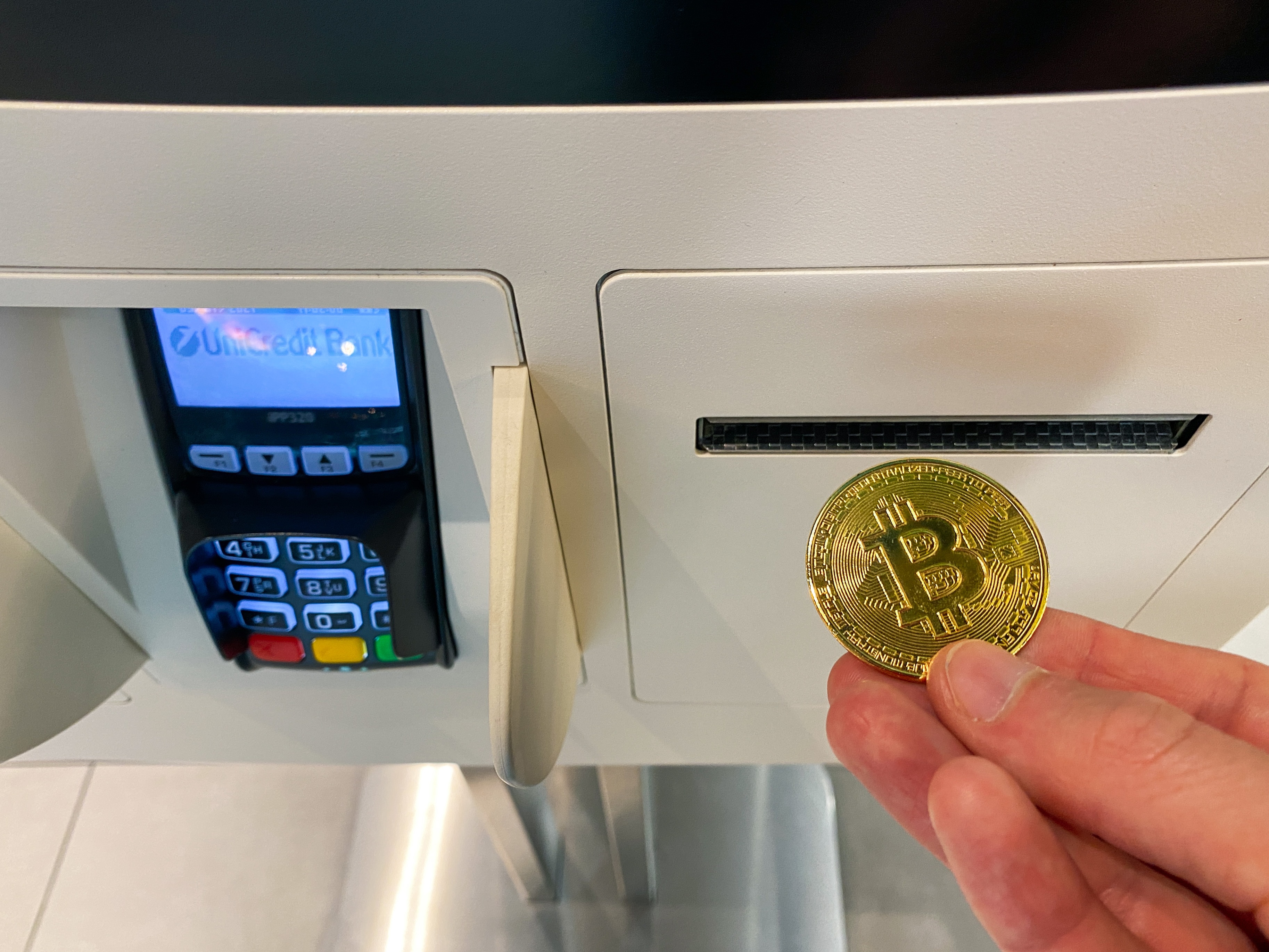
Bitcoin's global merchant acceptance witnessed a substantial surge, growing by 174% throughout 2023, with the Philippines proving itself in leading the way within the Asian region.
https://asset.coinness.com/en/news/062d28d85a56dde233f53ec1f8abcc99.jpg
Photo by rc.xyz NFT gallery on Unsplash

Region facing regulatory restrictions

That’s according to BTC Map, a provider of bitcoin merchant mapping services. The data, derived from BTC Map's open-source mapping data via OpenStreetMap, revealed that the number of venues accepting bitcoin payments surged from 2,207 at the beginning of the year to 6,126 by the year's end. This diverse array of businesses included restaurants, bars, shops and various services.


The expansion of bitcoin vendors is a global phenomenon, with concentrations notably observed in Europe, the United States and Latin America. The Philippines stands out in Asia with hundreds of vendors, while regulatory restrictions in East Asia, especially China, have limited adoption.


While it's great to see a high level of direct adoption among Filipino merchants, it's easy to understand why this level of adoption hasn’t been matched within Asia’s largest market. China has had a long-standing ban on cryptocurrency trading, mining or its use as a means of payment. Despite the ban, it appears that crypto trading is still alive and well in China, although beneath the surface.


With mining too, while the sector shrank considerably once a ban was imposed, there is believed to be a significant ongoing level of bitcoin mining occurring still within China’s borders. However, when it comes to vendors, this is likely to be an activity that is far too visible to the authorities and with that, China’s 1.4 billion citizens are not getting the opportunity to buy goods and services with the world’s leading cryptocurrency.


Compounding matters, the Chinese authorities have been working diligently on a myriad of projects to bring about day-to-day retail use of the country’s central bank digital currency, the digital yuan. Those efforts are not likely to be aligned with an accommodation of or tolerance of bitcoin payments.


The increase in merchant listings showcased a slight decline from the peak in September, which reached 6,590 merchants. BTC Map's platform allows businesses and users to tag locations accepting bitcoin payments, with the rise in numbers potentially attributed to increased user contributions to the database.


This surge in bitcoin adoption globally occurred against the backdrop of the cryptocurrency's price volatility throughout the year. Despite potential limitations in data collection due to its reliance on volunteer contributions, the overall trend indicates a growing acceptance of bitcoin.


Ongoing challenges to adoption

A panel of bitcoin leaders at the Plan B conference in October discussed the challenges and opportunities of global bitcoin adoption. Notably, they highlighted the difficulty of onboarding new users and merchants, particularly in diverse cultural contexts. In El Salvador, where bitcoin is legal tender, obstacles persist in convincing merchants to accept bitcoin payments.


Geographically, concentrations of bitcoin-accepting vendors were more prevalent in Central and South America, while Africa and Asia demonstrated fewer such establishments. The United States and Europe led in the global count of crypto-friendly merchants.


The panel stressed the importance of education in overcoming these challenges, emphasizing the need for user-friendly applications to facilitate mainstream adoption, moving away from complex technologies. As bitcoin continues its global expansion, the industry recognizes the vital role education and user-friendly solutions play in fostering broader acceptance.


 

More to Read
View All
Web3 & Enterprise·

Sep 27, 2023

Binance Explores Stablecoin Issuance on MUFG Progmat Coin Platform

Binance Explores Stablecoin Issuance on MUFG Progmat Coin PlatformMitsubishi UFJ Trust and Banking Corporation (MUTB), the trust arm of Japan’s largest bank, Mitsubishi UFJ Financial Group (MUFG), has announced a collaborative effort with Binance Japan to investigate the issuance of public blockchain stablecoins denominated in Japanese yen and other currencies.Photo by Aditya Anjagi on UnsplashProgmat blockchain platformAccording to a press release published on Tuesday, the development is centered around MUFG’s Progmat blockchain tokenization platform, which encompasses the Progmat Coin stablecoin platform. Notably, Progmat now counts among its stakeholders some of Japan’s major financial institutions, including the second and third largest banks, SMBC and Mizuho.The scope of this venture extends beyond the confines of Japanese users, potentially transforming Japan into Binance’s stablecoin issuance hub. The initiative has emerged against the backdrop of recent regulatory events in the United States, notably the New York State Department of Financial Services (NYDFS) instructing Paxos Trust to halt the issuance of the Binance USD (BUSD) stablecoin earlier this year. The timeline for the launch of Japanese Binance stablecoins is set for 2024, contingent upon Binance Japan obtaining an Electronic Settlement Methods Transaction Business Provider license.Japan has been making strides in its regulatory landscape to accommodate various types of stablecoins, including those issued by banks and trusts. Under this framework, stablecoins issued by trusts like Mitsubishi UFJ Trust enjoy some unique advantages, such as exemption from licensing requirements and the absence of Know Your Customer (KYC) protocols for stablecoin transfers. Furthermore, these stablecoins are backed by ring-fenced reserve assets, mirroring the approach taken by Paxos Trust.The underlying Progmat blockchain technology is rooted in the Corda enterprise blockchain. However, MUFG has been actively collaborating with DataChain and TOKI technology to facilitate stablecoin issuance on multiple public blockchains, allowing for cross-chain transfers. The initial plan encompasses blockchain platforms like Ethereum, followed by Cosmos, Polygon, Avalanche, and others. This development raises questions about the potential elevation of Binance’s BNB Chain in the broader blockchain ecosystem.Tatsuya Saito, Founder and CEO of Progmat, remarked on the collaboration, stating:“We believe that the new stablecoin from this collaboration will be a step forward in advancing the Web 3.0. Progmat is a neutral infrastructure that enables the issuance of various brands of stablecoins with the greatest flexibility of use and the least risk of de-pegging, it does not compete with players issuing their own stablecoins.”Saito also hinted at other stablecoin projects in the pipeline with Japanese financial institutions and partners, underscoring Binance’s dominant position in the cryptocurrency trading world.Expanding presence in JapanBinance Japan, which recently acquired an existing crypto exchange and rebranded it as Binance Japan, currently lists 34 tokens. In addressing the WebX conference in July, Binance Founder and CEO Changpeng Zhao (CZ) recognized the positive regulatory environment that exists in Japan relative to Web3.From Binance’s perspective, this latest collaboration represents a substantial win, especially after the loss of its own stablecoin. Binance has been promoting lesser-known stablecoins on its exchange by reducing transaction costs, a strategy with inherent risks. In contrast, the alliance with MUFG, a globally significant bank, adds credibility and a different level of assurance to stablecoins.

news
Policy & Regulation·

Feb 09, 2024

Settlement approved but sealed by judge in BlockFi-3AC case

A settlement agreement between failed crypto lender BlockFi and bankrupt Singaporean crypto hedge fund Three Arrows Capital (3AC) has received approval from a U.S. judge. However, the specifics of the settlement remain sealed, citing concerns raised by yet another failed crypto platform, FTX. Dispute resolvedDuring a hearing on Feb. 6, New Jersey Bankruptcy Court Judge Michael Kaplan resolved the dispute, which saw BlockFi claiming $129 million owed by 3AC, while the Singapore-based firm contended that BlockFi owed it $280 million. Judge Kaplan's decision to keep the settlement agreement sealed stemmed from a perspective that unsealing it would be counterintuitive. BlockFi had filed a motion to seal the settlement terms last month. The U.S. Trustee objected to the seal, asserting that the debtors hadn't provided sufficient justification for sealing the agreement.Photo by mk. s on UnsplashSensitive settlement termsBlockFi justified the need for confidentiality, citing the sensitive commercial nature of the terms, which could potentially impact ongoing litigation involving FTX. The approval of the settlement now paves the way for BlockFi to proceed with distributions from the lending estate to its 100,000 creditors, with the firm owing up to $10 billion. Central to the dispute were preferential payments, transactions made just before bankruptcy that could have given the recipient more than they would have received through court proceedings. The resolution of counterclaims between BlockFi and 3AC follows mediation ordered by Judge Kaplan in October, likely culminating from a two-day hearing starting on Jan. 5 aimed at resolving the matter conclusively. This settlement follows another agreement between 3AC and Genesis, settling $1 billion in claims by 3AC. The company filed for bankruptcy in July 2022, attributing the extreme fluctuations in cryptocurrency markets as the reason for its collapse. Projected 46% 3AC creditor recoveryAccording to a December report to creditors by Teneo, it's estimated that 3AC creditors will receive approximately 45.74% of their claims from the bankrupt estate. As of Dec. 18, 2023, 3AC's assets were valued at $1.16 billion, while recognized claims for distribution stood at $2.7 billion. In an ongoing effort to secure 3AC's assets, a British Virgin Islands (BVI) court froze $1 billion in assets belonging to 3AC's founders, amid the liquidation process. This move is part of a broader strategy to seek recoveries from the founders and Kelly Chen, wife of one of the co-founders. 154 claims totaling $3.4 billion were filed against the 3AC estate, with $200 million not admitted for distribution and $322 million rejected or expected to be rejected. Additionally, claims worth $76 million are currently under dispute. BlockFi, along with eight affiliates, filed for Chapter 11 bankruptcy in November 2022. The firm cited significant exposure, including obligations owed to BlockFi by FTX-linked hedge fund Alameda Research, assets on the FTX platform and an undrawn credit line from FTX. 3AC’s collapse in June 2022, followed by FTX's downfall, led to BlockFi's bankruptcy filing in late November 2022. In a separate development, OPNX, a crypto bankruptcy claims platform launched by 3AC co-founders Su Zhu and Kyle Davies, announced its cessation of operations, with plans to shut down by Feb. 14.  

news
Markets·

Dec 13, 2023

Creditcoin listed on Upbit

Creditcoin listed on UpbitCreditcoin (CTC) — an ERC20 token issued on the Creditcoin Network — was listed on South Korea’s largest cryptocurrency exchange Upbit on Tuesday evening (KST), according to an official announcement on the Upbit website.Photo by Maxim Hopman on UnsplashThe token was initially listed on Upbit’s BTC trading market, then on the Korean won-denominated market (CTC/KRW) trading market shortly after. In the announcement, the exchange clarified that it can only be deposited through the Ethereum network and not others like BNB Smart Chain (BSC).Major growthUpbit is the third Korean exchange that CTC has been listed on after Bithumb and Gopax. “Through this listing on Upbit, we expect that CTC’s liquidity will be boosted significantly since it will be traded in a broader market,” said Gluwa, the developer of the Creditcoin Network. Notably, the token’s price jumped 171.14% in just a day following the listing. It is currently $0.64 as of this writing, according to CoinMarketCap.Revolutionizing RWA investmentsCTC tokens power the Creditcoin Network’s global real-world asset (RWA) ecosystem, which functions as a platform for connecting investors and fundraisers. Fundraisers initiate offers on the network, which are pegged with CTC, and investors can choose which offers to invest in based on assessing the risk by examining the fundraisers’ decentralized and public credit history. In this process, blockchain technology plays an important role by facilitating direct contact between fundraisers and investors, building a sustainable cryptocurrency ecosystem and allowing users to share credit history without disclosing personal information to centralized institutions or intermediaries.Since its major Creditcoin 2.0+ mainnet update that transitioned the protocol from a proof of work (PoW) to a fully nominated proof of stake (NPoS) consensus model, Creditcoin has experienced an increase in the number of network participants and the amount of staked CTC.

news
Loading