Top

Hong Kong’s SFC bolsters investor protection with new insurance mandate

Policy & Regulation·January 31, 2024, 1:57 AM

In an effort to fortify the cryptocurrency market and safeguard investors' funds, the Hong Kong Securities and Futures Commission (SFC) has introduced a minimum insurance requirement of 50% for licensed cryptocurrency exchanges handling customers' assets.

https://asset.coinness.com/en/news/1ac833b35b6d189644c7ccc7bf991b3e.webp
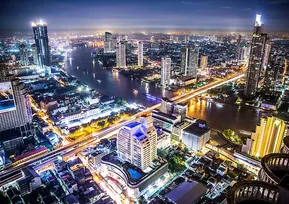
Photo by Simon Zhu on Unsplash

Guarding against insolvency risk

The move came to light through a statement published recently by OSL, one of Hong Kong’s licensed virtual asset trading platforms. It’s aimed at enhancing security measures, protecting users from potential security breaches or insolvency.


As part of that disclosure, OSL announced a two-year partnership with Canopius, an underwriter syndicate associated with Lloyd's of London. Under this collaboration, OSL will provide insurance coverage for an impressive 95% of its users' assets, surpassing the mandated 50%.


OSL emphasized its commitment to safeguarding regulated assets under custody, irrespective of the regulatory guidelines permitting virtual asset service providers (VASPs) to reduce insurance coverage to 50%.


Response to recent failures

This decision is grounded in the acknowledgment of the volatile market conditions and the series of cryptocurrency firm collapses witnessed in recent years. 2022 saw a number of high-profile crypto platform collapses, such as the demise of FTX.


HashKey Exchange, another licensed crypto exchange in Hong Kong, has also proactively secured its users' assets by entering into a crypto insurance agreement with Hong Kong headquartered fintech firm OneDegree back in September. The insurer entered the digital assets space last July, expanding into the Middle East last month.


OneDegree’s arrangement with HashKey offers coverage ranging from $50 million to $400 million, extending beyond standard security breaches and insolvency to include server downtime, data back-up and load management incidents, ensuring comprehensive protection.


Broader regulatory efforts

The minimum insurance requirement is part of the SFC's larger strategy to regulate the cryptocurrency industry in Hong Kong. While the Chinese autonomous territory enabled cryptocurrency trading for retail investors in August, only OSL and HashKey have obtained virtual asset trading licenses. Thirteen other entities are currently in the application process, undergoing rigorous due diligence checks, including comprehensive financial audits exceeding the scope beyond proof-of-reserve systems.


This insurance mandate represents a significant step toward enhancing investor confidence in the cryptocurrency market. As digital assets gain popularity, ensuring the security of customers' funds has become paramount. The SFC's proactive approach seeks to strike a balance between fostering innovation and safeguarding investors.


Products are also emerging that crypto users themselves can access. UK-based CryptoShield offers insurance protection directly to users that covers potential loss of funds on crypto platforms.


The cryptocurrency landscape in Hong Kong is evolving rapidly, with the SFC playing a pivotal role in shaping the regulatory environment. Regulators aim to establish a robust framework addressing potential risks and protecting market participants while embracing digital innovation.


As the regulatory landscape matures, more licensed crypto exchanges in Hong Kong may be required to meet the 50% minimum insurance requirement, further strengthening security measures and making the market a safer place for investors.



More to Read
View All
Markets·

Dec 01, 2023

Coinone’s recent addition of USDT/KRW trading pair expected to reduce Kimchi premium

Coinone’s recent addition of USDT/KRW trading pair expected to reduce Kimchi premiumCoinone, a major South Korean cryptocurrency exchange, listed USDT, a stablecoin pegged to the US dollar on the platform’s Korean won-denominated market on Thursday (local time). Its listing price was KRW 1,289.Tether Limited, the company behind USDT, asserts that their stablecoin is “backed 100% by Tether’s reserves.” These reserves comprise a variety of real-world assets such as U.S. Treasuries, overnight reverse repurchase agreements, corporate bonds and precious metals. According to CoinMarketCap, USDT’s market capitalization stands at $89 billion, ranking it third in the cryptocurrency market, just behind Bitcoin and Ethereum.Photo by DrawKit Illustrations on UnsplashFirst to list USDT/KRW trading pairDespite the significance of USDT in the cryptocurrency market, Korean exchange users have faced the limitation of not being able to purchase the stablecoin using Korean won, although these exchanges did offer markets denominated in USDT. This limitation has prompted Koreans to turn to foreign cryptocurrency services for acquiring USDT. With Coinone’s latest move, the platform has become the first to facilitate USDT/KRW trading among the nation’s five fiat-to-crypto Korean exchanges — Upbit, Bithumb, Coinone, Korbit and Gopax.Regarding this development, Kwon O-hoon, Managing Partner at the law firm Cha and Kwon, told local news outlet Decenter that there seem to be no particular legal concerns with the crypto exchange’s engagement in USDT transactions. This perspective stems from the absence of stablecoin regulations in the country.Reducing the Kimchi premiumAccording to Decenter, crypto experts anticipate that the introduction of USDT/KRW trading will help in reducing the Kimchi premium, a term referring to the discrepancy in cryptocurrency prices on South Korean exchanges compared to those in foreign exchanges.For instance, according to data from CoinNess, the average price of BTC on Korean exchanges is around KRW 51,177,250. This is about 2.34% higher than its average price on foreign exchanges, which stands at KRW 50,005,909. This difference means that users on Korean exchanges need to pay an additional KRW 1,171,340 to buy one BTC, compared to what they would pay on international platforms.However, the newly added trading pair will streamline transactions between exchanges, making it simpler for investors to engage in arbitrage. This ease of transfer is expected to lead to more balanced pricing across different markets, reducing the Kimchi premium.In light of this development, Jo Dong-hyeon, CEO of blockchain company Undefined Labs, said various institutions and blockchain projects will likely find USDT increasingly useful as a store of value, given USDT facilitates easy transfers between different exchanges.

news
Policy & Regulation·

Aug 26, 2023

Hong Kong Regulator Explores Tokenization to Transform Bond Market

Hong Kong Regulator Explores Tokenization to Transform Bond MarketThe Hong Kong Monetary Authority (HKMA), the local regulator within the Chinese autonomous territory, unveiled the outcomes of its Project Evergreen study on Friday. Within the report, it indicated an interest in harnessing tokenization in order to improve aspects of the bond market.Photo by Jimmy Chan on PexelsBond market impact assessmentIn this comprehensive report, the regulator delved into the intricate world of bond tokenization, offering an in-depth assessment of its potential impact on the market. The 24-page report covers a range of insights, spanning use cases and benefits to the challenges encountered during the study. The overarching sentiment emerging from the study paints tokenization as a compelling avenue for enhancing the bond market’s functionality.Eddie Yue, the Chief Executive of HKMA, emphasized that the study underscored the latent potential of integrating distributed ledger technology (DLT) into real capital market transactions, all within the framework of Hong Kong’s existing legal structure. In addition, the research revealed the prospect of DLT elevating efficiency, transparency, and liquidity within bond markets.Highlighting efficienciesThe report highlighted that the digital nature of tokenized bonds has the power to render paper certificates obsolete, ushering in an era of streamlined processes and diminished errors. Moreover, the study emphasized the capacity for various stakeholders to seamlessly interact via a shared DLT platform, fostering an environment of collaboration. Real-time data synchronization would ensure heightened transparency, a crucial factor in modern financial markets.Furthermore, the report identifies that a standout feature of tokenization lies in atomic delivery versus payment (DvP) settlements for bond transfers. This innovation serves to significantly expedite the settlement process while bolstering the case for end-to-end DLT adoption.That said, the report acknowledges the nascent state of bond tokenization. Yue emphasized that a plethora of challenges must be overcome before mass adoption becomes viable. The HKMA official underscored the necessity for regulatory frameworks to evolve alongside technology adoption.These insights arrive at a time when Hong Kong is carving its niche as a haven for crypto and decentralized finance endeavors. A multitude of enterprises are believed to be queuing up for a coveted Hong Kong crypto license, underscoring the city’s rising stature in the digital finance sphere.July saw Hong Kong’s announcement of a partnership with Saudi Arabia, focusing on tokenization and payments. Additionally, the HKMA is actively exploring the establishment of a regulatory framework for the digital Hong Kong dollar and stablecoins, heralding a commitment to the distributed ledger technology (DLT) application. An imminent seminar with industry stakeholders is planned, aimed at introducing DLT technology and fostering its adoption.Arthur Chan, HKMA Assistant Chief Executive, anticipates wider DLT integration, envisioning reduced settlement times for bond issuances and instantaneous settlement through tokenized cash and smart contracts. He acknowledges the evolving nature of DLT platforms, acknowledging the need for further research and development. However, Chan envisions a future where tokenization extends beyond bonds, potentially encompassing securities, real estate, and mortgage products.

news
Web3 & Enterprise·

Sep 02, 2023

OKX Entering Indian Market With a Focus on Web3

OKX Entering Indian Market With a Focus on Web3Cryptocurrency exchange OKX is gearing up to make its presence felt in the Indian market.Local recruitmentThat’s according to a discussion between a company executive and CoinDesk, as explained by the publication in a report published on Friday. The firm plans on recruiting local employees in its endeavor to conquer the market within the world’s most populous nation.OKX intends to rely on local employees who will spearhead its initiatives in the country. Haider Rafique, Chief Marketing Officer at OKX explained:“We’re trying to identify who’s who in the zoo and what is their contribution. There’s a large developer community. How do we help them? Build a relationship with them.”He believes that adopting a community-centric approach will pave the way for a successful entry into the local market. Rafique emphasized:“We’re going to learn about the community. We’re going to work with local folks — figure out where we can add value.”Photo by Naveed Ahmed on UnsplashFocusing on Web3 applicationsThe company also intends to take on the challenge by placing emphasis on the use of Web3 applications. Rafique revealed the company’s ambitious plans to scale up its wallet services “exponentially” by engaging with India’s developer community. Currently, there are approximately 200,000 OKX Wallet users in India, accounting for just 5% of the country’s Web3 user base.In a recent collaboration, OKX partnered with the blockchain platform Neo for an APAC Hackathon held in Bengaluru, a city in southern India. Rafique described this move as a strategic test to validate assumptions, understand the local culture, and support the burgeoning Web3 ecosystem.The global exchange already has a physical presence in world centers such as Hong Kong, Singapore, Dubai, and the Bahamas.Indian crypto environmentTrading cryptocurrencies is currently legal in India, albeit with no established regulatory framework by a central authority. Ironically India has been very active in working towards the establishment of global regulatory standards relative to crypto while coming in for criticism from its Supreme Court recently for the government’s failure to provide regulatory clarity at home.Cryptocurrencies are used and traded at the investor’s risk in India and do not hold legal tender status for banking purposes. Additionally, a 30% tax is imposed on cryptocurrency transactions in the country.Rafique believes that Indian regulators are gradually distinguishing Web3 from centralized finance (CeFi). He remarked: “They’re more concerned about venues that have fiat on-ramps, which we do but don’t offer it in India.” He expressed a readiness for the company to become a front-runner once India establishes a regulatory framework for cryptocurrencies.It’s interesting to note that while OKX embarks on expanding its footprint within the Indian market, Indian crypto market incumbents have been looking to downsize. Indian cryptocurrency exchanges like CoinSwitch and CoinDCX have faced layoffs amid the current market downturn.Notwithstanding current market conditions, it’s likely that OKX is taking a long-term view and positioning itself for future success in what should be a very important crypto asset marketplace in the future.Ryan Selkis, CEO and Founder of crypto market intelligence firm Messari expressed this view, stating: “I love to see companies like OKX expanding in India. The largest democracy in the world should be a haven for crypto innovation in the years to come.”

news
Loading