Top

Hong Kong’s PCPD investigates Worldcoin over privacy concerns

Policy & Regulation·February 02, 2024, 1:43 AM

On Wednesday, the Office of the Privacy Commissioner for Personal Data (PCPD) in Hong Kong launched investigations at six premises controlled by Worldcoin, the biometric cryptocurrency project established by Sam Altman, the CEO of OpenAI.


Potential personal data privacy risks

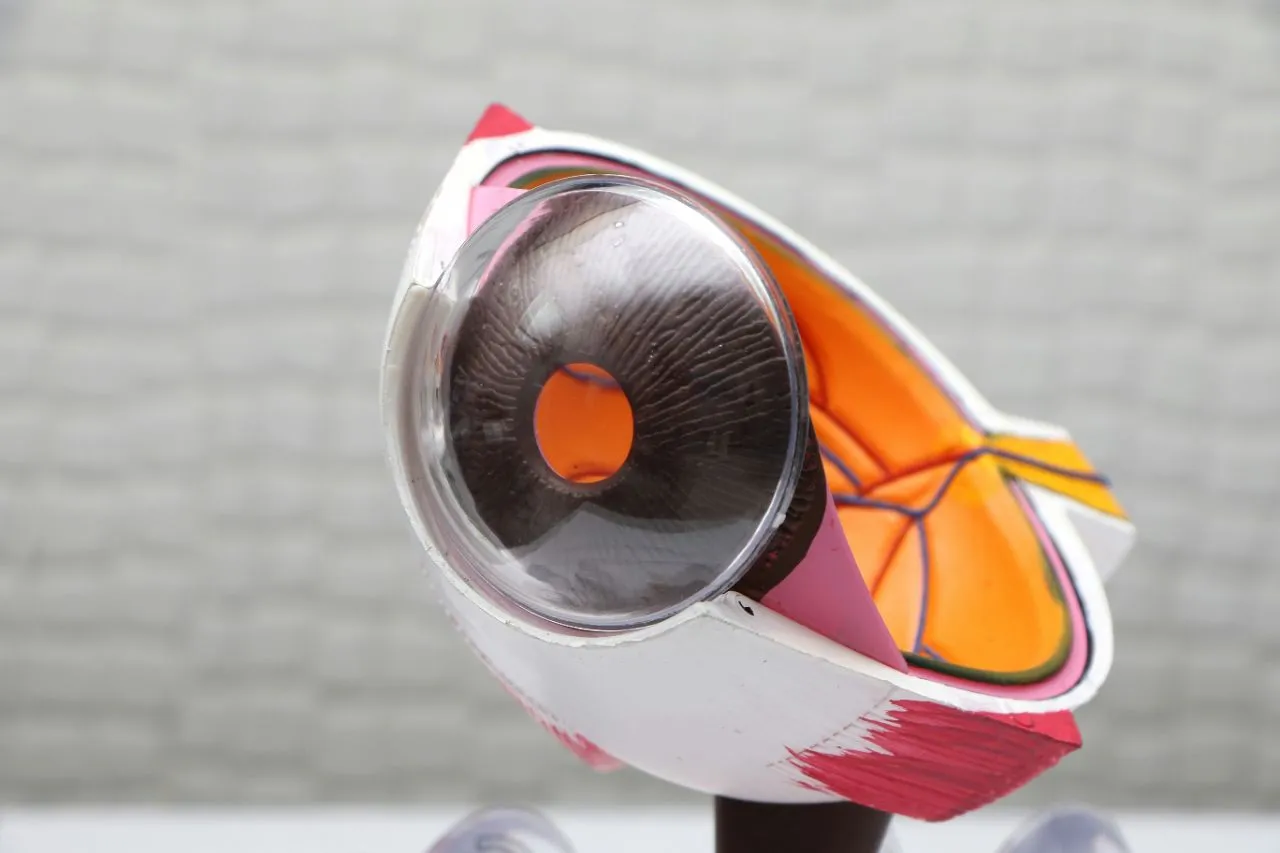
In a statement, the Privacy Commissioner expressed serious concerns about potential risks to personal data privacy. The PCPD executed warrants as part of the inquiry into Worldcoin's identity verification project, particularly focusing on the use of iris-scanning orbs for identity verification.


The PCPD urged Hong Kong residents to consider the implications of Worldcoin's biometric data collection and emphasized the importance of evaluating the legitimacy of such data collection.


The Commission also advised individuals to inquire about the purpose of data collection, the intended use of the data, the classes of entities with access to the data, the retention period of biometric data and the safety measures implemented to protect sensitive information.


"The PCPD is concerned that the operation of Worldcoin in Hong Kong involves serious risks to personal data privacy, and believes that the collection and processing of sensitive personal data by the relevant organization may be in contravention of the requirements of the Personal Data (Privacy) Ordinance," stated the privacy watchdog.


The Commission highlighted that any personal data controlled by Worldcoin must be collected for a lawful purpose related to the project's function or activity, with the information collected from users' irises deemed sensitive according to regulatory guidelines.
https://asset.coinness.com/en/news/53d725996c651f25b6c9dfbe2e3f2800.webp
Photo by Harpreet Singh on Unsplash

Global scrutiny

Worldcoin, which commenced operations in 2021 and officially launched in July 2023, has faced regulatory scrutiny in various countries due to privacy concerns. As of December 2023, Worldcoin reported that over 5 million people had created accounts using their identities.


However, the project's approach to identity verification through iris scanning has triggered investigations and actions by regulators. Notably, the project suspended services in Kenya and halted iris scans in India in response to regulatory challenges. 


The company’s activities in the French and Brazilian markets have been suspended. Last year the UK’s Information Commissioner’s Office said that it would make further enquiries into the company’s activities. Meanwhile, the German data watchdog has been investigating Worldcoin since 2022.


In an effort to clarify the efforts the company is making to achieve compliance across international jurisdictions where data privacy is concerned, Worldcoin recently published a blog post on the subject. Within it, the company states that it “is designed to be fully compliant with all laws and regulations governing data collection and data transfer."


Despite its ongoing regulatory challenges, Worldcoin CEO Alex Blania remains steadfast in advancing the project's mission, stating recently:

"We race toward billions of users as fast as we possibly can." 


The project closed out 2023 by expanding into Singapore.


The privacy concerns surrounding Worldcoin underscore the growing importance of balancing technological innovation with robust data privacy regulations to ensure the protection of individuals' sensitive information.


More to Read
View All
Web3 & Enterprise·

Sep 05, 2023

Hashed CEO Emphasizes South Korea’s Potential to Lead Mass Adoption of Web3 in Asia

Hashed CEO Emphasizes South Korea’s Potential to Lead Mass Adoption of Web3 in AsiaSimon Kim, CEO of Asian blockchain investment firm Hashed, highlighted South Korea’s potential to pioneer the mass adoption of Web3 during his keynote speech on Tuesday at Impact, the main conference of Korea Blockchain Week 2023 held at the Shilla Hotel in Seoul.“Korea possesses the strength to lead despite its small size,” he said. “The country will serve as the turning point for Web3.”Photo by Daniel Bernard on UnsplashTech trailblazerKim elaborated on the unique characteristics of Korea’s Web3 ecosystem, citing the so-called “kimchi premium” phenomenon, where cryptocurrencies in Korea are valued higher than other global exchanges, as well as the country’s role in leading altcoin price fluctuations and bull markets.Furthermore, Korea also has one of the world’s fastest and most widespread high-speed Internet networks, with nearly 100% coverage and a smartphone penetration rate exceeding 97%.According to Kim, digital natives are the driving force behind many inventions that have marked the country as a longstanding hub of innovation and digitization. Among these inventions is the world’s first online game, The Kingdom of the Winds, and the world’s first avatar-based social platform Freechal, as well as the pioneering e-sports league StarCraft League and game item trading platform itemBay.In particular, Freechal can be deemed as a forerunner to the current trend of using non-fungible tokens (NFTs) as profile pictures on social media. itemBay also serves as the precursor to both virtual asset and NFT exchanges. These types of early ventures are inextricably linked to the rise of cryptocurrency exchanges.Kim went on to underscore Korea’s prowess in the gaming industry, mentioning popular games like Dungeon Fighter Online, MapleStory, and PlayerUnknown’s Battlegrounds (PUBG). He noted that many local game developers have already established Web3 studios and are actively preparing to transition to the world of Web3 gaming. The K-pop industry has also been incorporating Web3 technology in various projects.Merging hemispheresHashed has been actively investing in projects since 2016, with over 150 projects in its extensive portfolio. Of these projects, approximately 71% of those based in Western countries are related to infrastructure, while 67% of those based in Eastern countries are related to digital content and apps. The company ultimately aims to serve as a bridge connecting the East and West by acting as a network builder to facilitate this exchange, Kim said.

news
Web3 & Enterprise·

Aug 17, 2023

Monthly Active Users of Binance in South Korea Surpasses 230,000

Monthly Active Users of Binance in South Korea Surpasses 230,000The monthly active user (MAU) count for the virtual asset exchange app Binance has surpassed 230,000 in South Korea, according to a recent analysis reported by local news outlet Etoday. This places Binance as the fourth-largest exchange in terms of user base, following more prominent local won-denominated exchanges Upbit, Bithumb, and Coinone.Photo by Vadim Artyukhin on UnsplashSoaring numbersAccording to data from the insights platform Mobile Index, the MAU for the Binance app in Korea averaged 230,965 users from February to July this year. Starting from 238,487 users in February, the number peaked at 240,000 in April, followed by a slight decrease to 219,010 in June and 215,743 in July. These figures significantly outpace the 131,799 average for Korbit and 36,123 for Gopax, recorded over the past six months.The abundance of users is also reflected in the app’s high trading volume in Korea. In May this year, Binance reportedly accounted for around $58.3 billion in trading volume from Korean users, representing approximately 13% of the total trading volume, according to the Wall Street Journal. This makes Korea the app’s second-largest market after China in terms of trading volume.These statistics are notable considering the fact that Binance does not support won-denominated trading nor has a Virtual Asset Service Provider (VASP) license for Korean operations. They can thus be attributed to the availability of futures trading, which is not offered by local exchanges. According to the Journal, futures trading accounts for 98% of the transactions conducted by Korean users.Regulatory validationMoreover, Binance is registered on the travel rule whitelists of three of the country’s largest exchanges: Upbit, Bithumb, and Coinone. This travel rule regulation was put into effect last year, requiring financial institutions to share data on cryptocurrency transactions.Being whitelisted means that users of the aforementioned exchanges can easily make trades on Binance after completing Know Your Customer (KYC) identification procedures.Each exchange follows its own criteria to add virtual asset service providers to its whitelist, allowing only whitelisted entities to send and receive transactions.Industry experts claim that this is yet another depiction of just how lucrative Korea’s crypto market is, as is the case with the significant trading volumes recorded by domestic exchanges. This is likely driving the active efforts of foreign exchanges, including Binance, to penetrate the market.Binance’s ongoing regulatory challengesEarlier this year, Binance acquired a majority stake in Streami, the operator of Korea’s KRW-to-crypto exchange Gopax, aiming to solidify its presence in the Korean market. Following this acquisition, Streami underwent leadership transitions that saw Lee Joon-haeng step down, making way for Binance’s APAC head Leon Sing Foong. Subsequently, the leadership baton was passed to Lee Joong-hoon, the former Vice President of Gopax.For these shifts in leadership, Streami submitted reports to the Financial Intelligence Unit (FIU) under the Korean Financial Services Commission (FSC) to inform the regulatory body about changes in company representatives. However, despite these notifications, the financial regulator has not yet granted its approval, likely influenced by the ongoing legal challenges Binance is facing in multiple jurisdictions, including that of the United States.In a seeming effort to address this regulatory impasse, Streami has recently decided to undergo yet another change in its CEO position. This marks the third leadership alteration within a span of six months. Meanwhile, the identity of the incoming CEO is yet to be disclosed.Oscillating trends of growth and declineIn related news, Mobile Index also reported that Upbit had the highest MAU among virtual asset exchange apps in Korea. From February to July, Upbit averaged an MAU count of 3,280,746, surpassing the 1,005,432 average for Bithumb, marking a threefold difference. Coinone’s average MAU during this period was calculated at 316,277.However, over the same six-month period, all won-denominated exchanges except for Korbit experienced a decline in MAU. Gopax witnessed a 22.3% drop from 42,556 users in February to 33,059 users in July. This was followed by 20%, 14.8%, and 6.8% declines for Coinone, Bithumb, and Upbit, respectively. Binance also experienced a 9.5% dip.In contrast, Korbit saw a 16.5% increase, rising from 118,816 MAU in February to 131,799 in July.

news
Web3 & Enterprise·

Sep 11, 2023

UAE’s Royal Office Visits Korea to Further Security Token Collaboration with AIITONE

UAE’s Royal Office Visits Korea to Further Security Token Collaboration with AIITONEAIITONE, a Korea-based augmented reality firm specializing in security tokens, invited journalists to showcase its strategy to foster business collaborations between South Korea and the United Arab Emirates (UAE) on the occasion of the Korean visit of the Private Office of His Highness Sheikh Ahmed Bin Faisal Al Qassimi.Photo by Ethan Brooke on UnsplashPrivate Office’s return visitThe Private Office is a Dubai-based corporate conglomerate that operates businesses in various areas including real estate, energy, and finance. This visit by the Private Office marks a return visit following AIITONE’s visit to the UAE in July.The conference took place at a hotel in Gangnam, Seoul, and was attended by Lee Jin-yeop, CEO of AIITONE; Bruce Jeong, Chairman of Middle East Investment; and H.H. Sheikh Ahmed Bin Faisal Al Qassimi.Security tokens, CBDCs, smart defenseChairman Jeong, leading AIITONE’s global initiatives, said that their primary endeavor is to set up a Korean branch of the Royal Office. This branch will function as an international business hub, facilitating collaborations across three key sectors: security tokens, central bank digital currencies (CBDCs), and smart defense ventures.The event also featured presentations by AIITONE officials who introduced the company’s focus areas.Kang Man-soo, who leads AIITONE’s defense unit, highlighted the company’s technical expertise in maintenance training equipment, interactive electronic technical manuals, and integrated system support. He pointed out that AIITONE has been actively involved in the development of technical manuals and training simulators for various defense assets, including warships, guided weapons, and fighter aircraft. Kang emphasized that AIITONE’s strategic partnerships with Korean defense firms have propelled their engagement in initiatives aimed at exporting these products to countries such as Indonesia, Malaysia, and Poland.Lee Joo-hyung, the head of AIITONE’s extended reality (XR) content division, revealed the company’s plan to create portable products that can replicate the physical sensations of the real world, including sensations like physical contact and heat. Additionally, Lee introduced MOUM, a metaverse platform that features blockchain-powered security functions and generative artificial intelligence (AI) capabilities.Park Sang-il, who is at the helm of the firm’s security token project, showcased AIITONE’s comprehensive security token platform, which enables users to both issue and distribute security tokens. Notably, the platform is compatible with hyperledgers Besu and Fabric.Since arriving in Korea last Wednesday, the Royal Office has met with representatives from Standard Chartered Bank Korea and lawyers from law firm Kim and Chang, as well as lawmaker Yang Hyang-ja. Additionally, the Royal Office made a visit to smart farms located in South Jeolla Province.H.H. Sheikh Al Qassimi expressed a high regard for South Korea, acknowledging its beautiful natural landscapes and significant economic development. He underlined that this visit serves as an opportunity for the Royal Office to strengthen cooperation between UAE companies and their Korean counterparts, further fostering economic exchanges between the two countries.

news
Loading