Top

Positive market sentiment ahead of Bitcoin halving

Markets·February 07, 2024, 2:23 AM

Seychelles-incorporated crypto exchange platform Bitget recently released findings from a study on Bitcoin's upcoming halving, revealing that the vast majority of surveyed investors predict bitcoin will achieve a new all-time high (ATH) in 2024. Separately, other market commentators and analysts appear to be bullish on bitcoin ahead of the scheduled cut in Bitcoin mining rewards.
https://asset.coinness.com/en/news/6881df530d2f731509531828b763c739.webp
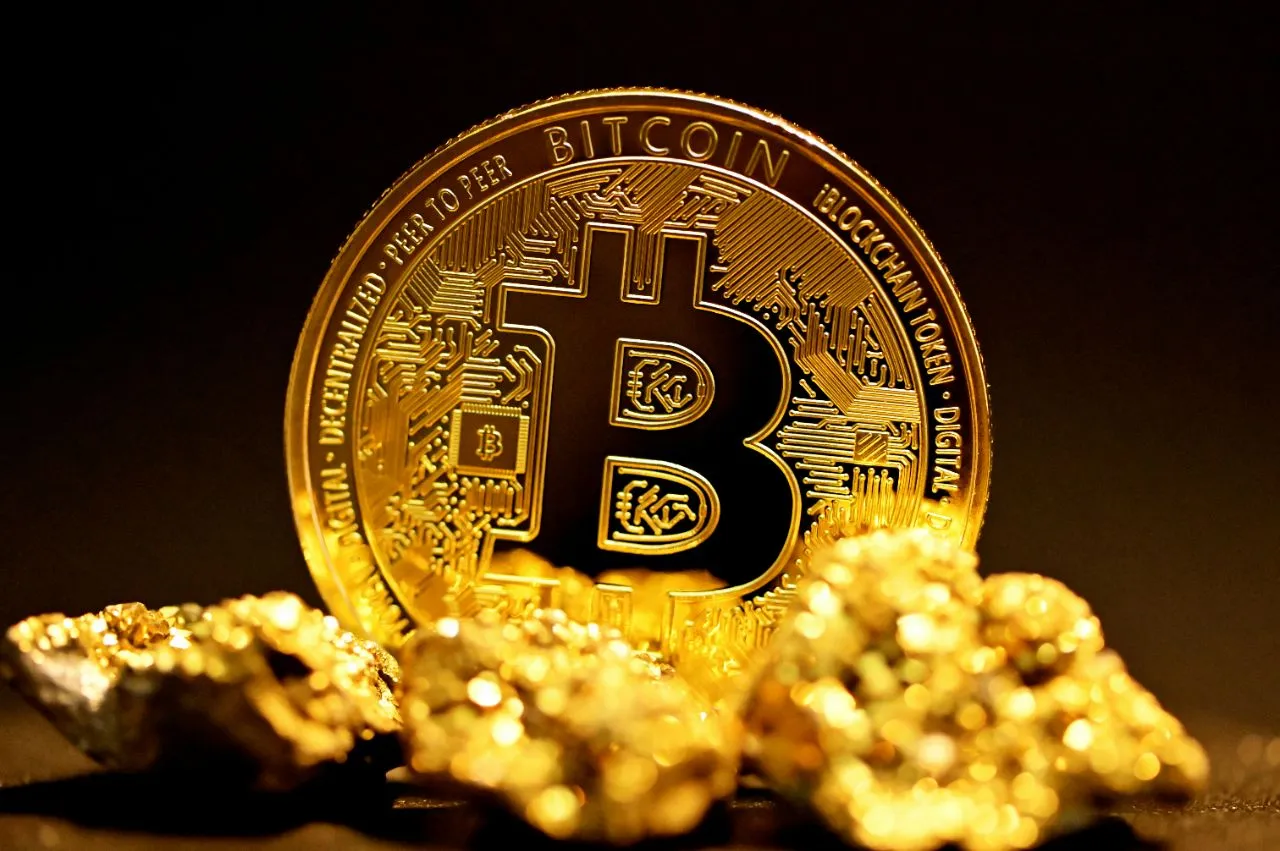
Photo by Kanchanara on Unsplash

84% anticipate new bitcoin ATH

The study, based on anonymized data from 9,748 participants worldwide, focused on investor perceptions surrounding the halving's impact on their investment decisions.


84% of participants anticipate a new ATH for bitcoin during the next bull run, with only East Europe showing a percentage lower than 80%. Over 50% predict bitcoin's price to be between $30,000 and $60,000 by the time the halving occurs in April. Meanwhile, 30% foresee the bitcoin unit price going higher than $60,000.


Off the back of the data that has arisen via the study, Bitget managing director Gracy Chen suggested that it is indicative that 2024 will be a significant year for the bitcoin market.


Crypto investment plans

Approximately 70% express plans to increase their crypto investments, with the highest conviction in the Middle East and North Africa (MENA) and East Europe regions. Western European investors are characterized as "short-term cautious" and "long-term optimistic."


In addition to the Bitget study, many market commentators appear to have arrived at a similar conclusion. In July of last year, Standard Chartered Bank forecasted a 2024 unit price for bitcoin of $120,000. The bank reaffirmed that view last month, going further still in stating that by 2025, it expected bitcoin to reach a price of $200,000, largely due to capital inflows into spot bitcoin exchange-traded funds (ETFs), which were approved in the United States in January.


Broader market sentiment

Taking to social media on Monday, crypto analyst Charles Edwards of Capriole Investments proposed a potential 500% price return for bitcoin if a bullish halving pattern plays out. Edwards envisions bitcoin reaching $280,000 in 2025. Like Standard Chartered, he cites the January bitcoin ETF launch as the driving force, likening it to a "second halving." He argues that major technological developments have historically seen quicker rates of adoption.


Crypto trading analyst Michaël van de Poppe predicts a pre-halving surge to $48,000 and an eventual breakout toward an all-time high in Q3/Q4 of 2024. The next Bitcoin halving is expected in April 2024, historically associated with increased scarcity and subsequent price surges.


Pseudonymous macroeconomist @Micro2Macr0 took to the X social media platform on Monday, stating:

"Only 2.5 months till the #Bitcoin #Halving. The world is getting more unstable and you have the greatest hedge ever invented sitting in front of you. What are you waiting for?" 


Meanwhile, "British HODL" warned that recent developments may result in a break from previous trading patterns. He stated:

"Everyone says 12 months after the halving the shock starts for #Bitcoin price. . . . I think there is a high likelihood that the ETF’s change the cycle you’re expecting. Be aware of that.”


More to Read
View All
Policy & Regulation·

Sep 18, 2023

Korbit Report: SEC Commissioner Shares Insights on Crypto Regulation

Korbit Report: SEC Commissioner Shares Insights on Crypto RegulationKorbit Research Center, a division of South Korea’s cryptocurrency exchange Korbit, on Monday, released a report that provides a comprehensive summary of its interview with Hester M. Peirce, a Republican Commissioner at the US Securities and Exchange Commission (SEC), which took place on August 18. The interview was conducted by Peter Chung, the head of research at Korbit Research Center.Photo by Joshua Hoehne on UnsplashKorbit’s meeting with US crypto expertsIn August, Chung made a trip to the United States, where he met with prominent figures and companies within the cryptocurrency industry to gain a deeper understanding of the ongoing institutionalization of cryptocurrencies in the United States. Through this opportunity, Korbit intends to release a series of reports that will encapsulate the valuable insights garnered during these interactions in the US.His first interviewee of the series was Commissioner Peirce, who serves as one of the five commissioners at the SEC. These commissioners are appointed by the President of the United States with the confirmation of the US Senate. To maintain political balance and impartiality, it is mandated that no more than three commissioners belong to the same political party.Peirce assumed her role as a Commissioner at the US Securities and Exchange Commission (SEC) in January 2018, following her appointment by President Trump. Before her tenure at the SEC, she held the position of Senior Counsel on the United States Senate Committee on Banking, Housing, and Urban Affairs. She is known as an advocate for technological innovation.Token safe harbor proposalPeirce earned the nickname “Crypto Mom” due to her advocacy for encouraging innovation within the cryptocurrency industry through the implementation of reasonable regulations. One notable initiative that exemplifies her perspective is the token safe harbor proposal. This proposal suggests giving blockchain network developers a three-year grace period during which they can work on building a decentralized network while being exempted from complying with the registration rules of federal securities laws, as long as certain conditions are met.During the interview, Peirce expressed concerns about recent actions taken by the SEC, which have added to the uncertainty surrounding cryptocurrency regulations. She also emphasized the need for swift legislative action to establish a framework for cryptocurrency regulation. Peirce noted that there appears to be a tendency to prioritize the classification of virtual assets over investor protection.Suggestions for KoreaAlthough Peirce hasn’t engaged in any direct interactions with Korean regulators, she suggested the Korean government optimize regulations for its own cryptocurrency industry. Her suggestion was to minimize unnecessary intervention and instead foster an environment where the sector can naturally evolve in accordance with the principles of a free-market economy.Furthermore, Peirce delved into detailed discussions on three pivotal topics: the classification of virtual assets as securities, the need for disclosure requirements, and the significance of assessing the extent of decentralization within a network.Classification of cryptocurrenciesThe Commissioner said that it is inappropriate for the SEC to contend that most cryptocurrency projects should fall under its regulatory purview. The SEC’s argument is based on the assertion that cryptocurrencies may constitute securities because they function as a medium of value exchange in fundraising activities, much like investment contracts in traditional financial markets. Despite this, she expressed optimism regarding the recent US court’s ruling on the Ripple vs. SEC case, which she believes may help rectify misconceptions surrounding the classification of investment contracts.Balancing investor protection and investor choiceMeanwhile, she expressed her viewpoint that regulations aimed at protecting investors should stay true to the disclosure principles introduced back in 1934 when the SEC was first established. However, she also argued that the SEC should avoid imposing arbitrary restrictions on investors’ choices. During the initial phases of a cryptocurrency project, there tends to be an inherent information asymmetry between crypto project leaders and individual investors. To ensure a fair investment environment, she advocated for legal mandates for disclosure. Notably, both her token safe harbor proposal and the Responsible Financial Innovation Act proposed by US Senators Kirsten Gillibrand and Cynthia Lummis incorporate such disclosure requirements.Decentralization assessmentCommissioner Peirce also approached the assessment of decentralization with a thoughtful perspective. Her Token Safe Harbor Proposal 2.0 states that after the three-year grace period, “token transactions may not constitute securities transactions if the network has matured to a functioning or decentralized network.” However, she admitted to grappling with the challenge of precisely defining what constitutes sufficient decentralization. During the conversation, she sought Mr. Chung’s perspective on this matter. In response, Mr. Chung shared that the Korbit Research Center regularly conducts measurements and assessments of the degree of decentralization for major blockchain networks every six months.Regarding the interview, Peter Chung expressed his admiration for the high-ranking official’s openness to innovation and strong communication skills. He also voiced his hope for more open discussions in Korea that could promote sustainable growth of the country’s crypto industry.

news
Policy & Regulation·

Jan 02, 2024

Singapore Prime Minister issues warning on AI-generated crypto scam

In a recent announcement on Facebook, Singapore Prime Minister Lee Hsien Loong has raised alarm bells about a new form of cyber scam that exploits deep-fake technology. Deep-fake technologyThe Prime Minister highlighted the emergence of deceptive videos utilizing artificial intelligence (AI) to create false portrayals of him endorsing cryptocurrency scams. This development underscores the escalating sophistication of online scams and the deployment of advanced technology to mislead the public. Deep-fake technology has emerged as a powerful tool for scammers, enabling them to manipulate genuine footage to produce highly convincing yet entirely fabricated content. In the latest incident, a deep-fake video features Prime Minister Lee Hsien Loong endorsing a nonexistent crypto investment platform purportedly associated with entrepreneur Elon Musk. This video, a manipulated version of an interview on CGTN, showcases the concerning level of realism achievable with deep-fake technology. The incident emphasizes the growing trend of utilizing AI in perpetrating scams. Prime Minister Lee underscored the deceptive nature of these videos, articulating the potential damage they could inflict by leading unsuspecting individuals to invest in fraudulent schemes. The Singaporean government maintains a vigilant stance on such scams, consistently urging citizens to exercise caution and verify information from official sources.Photo by Guo Xin Goh on UnsplashPrevious issuesThe exploitation of public figures in financial scams is not a new phenomenon. Prime Minister Lee has been a recurrent target of such scams, dating back to 2018. At that time, the government issued public warnings about Bitcoin investment scams falsely claiming the Prime Minister’s endorsement. More recently, in July, another fake video featuring Lee Hsien Loong surfaced, prompting renewed public warnings. In 2021, the Prime Minister’s name and photograph were used without his consent in an effort to sell cryptocurrency. The data was taken from his X (formerly Twitter) profile. At the time, Lee wrote:“The site’s creators are anonymous, but I have sent an open tweet out to ask that my name and photo be removed from the site immediately, as I have nothing to do with the platform. I urge everyone to remain vigilant when dealing with cryptocurrency platforms.” That was a much less sophisticated identity-related scam. More often than not, scammers and fraudsters tend to be early adopters of technology. That’s proving to be the case with the use of deep-fakes in this instance. A need for cautionAs he did in 2021, Prime Minister Lee has urged the public to exercise caution in light of this more recent incident. He advises against responding to scams promising guaranteed investment returns or giveaways. There’s every sign that the Prime Minister’s warning is warranted. In September it emerged that six Singaporeans lost more than $100,000 when a scammer tricked them into buying tokens on a cryptocurrency trading platform. More recently, five Americans were conned out of $10 million in a scam that involved a spoofed domain of the former Singapore International Monetary Exchange (Simex). This call for public vigilance is part of a broader government effort to address the surge in cyber fraud. These repeated incidents underscore the challenges posed by digital technologies in spreading misinformation and financial fraud.   

news
Markets·

Jul 11, 2023

Singapore and the Philippines Lead Crypto Interest in Southeast Asia

Singapore and the Philippines Lead Crypto Interest in Southeast AsiaSingapore and the Philippines have emerged as the frontrunners in Southeast Asia’s crypto landscape in 2023, capturing the majority of regional interest.Research carried out by Malaysian cryptocurrency data aggregator CoinGecko reveals that on a per capita basis, Singapore holds a 43.5% share of crypto interest, followed closely by the Philippines with 40.3%.Photo by Kenneth Koh on UnsplashRegional crypto hubSingapore has established itself as a crypto hub not only within Southeast Asia but also in the wider Asia region. It was previously ranked as the third most crypto-curious country globally and has consistently been one of the top Web3 gaming countries for three consecutive years.Other countries in Southeast Asia, including Malaysia, Thailand, Vietnam, and Indonesia, also contribute to the region’s crypto interest, although at more modest levels. Combined, these countries represent 14.7% of the per capita crypto interest in the region so far this year.GameFi driving interestIn the Philippines, crypto interest is primarily driven by GameFi, and the country has maintained its position as the leading Web3 gaming country from 2021 to 2023. The Philippines witnessed the Axie Infinity mania, with local gaming guilds and inspiring rags-to-riches success stories. Additionally, it was among the top countries embracing meme coins earlier this year, alongside Malaysia.Vietnam shares a strong interest in GameFi, placing it among the top Web3 gaming countries for three consecutive years. Thailand and Indonesia have witnessed substantial trading volumes on their crypto exchanges, with $37.94 billion and $23.97 billion respectively in 2022.Notably, Malaysia has a significant presence in the crypto industry, despite its relatively smaller impact. The country is home to two prominent crypto data tools, CoinGecko and Etherscan, which were founded by Malaysian teams and are headquartered in the country.In contrast, smaller Southeast Asian economies such as Cambodia, Myanmar, Brunei, Laos, and Timor-Leste have a combined share of only 1.5% of regional crypto interest per capita. While these markets remain largely untapped, their low adoption rates are unlikely to improve in the near term. Except for Brunei, which is a wealthy nation, the smaller Southeast Asian economies are categorized as lower-middle income countries.Regarding the specific cryptocurrencies drawing attention in Southeast Asia in 2023, Layer 1, GameFi, meme coins, and DeFi-related crypto have emerged as the most popular categories. The top-ranking cryptocurrencies within these narratives account for 22.2% each of the region’s interest so far this year.The Philippines, as the top Web3 gaming country, showcases three GameFi cryptocurrencies — Smooth Love Potion (SLP), Ronin (RON), and Wemix (WEMIX) — among its most popular choices. Malaysian investors also show interest in DeFi projects like Maple (MPL) and BoringDAO (BORING), in addition to Bitcoin.Singapore’s popular crypto choices include The Graph (GRT), Bitcoin (BTC), and Pepe (PEPE). Vietnam demonstrates ongoing interest in Aptos (APT) and privacy tool Bob (BOB), while Thailand focuses on Gala (GALA) and Canto (CANTO). Finally, Indonesia monitors Not Financial Advice (NFAI) and AirSwap (AST).Overall, Singapore and the Philippines lead the way in crypto interest within Southeast Asia, while other countries in the region also contribute to the evolving crypto landscape.

news
Loading