Top

Liminal expands into Middle East via Abu Dhabi approval

Web3 & Enterprise·May 15, 2024, 11:30 PM

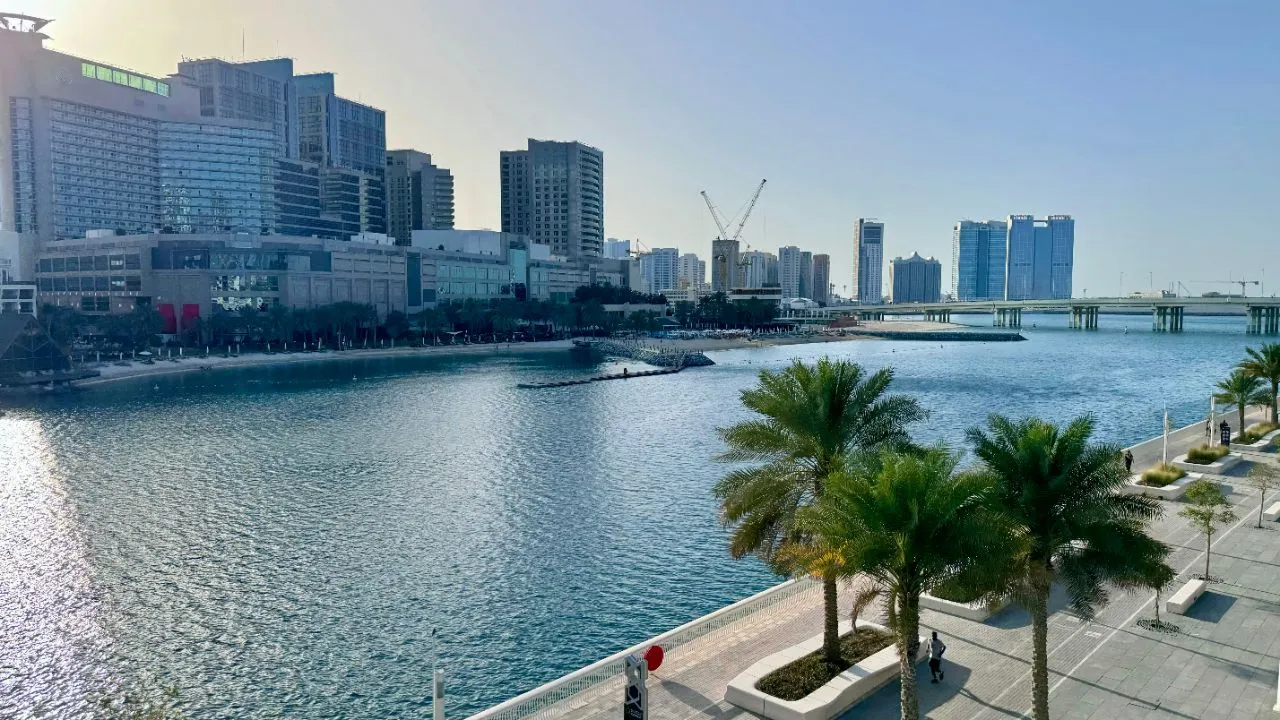
Liminal, a Singapore-based digital asset custodian, has gained regulatory approval in Abu Dhabi, as part of a series of recent steps the company has taken to expand across Asia and the Middle East.


Extending digital asset custody to the Middle East

Taking to the X social media platform on May 13, the company outlined that its First Answer Middle East subsidiary received Financial Services Permission (FSP) from the Abu Dhabi Global Market's (ADGM) Financial Services Regulatory Authority (FSRA) on May 9. The approval allows the firm to provide digital asset custody in the region. Liminal had initially been granted in-principle approval last year.


In a series of posts, the company outlined that it sees Abu Dhabi’s regulatory framework in respect of digital assets as forward-thinking. It drew particular attention to the work of the FSRA in developing a robust framework to enable institutions to enter the digital assets space.
https://asset.coinness.com/en/news/3f24edec05686c20b76b1d258831462e.webp
Photo by Sohail Sarwar on Unsplash

Game changer

On the actual license approval itself, the company stated, “The FSP license allows Liminal to hold, manage, and safeguard digital assets on behalf of institutions, hedge funds, venture capitalists and professional clients. This is a game-changer for digital asset custody practices in the region.”


Further regional expansion

Over the course of recent months, Liminal has scored a number of regulatory successes within the Asia Pacific (APAC) and Middle East and North Africa (MENA) regions. Its success within the United Arab Emirates (UAE) has not been confined to Abu Dhabi. In April, First Answer Custody FZE, a Dubai-based subsidiary company, secured initial approval from the emirate's regulator, the Virtual Asset Regulatory Authority (VARA). 


Meanwhile, Liminal's Indian subsidiary, First Answer India Technologies, has been established and registered as a reporting entity. As a consequence, it has become the first digital asset custodian registered with India’s Financial Intelligence Unit (FIU), an organization that falls under the umbrella of the Department of Revenue, and  which collects financial intelligence relative to money laundering. 


Making further in-roads within the world’s most populous country in November, India’s Central Bureau of Investigation (CBI) appointed the firm with a mandate to manage seized digital assets. Liminal has ties with India insofar as it was founded by Mahin Gupta in 2021, the co-founder of crypto exchange ZebPay.


In an interview with CoinDesk, Manan Vora, senior vice president of strategy and business operations at Liminal stated:

"We initiated a strategic drive two years ago to secure regulatory licenses in key markets across APAC and EMEA (Europe, Middle East and Africa), strategically positioning ourselves to cater to institutional clients.” Vora added: "Our strategic vision is to expand from our present technology presence in Europe and Taiwan to pushing for regulatory victories there. In Indonesia, we are already working as a technology provider for the nation's sovereign digital asset exchange."


Within its home market of Singapore, Liminal was grandfathered into a new licensing system that the city-state introduced recently in respect of digital asset custody as a consequence of already having been a provider of such services in Singapore. The company has been given a grace period of six months. Within that timeframe, it intends to submit an application to local regulator, the Monetary Authority of Singapore.

 

More to Read
View All
Policy & Regulation·

Apr 11, 2023

Malaysia Looking to Wean Itself Off Dollar Dependency

Malaysia Looking to Wean Itself Off Dollar DependencyAccording to Prime Minister Anwar Ibrahim, China is willing to engage in discussions with Malaysia regarding the creation of an Asian Monetary Fund. This proposal, which has been circulating for decades, aims to decrease the dependence on the US dollar.©Pexels/Sergei StarostinAsian Monetary FundAnwar highlighted the necessity to minimize reliance on the dollar and the International Monetary Fund and proposed the establishment of this fund at the Boao forum in Hainan last week. He stressed that the fund would aid in diversifying the financial landscape of Asia and improving its resilience against economic challenges.Following a state visit to China last week, Anwar stated that “there is no reason for Malaysia to continue depending on the dollar.” The Prime Minister told the Malaysian parliament on Tuesday that China’s President Xi Jingping was receptive to the idea of an Asian Monetary Fund and welcomed further discussions on such a proposal.Anwar Ibrahim, serving as both the Finance Minister and Prime Minister of Malaysia, stated that the country’s central bank is already taking measures to allow for negotiations between Malaysia and China using their respective currencies, the ringgit and renminbi.The robustness of the US dollar poses a significant challenge for Malaysia and other Asian countries, particularly as Malaysia is a net importer of food. In September 2022, the Bloomberg dollar index reached an all-time high, leading to a decline in the value of the ringgit and other Southeast Asian currencies to levels not seen in decades.As a result, Anwar Ibrahim’s proposal for a shift towards bilateral trade negotiations with China using the ringgit and renminbi holds the potential to alleviate some of the region’s dependence on the dollar and reduce the impact of its fluctuations.International shift away from dollarThis development comes as other officials in the region, particularly Singapore, have been discussing strategies to manage the effects of a dominant US dollar that has weakened local currencies and been used as an instrument of economic power by the United States.There has been a raft of deals struck in recent weeks all pointing towards an international shift away from the US dollar as the global reserve currency. Russia has agreed with China to trade in renminbi. A major trade deal was struck recently between China and Brazil that will see the two countries trade in reals and renminbi. Major oil producer Saudi Arabia has made similar soundings and signed similar deals with Beijing.Bitcoin as a reserve currencyAll of this recent upheaval has brought further consideration of bitcoin acting as a reserve currency back into view. It’s expected that even if there is a shift away from the US dollar, the renminbi won’t be capable of acting as a single dominant global reserve currency. Taking to Twitter on Wednesday, Bloomberg Intelligence Crypto Market Analyst Jamie Coutts suggested that bitcoin’s performance in Q1, 2023 marks “a significant milestone in its ascendancy as a potential global reserve asset.”Coutts believes that it marks the first occasion that the leading cryptocurrency has acted as a safe haven asset during a liquidity crisis. Bitcoin remains at an early stage of development. Nobody expects that it could serve as the global reserve currency at this point. However, it is not unreasonable to anticipate it increasingly growing into a role as a reserve currency used for international trade and settlement. Especially so, as issues bubble over relative to banking and a desire to escape the clutches of US dollar domination.

news
Policy & Regulation·

Sep 09, 2025

South Korea to mandate disclosure of crypto funds in home purchases

South Korean authorities will require homebuyers to disclose funds originating from cryptocurrency sales, a move aimed at increasing transparency in the nation's tight real estate market. The new rule is part of a wider government effort to address housing affordability, which is particularly pronounced in Seoul, and to integrate digital assets into its regulatory framework. The change, announced on Sept. 7 as part of new housing supply measures, will alter the mandatory funding plan submitted during property transactions. Proceeds from digital assets will be listed as a distinct category, similar to funds from stocks or bonds. Officials are also expanding loan disclosure requirements to include business loans and overseas borrowing, closing potential financing loopholes.Photo by Traxer on UnsplashImpact of asset volatility on property valuesThe policy follows growing evidence that volatility in assets like cryptocurrency can spill over into the property market. A 2024 study cited by Maeil Business Newspaper highlighted that both the COVID-era stock rally and Bitcoin's 2023 price surge had a discernible impact on housing values. According to Yu Jung-suk, a professor at Dankook University, apartments in Seoul's affluent Gangnam district are particularly sensitive to fluctuations in Bitcoin and the KOSDAQ index. He noted that high-profile property acquisitions by young crypto investors, even if few in number, can significantly sway market sentiment. Professor Yu suggested that regulators may need more comprehensive tools to manage the risks connecting different asset classes. The government's new measures also seek to cool the capital's housing market, where prices have continued to rise despite a slowdown in growth. In contrast, prices in areas outside Seoul have been declining since 2022. To address the supply-demand imbalance, officials plan to begin construction of 1.35 million new homes in the Seoul metropolitan area between 2026 and 2030. Stablecoin regulation and CBDC trials advanceBeyond real estate, officials are developing a formal regulatory structure for stablecoins. The Presidential Commission on Policy Planning is reportedly considering a model where a consortium of banks and fintech firms would be granted rights to issue a won-pegged stablecoin. Supervision for this new system would fall to a proposed Financial Stability Council, a body intended to serve as a central coordinator for financial policy, comprising the finance ministry, the Bank of Korea, and other regulators. The initiative aims to combine the stability of the traditional banking sector with the innovation of non-bank financial companies. The evolving regulatory environment is attracting attention from global industry leaders. Executives from Tether, the issuer of the USDT stablecoin, met with Shinhan Financial Group CEO Jin Ok-dong in Seoul on Sept. 8. While Tether representatives stated they were monitoring the regulatory climate, they confirmed no specific business plans were discussed. Separately, the Bank of Korea is moving forward with digital currency experiments. In partnership with government agencies and six major commercial banks, the central bank will launch a pilot program to test the use of a digital currency for distributing state subsidies and vouchers. 

news
Policy & Regulation·

Jul 02, 2025

Malaysian regulator seeks feedback on crypto framework enhancements

The Securities Commission Malaysia (SC), the statutory body tasked with regulating and developing capital markets within the Southeast Asian nation, has published a consultation paper in an effort to garner public feedback on potential enhancements to its crypto regulatory framework. In a press release published to its website on June 30, the SC claimed that its proposals seek “to enhance competitiveness of Malaysia’s regulated digital asset market, improve investor protection and strengthen the resilience and integrity of [Digital Asset Exchange] operators.”Photo by Vlad Shapochnikov on UnsplashEasing listing requirementsIn the event that the proposals are adopted, one key change would see a liberalization of the listing requirements for digital assets. Where certain key eligibility criteria have been met, the regulator would allow the listing of digital assets on digital asset exchanges without prior SC approval. The regulator stated that it wants to make this change in order to speed up the time taken to get digital assets to market as they emerge. By setting out additional criteria, there will be greater exchange operator accountability. Exchange operators would bear responsibility for listing tokens in compliance with the requirements set out by the regulator.  Assets could only be listed once those assets and the underlying protocol and network had undergone security audits which had been carried out by an independent and qualified blockchain security auditor, with the audit results made public.  For the purposes of the “Liberalised Listing Framework,” the asset must have been trading on a Financial Action Task Force (FATF)-compliant virtual asset service provider (VASP) platform for a minimum of one year. The regulator believes that easing the listing requirements will result in a broader digital asset product offering being made available in Malaysia. Last month, Thailand’s Securities and Exchange Commission (SEC) started a public consultation process aimed at revising token listing rules. Coin listing processes have also come under scrutiny from the authorities in South Korea recently. Segregating client assetsAmong the proposals is a plan to oblige exchange platforms to properly segregate client assets from operational funds and assets held by the exchange business. In recent years, many failed crypto exchange platforms, most notably FTX, got into difficulty by co-mingling customer funds with operational funds. Furthermore, the regulator doesn’t want any cross-over of assets between the local exchange operator and any overseas affiliate companies it may have.The SC stated that it is cognizant of recent global exchange failures, which has led it towards further enhancing crypto exchange operational governance and controls. It suggests that only 10% of client assets should be held by a Malaysian exchange in hot wallets, with the remaining 90% held in cold or offline wallets. The SC said that it welcomes feedback from members of the various stakeholder groups on the proposals outlined. The public consultation period runs from June 30 through Aug. 11.  Malaysia is expected to have 4.74 million crypto users by 2026. That would equate to 13% of Malaysians using crypto by then.

news
Loading
