Top

Filipino legislator proposes bill to establish Bitcoin reserve

Policy & Regulation·August 26, 2025, 6:06 AM

A legislator in the Philippines has put forward a bill that, if passed and enacted, would see the Southeast Asian country establish a Bitcoin reserve consisting of 10,000 BTC.


The proposed bill was filed with the House of Representatives as House Bill 421. Its proposer is Congressman Miguel Luis Villafuerte, a representative of Camarines Sur’s 5th district since 2022. Villafuerte also served as governor of the same province on two occasions, gaining recognition for becoming the youngest individual to assume the governorship in the Philippines.
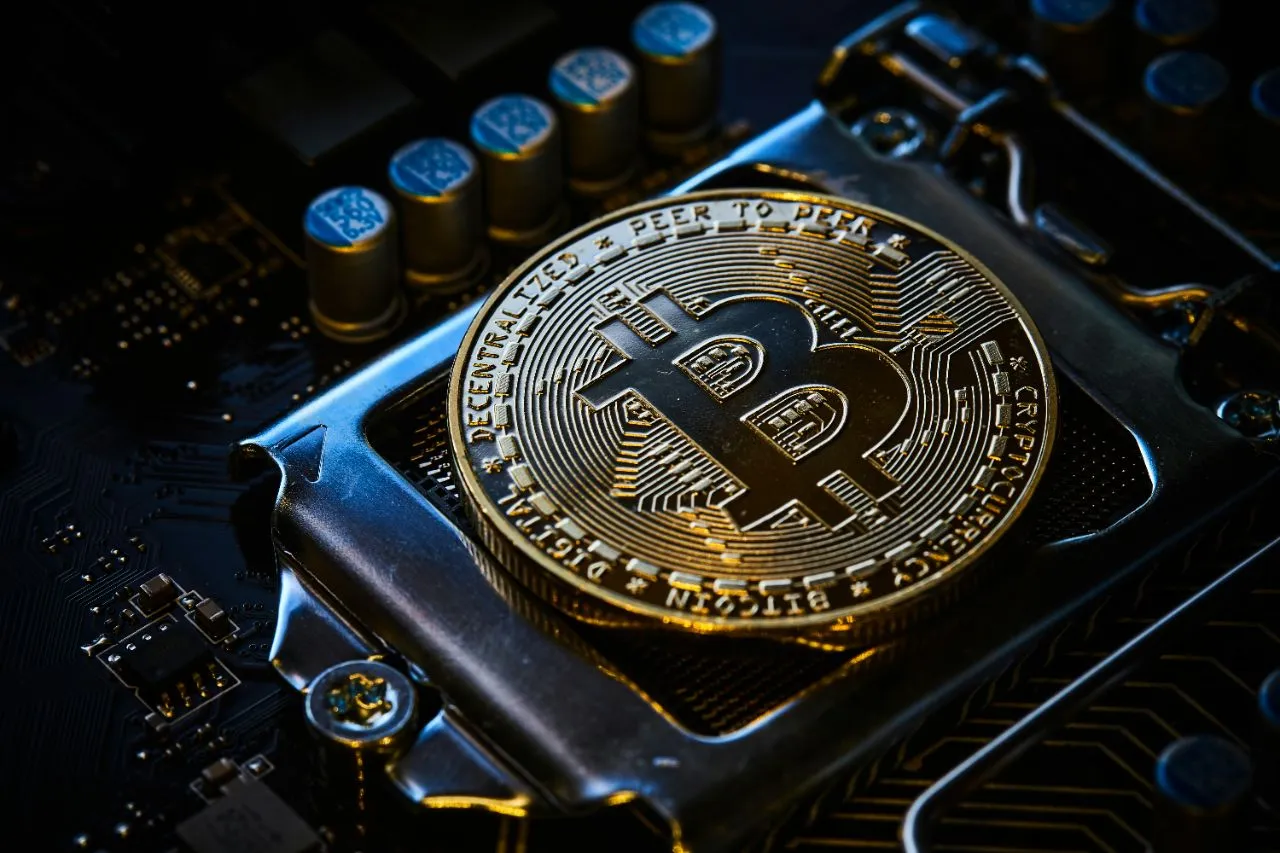
https://asset.coinness.com/en/news/d6c625c00d73628dbc6271349cfaea43.webp
Photo by Michael Förtsch on Unsplash

Drawing on developments overseas

Prefacing the bill with an explanatory note, Villafuerte draws on developments related to Bitcoin in the United States. He drew attention to U.S. Federal Reserve Chairman Jerome Powell having referred to Bitcoin as “digital gold,” while pointing to a bill in the U.S. proposed by Wyoming Senator Cynthia Lummis to create a strategic Bitcoin reserve in the U.S., with the support of U.S. President Donald Trump.


The bill itself, if passed and enacted, would provide a mandate to Banko Sentral ng Pilipinas (BSP), the country’s central bank, to acquire 2,000 BTC on an annual basis over a period of five years. According to Villafuerte’s proposal, that would result in the Philippines amassing a reserve of 10,000 BTC.


20-year minimum holding period

Following the achievement of this accumulation, the bill sets out that the leading digital asset would be locked in trust for a period of 20 years for the benefit of the country. A provision is included to establish a procedure that would enable the purchase schedule to be adjusted if a need arose to do so due to prevailing market conditions.


Upon completion of the 20-year holding period, the proposed legislation calls on the central bank to present a report to Congress with recommendations as to whether Bitcoin should continue to be held or if some of the holdings should be sold off on a gradual basis. Following the expiration of that initial 20-year period, the governor of the central bank cannot recommend the selloff of more than 10% of the holding over any two-year period.


Proof of reserves

In terms of sovereign nations, an early mover with regard to Bitcoin has been El Salvador. It became the first nation to establish Bitcoin as legal tender, while also establishing a Bitcoin reserve. However, the Central American nation has been criticized with regard to a lack of transparency surrounding that reserve.

In the case of Villafuerte’s bill, the proposed legislation includes a requirement for the central bank governor to establish a system of quarterly proof of reserve attestations. It calls for attestations to be performed by an independent third-party auditor with expertise in auditing digital assets.

The proposal comes as a number of nations are understood to be exploring the establishment of a strategic Bitcoin reserve. In April, a parliamentarian in Sweden proposed adding Bitcoin to the Nordic nation’s foreign exchange reserves. The Swedish parliament is set to debate the notion of a Bitcoin reserve next month.


Meanwhile, Switzerland’s central bank has reportedly gained exposure to Bitcoin through a $253 million shareholding in Bitcoin treasury firm Strategy.


More to Read
View All
Policy & Regulation·

Jul 31, 2023

Busan City Houses Two Foreign Financial Firms on the Road to Becoming Blockchain, Fintech Hub

Busan City Houses Two Foreign Financial Firms on the Road to Becoming Blockchain, Fintech HubThe city of Busan said Monday that it has chosen two financial companies, UIB Korea and Lina One, as the new occupants of Decacorn-Space — an office space on the 63rd floor of the Busan International Finance Center (BIFC) — in an effort to position the southern port as the nation’s blockchain and fintech hub.Busan has been running an open call for foreign financial institutions to move into the recently renovated space since June. After a rigorous two-step evaluation process, UIB Korea and Lina One were selected, the city said.This comes as part of Busan’s efforts to further develop the BIFC and become a major financial powerhouse in Korea.“We have been relocating public financial institutions, fostering financial experts, and exploring new growth drivers such as fintech, blockchain, and digital innovation,” the city’s mayor Park Heong-joon explained.Photo by Minku Kang on UnsplashAbout UIB Korea and Lina OneUIB Korea, or UIB Insurance Brokers, is the Korean branch of UK-based UIB Group — a global insurance broker that offers risk management advisory services. In particular, the firm is set to work with other domestic companies such as DB Insurance and Meritz Fire & Marine Insurance to establish a consortium for providing insurance products and consulting services.Meanwhile, Lina One is the Korean branch of Chubb Group, the world’s largest publicly traded property and casualty insurance company. One of the firm’s major goals is to promote the insurance information technology market in Busan.Notably, both companies aim to leverage their digital capabilities, experience, and competitiveness to achieve similar goals, which include digitizing insurance for various partners, ranging from maritime and industrial companies to regional banks, fintech companies, and individuals. In turn, their efforts are expected to expand Busan’s network with the larger global financial community and present the city as an ideal spot for international conferences.On the road to becoming a financial hubDespite considerable challenges such as the withdrawal of foreign financial institutions from Korea and the impact of COVID-19 on international travel, the city has continuously made efforts in collaboration with the Busan Finance Center to attract international financial institutions through events like investor relations meetings and local networking activities.To support the successful landing of these companies in Busan, the city will also offer one-stop services such as business model development support and residential settlement consultations.Once settled, UIB Korea and Lina One are expected to generate significant synergy with partner firms such as local financial holding company BNK Financial Group during the third phase of the development of the BIFC whose objective is to house innovative financial workspace by 2025.“It is crucial for us to attract more competent domestic and foreign financial institutions that will have a great impact on the city’s financial economy,” Mayor Park emphasized.

news
Policy & Regulation·

Dec 09, 2023

Binance withdraws Abu Dhabi bid amid global licensing reevaluation

Binance withdraws Abu Dhabi bid amid global licensing reevaluationLeading global crypto exchange Binance has chosen to withdraw its bid for a trading license in Abu Dhabi, according to information gleaned from the Abu Dhabi Global Market (ADGM) register and a report published by Reuters on Thursday.Photo by Demid Druz on UnsplashChange of directionThe local subsidiary company responsible for the application, BV Investment Management Limited, initially submitted its licensing bid on Nov. 15, 2022. Much has changed in the crypto space and in the fortunes of Binance over the course of the past year, leading the firm to withdraw its application on Nov. 7.This proposed license would have granted Binance the authority to pool and invest funds from professional investors. The decision to retract the bid is part of Binance’s broader reevaluation of its overall strategy going forward. “When assessing our global licensing needs, we decided this application was not necessary,” a spokesperson from the company told Reuters.Adapting to new circumstancesMuch has changed for Binance in 2023. The company has been combating regulatory pushback in multiple jurisdictions worldwide, not least in the United States, where Binance founder Changpeng Zhao (CZ) recently reached a plea agreement with U.S. prosecutors and agreed to pay $4.3 billion for violations related to money laundering and sanctions laws.As part of that process, CZ stepped down as CEO, passing the leadership to Singaporean Richard Teng. Teng is a former regulatory executive who previously oversaw the exchange’s regional operations. A spokesperson for the company maintained that this recent decision relative to licensing in Abu Dhabi is entirely unrelated to the recently agreed-upon settlement in the United States.UAE tiesWhile Binance may be dropping its attempts to gain licensing in Abu Dhabi, in July the company acquired a Minimum Viable Product (MVP) license from the Virtual Assets Regulatory Authority in the United Arab Emirates’ (UAE) other major center, Dubai. The UAE is also the location where CZ has established his home.Some had speculated that the company had also established its headquarters within the UAE. However, CZ has always refused to disclose the firm’s global headquarters, instead suggesting that the firm has no global headquarters. Teng has taken a similar approach.Binance was originally founded in China in 2017. It then shifted its headquarters to Japan and later established a base in Malta to circumvent regulatory challenges in China. Similarly, it’s thought that regulatory scrutiny provides the rationale for the company’s ongoing stance in refusing to confirm the location of its corporate headquarters.Despite regulatory challenges, Binance had previously expressed a focus on expanding its operations in the Middle East, known for its crypto-friendly environment and specific regulatory frameworks. Binance holds various crypto licenses from regulators in the region. In May of last year, it acquired a Category 4 crypto-asset service provider (CASP) license from the Central Bank of Bahrain.The exchange maintains registrations and licenses across Europe, Asia and other regions. It’s had mixed fortunes in its endeavors over recent months, driven out of some markets while making in-roads in others. Earlier this week, its Binance Japan subsidiary became fully operational. Last week, regulators in the Philippines moved against the company due to regulatory irregularities.

news
Web3 & Enterprise·

May 23, 2023

Cake DeFi Co-Founder Launches Ordzaar Ordinals Marketplace

Cake DeFi Co-Founder Launches Ordzaar Ordinals MarketplaceU-Zyn Chua, Singaporean Co-Founder and CTO of Singapore-based Cake DeFi, has launched Ordzaar, a Bitcoin Ordinals marketplace.In a social media post on Friday, the marketplace described itself as “a decentralized & trustless marketplace for #Bitcoin Ordinals, bridging the gap between trustlessness and true decentralization.” The Ordinals protocol has been enabled due to the SegWit and Taproot upgrades to the bitcoin protocol. It’s a system for numbering satoshis, the smallest denomination of the Bitcoin cryptocurrency. The protocol assigns each satoshi with a serial number, using that number to track them across transactions.By taking this approach, each individual satoshi becomes unique, allowing additional data to be attached to them in a process called inscription. The project has hit the ground running, with its website online and a step by step guide released, instructing new users in how to buy and sell Ordinals on the marketplace.Releasing a press release to publicize the launch, the project pointed out that “the lack of a fully decentralized Ordinals marketplace [poses] a major challenge”, given a backdrop in which Bitcoin Ordinal inscriptions have surged in popularity over the course of recent weeks. Elaborating on that point, the team stated: “There is a growing need for a reliable and secure platform that allows buyers and sellers to transact in a decentralized manner, giving them complete control over their assets, this is where Ordzaar comes in.”Asia Ordinals marketplace firstOrdzaar represents the first ever Bitcoin Ordinals marketplace based within the Asian region. Alongside U-Zyn Chua, the team behind the project implicates three other seasoned crypto-natives with a wealth of experience in crypto, bitcoin, and blockchain. Cake DeFi colleague Naqib Noor assumes the role of Co-Founder and Development Lead. As well as being Co-Founder, Chua is the project’s Lead Researcher.In an effort to showcase the brand new marketplace, the Ordzaar team sponsored and participated in the Bitcoin Ordinals 2023 conference in Miami late last week, with Chua appearing as a speaker at the event. The Co-Founder told Blockhead that:“Ordinals have proven that Bitcoin is more than just a peer-to-peer payment system and has demonstrated a new, high-value use case for the longest-running cryptocurrency. As the industry continues to build and innovate, Ordinals have the potential to unlock even more value on the Bitcoin blockchain, and will lift the entire crypto ecosystem as a whole.”NFTs took on a life all of their own with a market surge, tripling in value to $250 million in 2020. While that largely Ethereum-based market has cooled somewhat since then, it nonetheless continues to broaden and establish itself. Chua believes that Bitcoin-centric Ordinals can take a large slice of that development. “Along with the explosive adoption seen in the traditional ETH NFT market, we expect to see a similar trajectory in the Ordinals space,” he explained.In a tweet published on Saturday, Crypto journalist and investment team member at Seoul-based crypto venture capital firm #Hashed, Joseph Young, referred to changing dynamics within the NFT space, with relative newcomers Blur and Tensor taking on OpenSea and Magic Eden. Not short on confidence, the Ordinals team responded, stating: “And Ordzaar will be dominating decentralized Ordinals and BRC20 trading.” The overarching crypto space continues its progression at pace, and it will be intriguing to see how Ordinals, together with new marketplaces like Ordzaar, perform as the industry trundles forward.Photo by Dmitry Demidko on Unsplash

news
Loading